Unlocking the Secrets
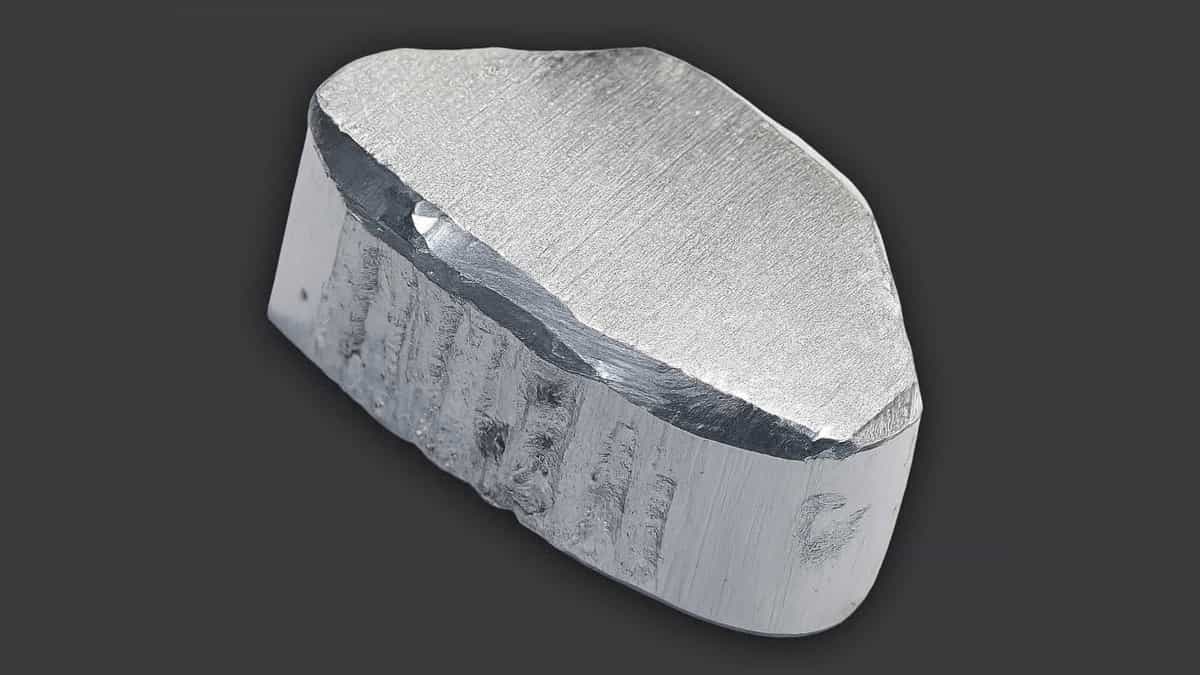
Aluminium is a light metal which has a silvery white colour in its pure state and which is so soft that it can easily be stretched and used to make fine wires. It is also suitable for rolling into thin sheets or foils. Aluminium is the third most abundant element (after oxygen and silicon) and is very reactive. For this reason it only exists in chemically bonded form.

The Dane Hans Christian Oersted discovered the element of aluminium in 1825 when he deconstructed alumina into its elements. This is where aluminium gets its name from, derived from the Latin word for alum, “alumen”. Two years later the German chemist Friedrich Wöhler was successful in producing aluminium powder. At this time aluminium was still more valuable than gold and had a higher price.
You May Like To Read:
Aluminium or Aluminum – Which One Is Correct?
Aluminium is not only used particularly in the packaging industry, but has also primary choice in house & building improvement (Windows, Doors & Facades) & vehicle construction for some decades now, due to its low density. By combining it with magnesium, silicon and other metals, an alloy can be manufactured from aluminum with a strength similar to that of steel. The metal is also used in aircraft construction and in space technology. Because of its electrical conductivity aluminium is also used as a conductor material in power lines.
Today, aluminum is required in every industrial sector. Its specific qualities make it indispensable in many areas of application, such as the transport and construction industry, mechanical engineering or the packaging industry. Aluminium is not only very light but also very strong. It hardly corrodes and can also be recycled very easily.
Aluminium is produced primarily in China, Russia and the USA, while the most significant aluminium ore deposits can be found in India, Australia, Guinea, Brazil, Jamaica, Guyana and Indonesia.
What is Aluminum and How Is It Made?
Hydrated alumina, better known as bauxite ore, is what’s mined from the Earth’s crust and refined to extract aluminium. Once extracted from the bauxite, pure aluminium is often much too soft and ductile for commercial use.

For this reason, aluminium is almost always combined with other alloying metals or elements. These commonly include copper, magnesium, manganese, silicon, tin, and/or zinc. By creating an aluminium alloy, the overall strength of the metal is improved as well as many other varying physical properties necessary for application.
What is Aluminium Smelting?
Aluminium smelting refers to the industrial process of extracting aluminium metal from its ore, bauxite. This process involves several steps, beginning with the extraction of bauxite from the earth’s surface. The mined bauxite is then refined to produce alumina (aluminium oxide), which serves as the precursor for aluminium metal.

In the electrolytic reduction stage, alumina is dissolved in molten cryolite and subjected to an electric current, resulting in the decomposition of alumina into aluminium metal and oxygen gas. The molten aluminium is collected, purified, and cast into ingots for further processing. While aluminium smelting is energy-intensive, the resulting metal is valued for its lightweight properties, corrosion resistance, and recyclability, making it essential for various industrial applications.
Types of Aluminium
Pure aluminum is extremely soft, and often not strong enough for commercial uses and building projects.
In order to fix this, pure aluminium is mixed with other elements such as iron, silicon, copper, magnesium, manganese, and zinc. By alloying with these other elements, aluminium’s properties such as strength, density, work ability, electrical conductivity, and corrosion resistance are enhanced.
During the aluminium alloying process, three different types of alloys can be produced depending on their attributes and what methods are used to treat them: commercially pure, heat-treatable, and non heat-treatable.
After Aluminium alloying these series comes out:
Aluminium 1000 (99% Pure)
1000 series aluminium is regarded as commercially pure aluminium. It contains a minimum of 99% aluminium with relatively no alloying additions. 1000 series aluminium is non-heat treatable, but this material exhibits high electrical and thermal conductivity, excellent corrosion resistance and excellent work ability.
Aluminium 1050
Aluminium 1050 is a very pure alloy (99.5% aluminium) known for its excellent corrosion resistance, high electrical and thermal conductivity, and low strength. It is highly workable and can be easily welded and brazed. It is the base for many anodized applications.
Common Applications: Chemical equipment, process plant equipment, architectural panels, nameplates, food industry containers, and heat exchangers.
Aluminum 1100
It is known for its superior corrosion resistance, formability, conductivity, and high weldability. It is not used in applications that require high strength or hardness. 1100 is non-magmetic, weldable, and not heat treatable.
1100 is typically used for chemical equipment, food handling equipment, decorative trim, lighting equipment, and heat exchangers. If excellent malleability and corrosion resistance are your primary goals, 1100-H14 is an excellent choice.
Aluminium 1100-1145
1100-H18(Trade Name) is the strongest temper of the 1100 series aluminium alloy. With minium aluminium content of 99%, 1100-H18 is regarded as commercially pure aluminum. 1100-H18 has excellent work ability, corrosion resistance, weldability, and high thermal conductivity.
1145-H19(Trade Name) is a non-heat treatable, commercially pure aluminium alloy. It has high formability, good electrical conductivity, and corrosion resistance.
Aluminium 2011
2011-T3(Trade Name) aluminium boasts good machine ability, especially free-cutting qualities, and good mechanical properties. It also has excellent surface finish capabilities. When machined, chips of the metal break off small and easily, allowing for smooth finishes and tight tolerances. Weldability, strength, and anodizing response are all rated as average at best, and this alloy does not have a high level of corrosion resistance.
2011 is typically used for screw machine parts, small precision gears, and precision machine parts such as clock, camera, and speedometer parts.If the ability to make your parts quickly and easily is the most important, and strength is not the primary desire, 2011-T3 is an excellent option.
Aluminium 2014
Aluminium 2014 is a very high-strength, heat-treatable alloy known for its excellent machinability and toughness. It offers one of the highest strength levels among aluminium alloys, especially in the T6 temper, making it suitable for highly stressed components. However, it has relatively poor corrosion resistance and is not considered weldable by common methods, as welding can lead to cracking and a significant loss of strength in the heat-affected zone.
2014 is typically used in heavy-duty structural applications such as aircraft structures, truck frames, and military vehicle components. If your priority is maximum strength and machinability in a non-welded component, and you can provide adequate corrosion protection, 2014-T6 is an excellent option.
Aluminium 2017
Aluminium 2017 is a high-strength alloy very similar to its close relative, 2014. It possesses good machinability and develops its strength through natural aging at room temperature after solution heat treatment. Like other copper-rich 2xxx series alloys, it has poor corrosion resistance and its weldability is generally not recommended for critical structures.
2017 is typically used for screw machine parts, bolts, rivets, and other high-strength fasteners. If you need a strong, naturally aging alloy for machined parts or fasteners that will not be welded, 2017 is a solid and well-established choice.
Aluminium 2024
Copper is the main alloying ingredient in 2024 aluminum. It is very strong compared to most aluminium alloys, and has average machin ability, but the copper component of this alloy makes it susceptible to corrosion. Many items in this alloy are produced with a clad surface to protect the underlying material. In addition, 2024 is not considered to be weldable.
Finally, the fatigue resistance of 2024 make it a primary choice when the application is expected to be under stress or strain for prolonged periods. It is typically used in aerospace applications, bolts, clock parts, computer parts, hydraulic valve parts, nuts, pistons, and gears. If you need durable and strong aluminium material, this is an excellent choice.
Aluminium 2219
Aluminium 2219 is a premium high-strength alloy renowned for retaining its excellent mechanical properties at elevated temperatures, up to about 600°F (315°C). Its key advantage over other 2xxx series alloys is its superior weldability; it can be readily arc-welded with minimal loss of strength in the weld zone when using a proper filler alloy like 2319 or 4043. It also exhibits good stress-corrosion cracking resistance.
2219 is typically used in aerospace applications such as rocket motor casings, fuel tanks, supersonic aircraft skins, and space vehicle structures. If your application requires a combination of very high strength, excellent weldability, and performance in high-temperature environments, 2219 is the superior and often essential option.
Aluminium 3003
3003 aluminium is is highly workable, formable, and weldable, with exceptional corrosion resistance. It is an alloy that is particularly popular for outdoor projects that require extensive forming or joining operations. It is typically used in chemical tanks, trim, pressure vessels, piping, and decorative parts.
Aluminium 3004
Aluminum 3004 is a widely used aluminum alloy that is commonly used for various applications in different industries.Aluminium 3004 is commonly used to make beverage cans due to its excellent formability, corrosion resistance, and low weight. It is typically used in Beverage Cans, Heat Exchangers, Roofing and Siding, Chemical and Food Processing, Cookware, and Automotive Components.
Aluminium 3005
Aluminium 3005 is a medium-strength alloy with better strength than 3003. It has excellent corrosion resistance and good workability, making it a common choice for sheet metal work. It is often used where a slightly stronger, more formable material is needed than 3003.
Common Applications: Building products (siding, gutters, downspouts), sheet metal work, residential siding, refrigerator panels, and venetian blind slats.
Aluminium 3105
Aluminium 3105 is a low-strength alloy primarily used for its excellent formability and corrosion resistance. It is very similar to 3003 but with slightly lower strength. It is easy to weld and braze, making it suitable for non-structural applications.
Common Applications: Residential siding, mobile home skirting, fabrications, sheet metal work, and flashing.
Aluminium 4032
Aluminium 4032 is a high-strength, heat-treatable forging alloy, not a welding wire. It is alloyed with silicon, copper, and nickel to provide a unique combination of properties including low thermal expansion, high wear resistance, and good strength at elevated temperatures. It machines to a good finish but has relatively low corrosion resistance.
4032 is typically used for forged pistons in internal combustion engines, as well as other high-performance automotive and aerospace components like compressor vanes. If you need a durable alloy that can maintain dimensions and resist wear under heat and friction, 4032 is an excellent engineering-grade option.
Aluminium 4043
Aluminium 4043 is the most common and versatile filler alloy used for welding aluminium. Its high silicon content provides excellent fluidity when molten, reducing the risk of weld cracking, especially when joining 6xxx series alloys. It produces a stable weld puddle with good bead appearance. However, welds made with 4043 will anodize to a dark gray color, which can be undesirable for cosmetic applications.
4043 is typically used as the standard choice for MIG and TIG welding of alloys like 6061 and 3003 in automotive, bicycle, and general fabrication. If you need a reliable, all-purpose filler wire for most of your welding projects, 4043 is the default and excellent option.
Aluminium 4047
Aluminium 4047 is a specialized filler alloy with an even higher silicon content than 4043, giving it an extremely low melting point and superior flow characteristics. This makes it exceptionally good at filling wide gaps and producing clean, neat joints with minimal cleanup. Its primary advantage is its extreme fluidity.
4047 is typically used for brazing applications and for welding aluminium castings, where its gap-filling capability is critical. It is also the preferred cladding alloy for brazing sheets used in heat exchangers and radiators. If your project involves brazing or welding uneven cast components, 4047 is the superior specialist choice.
Aluminium 5005
Aluminium 5005 is a general-purpose alloy with medium strength, excellent corrosion resistance, and a bright, attractive finish after anodizing. It is very similar to 3003 in strength and workability but is often chosen for its superior anodizing characteristics.
Common Applications: Architectural anodized panels, trim, appliances, nameplates, automotive trim, and consumer durables.
Aluminium 5052
5052 is the aluminium alloy most suited to forming operations, with good workability and higher strength than that of either 1100 or 3003. 5052 is not heat-treatable, but is stronger than most of the 5xxx series of aluminiums. It has very good corrosion resistance, and can be easily welded as well. 5052 is not a good choice for extensive machining operations, as it has only a fair machin ability rating. It is typically used in aircraft fuel and oil lines, fuel tanks, sheet metal work, appliances, lighting, wire, and rivets.
Aluminium 5454
Aluminium 5454 is a medium-strength, non-heat-treatable alloy known for its good resistance to corrosion and excellent performance in elevated temperature service up to approximately 150°C (300°F). It offers better strength than 5052 while maintaining good formability and weldability.
5454 is typically used for welded structures, pressure vessels, and truck and bus body panels that may be exposed to moderate heat, such as through painting processes. If your application requires a reliable, weldable alloy for service in moderately elevated temperatures, 5454 is an excellent and practical option.
Aluminium 5754
Aluminium 5754 is a medium-strength alloy very similar to 5454 and is often considered a direct European equivalent. It provides good strength, excellent corrosion resistance, and very good weldability. It is highly formable and responds well to anodizing, making it suitable for both structural and aesthetic applications.
5754 is typically used in automotive body panels, marine components, architectural panels, and a wide range of welded fabrications. If you need a versatile, corrosion-resistant alloy with a good balance of strength and formability for automotive or general fabrication, 5754 is a widely used and excellent option.
Aluminium 5083
Aluminium 5083 is renowned for having the highest strength of the non-heat-treatable aluminium alloys. It retains exceptional strength even after welding, making it a prime choice for heavily loaded structures. It offers superb corrosion resistance, particularly in marine and industrial environments, and is readily weldable.
5083 is typically used in marine applications such as ship hulls, superstructures, and offshore gangways, as well as in military vehicles and pressure vessels. If you need the strongest possible weldable aluminium for harsh environments, especially saltwater, 5083 is the superior and industry-standard option.
Aluminium 5086
5086-H32 aluminium is frequently found in marine applications, with higher strength capacity than aluminum 5052 or 5083. 5086 has superior corrosion resistance, moderate strength, and good formability. 5086 is non-magnetic, easily weldable, and heat treatable. It is typically used in pressure vessels, cryogenics, towers and rigs, oil/gas piping, and armor.
Aluminium 6005 & 6005A
Aluminium 6005 and its closely related variant 6005A are medium-strength structural alloys known for their excellent extrudability, often allowing for more complex and thinner profiles than 6061. They offer a good combination of strength, corrosion resistance, and weldability. The “A” variant (6005A) has slightly adjusted chemical limits that permit a higher strength, making it a common choice for structural applications.
These alloys are typically used for architectural extrusions, automotive frame rails (such as in roof racks and seat frames), ladder rails, and bridge railings. If you need a strong, readily extrudable alloy for complex structural sections, 6005A is an excellent and often preferred option over 6061.
Aluminium 6060
6060 aluminium is a medium strength alloy more closely related to 6063 than to 6061 but will have more magnesium than 6063. This alloy is mainly found in Europe with metric sizes and is commonly heat treated to a temper with higher strength but low ductility. 6060 alloy is very good for anodizing. It is typically used in including, doors and windows frames, Electrical components and conduits, Tube for irrigation systems, Curtain Walls, Lighting, furniture and picture frames, Carpet edging, Railings and fences, Applications where surface finish is important The main alloy ingredients of 6060 aluminium are magnesium and silicon.
Aluminium 6061
6061 Aluminium is, by any measure, the most commonly used aluminium alloy in the world. It is useful in almost any application due to its strength, heat treat ability, comparatively easy machining, and weldability. If that were not enough, it is also capable of being anodized, adding a layer of protection for finished parts. It is typically used in aircraft components, cameras, couplings, marine fittings and hardware, electrical components and connectors, decorative hardware, pins, brake and hydraulic pistons, valves, and bicycle frames.
T6
The T6 refers to the temper or degree of hardness, which is achieved by precipitation hardening. This grade has a good strength-to-weight ratio and is also heat-treatable. With great formability and weldability, it is used for engineering and structural applications, doors, windows, furniture, and more.
Aluminium 6063
6063 aluminium is the most popular alloy for extrusion and so it is a natural consideration. This alloy is widely used in architectural applications. Because of this, it is often referred to as architectural aluminum.
6063-T6 aluminium is used for applications such as railing, door window frames, door frames, roofs, balustrading, sign frames, shop fittings, irrigation tubing, building products, electrical, marine, piping, recreation equipment, storage tanks, truck frames & trailers. 6063 is rated as “Good” for forming and cold working operations, “Excellent” for anodizing, and “Fair” for machining.
Aluminium 6082
Aluminium 6082 is often considered the most common structural alloy in Europe, similar to how 6061 is used in North America. It is known for its high strength, good corrosion resistance, and excellent weldability. It possesses the highest strength of the 6000 series extrusion alloys when in the T6 temper, making it suitable for highly stressed components.
6082 is typically used in bridges, cranes, offshore structures, transportation equipment, and high-stress architectural applications. If your project requires the maximum possible strength from a readily available, weldable extrusion alloy, 6082 is a top-tier and reliable option.
Aluminium 6101
6101 is best suited for applications involving moderate strength and maximum electrical conductivity.It is typically used for electrical bus bars where mechanical strength is also a requirement.
Aluminium 6262
6262 aluminum was designed for operations where significant machining is required.It is typically used in camera parts, couplings, marine fittings, decorative hardware, hinge pins, knobs, nuts, oil line fittings, appliance fittings, valves and valve parts.
Aluminium 6351 T6
6351-T6 Aluminum Rod is made up of an aluminum alloy with 96% aluminum, silicon, magnesium, manganese, iron, zinc, titanium, copper and other elements in the composition. The melting point is 600 °C (1110 °F) lower than stainless steel (1400-1510°C). The material has a good thermal expansion and electric conductivity. The aluminum 6351 alloy is used in manufacturing tubes and pipes. These pipes and tubes are used to make Ladders.
Aluminium 6463
Aluminium 6463 is an alloy specifically designed for anodizing to achieve a bright, smooth, and decorative finish. It offers moderate strength but excels in its ability to be extruded with a superb surface quality, free of imperfections that would be highlighted after anodizing. Its mechanical properties are lower than those of 6063.
6463 is typically used for architectural trim, door and window frames, automotive brightwork, and any application where a high-quality aesthetic appearance after anodizing is the primary requirement. If the visual quality of the final anodized part is your utmost priority, 6463 is the specialist and excellent option.
Aluminium 7005 & 7020
Aluminium 7005 and 7020 are high-strength, weldable alloys known for retaining a significant portion of their strength after welding, a key advantage over many other high-strength alloys. They offer good corrosion resistance and are often supplied in a specially controlled temper to optimize this weldability.
These alloys are typically used in heavily stressed structures like bicycle frames, automotive and truck bumpers, roll cages, and military applications. If you need a very strong, readily weldable alloy for a safety-critical or high-performance structure, 7005 or 7020 are excellent and practical options.
Aluminium 7050
Aluminium 7050 is a premium aerospace alloy developed to combine very high strength with superior resistance to stress corrosion cracking (SCC) and excellent toughness, especially in thick sections. It maintains its properties better than 7075 after heat treatment and is less susceptible to exfoliation corrosion.
7050 is typically used in aerospace structures such as aircraft wing skins, fuselage frames, and landing gear parts, as well as in military and rocketry components. If your application demands the ultimate combination of strength, toughness, and corrosion resistance in thick plates or forgings, 7050 is the superior and industry-standard option
Aluminium 7068
Aluminium 7068 is one of the strongest commercially available aluminium alloys, offering a higher strength-to-weight ratio than 7075. It provides excellent wear resistance and good fatigue strength, though its corrosion resistance is generally lower than other 7xxx alloys and it is not considered weldable.
7068 is typically used in high-performance applications such as aerospace components, military equipment, high-end bicycle and automotive parts, and high-strength fasteners. If your primary design criterion is absolute maximum strength and you can manage corrosion protection, 7068 is the top-tier option.
Aluminium 7075
7075 aluminum is one the strongest aluminum alloys. Its high yield strength (>500 MPa) and its low density make the material a fit for applications such as aircraft parts or parts subject to heavy wear. Its principal alloying ingredients are zinc and copper, which make it one of the highest-strength aluminum alloys that are available.It is typically used in aircraft, missiles, spacecraft, and other defense applications.
Aluminium 7475
Aluminium 7475 is a variant of 7075 specifically engineered for superior fracture toughness and fatigue crack resistance. It possesses the same high strength as 7075 but with much improved damage tolerance due to tighter control over impurities and processing, particularly in sheet form.
7475 is typically used in aerospace fuselage skins, wing panels, and other critical aircraft structures where resistance to crack propagation is essential for safety and longevity. If you need 7075-level strength but with dramatically improved toughness and fatigue performance, 7475 is the essential and specialized option.
Related Articles

Featured


You May Also Like

From ‘My Coke Can Went to Space’ to 5-Cent Deposits — The Tr…

Which Mosquito Net is Best for Aluminium Sliding Frame?

Thermal Break Material for Aluminium Windows

Why Aluminium is the Optimal Choice for Roofing Sheets

Seamless Style and Grand Entrances: A Look at Aluminum Pivot…