The Foundational Purity Powering Modern Life
While high-strength aerospace alloys or specialized conductive grades grab headlines, the Aluminium 1000 series forms the indispensable, versatile bedrock of the aluminium industry. Representing commercially pure aluminium (99.00% minimum purity and above), this family isn’t defined by complex alloying, but by its inherent metallic simplicity. This purity unlocks a unique combination of properties that makes it the go-to choice for countless applications where formability, corrosion resistance, conductivity, and workability reign supreme.
The Essence of Simplicity: Composition and Grades
The defining characteristic of the 1000 series is its minimal alloying content. Iron (Fe) and Silicon (Si) are the primary residual elements, present as natural impurities from the smelting process rather than intentional additions. Their levels are carefully controlled to achieve specific properties within the series:
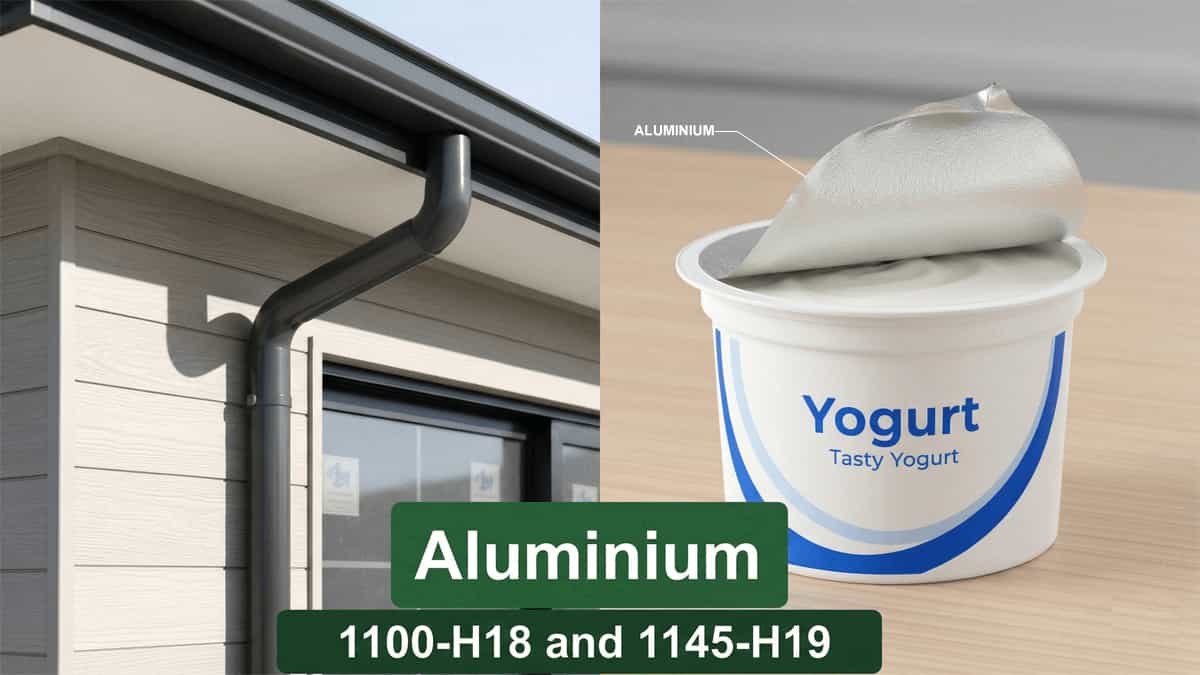
- 1100: The most widely used grade. Contains 99.00% min Al, with Fe and Si making up the majority of the remaining 1%. It offers an excellent balance of properties for general use.
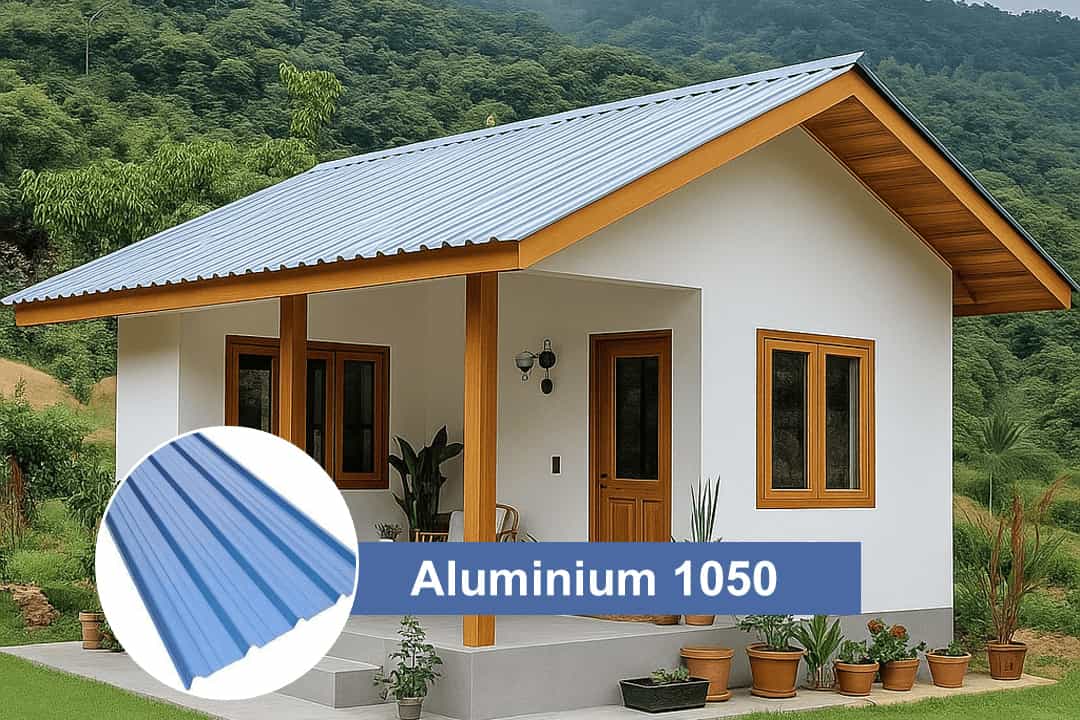
- 1050: Higher purity (99.50% min Al). Lower Fe/Si content improves electrical conductivity and formability slightly over 1100.
- 1060: Even purer (99.60% min Al). Further enhanced conductivity and corrosion resistance.
- 1070, 1080, 1085, 1090: Increasing purity levels (99.70% to 99.90% min Al), primarily used for specialized foil and electrical applications where maximum conductivity or chemical purity is critical.
- 1350: Specifically designed for electrical conductor applications (“EC Grade”). While technically a 1000-series variant (99.50% min Al), it has stricter controls on impurities detrimental to conductivity (Fe+Si max 0.10%, Cu max 0.05%) to achieve minimum 61.5% IACS. Often grouped with 1000 series but deserves specific mention for electrical use.
Core Properties: Where Purity Delivers
- Unmatched Formability: This is arguably the 1000 series’ crown jewel. Its high purity makes it exceptionally ductile and malleable. It can be easily rolled into ultra-thin foil (down to 0.006mm or less!), deeply drawn into complex shapes (cans, containers), spun, stamped, and bent without cracking. This makes it ideal for intricate fabrication.
- Superior Corrosion Resistance: Pure aluminium naturally forms a tenacious, self-healing oxide layer (Al₂O₃) when exposed to air. The minimal alloying elements in the 1000 series mean fewer sites for potential galvanic corrosion. It exhibits outstanding resistance to atmospheric corrosion, many chemicals (especially oxidizing acids), and food products. It’s widely used in marine environments and harsh chemical settings.
- High Thermal and Electrical Conductivity: Purity directly benefits conductivity. While not matching copper, the 1000 series offers excellent thermal conductivity (approx. 220-235 W/m·K for pure grades) and high electrical conductivity:
- 1100: ~59% IACS
- 1050: ~61% IACS
- 1060: ~62% IACS
- 1350: 61.5%+ IACS (guaranteed min for electrical conductors)
This makes it vital for heat exchangers and electrical applications where high strength isn’t the primary requirement.
- Excellent Workability: Easy to machine (though it can be gummy, requiring sharp tools and lubricants), weld (especially using TIG, MIG, resistance welding), braze, and solder. Its softness facilitates joining processes.
- High Reflectivity: Pure aluminium offers excellent reflectivity to both visible light and radiant heat (up to 95% for infrared), making it invaluable for lighting fixtures, thermal insulation (building, cryogenics), and decorative applications.
- Non-Toxic and Hygienic: Its inertness and smooth, non-porous surface make it ideal for food and beverage packaging, processing equipment, and pharmaceutical applications. It doesn’t impart taste or odour.
- Attractive Aesthetic: A bright, silvery appearance that can be easily anodized to create durable, decorative finishes in a wide range of colours, or chemically brightened for high reflectivity.
- Lightweight: Inherently low density (2.70 g/cm³).
Key Tempers: Shaping Performance
Properties are heavily influenced by temper, achieved primarily through cold working (strain hardening):
- O (Annealed): The softest state. Maximum formability and ductility, lowest strength. Used for deep drawing and severe forming operations.
- H1x (Strain Hardened Only): Strength increased solely by cold working.
- H12, H14, H16, H18: Increasing levels of cold work, leading to higher strength and hardness but reduced ductility. H18 is “full hard”.
- H2x (Strain Hardened and Partially Annealed): Cold worked beyond the desired level, then partially annealed to achieve specific properties. Less common for 1000 series.
- H3x (Strain Hardened and Stabilized): Cold worked and then stabilized by a low-temperature heat treatment to prevent age softening. Important for applications requiring stability at slightly elevated temperatures.
Ubiquitous Usage: The Pure Aluminium Touchpoint
Aluminium 1000 series is everywhere, often unseen but essential:
- Packaging:
- Foil: The dominant application. Used for food wrapping, blister packs, pharmaceutical packaging, aseptic cartons (laminated), capacitors, insulation.
- Beverage Can Bodies: Primarily alloy 1050 or 1070 for its formability and compatibility with the can-making process (DWI – Draw and Wall Ironing).
- Food Containers & Closures: Trays, lids, tubes, flexible packaging laminates.
- Electrical:
- Overhead Power Conductors: Alloy 1350 is the standard for AAC (All Aluminium Conductor) and AAAC (All Aluminium Alloy Conductor – though AAAC uses 6xxx alloys).
- Busbars (Lower Current): Where ultra-high strength isn’t required, 1050/1060/1350 are used.
- Transformer Windings, Cables, Magnet Wire.
- Heat Transfer:
- Heat Exchangers: HVAC&R coils, automotive radiators (historically, now largely 3xxx), heater cores. High thermal conductivity and corrosion resistance are key.
- Heat Sinks: For electronics where maximum thermal performance is needed, often 1050/1070/1100.
- Cooking Utensils: Pots, pans, baking trays (often with cladding).
- Chemical & Process Industries:
- Tanks, Vessels, Piping: Handling chemicals (nitric acid, hydrogen peroxide), storage, processing. Grades like 1060/1100.
- Refrigeration Systems.
- Architectural & Decorative:
- Anodized Trim & Extrusions: Facades, window frames (less structural, more decorative), signage, nameplates. Excellent anodizing response.
- Reflective Insulation: Building wraps, radiant barriers.
- Light Fittings.
- General Fabrication:
- Sheet Metal Work: Gutters, downspouts, flashing, decorative panels.
- Signage.
- Spinnings, Stampings, Deep Drawn Parts.
Why Choose 1000 Series? Comparing the Competition
- vs. Other Aluminium Alloys: When maximum formability (especially deep drawing), corrosion resistance, thermal/electrical conductivity, or weldability are paramount, and high strength is not required, 1000 series wins. Alloys like 3003 (better strength, slightly lower formability/corrosion resistance) or 5052 (much higher strength, good corrosion resistance, lower formability/conductivity) are chosen when those properties are needed.
- vs. Steel: Offers superior corrosion resistance (without coating), lighter weight (1/3 the density), better thermal/electrical conductivity, and non-magnetic properties. Steel provides vastly higher strength and lower cost in many forms.
- vs. Copper: Significantly lower cost and weight (1/3 the density), better corrosion resistance in many environments. Copper offers superior electrical and thermal conductivity and higher strength (especially work-hardened copper). 1000 series provides a cost-effective alternative where absolute maximum conductivity isn’t critical.
- vs. Plastics: Offers higher temperature resistance, impermeability (to gases/moisture), better thermal conductivity, rigidity, and recyclability. Plastics offer lower cost for complex shapes, better impact resistance in some cases, and electrical insulation.
Sourcing and Standards
Aluminium 1000 series is produced globally by primary aluminium producers and rolling mills in vast quantities. Key standards include:
- ASTM:
- B209: Standard Specification for Aluminum and Aluminum-Alloy Sheet and Plate.
- B210: Standard Specification for Aluminum and Aluminum-Alloy Drawn Seamless Tubes.
- B211: Standard Specification for Aluminum and Aluminum-Alloy Bar, Rod, and Wire.
- B491: Standard Specification for Aluminum and Aluminum-Alloy Extruded Round Tubes for General-Purpose Applications.
- B483: Standard Specification for Aluminum and Aluminum-Alloy Drawn Tube for General Purpose Applications.
- EN Standards: EN 485 (Sheet/Plate), EN 573 (Chemical Composition Designations), EN 754 (Bars), etc. Common grades include EN AW-1050A, EN AW-1070A, EN AW-1200, EN AW-1350.
- ISO Standards: ISO 209 (Chemical Composition), ISO 6361 (Wrought Sheet/Plate).
- JIS Standards: JIS H 4000 (Sheets/Plates/Strips), e.g., A1100, A1070.
Sustainability: The Pure Cycle
The 1000 series embodies aluminium’s sustainability credentials. It is infinitely recyclable without degradation of its core properties. Recycling aluminium requires only about 5% of the energy needed for primary production. The vast majority of aluminium ever produced is still in use today, with recycled content (post-consumer and post-industrial scrap) forming a significant portion of new 1000 series products, especially in packaging and extrusions. Its lightweight nature further reduces emissions throughout the product lifecycle.
The Future: Enduring Relevance
Despite the proliferation of sophisticated alloys, the fundamental properties of commercially pure aluminium ensure the 1000 series remains irreplaceable. Key growth drivers include:
- Sustainable Packaging: Increasing demand for recyclable, lightweight packaging solutions (foil, cans, laminates) to replace plastics.
- Electrification & Renewables: Continued reliance on 1350 for power transmission and distribution infrastructure expansion for EVs, grids, and renewables.
- Energy Efficiency: Use in heat exchangers and reflective insulation to improve HVAC&R and building energy performance.
- Advanced Applications: Ultra-high purity grades (1090+) in electronics, capacitors, and specialized optics.
Aluminium 1000 series is the canvas upon which much of modern industry and daily life is painted. Its unparalleled formability, exceptional corrosion resistance, excellent conductivity, and inherent recyclability make it a material of quiet, pervasive importance. From the foil preserving your food and the can holding your drink to the wires carrying power and the heat exchangers cooling your environment, pure aluminium touches countless aspects of existence. It may lack the exotic allure of high-performance alloys, but its fundamental purity and versatility ensure it will continue to be a cornerstone material, enabling innovation and sustainability across diverse sectors for generations to come. It is the indispensable workhorse of the aluminium world.
Related Articles
Featured

You May Also Like
Laminated Glass: Why It’s Quieter, Safer—and Still Not Unbre…

Queensland’s Secret to Beating the Heat? These Window Awning…
Aluminium Sulfate (Al₂(SO₄)₃): The Complete Guide
Best Storm Doors for Harsh Winters: Heavy-Duty Options for W…
Why Is Aluminium Used in Cables? The Advantages Over Copper …