The Quintessential Commercially Pure Workhorse
While high-strength alloys capture headlines, Aluminum 1100 quietly forms the backbone of countless everyday applications. As the most widely used grade within the commercially pure 1000 series (99.00% minimum aluminum), 1100 exemplifies the core strengths of unalloyed aluminum: exceptional formability, superb corrosion resistance, high thermal and electrical conductivity, and excellent workability. It’s the versatile, reliable foundation upon which vast segments of industry are built.
Composition: Embracing Simplicity
Aluminum 1100’s power lies in its purity and minimal alloying:
- Aluminum (Al): 99.00% minimum (typically 99.0-99.3%).
- Primary Impurities:
- Iron (Fe): 0.40 – 1.00% (Adds slight strength but reduces conductivity).
- Silicon (Si): 0.20 – 0.60% (Also adds slight strength, reduces conductivity).
- Copper (Cu): 0.05 – 0.20% (Trace amounts, residual).
- Other Elements (Mn, Zn, Mg, Ti, Cr, etc.): Present only in very small, strictly limited quantities (usually < 0.05% each, < 0.15% total).
This simple composition, dominated by aluminium with controlled levels of Fe and Si, unlocks its defining properties. It lacks the intentional strengthening additions found in alloys like 6061 or 5052.
Core Properties: The Strengths of Purity
- Outstanding Formability (Ductility & Malleability): This is 1100’s hallmark. Its high purity makes it incredibly soft and ductile, especially in the annealed (O) temper.
- Deep Drawing: Excels in severe forming operations like deep drawing (e.g., cookware, reflectors, containers).
- Spinning: Ideal for spun shapes (lampshades, funnels).
- Stamping & Bending: Easily stamped and bent without cracking.
- Rolling: Can be rolled into thin sheets and foil (though ultra-thin foil often uses purer grades like 1145/1235).
- Superior Corrosion Resistance: Pure aluminium naturally forms a protective, self-healing oxide layer (Al₂O₃). The low alloy content minimizes sites for galvanic corrosion. 1100 exhibits:
- Excellent resistance to atmospheric corrosion (including marine environments).
- Good resistance to a wide range of chemicals, particularly oxidizing acids like nitric acid.
- Excellent resistance to food products and many organic chemicals.
- Its corrosion resistance is generally superior to many stronger aluminum alloys.
- High Thermal and Electrical Conductivity: Purity maximizes conductivity:
- Electrical Conductivity: ~59% IACS (International Annealed Copper Standard). While lower than purer 1000-series grades (e.g., 1350 EC grade at 61.5%+), it’s still significantly higher than most other aluminum alloys and vastly superior to steel. Suitable for many electrical applications where ultra-maximum conductivity isn’t critical.
- Thermal Conductivity: ~222 W/m·K. Excellent for heat transfer applications like heat exchangers, heat sinks, and cookware.
- Excellent Workability: Easy to machine (requires sharp tools and lubricants to prevent “gumminess”), weld (TIG, MIG, Resistance Welding), braze, and solder. Its softness facilitates joining and fabrication.
- High Reflectivity: Offers excellent reflectivity to both visible light (up to ~80%) and radiant heat (up to ~95%), making it valuable for lighting fixtures, thermal insulation (reflective barriers), and decorative finishes.
- Non-Toxic & Hygienic: Inert and non-absorbent, making it safe for direct food contact (pots, pans, packaging components), pharmaceutical applications, and brewing equipment. Doesn’t impart taste or odor.
- Attractive Appearance: Bright, silvery finish that takes well to polishing, chemical brightening, and anodizing for decorative or protective coatings.
- Lightweight: Density of 2.71 g/cm³ (approx. 1/3 that of steel).
Key Tempers: Tailoring Softness to Need
1100’s properties are highly dependent on temper, primarily achieved through cold working:
- O (Annealed): The softest state. Maximum formability and ductility, lowest strength (Tensile ~90 MPa, Yield ~35 MPa). Essential for deep drawing and severe forming.
- H12: Quarter Hard. Slight cold work after annealing. Moderate strength increase (Tensile ~100 MPa, Yield ~95 MPa), good formability.
- H14: Half Hard. Moderate cold work. (Tensile ~115 MPa, Yield ~105 MPa). Balance of strength and formability for many sheet applications.
- H16: Three-Quarter Hard. Significant cold work. (Tensile ~130 MPa, Yield ~125 MPa). Higher strength, reduced formability.
- H18: Full Hard. Maximum practical cold work. (Tensile ~150 MPa, Yield ~145 MPa). Highest strength and hardness, minimal ductility. Used where stiffness is needed without heat treatment.
Where Aluminum 1100 Shines: Ubiquitous Applications
1100’s unique blend of properties makes it indispensable across diverse sectors:
- Sheet Metal Fabrication:
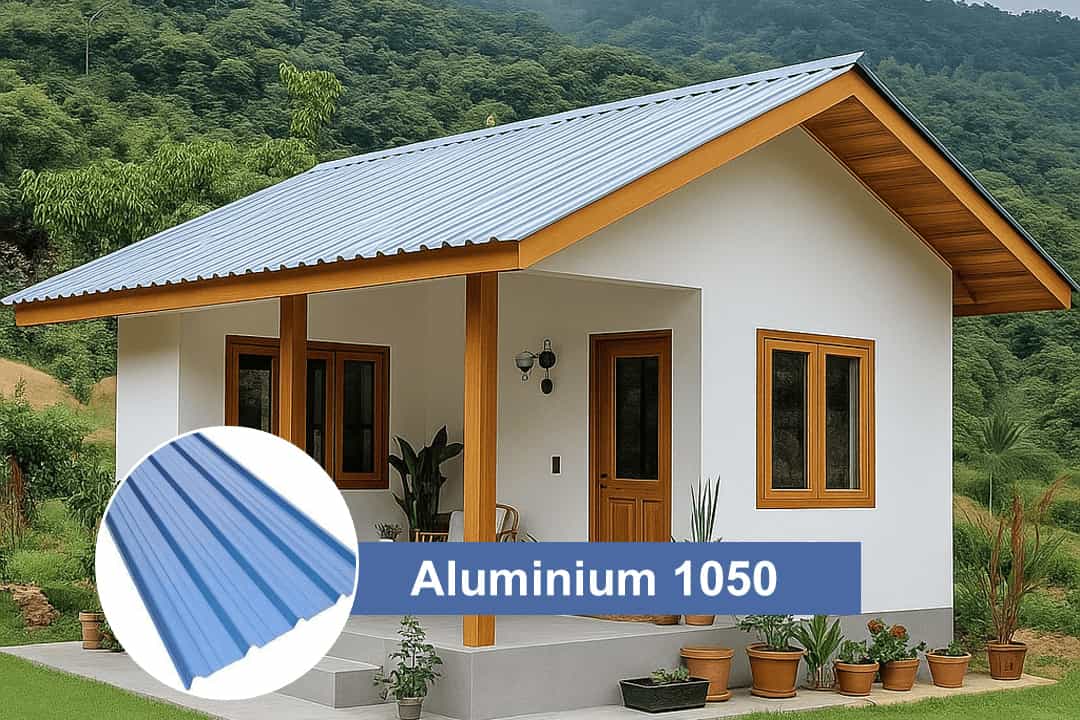
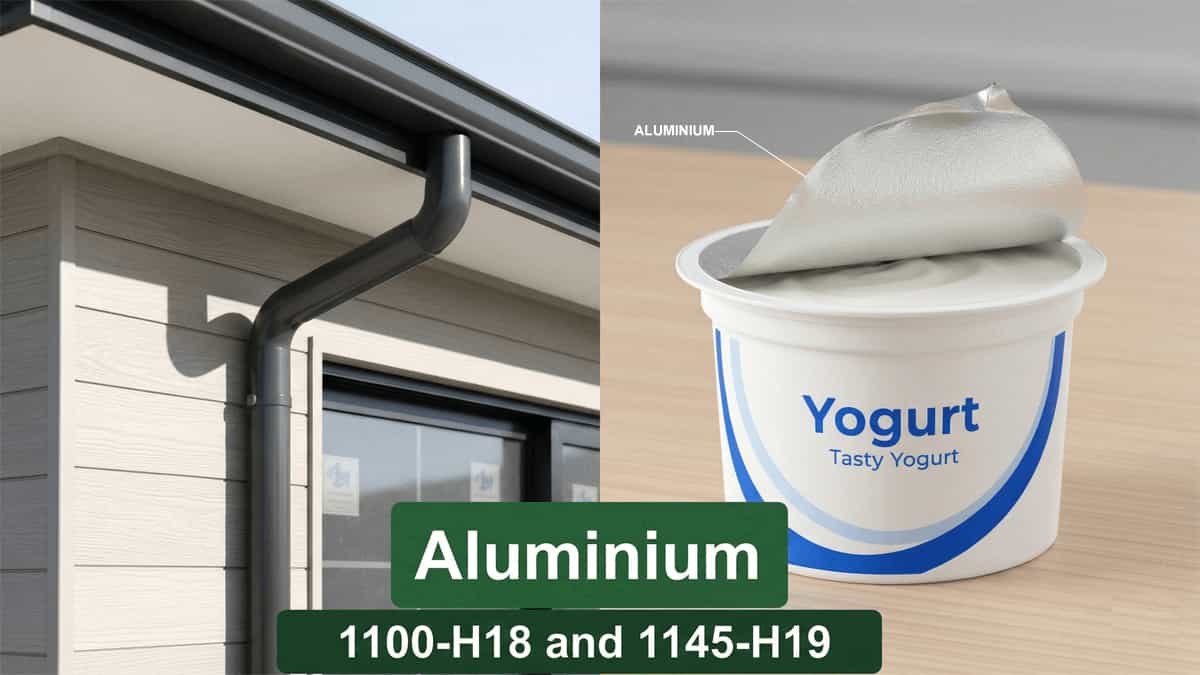
- Architectural: Roofing, flashing, gutters, downspouts, soffits, decorative trim (often anodized).
- Signage: Nameplates, tags, illuminated signs (reflectors).
- HVAC: Dampers, decorative grilles.
- Packaging & Containers:
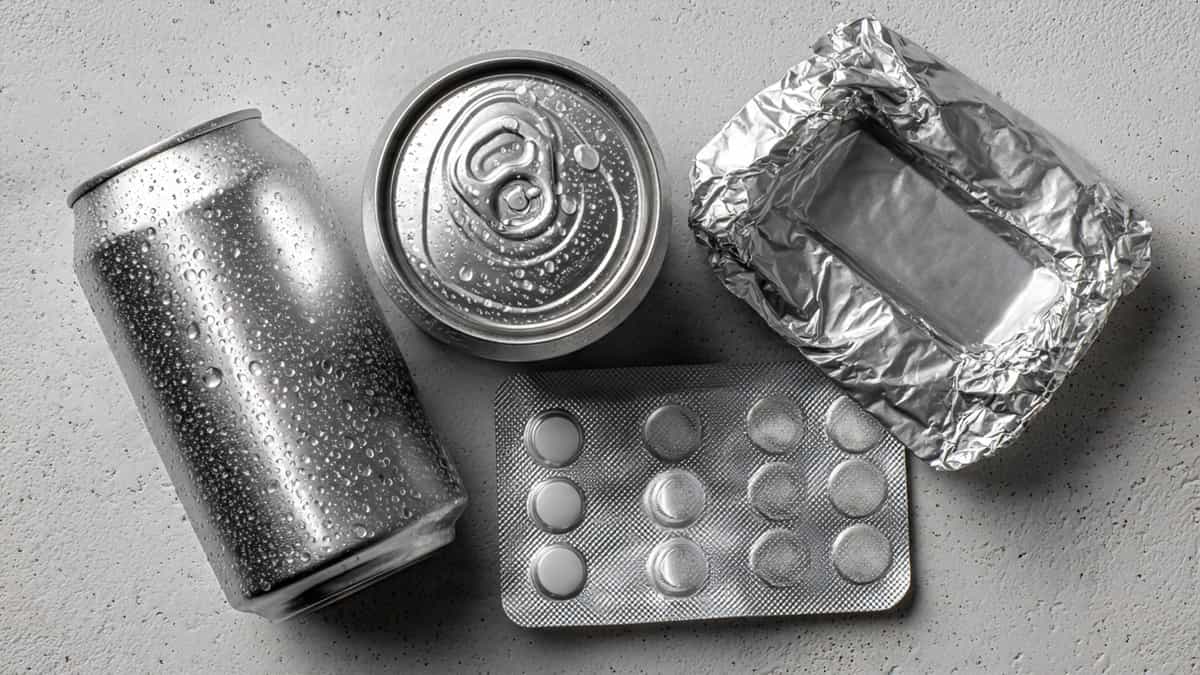
- Rigid Containers: Cooking utensils (pots, pans – often clad with other alloys), trays, baking sheets, bottle caps, closures.
- Foil Stock: Used for thicker foil applications like semi-rigid containers, foil tape backings, bottle seals (lids). (Ultra-thin flexible foil typically uses purer alloys).
- Chemical & Process Industries:
- Tanks, Vessels, Piping: Handling chemicals like nitric acid, hydrogen peroxide, acetic acid, and other products where corrosion resistance is paramount. Linings for steel tanks.
- Brewing & Distilling: Mash tuns, fermenters (due to corrosion resistance and non-reactivity).
- Refrigeration Systems: Evaporator plates, tubing.
- Heat Transfer:
- Heat Exchangers: Fin stock and tube for applications where maximum corrosion resistance and formability are prioritized over the slightly higher strength of 3003. (e.g., some HVAC coils, industrial coolers).
- Heat Sinks: For electronics where thermal conductivity and ease of forming complex fin shapes are key, and high strength is secondary.
- Electrical:
- Busbars (Low/Medium Current): Where high conductivity is needed, and structural loads are minimal.
- Conductors: Wiring, cable sheathing.
- Transformer Parts.
- Lighting Components: Reflectors, housings.
- General Manufacturing:
- Spinnings: Lampshades, reflectors, funnels, covers.
- Stamped Parts: Gaskets, washers, brackets, decorative items.
- Decorative Trim & Finishes: Easily polished, brushed, or anodized.
Why Choose 1100? The Trade-Offs
- Strengths: Unmatched formability (O temper), excellent corrosion resistance, high thermal/electrical conductivity, ease of fabrication/welding, non-toxic, attractive appearance, recyclability.
- Limitations: Relatively low strength (even in H18 temper), limited mechanical properties at elevated temperatures (>150°C), lower hardness (susceptible to scratching/denting), not heat-treatable for strengthening.
Comparing Alternatives:
- vs. Purer 1000 Series (e.g., 1050, 1060): 1100 has slightly lower conductivity and slightly lower corrosion resistance due to higher Fe/Si. However, it offers marginally higher strength (due to Fe/Si) and is often more readily available and cost-effective for general sheet applications. Choose purer grades for maximum conductivity (electrical conductors) or critical corrosion resistance.
- vs. 3003: 3003 (Al-Mn alloy) offers significantly higher strength (especially in H tempers) while maintaining good formability and corrosion resistance. It’s the dominant alloy for heat exchanger fins. Choose 3003 when higher strength is needed; choose 1100 for maximum formability or slightly better corrosion resistance in some environments.
- vs. 5052: 5052 (Al-Mg alloy) offers much higher strength, excellent corrosion resistance (especially marine), and good formability (though less than 1100-O). Choose 5052 for structural parts or marine applications requiring strength; choose 1100 for severe forming or where maximum conductivity is needed.
- vs. Steel: Superior corrosion resistance (no coating needed), lighter weight (1/3 density), better thermal/electrical conductivity, non-magnetic. Steel offers vastly higher strength and lower cost for many structural applications.
- vs. Copper: Significantly lower cost and weight (1/3 density), better corrosion resistance in many environments. Copper offers superior conductivity and higher strength. 1100 is a cost-effective alternative where absolute max conductivity isn’t critical.
Sourcing and Standards
Aluminum 1100 is produced globally in massive quantities as sheet, plate, coil, foil, rod, bar, tube, and wire by primary producers and rolling mills.
Key Standards:
- ASTM:
- B209: Standard Specification for Aluminum and Aluminum-Alloy Sheet and Plate (Covers 1100 sheet/plate).
- B210: Standard Specification for Aluminum and Aluminum-Alloy Drawn Seamless Tubes.
- B211: Standard Specification for Aluminum and Aluminum-Alloy Bar, Rod, and Wire.
- B483: Standard Specification for Aluminum and Aluminum-Alloy Drawn Tube for General Purpose Applications.
- B491: Standard Specification for Aluminum and Aluminum-Alloy Extruded Round Tubes for General-Purpose Applications.
- EN (Europe): EN 485 (Sheet/Plate), EN 573-3 (Chemical Composition – Designation EN AW-1100), EN 754 (Bars).
- ISO: ISO 209 (Chemical Composition – Designation Al99.0Cu), ISO 6361 (Wrought Sheet/Plate).
- JIS (Japan): JIS H 4000 (Sheets/Plates/Strips – Designation A1100).
Sustainability: The Pure Cycle Champion
Like all aluminum, 1100 is infinitely recyclable without loss of its core properties. Recycling requires only ~5% of the energy needed for primary production. It boasts a high recycled content potential, particularly from post-industrial scrap in fabrication plants and post-consumer packaging scrap. Its lightweight nature further reduces transport emissions. Choosing 1100 contributes to resource efficiency and circular economy goals.
The Future: Enduring Relevance
Despite the constant development of new alloys, Aluminum 1100’s fundamental strengths ensure its continued importance:
- Foundation for Fabrication: Remains the go-to material for sheet metal shops requiring maximum formability.
- Chemical Processing: Its reliable corrosion resistance secures its place in tanks, piping, and linings.
- Sustainable Packaging: Plays a role in rigid containers and foil laminates as alternatives to plastics.
- Heat Management: Continues as a viable choice for heat sinks and specific heat exchanger applications where corrosion resistance is paramount.
- Decorative & Architectural: Its excellent anodizing response and appearance guarantee use in trim and finishes.
Aluminum 1100 is the embodiment of commercially pure aluminum’s practical virtues. It may not boast the highest strength or the ultimate conductivity, but its unparalleled formability, exceptional corrosion resistance, good conductivity, ease of fabrication, and inherent recyclability make it an indispensable workhorse.
From the flashing on a roof and the pot on your stove to the chemical tank in a factory and the reflector in a light fixture, 1100 performs reliably in countless roles. It is the versatile, foundational alloy that quietly enables modern manufacturing and daily life, proving that sometimes, purity and simplicity are the ultimate strengths.