
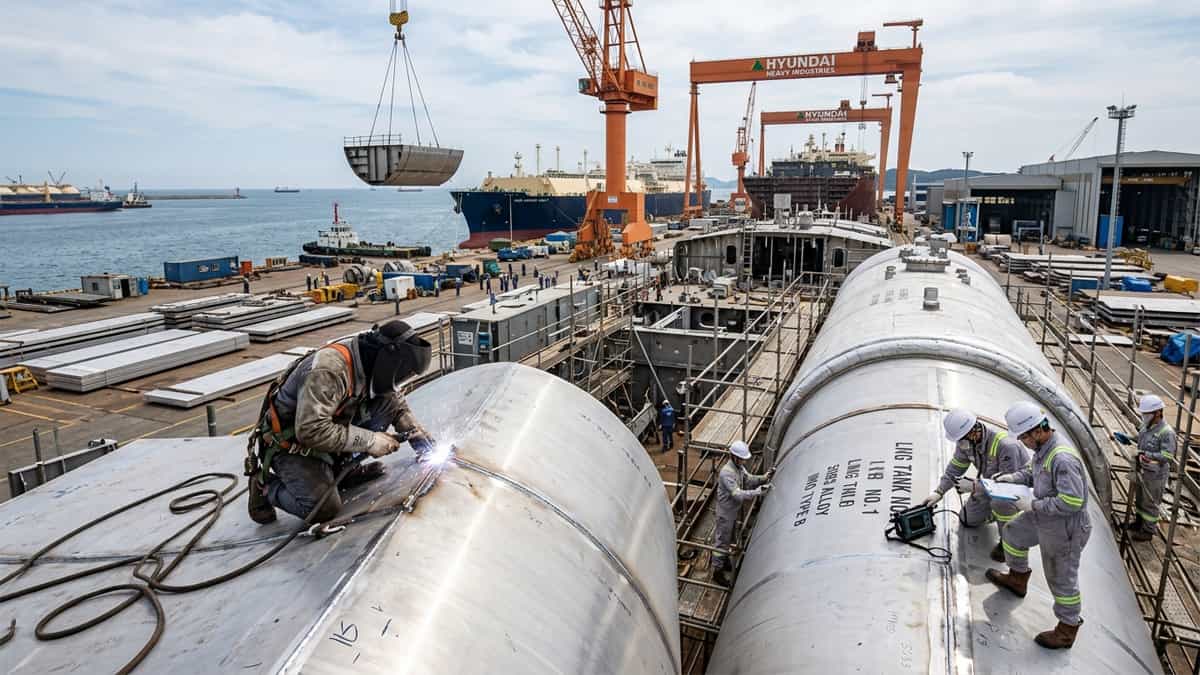
Aluminium 5083 – also known as Aluminum 5083 – is a non‑heat treatable aluminium‑magnesium alloy with the highest strength among the non‑heat treatable alloys. Containing 4.0–4.9% magnesium, 5083 aluminium offers exceptional corrosion resistance, outstanding weldability, and superior performance at cryogenic temperatures. It is the material of choice for heavy‑duty marine structures, shipbuilding, pressure vessels, and any application that demands high strength without heat treatment – from Arctic‑class vessels to liquefied natural gas (LNG) tanks.
What is Aluminium 5083?
Aluminium alloy 5083 is the flagship of the 5xxx series (aluminium‑magnesium). With a magnesium content of 4.0–4.9% – the highest in the standard 5xxx series – 5083 delivers tensile strength comparable to some heat‑treatable alloys while retaining the excellent corrosion resistance, weldability, and formability that characterise the 5000 family. Unlike 6061 or 7075, 5083 cannot be heat treated; its strength comes from solid solution strengthening (magnesium dissolved in aluminium) and cold work (strain hardening).
What makes 5083 truly exceptional is its performance in extreme environments. It maintains its toughness and strength down to cryogenic temperatures (as low as –270°C) without becoming brittle – a property that has made it the standard for LNG carriers, Arctic‑capable ships, and cryogenic pressure vessels. At the same time, its superior corrosion resistance in seawater rivals that of marine‑grade alloys, making 5083 the workhorse of the global shipbuilding industry.
Key Characteristics at a Glance:
| Property | Value |
|---|---|
| Density | 2.66 g/cm³ |
| Melting Range | 570 – 640 °C |
| Thermal Conductivity | 117 – 121 W/m·K |
| Modulus of Elasticity | 71.0 GPa |
| Electrical Resistivity | 29 – 34% IACS |
Data compiled from industry specifications
Chemical Composition of Aluminium 5083
Aluminium 5083’s exceptional properties are rooted in its carefully controlled composition. The high magnesium content (4.0–4.9%) is the primary strengthener. The manganese (0.4–1.0%) improves corrosion resistance and adds moderate solid‑solution strengthening. Chromium (0.05–0.25%) significantly enhances resistance to stress‑corrosion cracking – critical for welded structures in marine environments. The low iron and silicon limits ensure good ductility and weldability.
| Element | Percentage (%) |
|---|---|
| Aluminum (Al) | Balance |
| Magnesium (Mg) | 4.00 – 4.90 |
| Manganese (Mn) | 0.40 – 1.00 |
| Chromium (Cr) | 0.05 – 0.25 |
| Iron (Fe) | ≤0.40 |
| Silicon (Si) | ≤0.40 |
| Zinc (Zn) | ≤0.25 |
| Titanium (Ti) | ≤0.15 |
| Copper (Cu) | ≤0.10 |
| Others (Each) | ≤0.05 |
Source: ASTM B209 / EN 573‑3
Key Properties of Aluminium 5083
💪 Highest Strength Among Non‑Heat Treatable Alloys
This is the defining feature of 5083. In the H116 and H321 tempers (the most common for marine use), 5083 delivers:
- Ultimate Tensile Strength: 290 – 360 MPa (42–52 ksi)
- Yield Strength (0.2%): 215 – 260 MPa (31–38 ksi)
- Elongation: 10 – 16%
For comparison, the popular marine alloy 5052‑H32 has a typical tensile strength of only 215–250 MPa. 5083 is approximately 30–40% stronger than 5052 while still being non‑heat treatable and readily weldable.
🌊 Superior Corrosion Resistance – Especially Seawater
Aluminium 5083 offers excellent resistance to corrosion in marine atmospheres and seawater – one of the best among all aluminium alloys. The high magnesium content promotes a stable, self‑healing oxide film that protects against:
- Uniform corrosion in saltwater
- Pitting corrosion – minimal even after years of immersion
- Intergranular corrosion – when properly processed (H116/H321 tempers are specifically designed to resist intergranular attack)
“5083 is one of the most corrosion‑resistant aluminium alloys available for seawater service. It is widely specified for ship hulls, superstructures, and offshore platforms.”
❄️ Exceptional Cryogenic Performance – A Unique Advantage
Unlike many structural materials that become brittle at low temperatures, 5083 actually becomes stronger and tougher as temperature decreases. This property is rare among metals and makes 5083 the material of choice for:
- Liquefied natural gas (LNG) tanks – service temperature around –162°C
- Liquid oxygen / nitrogen vessels – cryogenic storage
- Arctic‑class ships and offshore structures – operating in sub‑freezing waters
- Superconducting magnet housings
At cryogenic temperatures, the tensile strength of 5083 can exceed 400 MPa while retaining excellent ductility (15–20% elongation).
🔧 Excellent Weldability
Aluminium 5083 is readily weldable using all common methods, particularly:
- MIG (GMAW) – most common for shipbuilding
- TIG (GTAW)
- Resistance welding
The recommended filler alloy is 5183 or 5356, both of which produce weld metal with strength and corrosion resistance matching the parent metal. One important consideration: welding reduces the strength in the heat‑affected zone (HAZ) to approximately the annealed (O) temper level. Designers account for this by specifying thicker sections or using H116/H321 tempers that are less sensitive to HAZ softening.
🔨 Formability
5083 has good formability in the softer tempers (O, H111). In the strain‑hardened tempers (H116, H321, H32), formability is moderate – suitable for bending and moderate forming but not for severe deep drawing. For complex shapes, forming in the annealed (O) temper followed by final tempering (if possible) is recommended.
⚙️ Machinability
Like most 5xxx series alloys, 5083 has fair machinability (approximately 30–40% of free‑machining alloys). Best practices:
- Use carbide‑tipped tools with sharp edges
- Apply ample coolant to prevent work hardening
- Employ high cutting speeds and positive rake angles
- For precision machining, consider 6061 or 2011 instead
🔄 Common Tempers for 5083
| Temper | Description | Typical Application |
|---|---|---|
| O | Annealed – maximum formability | Complex formed parts, subsequent heat treatment not required |
| H111 | Slightly work‑hardened (less than H11) | Moderate forming, general fabrication |
| H116 | Special marine temper – strain hardened and stabilised for intergranular corrosion resistance | Ship hulls, decks, superstructures – the most common marine temper |
| H321 | Strain hardened – similar to H116 but with different stabilisation | Pressure vessels, heavy plate applications |
| H32 | Quarter hard – strain hardened and stabilised | Moderate‑strength applications requiring some formability |
| H34 | Half hard | Higher strength, limited formability |
Applications of Aluminium 5083
Aluminium 5083 is a specialist alloy for extreme environments – marine, cryogenic, and high‑corrosion. Its applications span shipbuilding, offshore energy, pressure vessels, and transportation.
⚓ Marine & Shipbuilding – The #1 Application
5083 is arguably the most widely used aluminium alloy in shipbuilding, especially for vessels that require both high strength and seawater corrosion resistance:
- Ship hulls – from patrol boats to fast ferries and cargo vessels
- Decks, bulkheads, and superstructures – lightweight and corrosion‑resistant
- Fishing vessels – trawlers, longliners, and processing ships
- Workboats, crew boats, and pilot boats
- Offshore oil & gas platforms – living quarters, helidecks, and walkways
- Subsea equipment housings – ROV components, underwater cameras
🧊 Cryogenic & LNG – The Specialist Application
The cryogenic toughness of 5083 makes it the standard alloy for liquefied gas transport and storage:
- LNG carrier tank internal structures – operating at –162°C
- Liquid oxygen / nitrogen storage tanks
- Cryogenic pressure vessels
- Arctic‑class icebreaker hulls – combining low‑temperature toughness with seawater corrosion resistance
🏭 Pressure Vessels & Chemical Storage
5083 is used for:
- Low‑to‑medium pressure vessels (up to approximately 6–8 MPa)
- Chemical tanker cargo tanks – carrying corrosive liquids
- Process plant equipment – where both strength and corrosion resistance are required
🚛 Transport & Heavy Vehicles
- Truck and trailer fuel tanks – lightweight and durable
- Railway hopper cars – for bulk commodities
- Refrigerated container linings – where low‑temperature performance is needed
🏗️ General Fabrication & Structural
- Bridge components – especially in coastal areas
- Crane booms and outriggers – high strength with low weight
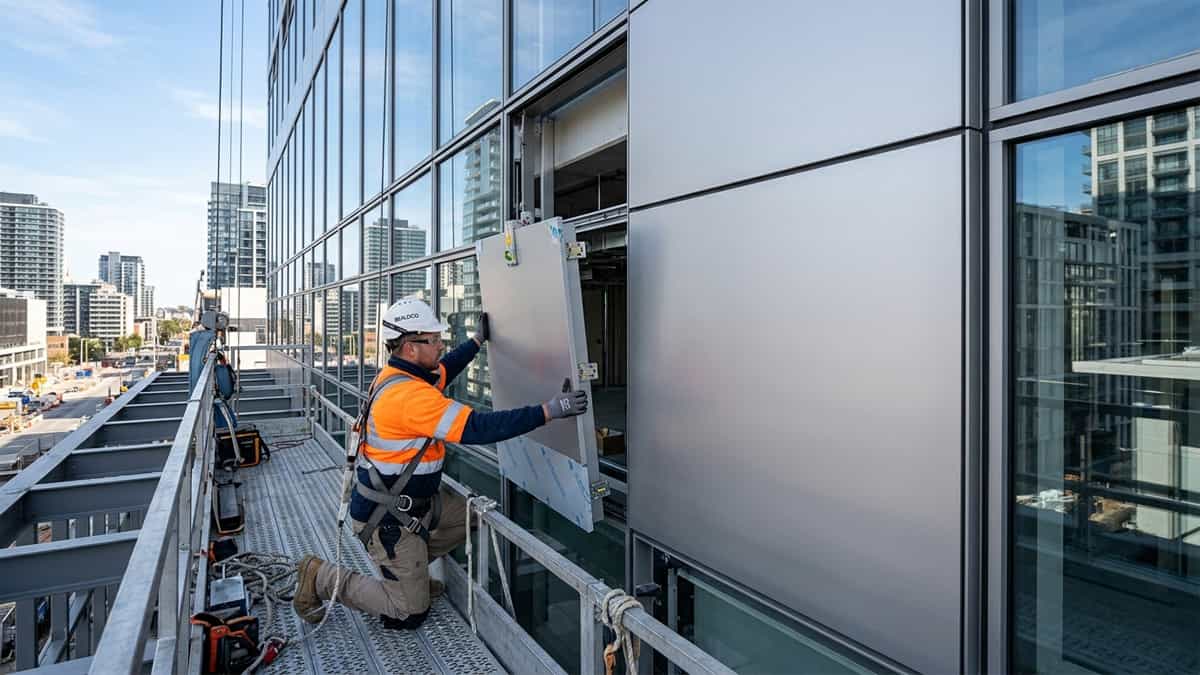
- Architectural cladding in marine environments
Aluminium 5083 vs. Other 5000 Series Alloys
Rather than a dense table, here is a practical guide to choosing between the most common marine‑grade 5xxx alloys:
| Alloy | Mg (%) | Strength (UTS) | Corrosion Resistance (Seawater) | Cryogenic Performance | Best For |
|---|---|---|---|---|---|
| 5052 | 2.2–2.8 | Medium (~240 MPa) | Very good | Good | Fuel tanks, small boats, general fabrication |
| 5754 | 2.6–3.6 | Medium‑high (~270 MPa) | Very good | Good | Automotive panels, sheet metal work |
| 5454 | 2.4–3.0 | Medium‑high (~290 MPa) | Excellent (plus elevated‑temperature strength) | Good | Pressure vessels, chemical tanks, wheels |
| 5083 | 4.0–4.9 | Highest (~330 MPa) | Excellent (best in class) | Exceptional (to cryogenic) | Heavy‑duty marine hulls, LNG tanks, offshore structures |
Pro Tip: Choose 5083 when you need the maximum strength from a non‑heat treatable alloy – for ship hulls, cryogenic vessels, and heavy marine structures. Choose 5052 or 5754 for lighter duty or when formability is more important than ultimate strength. Choose 5454 for elevated‑temperature service (65–170°C).
For a detailed, interactive side‑by‑side comparison of 5083 with any other aluminium alloy – including 5052, 5454, 6061, or 7075 – visit the Aluminium Alloy Comparison Tool. This tool allows you to compare over 40 alloy types across properties including strength, corrosion resistance, weldability, and thermal conductivity.
Fabrication & Workability Guide
🔨 Forming
5083 is moderately formable in strain‑hardened tempers (H116, H321). For severe forming operations, use the O (annealed) temper and then, if necessary, perform final strain hardening. Minimum bend radii for H116/H321 are typically 2–3× material thickness.
🔥 Welding
Excellent weldability – one of the best in the 5xxx series for high‑strength applications. Use:
- 5183 filler – best for matching 5083 strength and corrosion resistance
- 5356 filler – also suitable, widely available
- 4043 filler – not recommended for 5083 (lower strength, poor corrosion match)
Important design note: Welding reduces the strength of 5083 in the HAZ to approximately 170–200 MPa (O temper level). For critical structures, design welds with this reduced strength in mind, or use thicker sections.
⚙️ Machining
Fair machinability – significantly worse than 6061 but acceptable for most fabrication work. Use carbide tools, high speeds, and ample coolant. For extensive machining of 5083, consider using the O temper and then heat treating (though 5083 is non‑heat treatable, so cold work is the only strengthening method).
🌡️ Heat Treatment
Not heat treatable – strength is achieved only through cold work and solid solution hardening. Annealing is the only thermal process: heat to 345°C (650°F), hold, and air cool.
❄️ Cold Working
Excellent cold working capacity – the alloy can be strain hardened to significant levels. This is how H116, H321, and H32/H34 tempers are produced.
Why Choose Aluminium 5083?
✅ Advantages
- Highest strength among non‑heat treatable aluminium alloys – UTS up to 360 MPa
- Exceptional seawater corrosion resistance – best‑in‑class for marine applications
- Outstanding cryogenic performance – becomes stronger and tougher at low temperatures
- Excellent weldability – with matching 5183 filler
- Good fatigue strength – suitable for cyclic loading in ship structures
- Lightweight – density 2.66 g/cm³ (about one‑third of steel)
- Non‑heat treatable – no risk of improper heat treatment
- Fully recyclable – sustainable choice for large structures
❌ Limitations
- Lower strength than heat‑treatable alloys (6061‑T6, 7075‑T6) – but 5083 is non‑heat treatable, so no heat treatment needed
- Formability only moderate in H116/H321 tempers – complex shapes require O temper
- Machinability is fair – not suitable for precision machining without care
- Weld strength reduction – HAZ strength approaches O temper level
- Not suitable for elevated temperatures above ~65°C – strength degrades; use 5454 instead for hot service
- Susceptible to intergranular corrosion if improperly processed – always specify H116 or H321 for marine service
Final Wrap
Aluminium 5083 (Aluminum 5083) is the high‑strength champion of the 5000 series and the standard‑bearer for marine and cryogenic applications. Its combination of excellent seawater corrosion resistance, outstanding weldability, and the highest strength among non‑heat treatable alloys makes it indispensable for shipbuilding, offshore platforms, LNG carriers, and cryogenic pressure vessels.
While it cannot match the ultimate tensile strength of 6061‑T6 or 7075‑T6, 5083 offers something they cannot: non‑heat treatable, weldable strength that persists from cryogenic temperatures to moderate service. From the hull of an Arctic icebreaker to the inner tank of an LNG carrier, Aluminium 5083 delivers reliability where failure is not an option.
For engineers and fabricators working in marine, cryogenic, or high‑corrosion environments, 5083 aluminium is the proven, trusted choice. Explore its properties relative to other alloys using the Aluminium Alloy Comparison Tool.
📚 Related Articles
Deepen your understanding of aluminium alloys with these curated guides:
- Aluminium Alloy Comparison Tool – Compare 40+ aluminium alloys side by side to find the perfect material for your project
- Aluminium 5052: The Marine‑Grade Alloy for Superior Corrosion Resistance – The lighter‑duty marine alloy for fuel tanks and general fabrication
- Aluminium 5454: The Elevated‑Temperature Marine Alloy – The specialist for pressure vessels and chemical storage up to 170°C
- Aluminium 5754: The Versatile 5xxx Alloy for Automotive and Fabrication – The medium‑strength all‑rounder
- Why Is Aluminum Used for Aircraft Bodies? – Understanding aluminium’s role in extreme environments
Related Articles


Featured


You May Also Like
Aluminium 5005 (Aluminum 5005): The Architect’s Alloy for Su…

Why Aluminum Awning Windows Are Perfect for Living Rooms, Ki…

If You Have an Awning Window, You’re Probably Underestimatin…

Which Mosquito Net is Best for Aluminium Sliding Frame?
Semi-Unitized vs Unitized Curtain Wall: What’s the Dif…
