The High-Temperature Specialist: Forged for Power and Precision
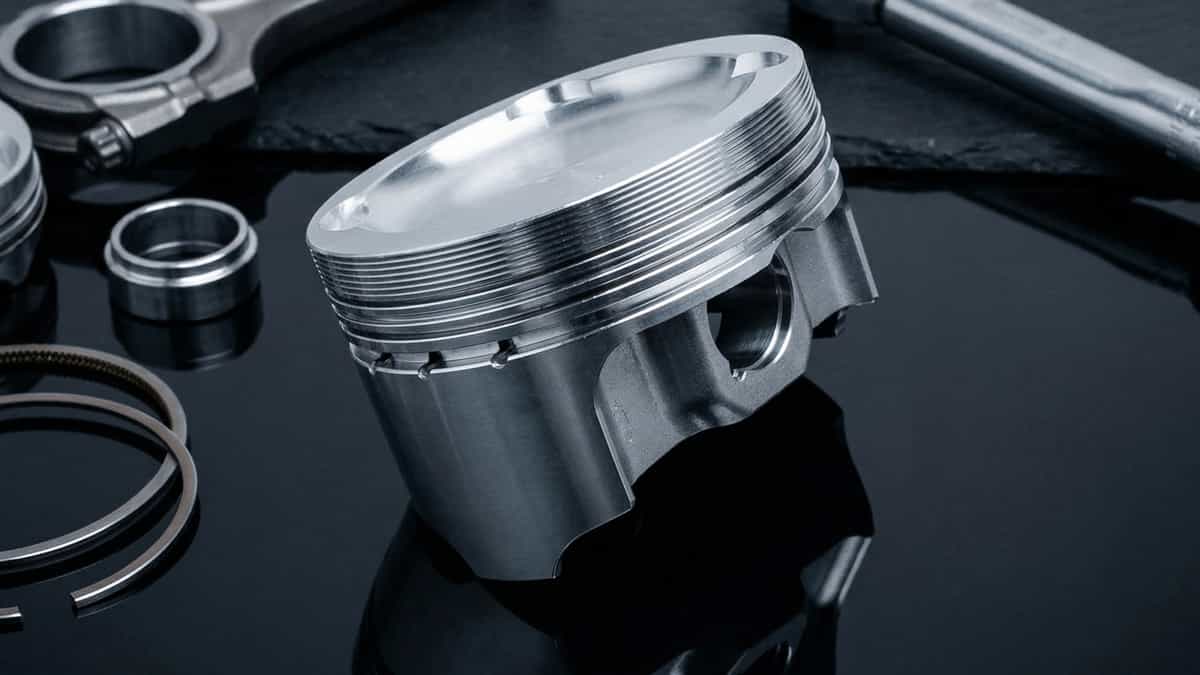
In the diverse family of aluminium alloys, most are designed for general-purpose fabrication, corrosion resistance, or structural strength. Aluminum 4032 occupies a far more specialized niche. As a wrought alloy within the 4000 series (aluminium-silicon system), 4032 is specifically engineered for one of the most demanding applications in mechanical engineering: high-performance pistons and components that must maintain dimensional stability under extreme thermal stress.
Unlike its 4000-series cousins 4043 and 4047, which serve primarily as filler metals, aluminium 4032 is a high-strength, heat-treatable wrought alloy designed to be the component itself. Its unique composition—combining high silicon with additions of copper, magnesium, and nickel—delivers a remarkable balance of low thermal expansion, wear resistance, and elevated-temperature strength that has made it the material of choice for forged pistons in racing engines, turbocharged vehicles, and aerospace applications for decades.
Within the 4000 series, 4032 stands apart as the alloy with the highest tensile strength, achieved through careful alloying and heat treatment. It represents the pinnacle of what aluminium‑silicon alloys can achieve when optimized for mechanical performance rather than weldability.
Composition and Metallurgy: Engineered for Heat
Aluminium 4032 is a complex, multi‑element alloy where each addition serves a specific purpose in enhancing high‑temperature performance. Its composition places it at the high‑silicon end of the 4000 series, approaching the eutectic point (~12.6% Si), which explains its exceptional fluidity during the initial casting of the forging billet.
Primary Composition (Aluminum Association / EN Standards):
| Element | Content (%) | Role in the Alloy |
|---|---|---|
| Aluminum (Al) | 81.1 – 87.2 | Base metal |
| Silicon (Si) | 11.0 – 13.5 | Primary alloying element; reduces thermal expansion, increases fluidity, improves wear resistance. Approaches the Al-Si eutectic for optimal casting characteristics. |
| Magnesium (Mg) | 0.8 – 1.3 | Forms Mg₂Si precipitates for age hardening; increases strength |
| Copper (Cu) | 0.5 – 1.3 | Solid solution strengthening; improves elevated‑temperature properties |
| Nickel (Ni) | 0.5 – 1.3 | Critical addition; forms stable intermetallic compounds, enhances high‑temperature strength, and further reduces thermal expansion |
| Iron (Fe) | 0 – 1.0 | Impurity/controlled addition |
| Zinc (Zn) | 0 – 0.25 | Impurity |
| Chromium (Cr) | 0 – 0.10 | Grain structure control |
The Metallurgical Strategy:
What makes 4032 unique is its multi‑pronged approach to high‑temperature performance:
- High Silicon (11–13.5%): Silicon particles in the aluminium matrix dramatically reduce the coefficient of thermal expansion—the alloy expands and contracts less with temperature changes than conventional aluminium. This is critical for pistons, where clearances must remain consistent from cold start to full operating temperature.
- Nickel Addition: Nickel is relatively uncommon in aluminium alloys, but in 4032 it serves a vital function. It forms intermetallic compounds that remain stable at elevated temperatures, helping the alloy retain strength when other alloys would soften.
- Copper and Magnesium: These elements enable precipitation hardening through the formation of Mg₂Si and Al₂Cu phases, providing the base strength that nickel then helps maintain at temperature.
- Wrought, Not Cast: While many piston alloys are cast, 4032 is a wrought alloy, meaning it is mechanically worked (forged) after casting. This eliminates porosity and aligns grain structure, producing components with superior fatigue resistance and reliability. For a deeper comparison of these processes: Aluminum Casting vs. Aluminium Forging Guide.
For a deeper understanding of aluminium metallurgy, explore: What is Aluminium and How Is It Made?.
Core Properties: Precision Under Pressure
1. Low Coefficient of Thermal Expansion
The most prized property of 4032 is its low thermal expansion. With a coefficient of 19.4 × 10⁻⁶/°C (20–100°C), it expands significantly less than typical aluminium alloys like 6061 (~23.6 × 10⁻⁶/°C) or 7075 (~23.2 × 10⁻⁶/°C). This ~18% reduction in thermal expansion is exactly why engine builders can run “tight” piston-to-wall clearances, reducing noise (piston slap) on cold starts and improving oil control.
2. High Strength at Elevated Temperatures
Aluminum 4032 retains a greater fraction of its room‑temperature strength at 200–300°C than most aluminium alloys, thanks to its nickel and copper additions. This makes it suitable for components that experience continuous thermal cycling.
3. Excellent Wear Resistance
The high silicon content creates hard, wear‑resistant silicon particles within the softer aluminium matrix. This provides a natural bearing surface that resists scuffing and galling against cylinder walls—a critical advantage in high-performance engines.
4. Good Forgeability
Despite its high silicon content, 4032 exhibits good hot workability and can be precision‑forged into complex shapes. Hot die forging is typically performed in the range of 510–371°C (950–700°F).
5. Moderate Corrosion Resistance with Distinctive Anodizing
While not as corrosion‑resistant as marine‑grade alloys, 4032 performs adequately in most environments. When anodized, it produces a dark gray, “sooty” or “smutty” finish because the silicon particles do not dissolve in the anodizing acid. In the racing world, this is often seen as a desirable “technical” aesthetic. For more on finishing options: Hard Anodizing vs. Architectural Anodizing.
6. High Strength Within 4000 Series
Aluminium 4032 offers the highest tensile strength among 4000‑series alloys, reaching ultimate strengths of 380–415 MPa in the T6 temper.
7. Important Limitation: Not for Cold Working
4032 is brittle at room temperature due to its high silicon content. It cannot be cold worked—attempting to cold‑bend or form a 4032 part will almost certainly result in fracture, not plastic deformation. All forming must be done hot.
Specifications and Standards
Aluminum 4032 is recognized under multiple international designations:
| Standard | Designation |
|---|---|
| AA (Aluminum Association) | 4032 |
| UNS | A94032 |
| EN | EN AW‑4032 (AlSi12,5MgCuNi) |
| BS (British) | DTD324B |
| AFNOR (French) | A‑S12UGN |
| JIS (Japanese) | A4032 |
| Chinese GB | 4A11 (LD11) |
| ASTM | B247 (forgings) |
| SAE | J454 |
| Military | QQ A‑367 |
Physical and Mechanical Properties
Physical Properties
| Property | Value |
|---|---|
| Density | 2.68 – 2.69 g/cm³ |
| Melting Range | 530 – 570 °C (990 – 1060 °F) |
| Elastic Modulus | 70 – 82 GPa |
| Poisson’s Ratio | 0.33 |
| Thermal Conductivity | 138 – 155 W/m·K |
| Coefficient of Thermal Expansion (20–100°C) | 19.4 × 10⁻⁶/°C |
| Electrical Resistivity | 4.3 – 4.99 × 10⁻⁶ ohm‑cm |
| Specific Heat Capacity | 870 – 900 J/kg·K |
Mechanical Properties – Typical Values
| Temper | Tensile Strength (MPa) | Yield Strength (MPa) | Elongation (%) | Hardness (HB) | Application |
|---|---|---|---|---|---|
| 4032‑O | 230–280 | 105–140 | 9–16 | ~60 | Annealed; maximum formability |
| 4032‑T4 | 310–350 | 200–250 | 8–12 | ~100 | Naturally aged; good formability |
| 4032‑T6 | 370–415 | 315–350 | 5–8 | 120–137 | Standard temper—peak strength for most applications |
| 4032‑T61 | 380–410 | 320–345 | 6–8 | 125–135 | Engine builder’s choice—modified quenching/aging cycle for enhanced dimensional stability |
| 4032‑T86 | 390–420 | 335–360 | 3–5 | 135–145 | Alcoa Deltalloy®; maximum wear resistance, screw machine applications |
Note: T6 is the standard temper for most forged pistons and components. T61 is often specified in high‑end racing applications where dimensional stability is critical.
Primary Applications: Where 4032 Excels
Aluminium 4032 is a specialist alloy, used almost exclusively in applications requiring its unique combination of thermal stability, wear resistance, and high‑temperature strength.
1. Automotive – Forged Pistons (The Primary Application)
4032 is the premium material for forged pistons in high‑performance internal combustion engines.
- Street/Strip Engines: The low thermal expansion allows tighter piston‑to‑cylinder clearances, resulting in quieter cold starts, better oil control, and longer engine life.
- Racing and Performance Engines: Used in naturally aspirated and turbocharged engines where thermal and mechanical loads are extreme.
- Motorcycle and Snowmobile Engines: Provides reliability in compact, high‑output powerplants.
- Diesel Engines: Suitable for moderate‑duty diesel pistons.
Why 4032 over 2618?
- 4032: Lower thermal expansion, quieter cold operation, better wear resistance. Ideal for street/strip, high‑mileage, and daily‑driven performance engines.
- 2618: Higher strength at extreme temperatures but higher thermal expansion. Requires looser cold clearances (“piston slap” when cold). Preferred for full‑race, drag‑only, or short‑duration applications.
2. Aerospace Components
The aerospace industry utilizes 4032 for components that must maintain precision under thermal cycling.
- Engine Components: Compressor parts, bushings, and fittings.
- Hydraulic System Components: Where dimensional stability under varying temperatures is critical.
- Structural Forgings: In applications requiring high strength‑to‑weight ratio with thermal stability.
For more on why aluminium dominates aerospace: Why Aluminum Works for Aircraft Parts and Airplane Parts Made from Aluminum.
3. Industrial Equipment
- Hydraulic Components: Pistons, cylinders, and valves in hydraulic systems.
- Compressor Parts: Where heat dissipation and wear resistance are required.
- Pump Components: Bushings and bearings in industrial pumps.
4. Automotive Drivetrain and Steering
- Transmission Valves
- Bushings for Rack and Pinion Steering Systems
- Master Brake Cylinders
5. Precision Machinery and Electronics
- Copier Parts: Where dimensional stability and wear resistance are needed in moving components.
- Sound Recording Devices: Precision mechanical components.
- Radio Parts.
6. Sports and Recreational Equipment
- High‑End Bicycle Components: Cranksets and derailleur parts where strength‑to‑weight ratio and stiffness are critical.
- Fishing Reel Components: Precision gears and bodies.
Looking for aluminum suppliers?
Tempers and Heat Treatment
4032 is a heat‑treatable alloy, with properties tailored through thermal processing.
| Temper | Treatment | Properties | Applications |
|---|---|---|---|
| O (Annealed) | Annealed at 413°C (775°F), controlled cooling | Soft, maximum ductility | Intermediate state for further processing |
| T4 | Solution heat‑treated + naturally aged | Good formability, moderate strength (~310 MPa UTS) | Prototyping, complex parts requiring machining before final aging |
| T6 | Solution heat‑treated + artificially aged | Maximum strength (~380–415 MPa UTS), good hardness | Standard temper for most applications—pistons, structural components |
| T61 | Solution heat‑treated + modified aging cycle | Optimized dimensional stability with excellent strength | Engine builder’s choice—high‑end racing and precision applications |
| T651 | T6 + stress‑relieved by stretching | Reduced internal stress, improved stability | Precision components requiring tight dimensional tolerances |
| T86 | Solution heat‑treated, cold worked, artificially aged | Enhanced strength, excellent wear resistance | High‑performance applications (Alcoa Deltalloy®); screw machine parts |
Heat Treatment Parameters
| Process | Temperature | Time | Cooling |
|---|---|---|---|
| Solution Heat Treatment | 510°C (950°F) | 1–12 hours (based on section thickness) | Cold water quench |
| Artificial Aging (T6) | 171°C (340°F) | 10 hours | Air cool |
| Artificial Aging (T61) | 160–170°C (320–340°F) | 8–12 hours (optimized) | Air cool |
| Annealing | 413°C (775°F) | Sufficient for thorough heating | Controlled cool at 10°C/hr to 204°C (400°F), then air cool |
Fabrication and Machining
Forming
- Hot Forging: 4032 is specifically designed for hot forging. Recommended temperature range: 510–371°C (950–700°F).
- Cold Working: Not possible—the alloy lacks sufficient ductility for cold forming operations. Attempting to cold‑bend 4032 will result in fracture.
Machinability
Aluminium 4032 exhibits good machinability, rated at approximately 70% of free‑machining brass. However, the 12% silicon content makes the alloy highly abrasive on cutting tools.
Best Practices:
- Tooling: Carbide‑tipped tools are the minimum recommended. For high‑volume production, PCD (Polycrystalline Diamond) tooling is the industry gold standard, providing significantly longer tool life and superior surface finish.
- Speeds and Feeds: Moderate cutting speeds with consistent feed rates to avoid work hardening.
- Coolant: Essential for extended operations to control temperature, evacuate chips, and reduce abrasive wear.
- Chip Formation: Produces short, brittle chips—excellent for automated machining.
- Surface Finish: Excellent finishes achievable with proper technique and sharp tooling.
Alcoa Deltalloy® 4032‑T86 is specifically formulated for screw machine applications, offering:
- Good machinability and drilling characteristics
- Excellent surface finish with polycrystalline or carbide tooling
- Superior wear resistance that may eliminate need for hard coat anodizing
Welding
4032 is weldable, but with limitations:
- Recommended Method: Inert‑gas arc welding (TIG/MIG).
- Not Recommended: Gas welding.
- Filler Selection: 4043 or 4047 fillers are typically used.
- Considerations: The high silicon content affects weldability; preheating may be beneficial for thicker sections.
For more on suitable fillers: Aluminium 4043 Alloy: Filler Wire Guide and Aluminium 4047 Alloy: Filler Wire for Brazing & Crack‑Resistant Welds.
Why Choose 4032? A Strategic Comparison
| Property / Alloy | 4032‑T6 | 4043 | 6061‑T6 | 2618‑T6 |
|---|---|---|---|---|
| Series | 4000 (Al‑Si) | 4000 (filler) | 6000 (Al‑Mg‑Si) | 2000 (Al‑Cu‑Mg) |
| Primary Use | Forged pistons, high‑temp components | Welding filler | General structural | Full‑race pistons, extreme high‑temp aerospace |
| Silicon Content | 11‑13.5% | 4.5‑6% | 0.4‑0.8% | ≤0.2% |
| Thermal Expansion (CTE) | Low (19.4) | Moderate (~22) | Higher (~23.6) | Higher (~22.5) |
| Elevated‑Temp Strength | Excellent | N/A (filler) | Good | Superior |
| Wear Resistance | Excellent | Moderate | Good | Moderate |
| Tensile Strength (MPa) | 380‑415 | 120‑200 (deposit) | 310 | 440 |
| Ductility | Low (5‑8%) | Moderate | Good | Moderate |
| Cold Start Characteristics | Quiet (tight clearance) | N/A | N/A | Piston slap (loose clearance required) |
| Anodizing Appearance | Dark gray/”smutty” | Dark (poor match) | Clear/light | Light |
| Cold Workability | None | N/A | Good | Limited |
The 4032 vs. 2618 Distinction (Critical for Automotive Readers):
| Criterion | 4032 | 2618 |
|---|---|---|
| Best For | Street/Strip, high‑mileage performance, daily‑driven engines | Full‑race, drag‑only, short‑duration applications |
| Thermal Expansion | Lower (tighter clearances, quiet cold starts) | Higher (requires looser clearances, piston slap when cold) |
| Wear Resistance | Superior (silicon particles provide natural scuff resistance) | Good (often requires additional coating) |
| High‑Temp Strength | Excellent | Superior |
| Typical Application | Turbocharged street cars, high‑performance motorcycles, moderate‑duty diesel | Top Fuel dragsters, Pro Mod, sustained extreme‑temp racing |
Choose 4032 when:
- You need a forged piston for a street/strip or daily‑driven performance engine.
- Dimensional stability under thermal cycling is critical (low thermal expansion).
- Components must resist wear without relying on coatings.
- The application involves sustained temperatures of 200–300°C.
- You require the highest strength available in a 4000‑series wrought alloy.
- Quiet cold starts and long engine life are priorities.
Consider alternatives when:
- You need a general‑purpose structural alloy (choose 6061).
- Maximum elevated‑temperature strength is required for full‑race applications (choose 2618).
- Good corrosion resistance in marine environments is primary (choose 5052 or 5083).
- Cold forming is required (4032 cannot be cold worked).
For comparison with other high‑strength alloys: Aluminium 6061‑T6: Properties, Uses & Machining Guide and Aluminium 7075: The Ultimate High‑Strength Aerospace Alloy.
Forms and Availability
Aluminum 4032 is available in multiple forms:
| Form | Typical Applications |
|---|---|
| Forgings | Most common form—pistons, connecting rods, custom components |
| Bar and Rod | Machined components, screw machine parts |
| Billets | For subsequent forging or extrusion (diameters from 140 mm to over 1000 mm) |
| Plate and Sheet | Limited availability; for specialized applications |
| Powder | Specialty applications, additive manufacturing research |
Surface Finishing
Anodizing
4032 produces a distinctive dark gray, “sooty” or “smutty” anodic coating because the silicon particles do not dissolve in the anodizing electrolyte. This finish is often considered a “technical” look in racing circles—either loved or hated.
- Color may not match other aluminium alloys used in the same assembly.
- For applications requiring a uniform appearance with other components, testing is essential.
- The hard silicon particles affect anodizing behavior and may require extended etching times.
Wear Resistance
One of 4032’s advantages is that its inherent wear resistance may eliminate the need for hard coat anodizing in many applications. The silicon particles provide natural bearing properties, reducing scuffing and galling.
Protective Coatings
When additional corrosion protection is needed, 4032 accepts:
- Paint and powder coating (with proper pretreatment)
- Conversion coatings
- Clear or dyed anodizing (with color matching challenges)
For more on finishing options: Powder Coating vs. Anodizing.
Sustainability and Recycling
Aluminium 4032 contributes to sustainability primarily through enabling lightweight, efficient internal combustion engines that reduce fuel consumption compared to heavier cast iron alternatives. As the industry transitions, its role is evolving.
Recycling Considerations:
- 4032 is fully recyclable within the aluminium recycling stream.
- The nickel content, while valuable, means 4032 scrap is typically segregated from other aluminium alloys to maintain composition control in remelting.
- In the growing market for recycled aluminium, alloys with specialty elements like nickel command attention for closed‑loop recycling in high‑performance applications.
For broader context on aluminium recycling: Aluminum Can Recycling Process and Types of Aluminum Scraps: Recycling Process.
Aluminium 4032 is not an alloy for everyday applications—it is a specialized engineering material designed for one of the most demanding environments in mechanical systems: the inside of a high‑performance engine. Its carefully balanced composition of silicon, copper, magnesium, and particularly nickel creates a material that maintains its dimensions, resists wear, and retains strength under thermal conditions that would soften conventional aluminium alloys.
For the automotive engineer designing a turbocharged street engine, the aerospace engineer specifying critical components, or the motorsports builder seeking the ideal balance between durability and performance, 4032 offers proven results backed by decades of service. It represents the sophisticated end of aluminium metallurgy—where multiple alloying elements work in concert to achieve properties that no single element could provide alone.
While composites and other advanced materials continue to emerge, 4032 remains the gold standard for forged pistons and high‑temperature precision components, proving that well‑designed aluminium alloys still have no equal in their specific niches.