Aluminium - Aluminium Magazine

Do Aluminum Cotter Pins Rust?

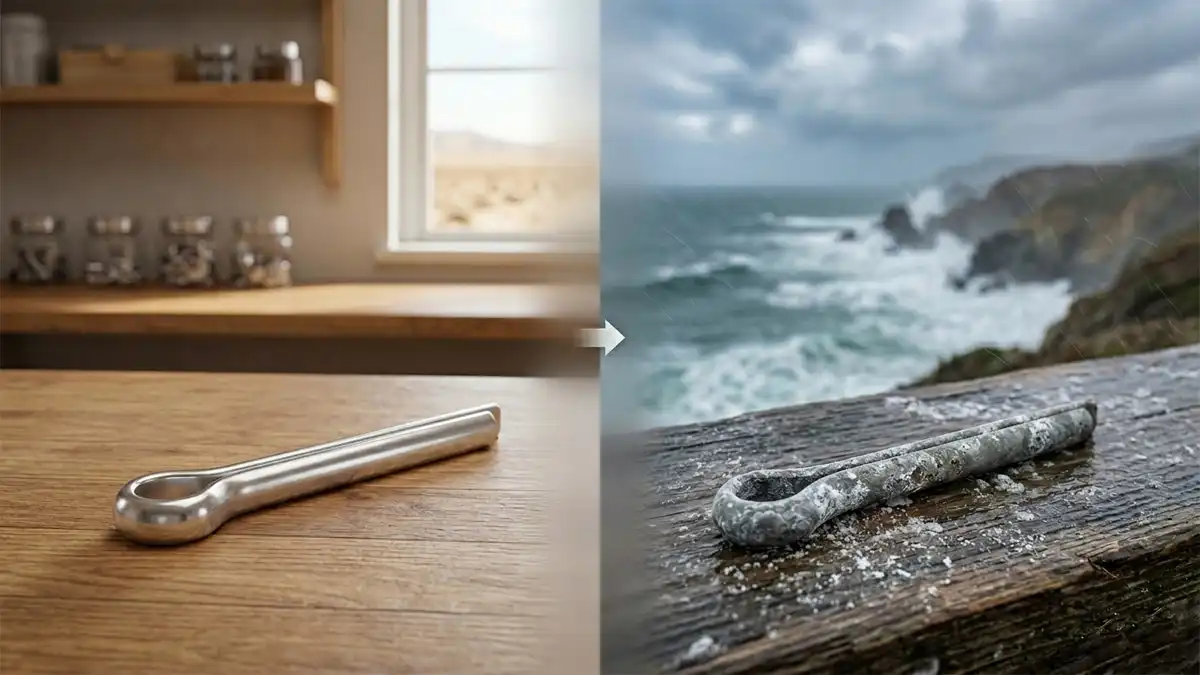
Split scene comparison of an aluminum cotter pin – pristine and dry on the left versus corroded with white patina and pitting from saltwater exposure on the right

What Happens When Aluminum Is Exposed to Moisture? To understand whether aluminum cotter pins rust, it helps to first know the difference between rust and corrosion. When aluminum is exposed to moisture, it does not rust. Instead, it undergoes oxidation. Aluminum instantly forms a very thin, hard, transparent layer of aluminum oxide (Al₂O₃) on its … Read more

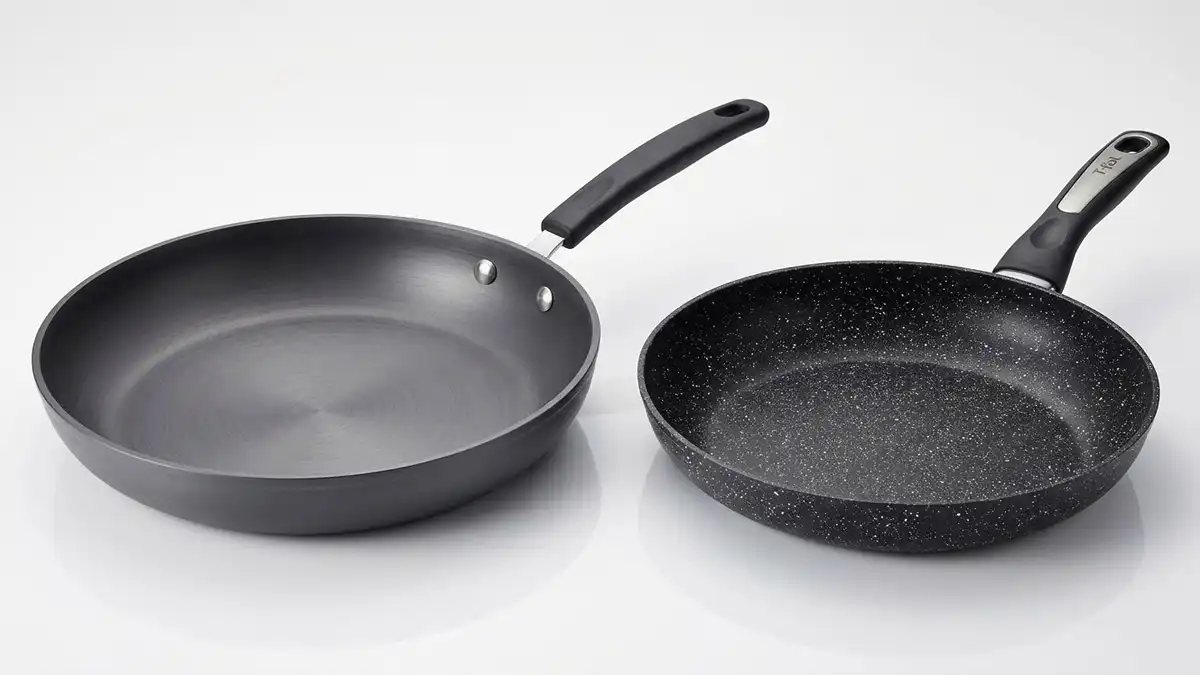
Forged Aluminum vs Hard-Anodized Aluminum Fry Pans: What’s the Real Difference?

A side-by-side comparison of a smooth dark grey hard-anodized aluminum fry pan and a textured speckled forged aluminum fry pan on a light grey studio background.

If you shop for cookware long enough, you will eventually run into two terms that sound similar but are actually describing different things: forged aluminum and hard-anodized aluminium. Many cookware brands market forged aluminium fry pans as thicker, stronger, and more durable than standard aluminium pans. At the same time, hard-anodized cookware is often promoted … Read more

Who Invented the Pop Can Lock (Ring Pull Tab)? How It Changed Soda Forever

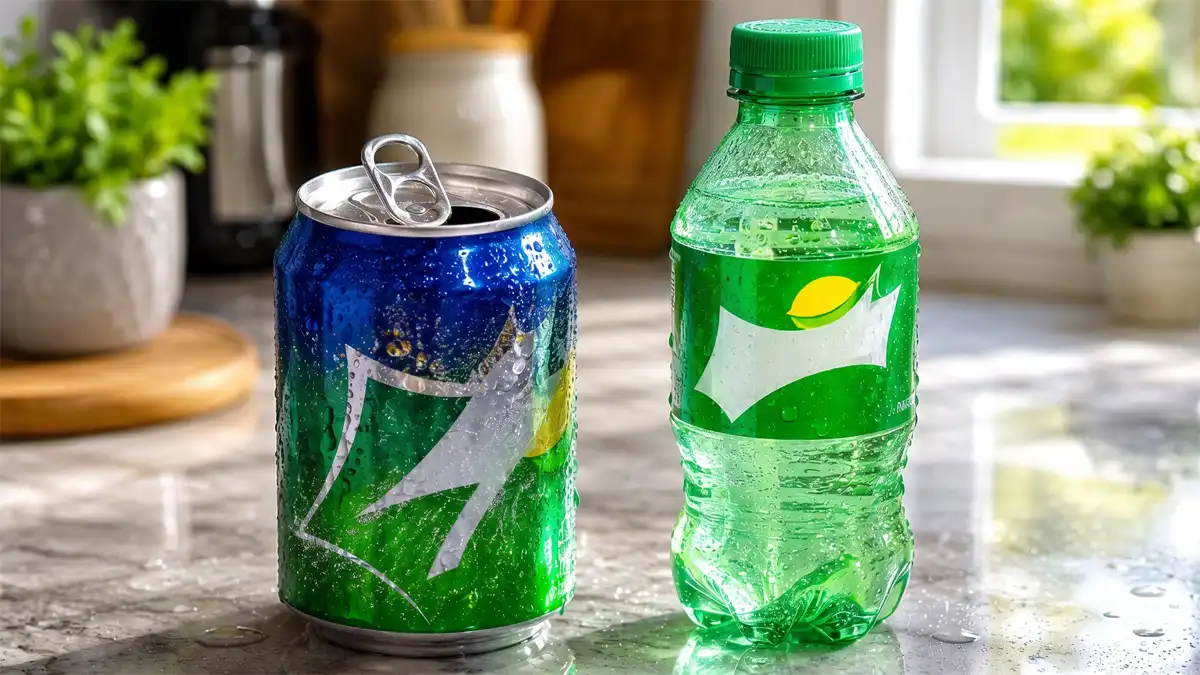
A close-up shot of a hand opening a chilled green soda can, lifting the silver ring pull tab as a dramatic burst of carbonation mist sprays out against a green background.

A hidden history of the most overlooked invention in beverage packaging. That Tiny Metal Tab You Never Think About Every soda can you open has a hidden piece of engineering most people never think about — the tiny metal tab. It looks simple, almost disposable… but it is actually the result of two major inventions, … Read more

Do Curtain Walls Save Energy? (Thermal Break Explained)

Luxury high-rise building with thermal break curtain wall on a snowy night — one warm lit floor with fireplace and people, snow piling on windowsill, no condensation.

Walk into any glass-walled skyscraper on a hot summer day. If the building is well designed, you will feel comfortable — not sweaty, not freezing. If it is poorly designed, you will feel a distinct chill or heat radiating from the glass. The difference often comes down to one critical feature: the thermal break. But … Read more

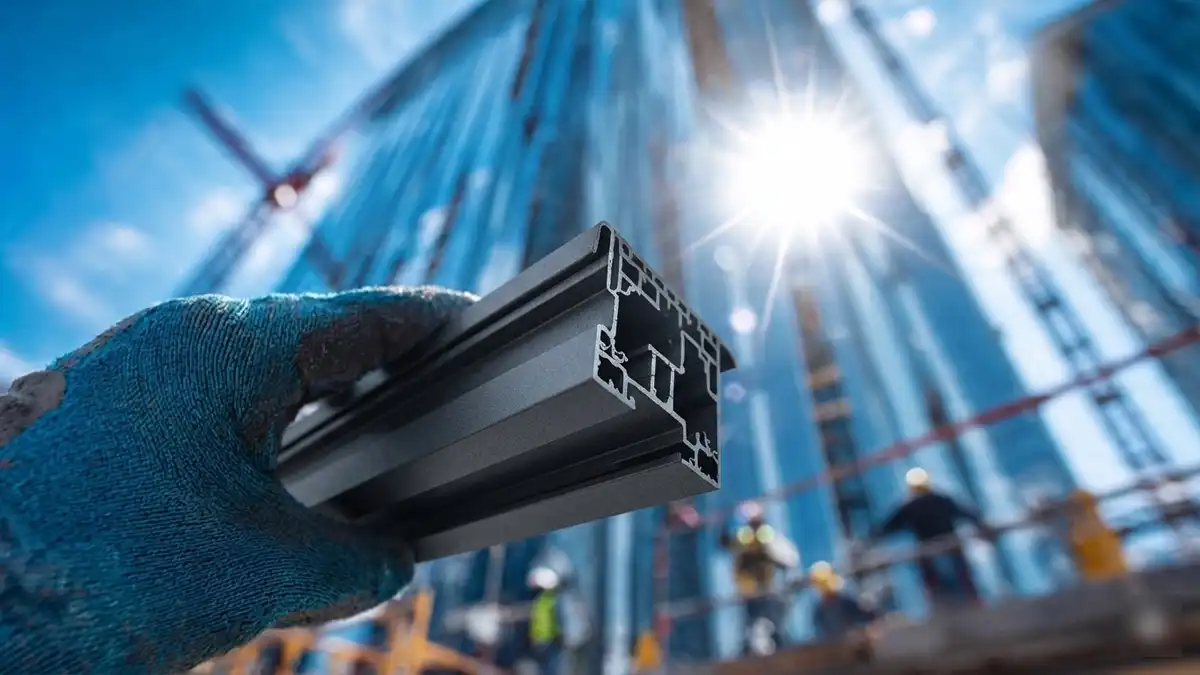
Why Aluminium Is Used in Curtain Wall Systems

Hand holding a complex aluminium extrusion profile for a curtain wall system, showing multi-cavity design and thermal break slot, with high-rise facade installation in background.

Walk through any major city and look up. The shimmering glass and metal envelopes of skyscrapers are almost always built around aluminium. It’s not a coincidence. Steel, wood, fiberglass, and even concrete have been tried, but aluminium has emerged as the global standard for curtain wall framing. Why? Because no other material delivers the perfect … Read more

Do You Know? How Curtain Wall Systems Handle Wind Load & Water Drainage

Inside a high-rise office during a heavy storm, looking at a glass curtain wall with rain pouring outside while workers sit comfortably inside.

Curtain walls are the unsung heroes of modern skyscrapers. They are lightweight, visually stunning, and engineered to withstand immense forces from nature. But two critical performance challenges define a successful curtain wall: wind load resistance and water drainage management. A failure in either can lead to catastrophic glass blowouts or annoying, destructive leaks. So, how … Read more

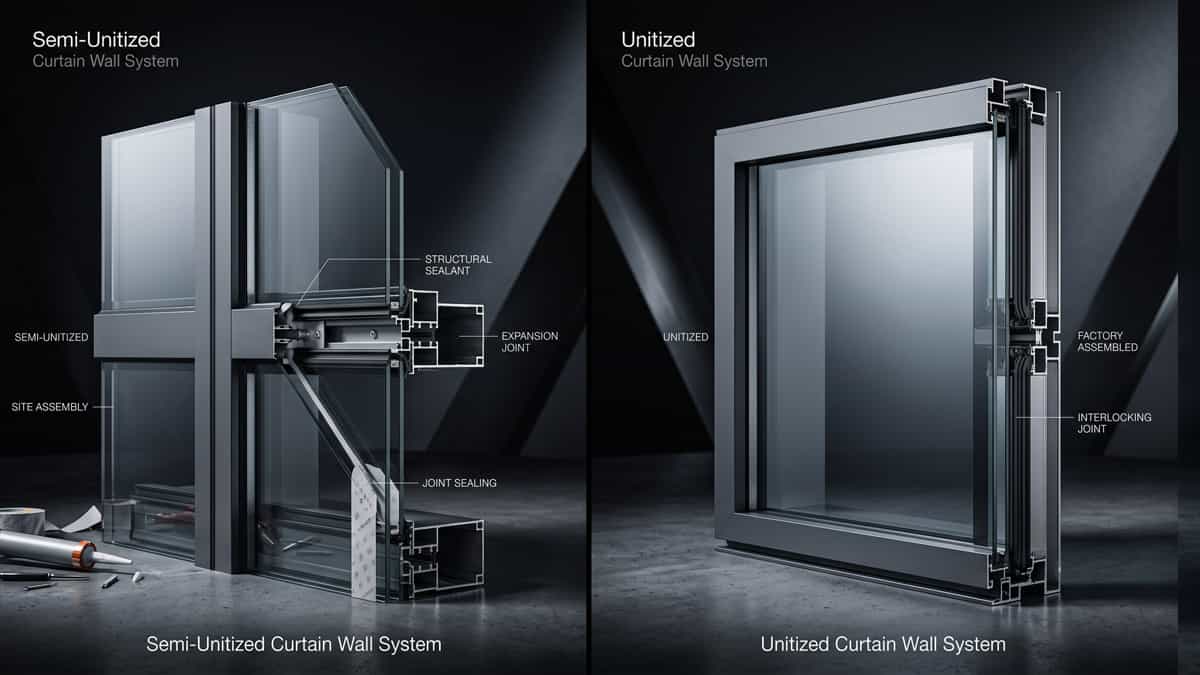
Stick Curtain Wall vs Unitized Curtain Wall – Which Is Better?

Stick curtain wall components assembled on-site next to a factory-fabricated unitized curtain wall module for a high-rise building facade.

When designing a modern building’s envelope, the choice between a Stick-Built and a Unitized Curtain Wall is a foundational decision that has significant repercussions on a project’s timeline, budget, quality, and long-term performance. This isn’t just a simple “this or that. ” It’s a high-stakes calculation that requires balancing numerous technical and logistical factors. This … Read more

Facade: What It Really Means in Modern Buildings

Modern building facade with aluminium panels and glass curtain wall, showing layered exterior envelope.

Why This Word Is Everywhere in Architecture Walk into any architectural discussion, read a construction magazine, or listen to a building designer. You will hear the word facade constantly. Architects, builders, and developers use it because it captures something essential about a building – its outer face, its personality, and its performance all at once. … Read more

Curtain Walls: The Hidden System Behind Modern Glass Buildings

Modern glass office building with aluminium curtain wall facade, showing vertical mullions and horizontal transoms.

Why Do Modern Glass Buildings All Look the Same? Walk through any major city today. Offices, shopping malls, airports, and even luxury hotels all seem to share the same design language: floor‑to‑ceiling glass, sleek metallic frames, and a seamless, reflective exterior. This is not a coincidence. The hidden system behind this global architectural trend is … Read more

How Aluminium Is Powering the Future of BMW Autonomous Cars

BMW electric SUV with ghosted aluminium chassis overlay representing lightweight autonomous vehicle engineering.

The future of autonomous driving is not limited to software and artificial intelligence. Hardware is equally critical. When you look at premium automotive brands like BMW, one thing becomes clear: performance and efficiency must go hand in hand. That is where aluminium becomes a game‑changer. For years, BMW has used aluminium to reduce weight without … Read more

Categories Car

The Dirty Truth Behind Early Beverage Cans (And Why Aluminium Won)

A side-by-side comparison of a rusty vintage steel "Original Bottled Ale" can with an old-style opening and a clean, modern aluminium "Himalayan Pure" water can with condensation

The Truth Brands Never Advertised Walk down any grocery aisle today, and you’ll see shiny, flawless aluminum cans stacked in perfect rows. They look clean, safe, and modern. But the dirty truth behind early beverage cans is something no beer or soda brand ever put in a commercial. Before aluminum won, beverage cans were rust-prone, … Read more

Did Steel Cans Exist Before Aluminum? The Real History of Aluminium Cans

Comparison of a rusty, corroded vintage steel beer can next to a clean, modern aluminum can, illustrating why aluminum won.

The Question Nobody Asks – Did Steel Come First? Before aluminum cans became the global standard for beer and soda, beverage packaging had a serious problem—and the first solution wasn’t aluminum at all. Yes, steel cans came first. But they also failed in ways that directly forced the rise of aluminium. Most people assume the … Read more

Aluminium 7020 Alloy: Properties, Weldability, and Military-Grade Applications

Aluminium 7020 alloy used for military bridge, railway wagon underframe, and bicycle frame – high strength and weldability

Aluminium 7020 is a high-strength, heat-treatable alloy belonging to the Al-Zn-Mg (7000) series. Unlike many other 7000-series alloys that contain copper, 7020 is copper-free, which gives it exceptional weldability and stress corrosion cracking resistance. This makes it a preferred material for structural applications in military, transportation, and general engineering where welding is required. Chemical Composition … Read more

Aluminum 7005 Alloy: Properties, Applications, and Benefits

Aluminium 7005 alloy used for bicycle frame, aerospace bracket, and welded structural beam – high strength and weldability

Aluminum 7005 belonging to the 7000 series of alloys, Aluminium 7005 is an age-hardenable material primarily alloyed with zinc and magnesium. It is renowned for offering a compelling balance of high strength, excellent corrosion resistance, and superior weldability, making it a highly sought-after material for structural and engineering applications where welding is a key requirement. … Read more

Why Aluminium Reigns Supreme in Packaging

Collage of aluminium packaging including soda can, foil roll, blister pack, and takeout container.

In the global battle for sustainable, efficient, and safe packaging, one material consistently outperforms glass, plastic, and even paper: aluminium. Whether it’s the humble soda can, the thin foil protecting your chocolate, or the sterile seal on life-saving medicine, aluminium’s unique combination of physical properties makes it the undisputed king of containment. But why exactly … Read more

Which Products Are Made of Aluminium? Ever Noticed These Around You?

Collage of various aluminium items including cans, foil, smartphone, airplane part, and window frame.

Aluminium is often called the “Miracle Metal” for good reason. It is lightweight yet strong, corrosion-resistant, and infinitely recyclable. From the moment you wake up and check your smartphone to the airplane that flies you across the globe, aluminium is silently shaping modern life. This article provides a detailed, categorized list of items made from … Read more

33 Aluminium Compounds: Formulas, Properties & Industrial Uses

33 Aluminium Compounds: Formulas, Properties & Industrial Uses

While pure aluminium is widely recognized for its structural uses in aerospace and construction, its true chemical versatility is found in its extensive range of compounds. From high-tech semiconductors to essential industrial catalysts, aluminium-based substances are foundational to modern engineering and chemistry. This master guide provides a technical overview of the 33 essential aluminium compounds, … Read more

Trimethylaluminum (TMA): Technical Guide to a Pyrophoric Semiconductor Precursor

Stainless steel pressurized bubbler cylinder for trimethylaluminum storage, with pyrophoric warning placard in a fume hood.

Trimethylaluminum, globally shortened to TMA, is a violently reactive organometallic compound. It is a clear, colorless liquid that is pyrophoric – it spontaneously ignites on contact with air. Despite its extreme danger, it is the premier aluminium precursor for semiconductor manufacturing, used in Atomic Layer Deposition (ALD) and as a Ziegler‑Natta co‑catalyst. 1. Basic Identification … Read more

Sodium Aluminium Fluoride (Na₃AlF₆): Technical Guide to Cryolite

Clear cryolite crystal half‑submerged in water, with the submerged portion invisible due to matching refractive index.

Sodium aluminium fluoride, universally known by its mineral name cryolite, is a strategically important compound. Its high‑temperature properties govern the economics of aluminium metal production. It appears as glassy, white, or colorless chunks, and its role in the Hall‑Héroult smelting process makes it one of the most manufactured inorganic compounds on Earth. 1. Basic Identification … Read more

Aluminium Titanate (Al₂TiO₅): Technical Guide to Zero‑Expansion Ceramics

White aluminum titanate ceramic honeycomb block with a blowtorch flame on one side and ice cubes on the opposite edge, showing thermal shock resistance.

Aluminium titanate is a high‑performance engineered ceramic with an exceptionally low coefficient of thermal expansion. It is a stoichiometric blend of alumina and titania, appearing as a white to pale yellow, porous, lightweight ceramic. It excels in environments prone to thermal shock, making it the gold standard for diesel particulate filters and molten metal handling. … Read more

Aluminium Telluride (Al₂Te₃): The Complete Guide

Sealed glass ampoule of dark grey aluminum telluride powder with toxicity hazard placard in a laboratory fume hood.

Aluminium telluride is a binary compound of aluminium and tellurium. It is a highly moisture‑sensitive, rare chalcogenide that decomposes in water to release hydrogen telluride (H₂Te) – an extremely toxic, foul‑smelling gas similar to hydrogen sulfide but even more hazardous. Due to its instability and toxicity, it has no consumer applications and is used only … Read more