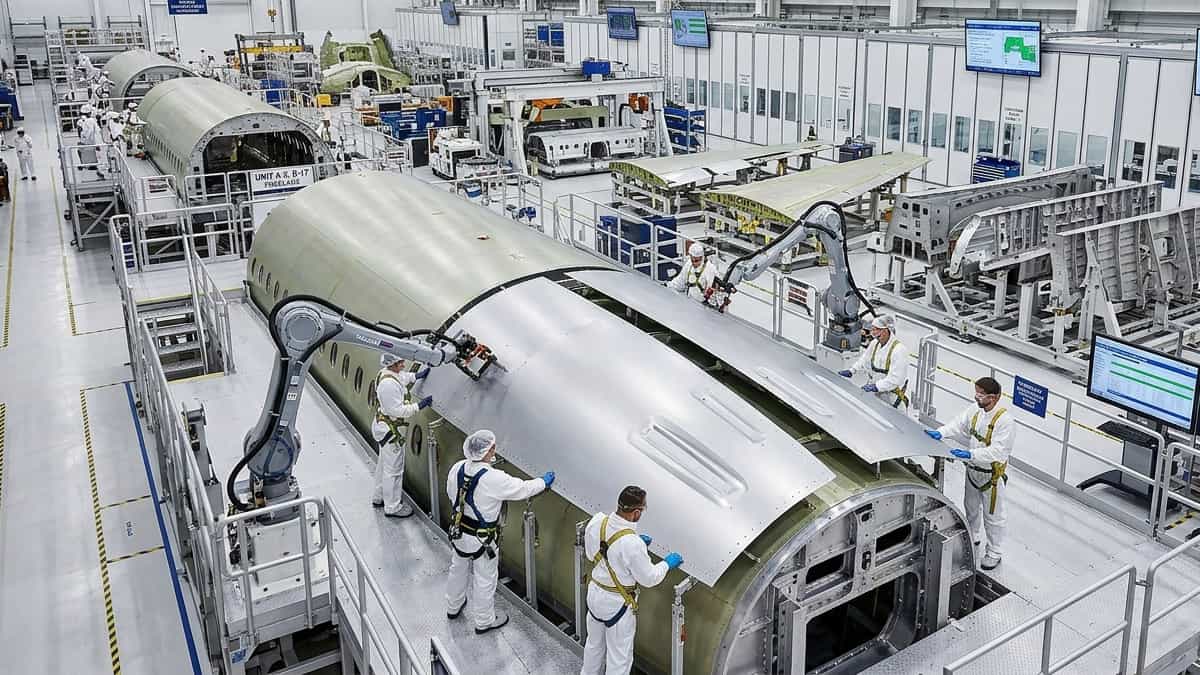
Aluminium 7475 – also known as Aluminum 7475 – is a heat-treatable aluminium-zinc-magnesium-copper alloy that represents the second generation of the 7000 series. Developed by Alcoa and registered in 1969 as a controlled‑toughness alloy, 7475 aluminum offers a fracture toughness approximately 40% greater than the industry‑standard 7075 while maintaining comparable high strength. It is the material of choice for fracture‑critical aerospace components, including fuselage skins, wing skins, and structural parts where crack propagation resistance is a paramount design consideration.
What is Aluminium 7475?
Aluminium alloy 7475 is a member of the 7000 series (aluminium‑zinc‑magnesium‑copper) alloys – the strongest family of aluminium alloys widely used in aerospace. Unlike the non‑heat‑treatable 5000 series alloys covered earlier, 7475 is a heat‑treatable alloy that achieves its outstanding mechanical properties through controlled thermal processing.
Within the 7000 series, if 7075 is regarded as the first generation, 7475 – registered in September 1969 – is considered the second generation, alongside 7175. Its defining characteristic is controlled fracture toughness: while offering strength comparable to 7075, 7475 provides significantly better resistance to crack propagation. This makes it indispensable for components that must remain safe even if a crack initiates in service.
Key Characteristics at a Glance:
| Property | Value |
|---|---|
| Density | 2.81 g/cm³ |
| Melting Point | 477 – 546 °C |
| Thermal Conductivity | 177 W/m·K |
| Modulus of Elasticity | 71.7 GPa |
| Electrical Resistivity | 4.99 × 10⁻⁶ ohm·cm |
Data compiled from industry specifications
Chemical Composition of Aluminium 7475
Aluminium 7475 is a zinc‑rich alloy with carefully balanced additions of magnesium, copper, and chromium. The copper content (1.2–1.9%) is a key difference from earlier 7000 series alloys, enhancing strength and stress‑corrosion resistance. The low silicon and iron limits (≤0.10% and ≤0.12% respectively) contribute to the alloy’s excellent fracture toughness by minimising coarse, brittle intermetallic particles.
| Element | Percentage (%) |
|---|---|
| Aluminum (Al) | 88.5 – 91.5 |
| Zinc (Zn) | 5.2 – 6.2 |
| Magnesium (Mg) | 1.9 – 2.6 |
| Copper (Cu) | 1.2 – 1.9 |
| Chromium (Cr) | 0.18 – 0.25 |
| Silicon (Si) | ≤0.10 |
| Iron (Fe) | ≤0.12 |
| Manganese (Mn) | ≤0.06 |
| Titanium (Ti) | ≤0.06 |
| Others (Each) | ≤0.05 |
| Others (Total) | ≤0.15 |
Source: ASM / Aluminum Association
The zinc and magnesium form fine strengthening precipitates (MgZn₂) during artificial aging. The copper provides additional solid‑solution strengthening and improves stress‑corrosion cracking resistance. The chromium acts as a recrystallisation inhibitor, helping to maintain a fine, unrecrystallised grain structure that is essential for high toughness.
Key Properties of Aluminium 7475
💪 Exceptional Strength – Comparable to 7075
Aluminium 7475 delivers very high strength, comparable to the widely used 7075 alloy. In the T651 temper, typical values are:
- Ultimate Tensile Strength: 586 MPa (85,000 psi)
- Tensile Yield Strength: 510 MPa (74,000 psi)
- Elongation at Break: 13%
- Hardness (Brinell): 150 HB
- Shear Strength: 350 MPa (50,800 psi)
Source: ASM Material Data Sheet
These values place 7475 among the strongest aluminium alloys commercially available, exceeded only by specialised alloys such as 7055 and 7068 in certain tempers.
🧠 Superior Fracture Toughness – The Defining Advantage
This is where Aluminium 7475 truly excels. Compared to 7075 in the same temper, 7475 aluminium sheet and plate typically offer a 40% increase in toughness. This remarkable improvement is achieved through strict control of composition (especially low Fe and Si) and thermo‑mechanical processing that produces a fine, unrecrystallised grain structure.
Fracture toughness values for 7475 plate (T‑L orientation):
| Property | Value |
|---|---|
| Fracture Toughness (L‑T) | 42.9 MPa·√m |
| Fracture Toughness (T‑L) | 37.4 MPa·√m |
| Fracture Toughness (S‑L) | 29.7 MPa·√m |
Source: MatWeb
For aerospace designers, this combination of high strength and high fracture toughness means that 7475 can be used in damage‑tolerant designs – components that can safely sustain cracks without catastrophic failure.
💤 Excellent Fatigue Resistance
7475 aluminium exhibits good fatigue crack propagation resistance, often outperforming other high‑strength aluminium alloys. This is particularly important for components subjected to cyclic loading, such as aircraft wing skins and fuselage panels. The alloy’s resistance to fatigue crack growth is one of the reasons it is specified for fracture‑critical applications.
🛡️ Corrosion Resistance
The corrosion resistance of 7475 is comparable to that of 7075, which is considered good for a high‑strength 7000 series alloy. However, like most 7xxx alloys, 7475 is susceptible to stress‑corrosion cracking (SCC) in certain tempers and orientations. For this reason, aerospace specifications often require overaged tempers (T7351, T7651) that provide the best resistance to SCC.
⚙️ High Machinability
Aluminium 7475 has good machining characteristics, with a machinability rating of 70% on a 0‑100 scale where 100% represents free‑machining alloy 2011. The alloy machines best in the annealed condition; oil‑based lubricants are recommended during machining operations.
🔧 Formability
7475 can be formed using conventional methods, but with an important caveat: it is much easier to form in the annealed condition. In the heat‑treated condition, the alloy exhibits significant springback due to its high strength. For complex forming operations, the material should be formed in the annealed (O) temper, then subsequently heat treated to achieve final mechanical properties.
🚫 Weldability – A Critical Limitation
Aluminium 7475 is not weldable by conventional fusion welding methods. This is a direct consequence of its high zinc and copper content, which makes the alloy highly susceptible to hot cracking during welding. For this reason, aerospace components made from 7475 are typically joined using mechanical fasteners (rivets, bolts) or adhesive bonding, rather than welding.
🔥 Heat Treatment
Unlike the 5000 series alloys, Aluminium 7475 is heat treatable. This is the primary mechanism by which its exceptional mechanical properties are achieved. The typical heat treatment sequence is:
- Solution heat treatment – heating to approximately 465–480°C to dissolve alloying elements
- Quenching – rapid cooling (usually in water) to retain the dissolved elements in supersaturated solid solution
- Artificial aging – controlled heating (typically 120–175°C) to precipitate fine strengthening particles
Common tempers for 7475 include:
| Temper | Description |
|---|---|
| O | Annealed – maximum formability, minimum strength |
| T6 | Solution treated and artificially aged – maximum strength |
| T651 | Solution treated, stress‑relieved by stretching, then artificially aged |
| T7351 | Overaged for maximum stress‑corrosion cracking resistance |
| T761 | A special temper with optimised toughness and corrosion resistance |
| T7651 | Solution treated, stress‑relieved, and overaged |
Applications of Aluminium 7475
Aluminium 7475 is a premium aerospace alloy whose unique combination of high strength and superior fracture toughness makes it essential for safety‑critical components where failure is not an option.
✈️ Aerospace & Aviation – The Primary Application
7475 aluminium is widely used in commercial and military aircraft for components where fracture toughness is a major design consideration:
- Fuselage skins – particularly in pressurised areas where crack propagation must be controlled
- Wing skins – both upper and lower surfaces requiring a combination of strength and damage tolerance
- Fracture‑critical structural parts – components whose failure would lead to catastrophic loss of the aircraft
- Bulkheads and frames – where high strength and resistance to crack growth are essential
- Floor beams and cargo bay structures
🔫 Defence & Military Applications
- Shell casings – 7475 is specified for certain ammunition components
- Missile airframes – where weight reduction and structural integrity are critical
- Armoured vehicle components – where a combination of strength and toughness is required
🏎️ High‑Performance Automotive
While less common than in aerospace, 7475 is sometimes used in:
- Racing car chassis components – where weight, strength, and toughness are all at a premium
- High‑performance suspension components
- Safety‑critical automotive structures
Aluminium 7475 vs. Aluminium 7075
The comparison between 7475 and 7075 is the most important one for engineers choosing a high‑strength 7000 series alloy. Rather than presenting a dense table, here is a practical guide:
| Aspect | 7475 | 7075 |
|---|---|---|
| Tensile Strength | Comparable (≈586 MPa in T651) | Comparable (≈570‑590 MPa) |
| Fracture Toughness | Approximately 40% higher – the defining advantage | Good, but significantly lower |
| Fatigue Crack Growth Resistance | Superior – better resistance to crack propagation | Good |
| Corrosion Resistance | Comparable (good; overaged tempers for SCC resistance) | Comparable |
| Machinability | 70% – very good | 70‑80% – excellent |
| Weldability | Not weldable – must use mechanical fasteners | Very poor – generally not welded |
| Cost | Higher – due to tighter composition and process control | Lower – the industry standard |
| Availability | Readily available, but less common than 7075 | Widely available |
| Primary Use | Fracture‑critical aerospace components | General high‑strength applications |
Pro Tip: Choose 7475 when your design is fracture‑critical – that is, when a crack must be able to grow stably without causing sudden failure. Choose 7075 when cost is a primary driver and the component can tolerate lower fracture toughness. For applications requiring the highest possible strength with good weldability, consider 7005 or 7039 instead.
For a detailed, interactive side‑by‑side comparison of 7475 with any other aluminium alloy – including 7075, 2024, 6061, or 5083 – visit the Aluminium Alloy Comparison Tool. This tool allows you to compare over 40 alloy types across properties including strength, fracture toughness, weldability, and corrosion resistance.
Fabrication & Workability Guide
🔨 Forming
Aluminium 7475 can be formed using conventional methods, but it is much easier to form in the annealed (O) condition. In the heat‑treated condition, the alloy has more springback because of its high strength. For complex forming operations, follow this sequence:
- Form in the O (annealed) temper
- Solution heat treat and quench
- Perform any necessary straightening
- Artificially age to final temper
⚙️ Machining
Aluminium 7475 has good machining characteristics (70% machinability rating). Best practices include:
- Machine in the annealed condition for optimal results
- Use oil‑based lubricants to ensure proper chip evacuation and surface finish
- Employ carbide‑tipped tools with sharp edges
- Apply positive rake angles to minimise cutting forces
- Use high cutting speeds to reduce built‑up edge formation
🔥 Heat Treatment
As a heat‑treatable alloy, 7475 can be significantly strengthened by thermal processing:
| Process | Typical Parameters |
|---|---|
| Solution Treatment | 465‑480°C, hold for sufficient time to dissolve soluble phases |
| Quenching | Cold water – rapid cooling to retain supersaturated solid solution |
| Aging (T6/T651) | 120‑175°C, 12‑24 hours (depending on temper) |
| Overaging (T73/T7351) | Higher aging temperatures (typically 175‑200°C) for SCC resistance |
🔧 Cold Working
Conventional methods are used to readily cold‑work Aluminium 7475 in the annealed condition. However, as the alloy work‑hardens, it becomes progressively more difficult to form.
🚫 Welding – Important Warning
Do not attempt to weld Aluminium 7475 by conventional fusion methods. The alloy is highly susceptible to hot cracking due to its zinc and copper content. Approved joining methods include:
- Riveting – the traditional aerospace approach
- Bolting – suitable for many structural applications
- Adhesive bonding – increasingly used in composite‑aluminium hybrid structures
- Friction stir welding – a solid‑state process that may be applicable in certain specialised applications
🎨 Anodising
Aluminium 7475 responds well to anodising. When properly processed, the alloy produces a uniform and shiny anodised finish with no surface defects. This makes it suitable for applications requiring both high strength and an attractive, corrosion‑resistant surface.
Why Choose Aluminium 7475?
✅ Advantages
- Exceptional fracture toughness – approximately 40% higher than 7075, enabling damage‑tolerant designs
- Very high strength – comparable to 7075, with ultimate tensile strength up to 586 MPa
- Excellent fatigue crack propagation resistance – superior to most other high‑strength aluminium alloys
- Good machinability – 70% rating, with best results in the annealed condition
- Heat treatable – properties can be tailored through thermal processing
- Responsive to anodising – produces a uniform, shiny surface finish
- Good corrosion resistance – comparable to 7075, with overaged tempers available for SCC resistance
- Fully recyclable – sustainable for aerospace and defence applications
❌ Limitations
- Not weldable by conventional fusion methods – must be joined by riveting, bolting, or adhesive bonding
- Higher cost than 7075 – due to tighter composition and process control
- Significant springback in heat‑treated condition – forming should be done in the annealed state
- Susceptible to stress‑corrosion cracking in T6 temper – requires overaging for critical applications
- Not suitable for high‑temperature service above approximately 120°C – strength degrades with prolonged thermal exposure
Summary
Aluminium 7475 (Aluminum 7475) is the second‑generation aerospace alloy that solved the toughness problem of the 7000 series. While 7075 aluminium revolutionised high‑strength applications, 7475 took the next step – delivering comparable strength with approximately 40% higher fracture toughness.
From the fuselage skins and wing panels of commercial airliners to fracture‑critical components in military aircraft, Aluminium 7475 provides the damage tolerance that modern aerospace designs demand. It is not a general‑purpose alloy; it is a specialist – the choice for engineers who must balance high strength with the certainty that a crack will not lead to sudden, catastrophic failure.
If your application is fracture‑critical and weight is at a premium, Aluminium 7475 is the proven, trusted solution. For the latest technical data and real‑time alloy comparisons, explore the Aluminium Alloy Comparison Tool.
📚 Related Articles
Deepen your understanding of aluminium alloys with these curated guides:
- Aluminium Alloy Comparison Tool – Compare 40+ aluminium alloys side by side to find the perfect material for your project
- Aluminium 7075: The Original High‑Strength Aerospace Alloy – The first‑generation 7000 series alloy that set the standard
- Aluminium 2024: The Copper Alloy for Aircraft Structures – Another key aerospace alloy, with different property trade‑offs
- Why Is Aluminum Used for Aircraft Bodies? – Understanding the role of 7000 series alloys in aerospace
- Aluminium 6061 T6: Properties, Machining & Applications – The general‑purpose heat‑treatable alloy for non‑critical structures
Related Articles


Featured


You May Also Like

Aluminum Carport: A Durable Choice for Car Protection
Storm Door Installation Cost: What Homeowners Should Expect

Everything About Aluminum Cans You Need to Know!

The Future of Aluminium: Aluminium Solar Panels
Aluminium 2014: The High-Strength Workhorse for Demanding Ap…