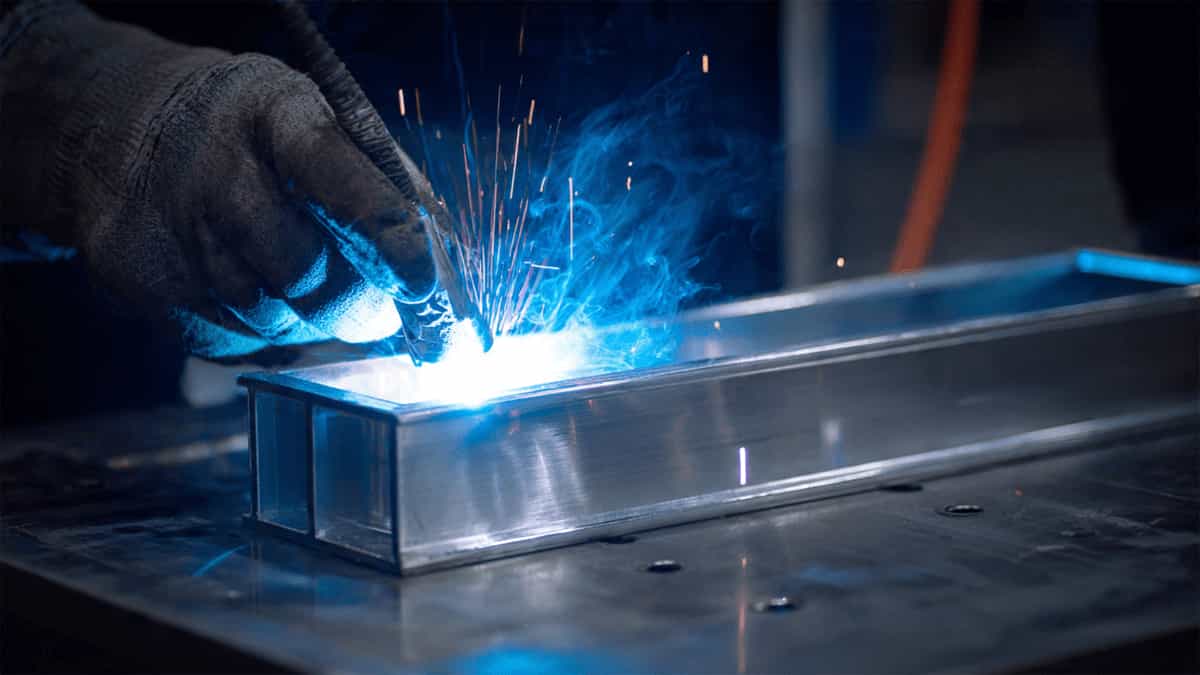
The High-Silicon Specialist: Ultimate Crack Resistance for Demanding Joints
In the family of aluminum filler metals, Aluminium 4047 stands as the specialist’s choice for the most challenging welding and brazing applications. As the highest-silicon alloy in the 4000 series (typically 12% Si), 4047 offers the ultimate in crack resistance, fluidity, and low-temperature melting characteristics. While its more common cousin 4043 handles the vast majority of everyday aluminum welding, 4047 is the go-to solution when cracking persists, when brazing is required, or when the highest possible joint integrity is demanded.
This alloy represents the extreme end of the aluminum-silicon system, where the silicon content approaches the eutectic composition—the point at which the alloy melts and solidifies at a single temperature rather than over a range. This unique metallurgical characteristic gives 4047 its exceptional performance in critical applications.
Composition and Metallurgy: Approaching the Eutectic
Aluminium 4047 is a 4000 series (Aluminum-Silicon) alloy with the highest commercially common silicon content. Its composition places it very close to the eutectic point of the system (12.6% Si), which fundamentally changes its solidification behavior.
Primary Composition:
- Aluminum (Al): Balance (approx. 85–88%)
- Silicon (Si): 11.0 – 13.0% — The defining alloying element.
- Iron (Fe): $\le$ 0.8% — Controlled as an impurity.
- Copper (Cu): $\le$ 0.30% — Limited to low levels.
- Beryllium (Be): $\le$ 0.0003% — Added in trace amounts to some wire specifications to improve surface quality.
The Eutectic Advantage:
The 12% silicon content gives 4047 a very narrow melting range—approximately 577–582°C (1070–1080°F). This near-eutectic composition means the alloy transforms from solid to liquid over a span of only 5°C, compared to 4043’s 50°C range. This minimizes the “mushy zone” where solidification cracks typically form.
Core Properties: Engineered for Extreme Performance
- Superior Crack Resistance: The most valuable property of 4047 is its resistance to hot cracking. When 4043 occasionally fails on highly restrained joints, 4047 is the engineered solution.
- Maximum Fluidity: This alloy has the highest fluidity of any common aluminum filler. The molten weld pool flows exceptionally well, penetrating into tight joints.
- Low Melting Point: Requires less heat input to achieve fusion, which is vital for aluminum brazing where base metal melting must be avoided.
- Moderate Strength with Low Ductility: 4047 offers higher tensile strength than 4043 but with significantly lower ductility (2–4% elongation). This makes the alloy unsuitable for parts requiring post-weld plastic deformation.
- Anodizing Limitation: Like other high-silicon alloys, weld deposits will appear dark gray or black when anodized, contrasting with most aluminum base materials.
Specifications and Physical Properties
Aluminium 4047 is manufactured to multiple international standards:
| Standard | Designation |
| AWS A5.10 | ER4047 |
| EN ISO 18273 | S Al 4047A (AlSi12(A)) |
| DIN 1732 | 3.2585 (AlSi12) |
| BS (UK) | 4047A (N21A) |
Mechanical Properties (Typical)
- Density: ~2.66 – 2.68 g/cm³
- Tensile Strength: 130 – 210 MPa
- Thermal Conductivity: ~160 W/m·K
- Electrical Conductivity: ~35% IACS
Primary Applications: Where 4047 Excels
1. Crack-Sensitive Joints
Specific situations where 4047 is preferred include highly restrained joints where thermal contraction stresses are high and thick section welding where cooling rates are slower.
2. Brazing and Braze Welding
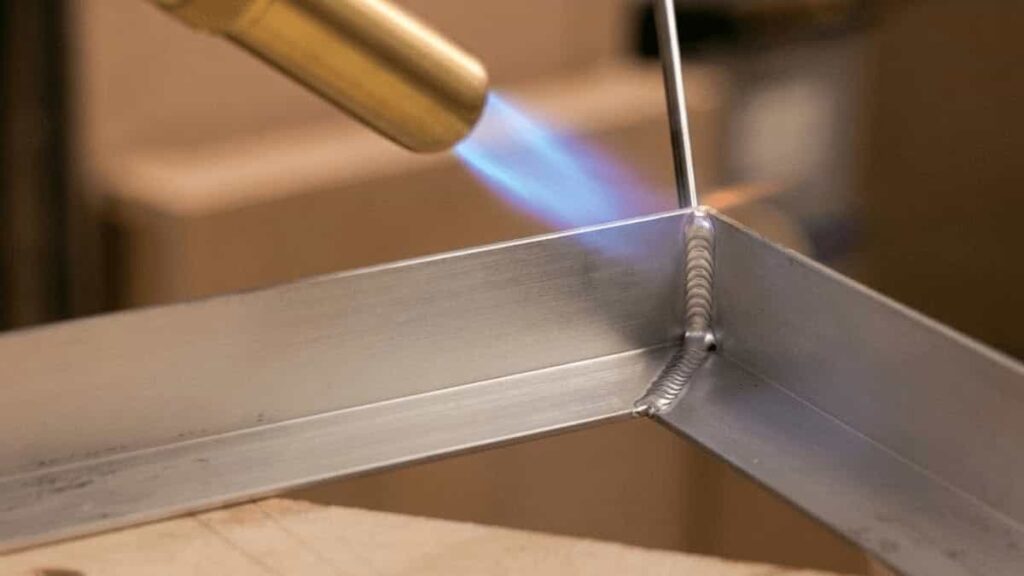
4047 is the premier alloy for aluminum brazing due to its low melting point. It is widely used in:
- Furnace Brazing: For heat exchangers and evaporators.
- Torch Brazing: For repair and small-scale production.
3. Automotive and Casting Repair
- Heat Exchangers: Radiators and A/C condensers are often brazed with 4047 clad on Aluminum 3003 cores.
- Casting Repair: The high silicon content matches the composition of common aluminum casting alloys like 356 and A356, making it ideal for filling defects.
Why Choose 4047? A Strategic Comparison
| Property | 4043 (AlSi5) | 4047 (AlSi12) | 5356 (AlMg5) |
| Silicon Content | ~5% | ~12% | None |
| Crack Resistance | Good | Superior | Good |
| Fluidity | Good | Excellent | Moderate |
| Ductility | 7-8% | 2-4% (Low) | 15-20% (High) |
| Brazing Suitability | Limited | Excellent | Not suitable |
The “Step-Up” Strategy: Experienced aluminum welding engineers typically try 4043 first for general fabrication. If cracking occurs, they “step up” to 4047 to solve the issue.
Welding Guidelines
- Processes: Suitable for MIG (GMAW), TIG (GTAW), and brazing.
- Shielding Gas: 100% Argon is the standard; Argon/Helium mixtures can be used for thicker aluminum sections.
- Compatible Base Materials: 6xxx series (6061, 6063), 3xxx series (3003), and high-silicon casting alloys.
Warning on Low Ductility: > Because 4047 has very low elongation, it is unsuitable for joints subject to heavy impact, cyclic loading, or vibration. These welds will crack rather than stretch under strain.
Sustainability and Recycling
As a specialized filler metal, 4047 contributes to sustainability by enabling lightweighting. Brazed aluminum heat exchangers are significantly lighter than copper-brass alternatives, directly reducing vehicle fuel consumption. Additionally, 4047 is fully recyclable within the existing aluminum scrap stream.
Aluminium 4047 represents the pinnacle of the aluminum-silicon filler metal family. Its 12% silicon content delivers the ultimate in crack resistance and fluidity, making it indispensable for modern manufacturing. While its higher cost and low ductility limit it to specialized roles, in those situations—from automotive radiators to aerospace fuel systems—4047 is often the only aluminum alloy that provides a reliable, leak-tight solution.
Related Articles

Featured


You May Also Like
AlPrice: The Simple Price-Listing Platform for the Aluminium…

Top 6 Advantages of Aluminium Casement Windows: Why You Shou…

Kelvin (K) Value in Windows: What It Means (and What It Does…

Why Aluminum Brackets & L-T Angles Are Essential for Mod…

The Future of Aluminium: Aluminium Solar Panels