
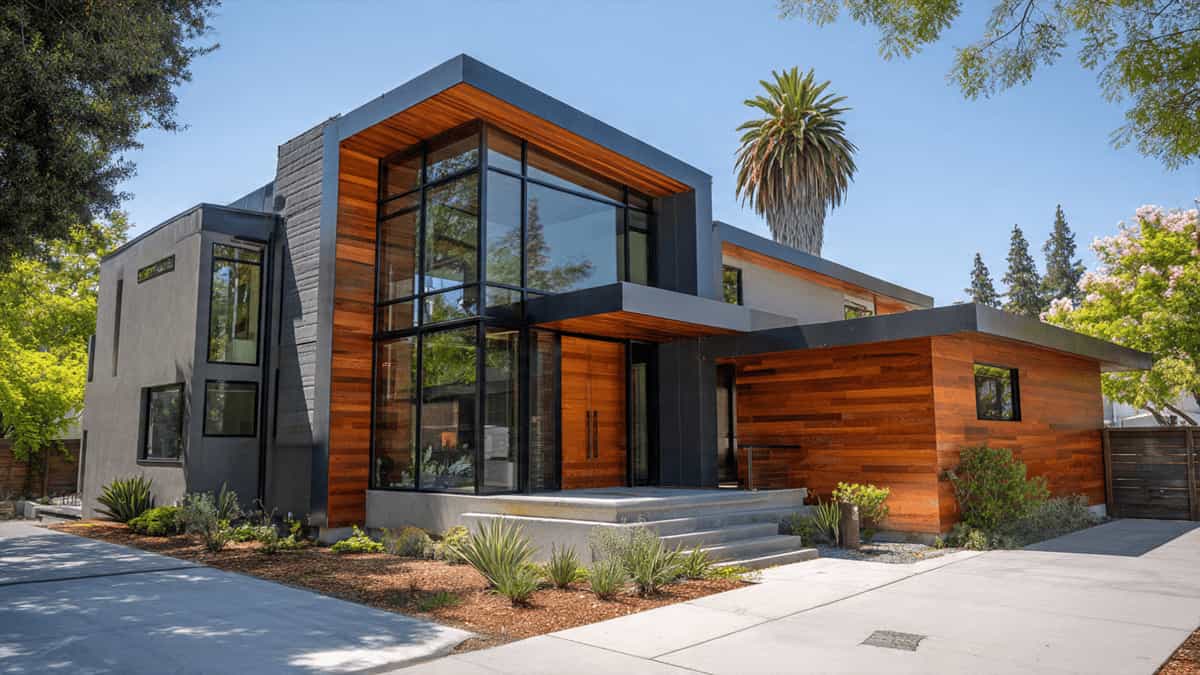
Bridging the Gap Between Formability and Strength
In the graded spectrum of the 3xxx series alloys, Aluminium 3005 occupies a crucial middle ground. Engineered to offer a measured step up in strength from the ubiquitous 3003 alloy, it maintains exceptional formability and corrosion resistance.
This alloy is the specialist’s choice for applications that demand more rigidity and dent resistance than 3003 can provide, but where the higher tensile strength of the “beverage can alloy” (3004) is unnecessary. Commonly found in architectural siding and heat exchangers, Aluminum 3005 is a reliable, optimized material for performance-driven sheet metal work.
Composition and Metallurgy: A Calculated Enhancement
Aluminium 3005 is a non-heat-treatable alloy whose properties are developed through strain hardening (cold working). Its chemistry is a deliberate intermediate formulation.
Primary Composition:
- Aluminium (Al): Balance (approx. 97.0 – 99.0%)
- Manganese (Mn): 1.0 – 1.5% — Provides the base strength and work-hardening response.
- Magnesium (Mg): 0.20 – 0.6% — The Differentiator. This magnesium addition provides a boost in strength compared to 3003, but is kept lower than in 3004 to preserve better formability for roll-forming operations.
- Impurities: Iron (Fe), Silicon (Si), and trace Copper (Cu) are controlled.
The Result: An alloy that is approximately 20-25% stronger than 3003 in comparable tempers. It is an excellent “drop-in” upgrade for applications where 3003 is marginally insufficient.
Core Properties: Optimized for Specific Demands
- Moderately High Strength: Offers a valuable increase in yield strength over 3003, providing better resistance to bending, denting, and sagging in large panel applications.
- Very Good Formability: Maintains excellent ductility, especially in annealed tempers. It is suitable for bending, roll-forming, and moderate drawing.
- Corrosion Resistance: Inherits the excellent atmospheric corrosion resistance of the manganese family. It is a robust choice for exterior building facades.
- Weldability & Brazability: Can be readily welded (TIG/MIG) and is suitable for brazed heat exchanger assemblies (radiators).
- Thermal Conductivity: Effective for thermal management (~150-160 W/m·K).
Common Tempers and Mechanical Properties
| Temper | Tensile Strength (MPa) | Yield Strength (MPa) | Elongation (%) | Primary Application |
| O (Annealed) | 115 – 145 | 55 (min) | 16 – 20 | Maximum formability for deep drawing. |
| H14 / H24 | 170 – 200 | 150 (min) | 4 – 8 | The Architectural Standard. A perfect balance of stiffness and workability. |
| H16 / H26 | 190 – 220 | 170 (min) | 3 – 6 | Higher stiffness for thinner gauge panels. |
| H18 (Full Hard) | 210 – 240 | 195 (min) | 2 – 4 | Maximum strength; limited formability. |
Note: H2x tempers (Strain-hardened and partially annealed) are often specified for architectural products to ensure flatness and dimensional stability.
Primary Applications: Where 3005 Finds Its Purpose
1. Architectural & Building Products
This is the primary domain for Aluminium 3005. Its enhanced strength allows for wider spans and better durability than 3003.
- Cladding & Siding: Used extensively for residential siding and industrial wall cladding. The alloy resists wind loading and handling damage better than softer alloys.
- Roofing: Often found in pre-painted or coil-coated roofing sheet.
- Learn More: For insights into facade materials, see: Aluminum Cladding Types & Applications.
2. Heat Exchangers & HVAC
- Radiator Fins & Heater Cores: A strong competitor to 3003 in automotive and stationary heat exchangers. The extra strength allows engineers to use thinner gauges (down-gauging) to save weight without sacrificing structural integrity.
3. General Fabrication
- Truck & Trailer Bodies: Panels that require moderate strength.
- Appliances: Cabinetry and electrical enclosures.
- Signage: Rigid backing for large outdoor signs.
Strategic Comparison: Why Choose 3005?
| Property / Alloy | 3003 | 3005 | 3004 | 5052 |
| Key Alloying | Mn | Mn, Mg (med) | Mn, Mg (high) | Mg (high) |
| Strength | Base (Good) | Higher | Highest (3xxx) | High |
| Formability | Excellent | Very Good | Good (Harder) | Very Good |
| Corrosion | Very Good | Very Good | Good | Excellent (Marine) |
| Typical Use | General Sheet | Siding, Fins | Cans, Roofing | Boats, Tanks |
| Cost | Lowest | Moderate | Moderate | Higher |
Selection Rule of Thumb:
Choose Aluminium 3005 when you need:
- Better dent resistance than 3003 (e.g., a building facade susceptible to hail or impact).
- A cost-effective, paintable sheet that performs better than standard commercial purity aluminum.
- To down-gauge (use thinner metal) in a heat exchanger design.
Fabrication and Finishing
- Forming: Excellent for roll-forming (making gutters/siding). For deep drawing, specify O temper.
- Machining: Fair. It is gummy; use sharp tools and lubricants.
- Welding: Easily weldable using 4043 or 5356 filler wire.
- Finishing: Aluminium 3005 is an excellent substrate for paint and powder coating. This is why it is the backbone of the coil-coating industry.
- Related Reading: Powder Coating vs. Anodizing.
Sustainability
Aluminum 3005 shares the outstanding sustainability profile of the family:
- Recyclability: Fully recyclable within the 3xxx series stream.
- Longevity: Its corrosion resistance ensures long service life in buildings, reducing the need for replacement materials.
- Energy Savings: When used in efficient heat exchangers, it contributes directly to energy conservation in vehicles and HVAC systems.
The Verdict
Aluminium 3005 may not have the fame of the beverage can alloy (3004), but it is a silent giant in the construction industry. It represents the intelligent optimization of material properties—providing a tangible performance boost over the baseline 3003 without the cost or fabrication difficulties of harder alloys. Whether protecting a home from the elements or cooling a vehicle engine, 3005 is the dependable, mid-range workhorse of the aluminium world.
Further Reading:
- Advantages of Aluminium Sheets – Understanding the benefits of sheet products.
- Good & Bad Climate for Powder Coated Windows – Relevant for coated architectural panels.
Related Articles


Featured
You May Also Like

Aluminium Ladders on Rent Business Idea

Who Invented the Pop Can Lock (Ring Pull Tab)? How It Change…

Aluminium Element: Symbol, Properties, Uses, and Surprising …

ISO 9001 14001 45001 Elevate Aluminium Coating Quality and S…

Aluminum vs Wood vs Vinyl – What’s the Best Material for Doo…
