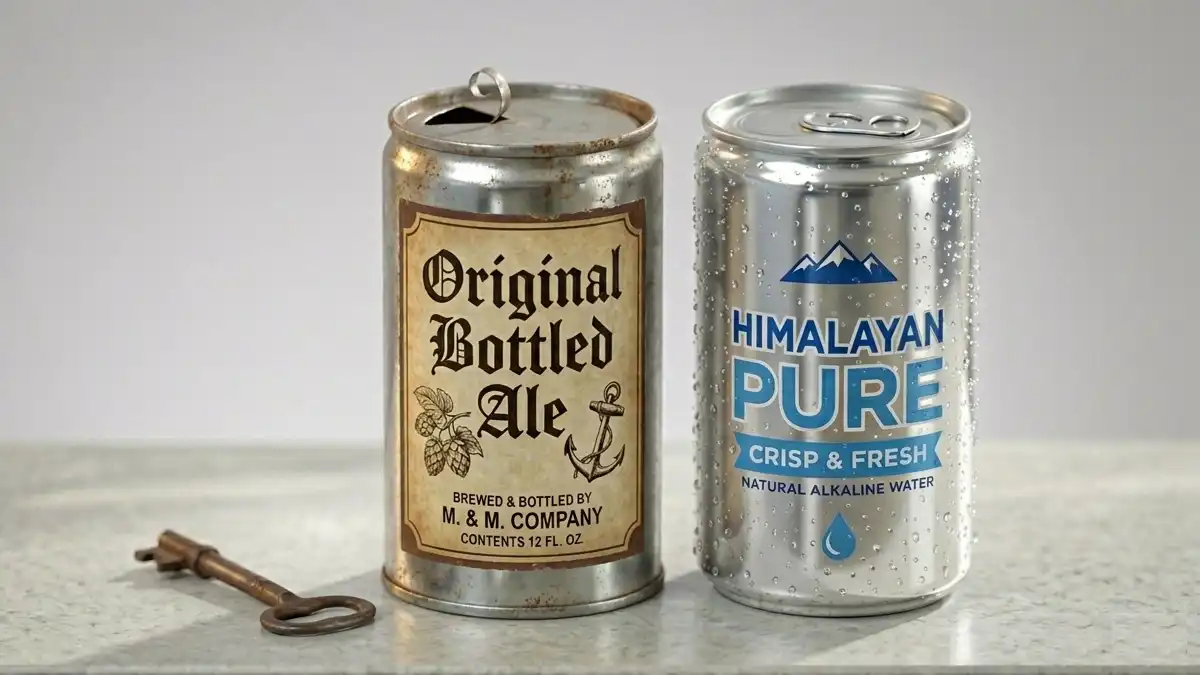
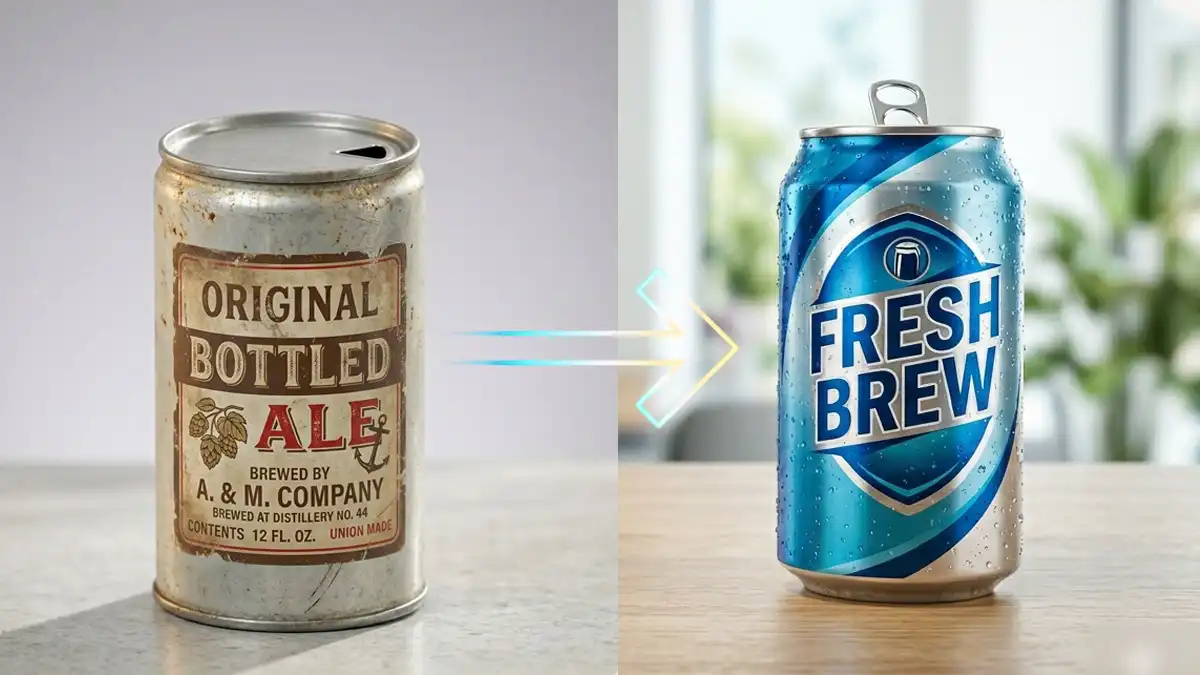
A hidden history of the most overlooked invention in beverage packaging.
That Tiny Metal Tab You Never Think About
Every soda can you open has a hidden piece of engineering most people never think about — the tiny metal tab.
It looks simple, almost disposable… but it is actually the result of two major inventions, a picnic mistake, and a global packaging revolution.
At one point, this “easy-open” design was so controversial that it almost got banned for safety reasons.
Before the pull tab, cracking open a canned drink was not as simple as you might think. Let’s pop the lid on this story.
What Is the Pop Can “Lock” or Pull Tab?
The pop can opening tab (often called a pull tab) is the metal lever attached to the top of a beverage can. When you lift it, the tab pushes a pre-scored section of the lid into the drink, creating an opening. It is a clever one-move system that requires no external tools.
For decades, the pull tab has allowed us to enjoy canned soda, beer, and other drinks instantly. But the design we know today is the result of more than 25 years of engineering evolution.
Before the Tab: How Cans Used to Open
Before the pull tab, canned beverages required a separate tool called a church key. This simple metal punch was used to poke two triangular holes into the flat top of a can—one for pouring and a second smaller hole to let air in so the liquid would flow smoothly.
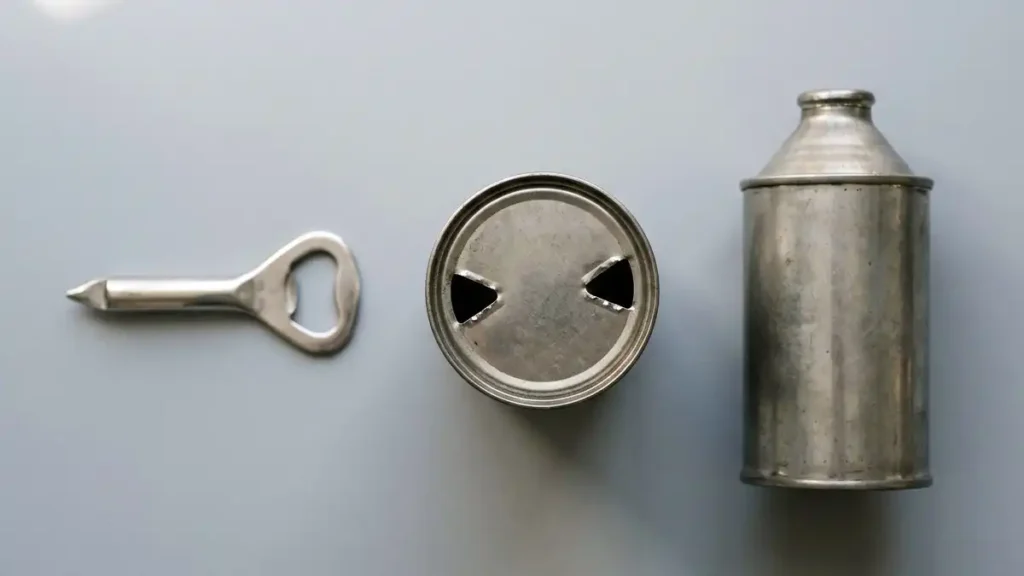
Flat-top cans (which are still used for some canned food items) first became common for beer in the 1930s. Throughout the 1940s and 1950s, both flat-top cans and cone-top cans (which had a narrow, bottle-like neck) coexisted on store shelves. But they all shared a major inconvenience: if you did not have a church key with you, you could not open your drink.
Imagine a summer picnic where you reach for an ice‑cold beer only to realize you forgot the opener. That exact frustration sparked one of the most important packaging inventions of the 20th century.
The Problem That Needed Solving
What started as a simple frustration at a picnic eventually changed how billions of drinks are packaged worldwide.
In 1959, an American engineer and machine tool operator named Ermal Cleon “Ernie” Fraze was enjoying a family picnic in Dayton, Ohio. He reached for a canned beer but quickly discovered he had forgotten his can opener. Using a car bumper, a rock, or any other makeshift tool to open a can is not exactly convenient—or safe.
Fraze was irritated. He thought to himself, “There has to be a better way.”
That moment of frustration ignited a spark of innovation. Fraze, who owned the Dayton Reliable Tool & Mfg. Co., decided to design a can that could be opened without any external tool.
Who Invented the Ring Pull Tab?
The modern pop can tab was invented by Ermal Cleon “Ernie” Fraze, an American engineer from Ohio.
The idea came to him in a very ordinary moment — he had a canned drink… but no opener.
Fraze was not the first person to imagine an easy‑open can, but he was the one who figured out how to attach a pull tab directly to the can top using a rivet. His design was a breakthrough. After several attempts, he developed a metal tab that was riveted to a pre‑scored lid. By lifting the ring, you could peel away a sealed section and open the can in one smooth motion.
Fraze obtained his first patent for the pull‑tab can in 1963. He then licensed the design to the aluminium giant Alcoa. The first commercial use of the ring pull came in 1962 when Pittsburgh Brewing Company introduced Iron City Beer in cans with the new pop‑top opening.
Key dates to remember:
- 1959 – Fraze conceives the idea.
- 1962 – First pull‑tab cans hit the market (Iron City Beer).
- 1963 – Fraze receives his pull‑tab patent.
Within just two years, the pull tab became the standard for beer cans in the United States, and soon after, for soft drinks as well. Over 75 percent of American beer brewers eventually adopted Fraze’s design.
How the Original Design Worked
The original ring pull tab was a detachable tab. It consisted of a small metal ring attached to a scored panel on the can top via a solid rivet. When you pulled up on the ring, the rivet transferred the force to the scored panel, tearing it away from the rest of the lid. The entire piece (the tab plus the detached metal panel) came off completely in your hand.
You then had a clean opening to drink from. But you also had a sharp piece of metal that needed to be disposed of properly.
Why the First Design Had Issues
As convenient as the original pull tab was, it had two major problems:
1. Litter Problem
Because the tab and the detached metal panel were completely removable, people often tossed them on the ground after opening their drink. Pop‑top tabs became a common eyesore on beaches, in parks, and along highways throughout the 1960s and early 1970s. The sight of countless ring pulls littering public spaces became a symbol of disposable‑culture waste.
At one point, the litter problem became so serious that some cities and parks pushed for bans on pull-tab cans entirely.
2. Safety Hazard
Those loose tabs were not just ugly—they were dangerous. The detached metal pieces had sharp edges. Children sometimes picked them up and cut themselves. Even more concerning, people occasionally accidentally swallowed a loose tab that had fallen into their drink. The sharp metal could cause serious internal injuries.
Clearly, the design needed an upgrade.
The Stay-On Tab Revolution (Modern Design)
The solution arrived in the mid‑1970s, thanks to a young engineer named Daniel F. Cudzik.
Cudzik was hired by the Reynolds Metals Company in 1972 to help the company break into the growing aluminium can business. While others saw the littered tabs as simply a nuisance, Cudzik saw an opportunity to improve the product.
His goal: Keep the tab attached to the can after opening.
In 1975, after years of development, Cudzik invented the stay‑on tab (initially dubbed the “ecology tab” due to its litter‑reducing design).
The stay‑on tab quickly replaced the older detachable tabs worldwide. Today, it is the only tab you will find on any standard beverage can.
How the Modern Pop Can Tab Works
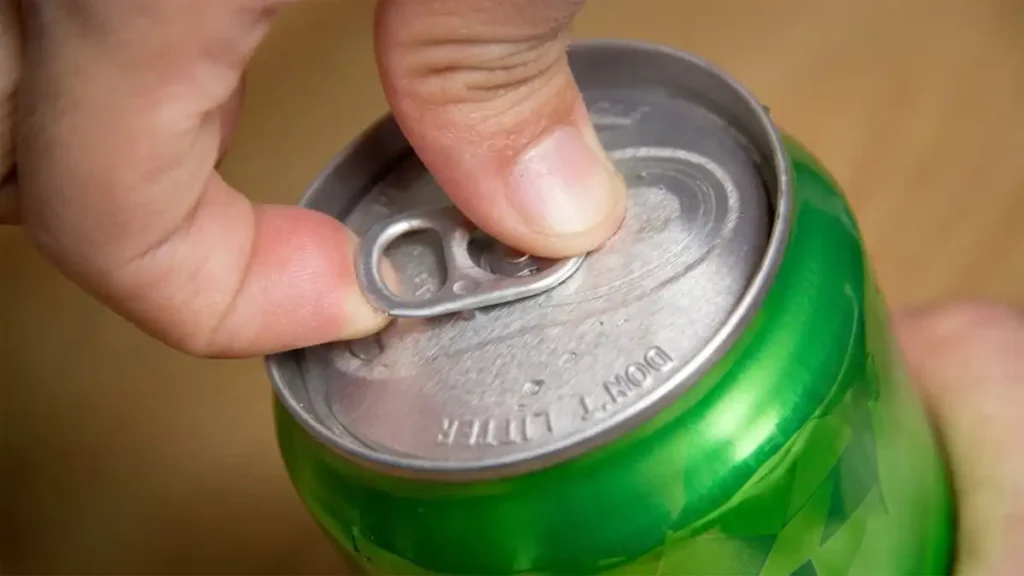
If you look closely at a can of soda today, you will notice that the tab is not actually a lever that pries open a lid. Its mechanism is more clever than that.
Here is how the modern stay‑on tab works:
- The tab is a Class 1 lever.
The rivet (the small circular bump near the front of the tab) acts as the fulcrum. The tab actually shifts from a second‑class lever (to break the internal pressure seal) to a first‑class lever (to push the panel down into the can) in a fraction of a second. - Lifting the back lifts the front.
When you pull up on the back of the tab (the “ring” part), the front end of the tab pushes down on the scored panel. - The panel pops inward.
The force causes the scored metal to break away from the rest of the lid and fold down into the can, creating an opening. The tab itself never detaches—it stays hinged to the lid. - The tab can be rotated.
After opening, the tab can be spun around so that the ring covers the drinking hole, keeping it cleaner until you take a sip.
Technical note: The body of a standard beverage can is typically made of a different aluminium alloy (AA3104) than the lid and tab (AA5182). The lid and tab require a stronger, high‑magnesium alloy to handle the stress of the score line tearing and the lever force without snapping. The pre‑scored panel relies on micro‑precision depth profiling. If the score is too deep, the can bursts under carbonation pressure; if it is too shallow, the tab shears off before pushing the panel open.
This simple but brilliant lever system is why the modern pop can tab is so reliable and why it has remained essentially unchanged for nearly 50 years.
Why This Small Invention Became a Global Standard
The stay‑on tab did more than just reduce litter and prevent injuries. It had other significant benefits:
- Material efficiency: The newer design uses less aluminium per tab because the entire tab stays attached. One estimate suggests that Cudzik’s design has conserved half a billion pounds of aluminium since its introduction.
- Recycling friendliness: Because the tab remains attached to the can, the entire can (lid, tab, and body) can be recycled together more easily. Learn more about the Aluminum can recycling process.
- User safety: The absence of loose, sharp pieces of metal means no more accidentally swallowing a tab or stepping on one at the beach.
- Manufacturing speed: Modern can‑making machinery can produce and attach stay‑on tabs at extremely high speeds, keeping costs low.
Today, over 100 billion aluminium beverage cans are produced every year. That is a testament to the power of great industrial design.
Curious about other innovations in can design? Read Everything about aluminum cans you need to know.
Environmental Impact: What Happens to the Tab Today
That tiny tab is not just convenient — it is part of one of the most recyclable systems on the planet.
Aluminium is one of the most recyclable materials on Earth. A used aluminium can be recycled and back on a store shelf in as little as 60 days. The tab is no exception.
When you recycle an entire aluminium can—including its stay‑on tab—the metal is melted down and reformed into new aluminium products. Because aluminium does not degrade during recycling, it can be reused infinitely.
However, the recycling system is not perfect. In many parts of the world, cans still end up in landfills. To make matters worse, the pull tab’s small size means it can slip through sorting machinery if it becomes detached. Fortunately, with the stay‑on tab, that is far less likely to happen.
Want to do your part? Always recycle your entire aluminium can. That tiny tab is just as valuable as the rest of the container.
For a deeper look at the journey of a can, explore Aluminum can journey: from trash to everywhere.
Fun Facts About Soda Can Tabs
- The early detachable tabs caused so much litter that beaches were covered in them during the 1960s.
- The modern stay-on tab is considered one of the most successful packaging redesigns ever.
- Aluminium cans (including the tab) can be recycled infinitely without losing quality.
- The tab design is so iconic that it is featured in modern industrial design collections.
Final Thoughts: Small Design, Big Impact
The next time you open a soda, you are not just lifting a tab — you are triggering a design that survived decades of failure, safety issues, redesigns, and global adoption.
It is one of those rare inventions that became invisible because it works too well to notice.
And please, recycle the whole can. That tiny tab deserves a second life too.