What Is an Aluminum / Aluminium Rolling Ladder?
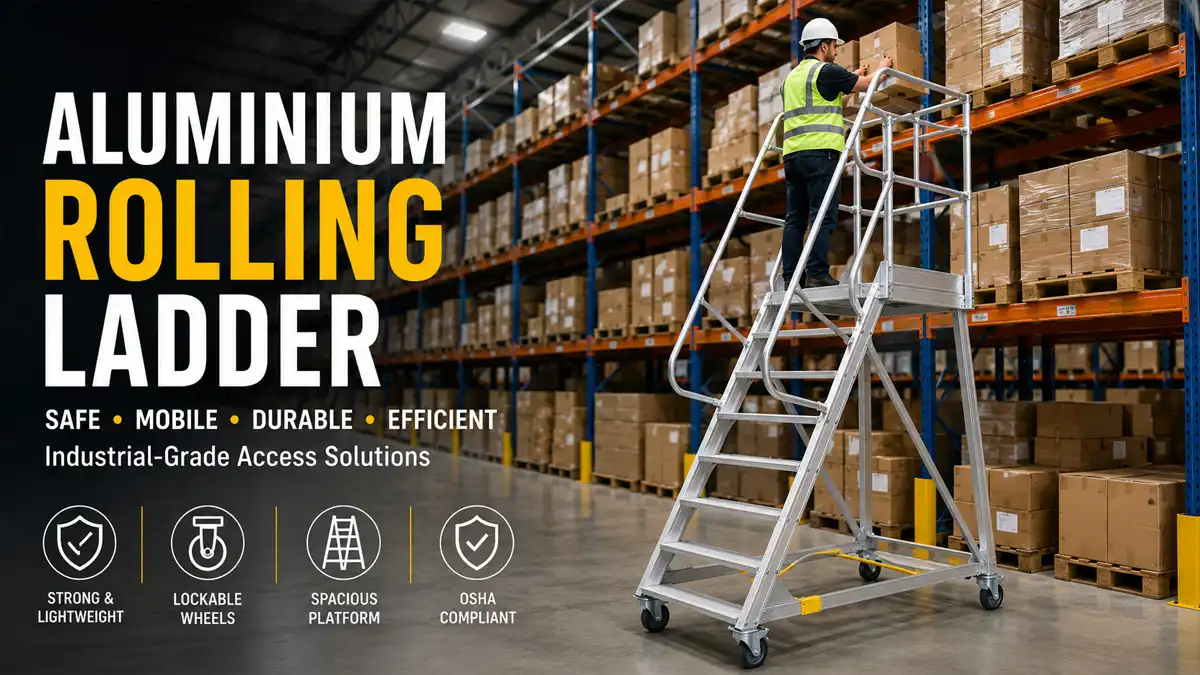
An aluminum rolling ladder—also known as an aluminium mobile platform or industrial rolling ladder—is a heavy-duty access solution designed for commercial and industrial environments. Engineered with casters at the base and an enlarged standing platform at the top, these ladders allow workers to safely access elevated shelving, heavy equipment, and high-inventory zones. To understand more about why aluminum is the preferred material for ladders, check out why aluminium is used in telescopic ladders.
Key Specifications at a Glance
- ✓ Load Capacity: Supports 300 to 350 lbs (Industrial duty rating)
- ✓ Material: High-strength, lightweight aluminum/aluminium alloys
- ✓ Corrosion Resistance: Naturally rust-proof; ideal for wet, chemical, or cleanroom environments
- ✓ Mobility: Up to 50% lighter than traditional steel alternatives
How Does a Rolling Ladder Work?
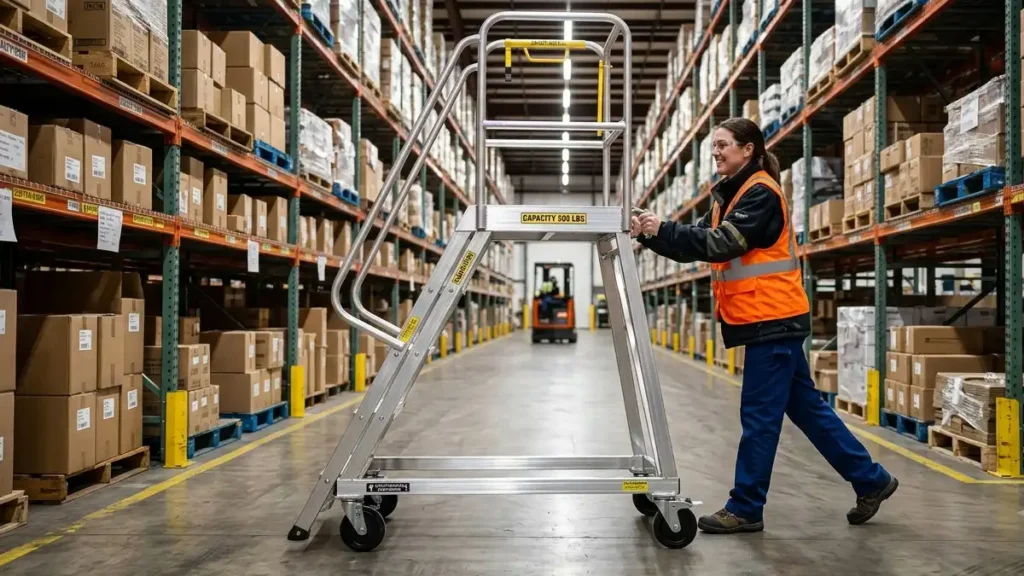
The core functionality centers on its weight-activated caster and locking system:
Spring-Loaded Casters: On smaller models, springs keep the wheels engaged for effortless rolling. When a worker steps onto the ladder, their weight overrides the springs, anchoring the rubber-tipped legs firmly to the floor.
Manual Lock Steps: Taller aluminium ladders (typically 5+ steps) feature a positive locking mechanism. A foot pedal mechanism retracts the casters to drop the ladder securely onto its base before climbing.
OSHA Regulation Highlight: All mobile ladder stands must feature an active system to impede horizontal movement whenever an employee is on the platform. For more on ladder safety standards, see EN131 & OSHA ladder safety standards.
Common Industrial Applications
Because aluminum is highly versatile, non-magnetic, and non-sparking, these rolling platforms are found across several fast-paced sectors:
- Warehouses & Retail: Safe inventory management, high-shelf order picking, and narrow-aisle stocking.
- Manufacturing & Aerospace: Assembly line work, quality control inspections, and aircraft/automotive maintenance.
- Hygienic Environments: Food processing plants, pharmaceutical labs, and cold storage units where strict sanitation and wash-downs prevent steel from being viable.
Types of Aluminium Rolling Ladders
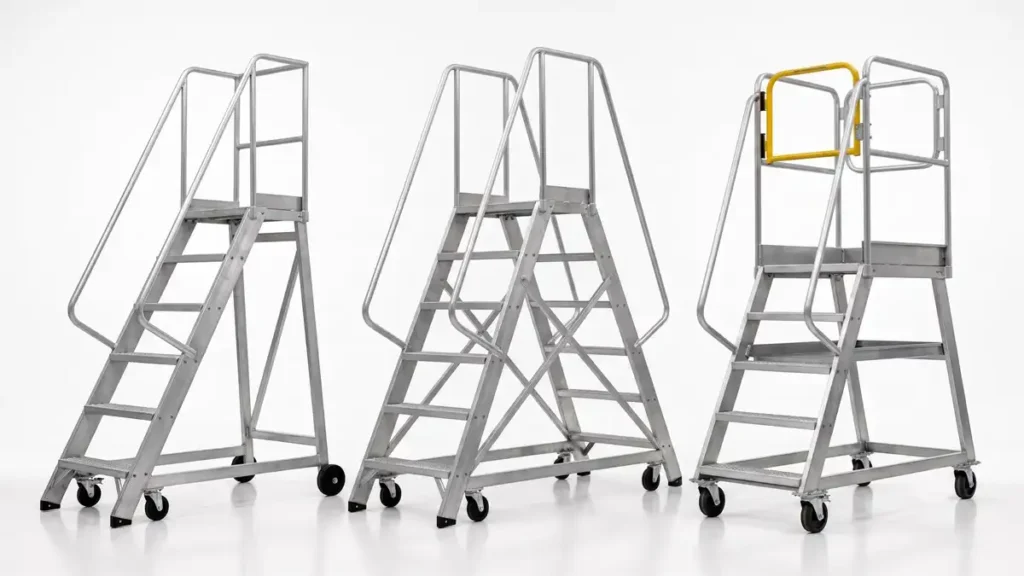
- Single-Side: Standard ladder configuration with steps on one side; ideal for walls and shelving racks.
- Double-Side: Access steps on both sides. Perfect for assembly lines allowing two workers entry or multi-angle tasks.
- Platform Ladder: Built with an oversized top deck intended for long-duration maintenance jobs requiring tool kits.
- Foldable & Extra Tall: Collapsible options save footprint in tight facilities, while extra-tall varieties reach mezzanines up to 20+ feet. Learn more about why cheap telescopic ladders are unsafe before making a purchase decision.
- Stairway Slope (Walk-Down): Features a gentle 50° incline allowing operators to descend safely facing forward while carrying stock.
Aluminum vs Steel Rolling Ladders
Choosing the correct structural material changes your operational efficiency. Here is how aluminum and steel compare directly:
UPSIDES
- ✓ Up to 50% lighter for effortless multi-aisle mobility
- ✓ Natural corrosion resistance without requiring paint/coatings
- ✓ Perfect for food-grade, lab, and outdoor humid spaces
- ✓ Non-sparking and completely non-magnetic
DOWNSIDES
- ✕ Higher upfront purchase price point
- ✕ Lighter mass makes it less optimal for brutal, fixed heavy machinery impacts
| Feature | Aluminum / Aluminium | Steel |
|---|---|---|
| Weight | Ultra-lightweight; rapid deployment | Heavy; high effort to reposition |
| Corrosion | Excellent rust resistance natively | Requires coating/galvanization |
| Best For | Frequent mobility, cleanrooms, moisture | Fixed workstations, extreme rough wear |
How to Choose the Right Height
To avoid safety incidents, calculate your required dimensions using these rules of thumb:
- Platform Height: The actual level where your feet stand.
- Working Height: Calculated as Platform Height + 5 to 6 feet (representing average human reach). Example: To reach a 12-ft rack, look for a 6 to 7-ft platform ladder.
- Ceiling Clearance: Ensure there is at least 6 to 7 feet of open overhead space from the platform to avoid head injuries.
OSHA Compliance & Safety Reference
Ensure any commercial aluminum/aluminium rolling platform conforms strictly to 29 CFR 1910.23 standards. For more guidance on ladder safety and longevity, check out do aluminium telescopic ladders rust and how long aluminium telescopic ladders last.
| OSHA Mandated Feature | Regulatory Framework Reference |
|---|---|
| Minimum Step Width of 16 Inches | 1910.23(e)(1)(i) |
| Slip-Resistant Underfoot Grating | 1910.23(e)(1)(ii) |
| Handrails required for platform heights 4ft+ | 1910.23(e)(1)(v) |
| Total structure must support 4x rated load | 1910.23(e)(1)(iii) |
Regional Alert: While Federal OSHA requires handrails between 29.5 and 37 inches high, CAL-OSHA scales this requirement up to 39–45 inches. Verify your regional compliance before procurement.
EXPERT MAINTENANCE TIPS
- Pre-Use Checks: Inspect weld joints for stress cracks or twist distortion before every shift. Never use a bent aluminum frame.
- Avoid Corrosive Chemicals: Do not clean with highly acidic/alkaline compounds or ammonia, which prematurely compromise aluminum alloys.
- Galvanic Corrosion Alert: If your aluminium ladder relies on steel hardware fasteners, ensure they are properly isolated via non-metallic washers to prevent moisture-induced degradation. For more on this, see aluminium ladder storage tips for humid coastal areas.
- Wheel Lubrication: Apply silicone or graphite spray to caster locks monthly to ensure smooth compliance mechanics.
FAQs
Are aluminum rolling ladders OSHA compliant?
Yes. Professionally manufactured mobile platforms are fully compliant under 29 CFR 1910.23, featuring slip-resistant steps, integrated locking caster systems, and handrails for models with platforms exceeding 4 feet.
Can aluminium rolling ladders be deployed outdoors?
Absolutely. Aluminum naturally resists oxide breakdown and rust, making it superior for outdoor operations. Just monitor contact surfaces for galvanic corrosion if exposed to salt or acid rains when steel bolts are structural elements.
What is the standard weight capacity limit?
Most commercial industrial grades are rated to securely support between 300 and 350 pounds. This metric accounts for the combined weight of the technician along with their tools and replacement inventory parts.