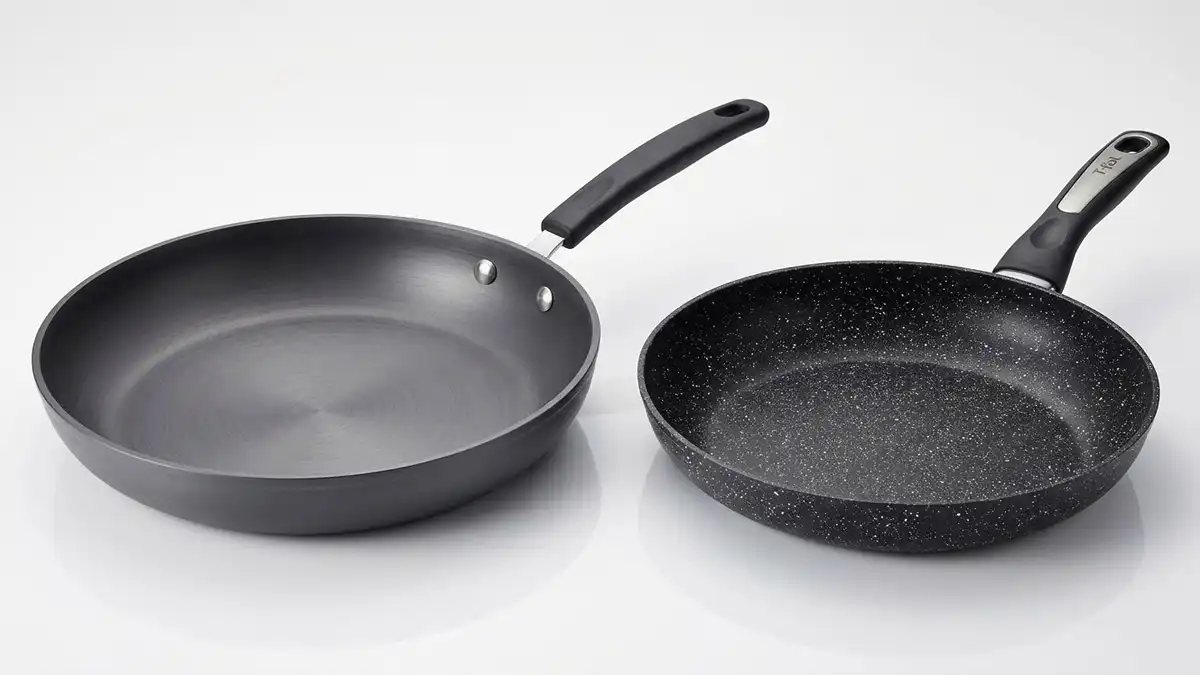
If you shop for cookware long enough, you will eventually run into two terms that sound similar but are actually describing different things: forged aluminum and hard-anodized aluminium.
Many cookware brands market forged aluminium fry pans as thicker, stronger, and more durable than standard aluminium pans. At the same time, hard-anodized cookware is often promoted as a premium option with better durability and scratch resistance. Because both products are usually sold with non-stick coatings, shoppers often assume they are the same thing. They are not.
The simplest way to understand the difference is that forging describes how the aluminum pan body is made, while hard anodizing describes a surface treatment applied to aluminum.
Forged vs Hard-Anodized Aluminum Pans
| Feature | Forged Aluminum | Hard-Anodized Aluminium |
|---|---|---|
| What it is | Manufacturing method | Surface treatment |
| Main purpose | Create a thicker, stronger pan body | Harden and protect the aluminium surface |
| Weight | Usually heavier than basic stamped aluminium | Varies by manufacturer |
| Heat distribution | Excellent | Excellent |
| Durability | Depends on thickness and coating quality | Generally more resistant to surface wear |
| Non-stick performance | Depends on the coating applied | Depends on the coating applied |
| Common marketing claims | Thicker base, even heating, warp resistance | Scratch resistance, durability, long service life |
The Key Difference
- Forged aluminium refers to the way the cookware body is manufactured.
- Hard-anodized aluminium refers to a treatment that hardens and protects the aluminum surface.
In real-world use, the distinction becomes less dramatic than many product descriptions suggest. A forged aluminium pan may feel more substantial in the hand because manufacturers often pair the forging process with thicker aluminium construction. Brands frequently advertise features such as “never warps,” “rock-like durability,” or “three times better release performance.” While these claims sound impressive, long-term user experiences often tell a more nuanced story.
Which Is Healthier?
From a health perspective, neither forged aluminium nor hard-anodized aluminium is automatically healthier than the other. Forging is simply a manufacturing method, while hard anodizing is a surface treatment. In both cases, the bigger health consideration is usually the condition of the cooking surface and non-stick coating. A well-maintained pan used according to the manufacturer’s instructions is generally more important than whether the aluminium body is forged or hard-anodized.
-Ads-
Customer reviews across multiple cookware brands show a common pattern: users are usually very satisfied when the pan is new. Eggs slide easily, cleanup is quick, and heat distribution is consistent. However, after months or years of regular cooking, the conversation often shifts away from the aluminium body itself and toward the condition of the non-stick coating. Some owners report that the coating remains effective for years, while others notice worn spots, reduced food release, or declining non-stick performance despite using plastic utensils and hand washing.
In other words, the aluminium body may remain perfectly functional while the coating becomes the limiting factor.
This is where hard-anodized cookware earns much of its reputation. The anodizing process creates a harder surface than untreated aluminium, which can improve resistance to scratches and everyday wear. That does not automatically make a hard-anodized pan immortal, nor does it guarantee that the non-stick coating will last forever. The coating is still the part most likely to determine the pan’s useful life.
A hard-anodized pan with a worn coating may perform no better than a forged aluminium pan with a worn coating.
For most home cooks, the decision should not come down to marketing terms alone. A well-made forged aluminium fry pan can outperform a poorly made hard-anodized pan, and vice versa. Factors such as coating quality, cooking habits, heat levels, cleaning methods, and overall construction often have a greater impact on long-term satisfaction than the words printed on the box.
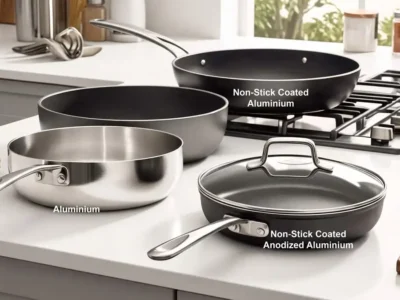
While both forged and hard-anodized cookware are commonly sold with non-stick coatings, the coating itself often has a greater impact on long-term cooking performance than the aluminium underneath. If you’re interested in how coated, anodized, and bare aluminium cookware compare from a cooking and safety perspective, see our guide on Non-Coated Aluminium Pan vs. Non-Stick Coated Pan vs. Anodized Non-Stick Coated Aluminium Pan Utensils.
Final Wrap
If your priority is fast, even heating and a sturdy feel, forged aluminum cookware is a strong option. If you are looking for additional surface durability and are willing to pay a premium for it, hard-anodized cookware may be worth considering. Either way, shoppers should remember that most complaints about modern non-stick fry pans are not about the aluminium underneath—they are about how long the coating continues to perform after hundreds of meals.
Related Articles
Featured
You May Also Like

Aluminium Waste & Scrap: GST Rates & HSN Codes

Aluminum Fence for Any US Climate Durable and Low Maintenanc…

Discover the Best UK Regions for Aluminium Windows Based on …

Career in Aluminium/Aluminum Windows & Doors Business: J…
How Much Do Storm Doors Cost in 2026?