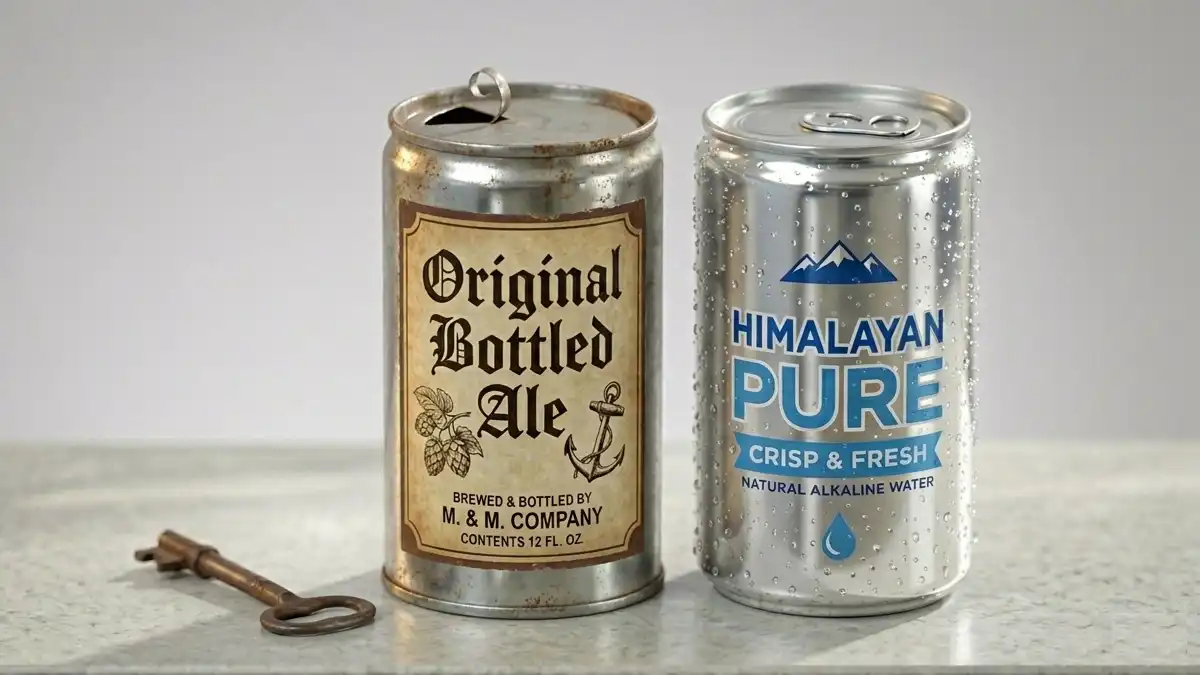
The Truth Brands Never Advertised
Walk down any grocery aisle today, and you’ll see shiny, flawless aluminum cans stacked in perfect rows. They look clean, safe, and modern. But the dirty truth behind early beverage cans is something no beer or soda brand ever put in a commercial.
Before aluminum won, beverage cans were rust-prone, foul-tasting, hard to open, and sometimes even hazardous to your health. Steel cans—the original canned drink containers—had so many hidden problems that the industry nearly gave up on the idea of canned beverages entirely.
So why did steel fail so badly? And how did aluminium come in and fix everything almost overnight? Let’s open the history books—and a few rusty old cans—to find out.
Early Beverage Cans Were Not as Safe as You Think
The first beer and soda cans (steel, 1930s–1950s) were lined with a primitive enamel to prevent the drink from touching bare metal. But that enamel was far from perfect. It often cracked during shipping or storage. When that happened, acidic carbonated drinks came into direct contact with steel.
The result? Rust flakes in your drink, metallic off-flavors, and, in some cases, small leaks that allowed bacteria to enter. Brands didn’t advertise that; instead, they quietly accepted returns and hoped consumers wouldn’t notice.
Rust, Metallic Taste, and Consumer Complaints
Imagine cracking open a cold beer after a long day—only to taste iron and bitterness. That was a common experience with early steel cans. The combination of carbonic acid (from CO2) and steel created a chemical reaction that leached metallic ions into the liquid.
Consumer complaints were so frequent that some breweries considered abandoning cans entirely. The metallic taste problem became the single biggest driver for finding a better material. That material turned out to be aluminium.
Why Steel Cans Struggled with Carbonated Drinks
Carbonated beverages are naturally acidic. Soda contains phosphoric or citric acid, and beer is mildly acidic. Steel is highly reactive with acids, meaning even with protective linings, the risk of corrosion was never completely eliminated.
Here’s what the industry learned the hard way:
- Acids eat through linings over time, making storage life unpredictable.
- Rust weakens the can, leading to sudden leaks in transit.
- Pressure + corrosion could lead to exploding cans in rare cases.
The Hygiene Problem Nobody Talks About
Early steel cans were difficult to sterilize properly. The same crevices and seams that held carbonation also trapped moisture and bacteria. Because of steel’s rough interior surface and the risk of rust, sterilization was never 100% reliable.
Aluminium, by contrast, could be manufactured with incredibly smooth interior surfaces and seamless construction (the modern two-piece drawn can). That changed everything.
Note: Just because it doesn’t rust doesn’t mean the liquid is touching the can body. Curious about what’s inside? Read our deep dive on Coatings Inside Aluminium Cans: Are They Safe? The Invisible “Bag” You Drink From.
How Opening Early Cans Was a Hassle
Before the pull tab (1962) and before aluminum, opening a steel can required a churchkey—a pointed metal tool that punched two triangular holes into the lid. If you didn’t have one, you couldn’t drink. Worse, once opened, the jagged holes were sharp, and people regularly cut their fingers or tongues on steel can lids.
The Turning Point: Why the Industry Needed Change
By the mid-1950s, the beverage industry faced a crisis because steel cans were:
- Rusting and leaking.
- Giving drinks a metallic taste.
- Hard to open safely.
- Heavy and expensive to ship.
The turning point came from Coors Brewing Company and Reynolds Metals betting on aluminium—a material previously considered too expensive for mass-market packaging.
Aluminium Enters the Scene
By 1958, Coors released the first all-aluminum beer can. The advantages were immediate:
- No rust – Aluminium forms a natural oxide layer that resists corrosion.
- No metallic taste – It does not react with carbonated acids like steel does.
- Lighter weight – Cans weighed about 1/3 of steel cans, slashing shipping costs.
- Better printing – The smooth surface allowed vibrant, full-color branding.
How Aluminium Solved These Problems Instantly
| Problem | Steel Can | Aluminium Can |
| Rust | Yes | No |
| Metallic taste | Common | None |
| Weight (12 oz) | ~45g | ~15g |
| Opening method | Churchkey | Pull tab / Stay-on tab |
| Recycling | Inefficient | Infinitely recyclable |
The Shift in Consumer Trust and Experience
Once aluminum cans hit the market, consumer complaints about taste and rust vanished. People loved the lighter weight and the fact that drinks tasted clean every time. Trust returned, and canned beverage sales exploded in the 1970s and 1980s.
Final Wrap: The Real Reason Aluminium Won
The real reason aluminum won isn’t just about weight or cost. It’s about solving problems that steel never could: rust, taste, hygiene, and user experience. The dirty truth behind early beverage cans is that steel was always a compromise. Aluminium, by contrast, was an upgrade in every possible way.
Today, the aluminium can stands as a triumph of material science. It’s light, strong, infinitely recyclable, and—most importantly—it delivers a clean, great-tasting drink every single time.
Related Articles

Featured
You May Also Like

Job Opportunities in Capacitor Can Manufacturing Plant

Condensation on Windows – How to Get rid?

Buying Aluminium Casement Windows? Single, Double or Triple …

Aluminium Industry Beginner’s Guide: Everything Students &am…

Aluminium-Clad Wood Thermal-Break Systems, Before Buying Tip…