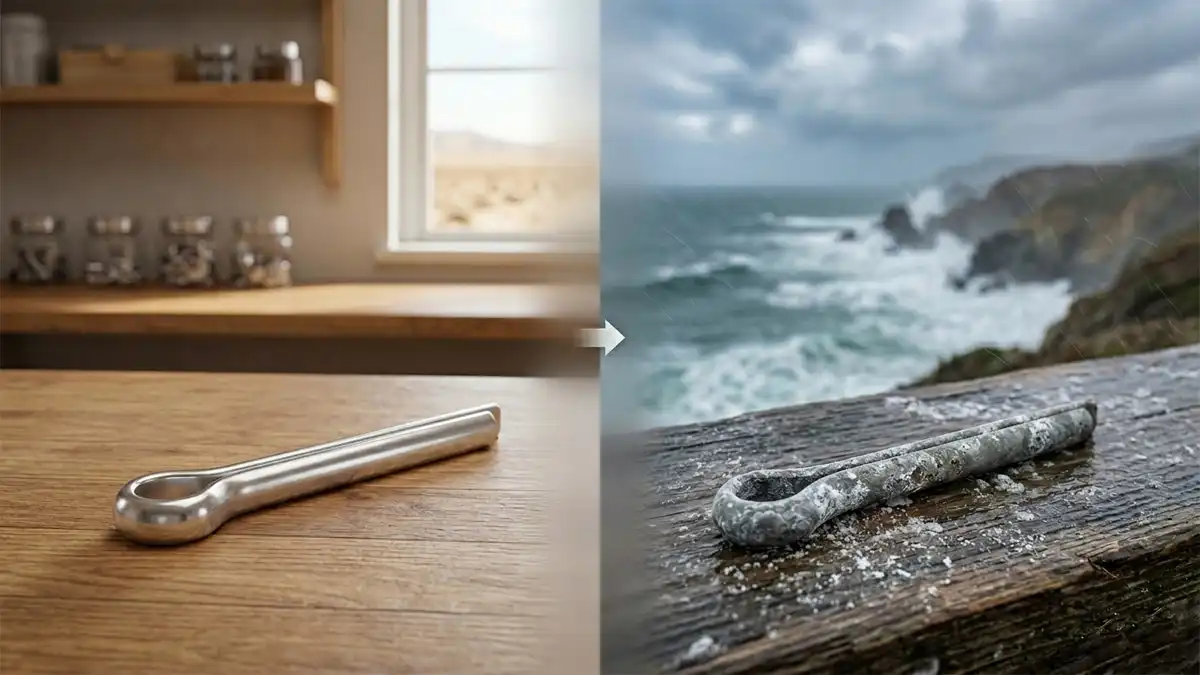
What Happens When Aluminum Is Exposed to Moisture?
To understand whether aluminum cotter pins rust, it helps to first know the difference between rust and corrosion.
- Rust is a specific type of corrosion that occurs only in iron and its alloys (like steel). It forms when iron reacts with oxygen and moisture, producing a flaky, reddish-brown iron oxide that weakens the metal.
- Corrosion is a broader term for the deterioration of a material due to chemical reactions with its environment. Almost all metals can corrode, but the process and appearance vary.
When aluminum is exposed to moisture, it does not rust. Instead, it undergoes oxidation. Aluminum instantly forms a very thin, hard, transparent layer of aluminum oxide (Al₂O₃) on its surface. This layer is extremely stable, adheres tightly to the metal, and acts as a protective barrier against further oxidation. Unlike iron oxide (rust), which flakes away and exposes fresh metal, aluminum oxide seals the surface and stops corrosion from progressing.
Do Aluminum Cotter Pins Rust?
No, aluminum cotter pins do not rust. Rust is exclusive to iron and steel. Because aluminum contains no iron, it cannot produce rust.
However, aluminum can corrode under certain conditions (covered in section 6). But for most everyday environments – dry air, humidity, rain, or even fresh water – the natural oxide layer keeps aluminum cotter pins safe from visible damage. This makes them a preferred choice where steel would quickly turn brown and weaken.
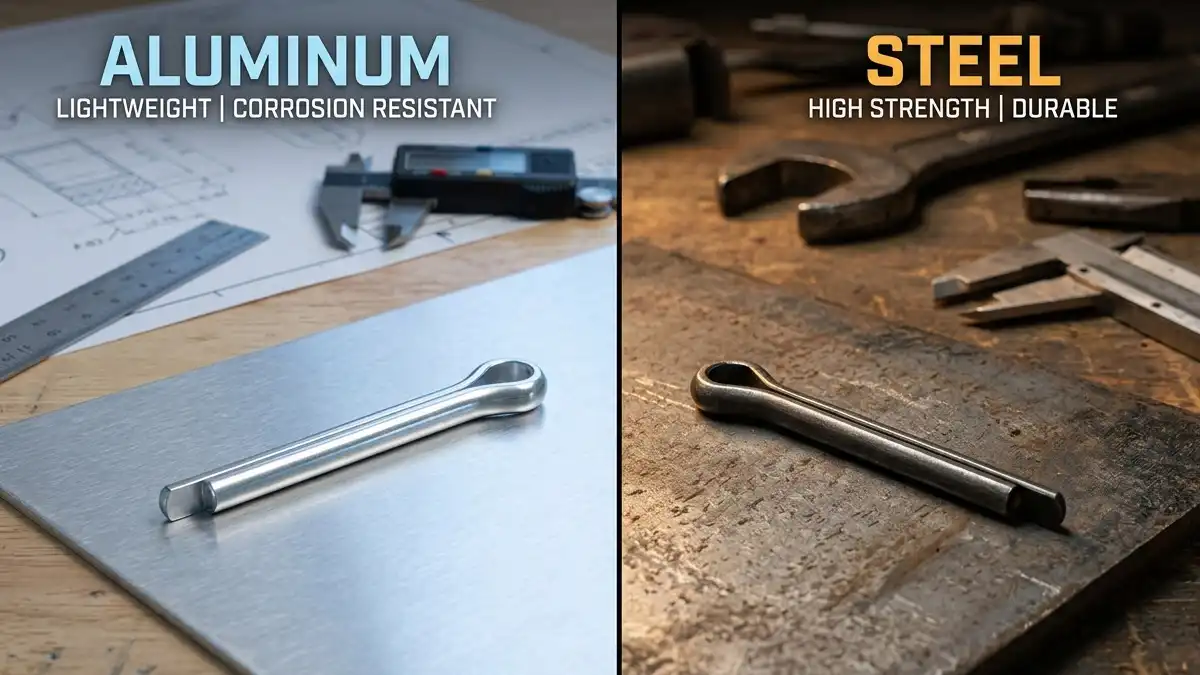
If you are comparing aluminum to steel for a wet environment, you may also find our guide Aluminum Cotter Pin vs. Steel Cotter Pin useful for understanding strength and corrosion trade‑offs.
Performance in Humid Climates
In regions with high humidity (e.g., tropical areas, summer in the southeastern United States), moisture is constantly present in the air. Steel cotter pins can develop surface rust within weeks. Aluminum cotter pins, on the other hand, thrive.
The oxide layer forms even faster in humid air, providing a durable, invisible shield. You may see a very fine, dull grey patina over time, but this is purely cosmetic and does not affect function. For indoor or sheltered outdoor applications in humid climates, standard (non‑anodized) aluminum cotter pins perform excellently.
Performance in Rainy Climates
Rainy climates introduce frequent wet‑dry cycles – equipment gets soaked, then dries, then soaked again. This cycle can accelerate rust on steel because moisture seeps into microscopic cracks. For aluminum cotter pins, rain is rarely a problem.
- Outdoor equipment (furniture, gates, agricultural machinery): Aluminum cotter pins resist water pooling and do not swell or seize.
- Agricultural and utility applications (sprayers, livestock equipment): Exposure to rain plus fertilizers or chemicals is still manageable, though chemical compatibility should be checked.
- Long-term durability: Even after years of rain exposure, aluminum cotter pins retain their mechanical strength. The oxide layer may become thicker and more protective.
Nevertheless, in very aggressive environments (acid rain or industrial fallout), anodized aluminum cotter pins offer an extra safety margin.
Performance in Coastal and Saltwater Environments
This is where the game changes. Coastal climates bring salt spray and high humidity, which are highly corrosive to many metals. For aluminum, salt can attack the oxide layer over time, leading to pitting corrosion (small holes).
- Salt spray exposure – Near the ocean, microscopic salt particles settle on the cotter pin. Salt absorbs moisture and creates a conductive film that can promote localized corrosion.
- Marine equipment (boat rigging, dock hardware, trailer components): Aluminum cotter pins are widely used because they are lightweight and do not rust, but they are not immune to saltwater corrosion. Alloy choice matters greatly. High‑strength alloys like 7075 are more susceptible to stress corrosion cracking in salt environments than marine‑grade alloys like 5052 or 5086. For cotter pins, which are small and not highly stressed, 6061 or anodized 6061 performs well.
- Corrosion risks near the ocean – In direct saltwater immersion or constant spray, expect some surface pitting over months or years. For critical marine applications, anodized or specially coated aluminum cotter pins are recommended, or you may switch to stainless steel cotter pins (which are rust‑resistant but heavier).
For a deeper understanding of aluminum’s behavior in different alloys and finishes, see our article Good Climate for Anodized Aluminium.
Can Aluminum Cotter Pins Corrode?
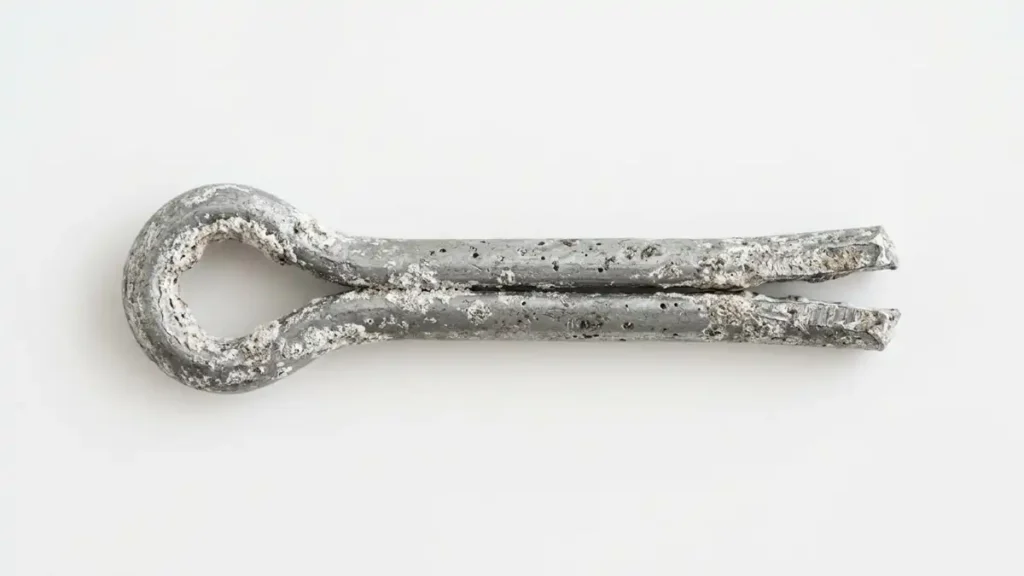
Yes, aluminum can corrode, but not as rust. The two main types of corrosion that affect aluminum cotter pins are:
Pitting Corrosion
- Small, deep holes appear on the surface.
- Occurs when the oxide layer breaks down locally (e.g., by chlorides from saltwater).
- Usually cosmetic unless pits become large enough to reduce cross‑section.
Galvanic Corrosion
- This is the bigger risk. When aluminum is in direct electrical contact with a more noble metal (e.g., stainless steel, copper, brass) in the presence of an electrolyte (like saltwater), the aluminum acts as a sacrificial anode and corrodes rapidly.
- Prevention: Avoid direct aluminum‑to‑stainless contact in wet conditions. Use insulating washers, coatings, or choose a compatible fastener material.
Aluminum cotter pins are rarely the primary structural component, so even if some pitting occurs, the pin usually remains functional. However, for high‑reliability applications (aircraft, marine safety gear), inspect regularly.
Aluminum vs Steel Cotter Pins in Wet Environments
| Feature | Aluminum Cotter Pin | Steel Cotter Pin (carbon steel) |
|---|---|---|
| Rust | No | Yes (rapid in wet conditions) |
| Corrosion type | Pitting / galvanic | Uniform rust, flaking |
| Fresh water / rain | Excellent | Poor (rust within days/weeks) |
| Humid air | Excellent | Fair (surface rust) |
| Coastal / salt spray | Good (anodized better) | Very poor (severe rust) |
| Direct saltwater immersion | Fair to good (depends on alloy) | Unacceptable (rusts quickly) |
| Maintenance | None to occasional cleaning | Frequent oiling or painting |
| Best use cases | Outdoor, marine, aerospace, humid regions | Dry indoor, oil‑protected, heavy‑load applications |
Environmental performance summary (at a glance):
- Dry Climate – Excellent (aluminum) / Good (steel)
- Humid Climate – Excellent (aluminum) / Poor (steel)
- Rainy Climate – Very Good (aluminum) / Very Poor (steel)
- Coastal Climate – Good to Very Good with anodized (aluminum) / Unacceptable (steel)
- Direct Saltwater Exposure – Depends on alloy & anodizing (aluminum) / Unacceptable (steel)
Verdict for wet environments: Aluminum cotter pins are almost always superior to plain steel. If maximum corrosion resistance is needed (saltwater immersion), upgrade to stainless steel cotter pins or anodized aluminum.
When Should You Choose Anodized Aluminum Cotter Pins?
Anodizing is an electrochemical process that thickens the natural oxide layer, making it harder, thicker, and more resistant to corrosion and wear. For aluminum cotter pins, anodizing provides:
- Extra protection – Especially in coastal climates, humid industrial environments, or where the pin may be exposed to chemicals or salt.
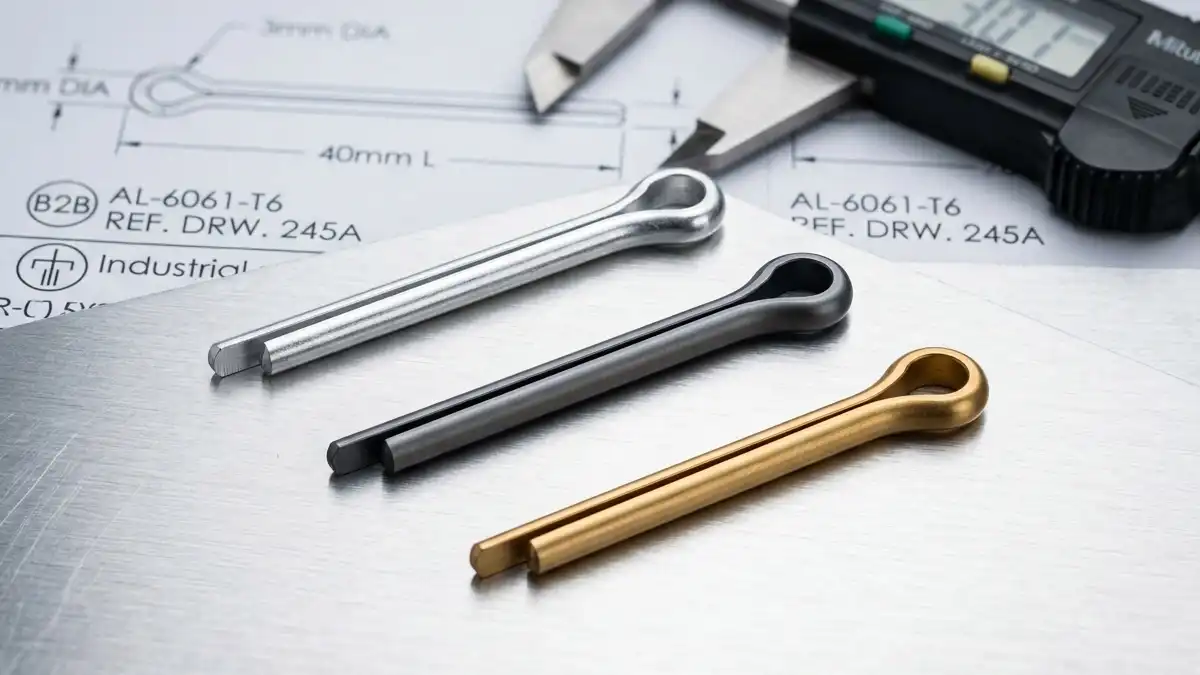
- Aesthetic options – Anodized pins can be dyed in colors (gold, black, red) for easy size identification.
- Improved surface hardness – Reduces scratching and galling.
You should choose anodized aluminum cotter pins when:
- The pin will be used near the ocean or in salt spray.
- The assembly is exposed to frequent condensation or direct rain (though non‑anodized also works well).
- Galvanic corrosion is a concern – anodizing adds electrical insulation (though not perfect).
- You want long‑term peace of mind without periodic inspection.
For everyday indoor or dry outdoor use, non‑anodized aluminum cotter pins are perfectly adequate and cost less.
FAQs
Q1: Will an aluminum cotter pin turn green or white after rain?
Aluminum does not turn green like copper. However, in severe galvanic or atmospheric corrosion, aluminum can develop a white, powdery crust (aluminum hydroxide). Under normal rain exposure, you will typically only see a dull grey patina – that is normal and protective. If you see white powder, it indicates active corrosion that should be addressed.
Q2: Can I use an aluminum cotter pin on a boat trailer that gets dipped in saltwater?
Yes, but with caution. For occasional freshwater dipping, standard aluminum works. For regular saltwater immersion, use anodized aluminum or switch to stainless steel cotter pins. Also, check for galvanic corrosion if the pin contacts stainless steel components.
Q3: How long does an aluminum cotter pin last outdoors?
In a typical rainy or humid climate, expect 5–10+ years with minimal corrosion. In dry climates, essentially indefinite. In coastal areas, anodized pins can last several years; non‑anodized may show pitting after 1–2 years.
Q4: Do I need to paint or oil aluminum cotter pins?
No. Painting is unnecessary and may even trap moisture. Oil is not required – the natural oxide layer is sufficient. In extremely aggressive chemical environments, a specialty coating would be advised.
Q5: What about aluminum cotter pins used with stainless steel nuts?
This is a classic galvanic couple. In dry conditions, no problem. In wet or salty conditions, the aluminum pin will corrode preferentially. Isolate with a plastic washer or use an anodized pin to reduce contact.
Q6: Are there any environments where aluminum cotter pins should be avoided?
Yes. Avoid strong acids (e.g., hydrochloric acid) or strong alkalis that can dissolve the oxide layer. Also avoid direct contact with wet copper or brass. For high‑temperature (>200°C) applications, aluminum loses strength.
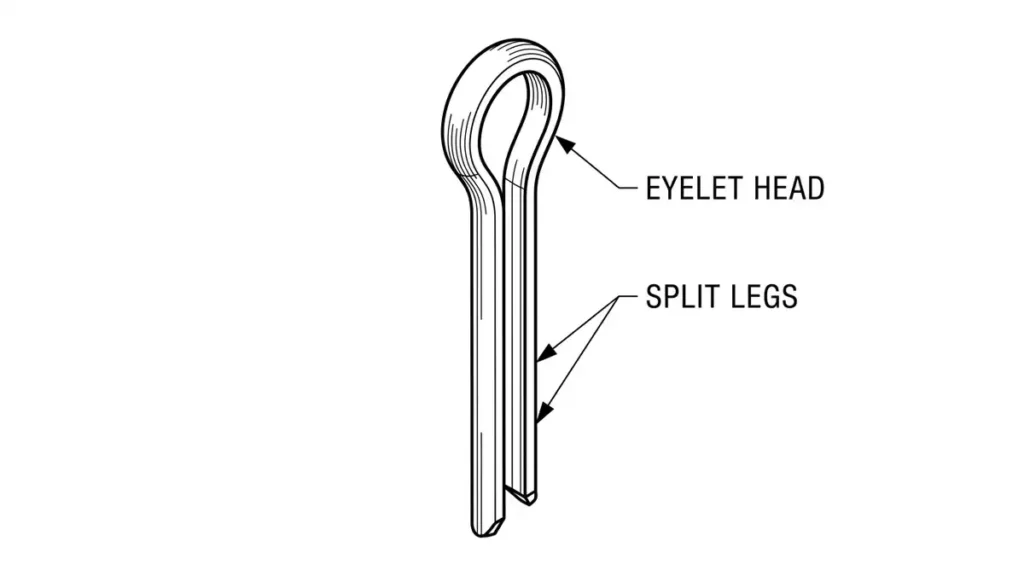
Image Prompt #1 – Cotter Pin Diagram (for Section 1 or 2)
Clean black‑and‑white line‑art illustration of a standard cotter pin (split pin). The drawing shows an isometric view with a rounded semicircular head and two straight, parallel legs extending downward. An exploded callout indicates the “eyelet head” and “split legs.” No background, white canvas, technical blueprint style, crisp 1pt lines, high contrast, vector‑style, 1200×800 pixels, suitable for embedding in a technical article.
SEO Metadata for Diagram Image
| Field | Value |
|---|---|
| Filename | cotter-pin-split-pin-diagram.jpg |
| Alt Text | Line diagram of a standard metal split cotter pin showing the eyelet head and straight legs |
| Title Tag | Cotter Pin Diagram – Split Pin Anatomy |
| Caption | A standard cotter pin (split pin) consists of a semicircular head and two prongs that are bent after insertion to lock components in place. |
Image Prompt #2 – Galvanic Corrosion Visual (for Section 6)
Macro close‑up photograph of an aged aluminum cotter pin installed on a stainless steel bolt in a wet, salty environment. The aluminum pin shows clear surface degradation: white powdery crust, small pits, and dull grey discoloration. The stainless steel bolt remains shiny. Dark, moody lighting with slight blue‑green tint to emphasize moisture. Shallow depth of field, focus on the corroded pin, background blurred showing a marine or industrial setting. Ultra‑realistic, 1200×800 pixels, 8K resolution.
-Ads-
SEO Metadata for Corrosion Image
| Field | Value |
|---|---|
| Filename | aluminum-cotter-pin-galvanic-corrosion.jpg |
| Alt Text | Close-up view of surface degradation and white pitting oxidation on an outdoor aluminum mechanical fastener near a stainless steel bolt |
| Title Tag | Galvanic Corrosion on Aluminum Cotter Pin |
| Caption | When an aluminum cotter pin contacts a more noble metal (like stainless steel) in a wet environment, galvanic corrosion can occur, producing white aluminum hydroxide powder and pitting. |
These two images, placed near sections 1–2 and section 6 respectively, will break up the text, illustrate key concepts, and improve reader engagement. The revised article now has a single streamlined comparison table plus a bullet summary, and FAQ #1 is technically accurate.