Aluminum cans are a marvel of modern packaging: lightweight, durable, and infinitely recyclable. They don’t just reduce waste—they drive a powerful circular economy. The moment you toss that can into the bin, a journey begins that can see it back on a store shelf in as little as 60 days.
This complete guide will walk you through why recycling aluminum cans matters, how the 7-step process works, and the critical role you play in capturing the massive 95% energy savings by closing the loop.
Why Recycling Aluminum Cans Matters
Recycling aluminum cans is one of the most effective actions we can take for the environment. Unlike plastic, aluminum can be recycled infinitely without losing its quality. This means the aluminum in a can today could be part of a car, a window frame, or another can decades from now. Recycling conserves natural resources, reduces landfill waste, and dramatically cuts down on the energy required to produce new metal.
The Recycling Process Step by Step

The journey of an aluminum can is a finely tuned process:
- Collection & Sorting: Consumers place cans in recycling bins. At Material Recovery Facilities (MRFs), they are separated from other materials using magnets (which repel aluminum) and eddy currents.
- Crushing & Baling: The sorted cans are crushed and compressed into large bales for efficient transportation.
- Decoating & Shredding: At the recycling plant, bales are shredded into small pieces. A hot air process removes the decorative labels and coatings.
- Melting: The shredded aluminum is melted in a large furnace at around 660∘C (1220∘F).
- Purification: The molten aluminum is treated to remove any impurities, resulting in a high-quality material.
- Ingot Casting: The purified aluminum is cast into large blocks called ingots.
- Rolling: These ingots are rolled into thin sheets, which are then used to manufacture new aluminum cans.
(Visual Suggestion: A 7-step infographic showing a can moving through collection, baling, melting, and back to a new can would be highly effective here.)
For more on the fundamentals of aluminum, you can read our guide on What is Aluminium and How is it Made?.
How Long Does It Take for a Can to Be Recycled?
The aluminum can recycling loop is incredibly fast. A used can can be collected, melted, reformed, and back on a store shelf as a new can in as little as 60 days. This rapid turnaround makes it one of the most efficient recycling processes in the world.
Energy Savings from Recycling
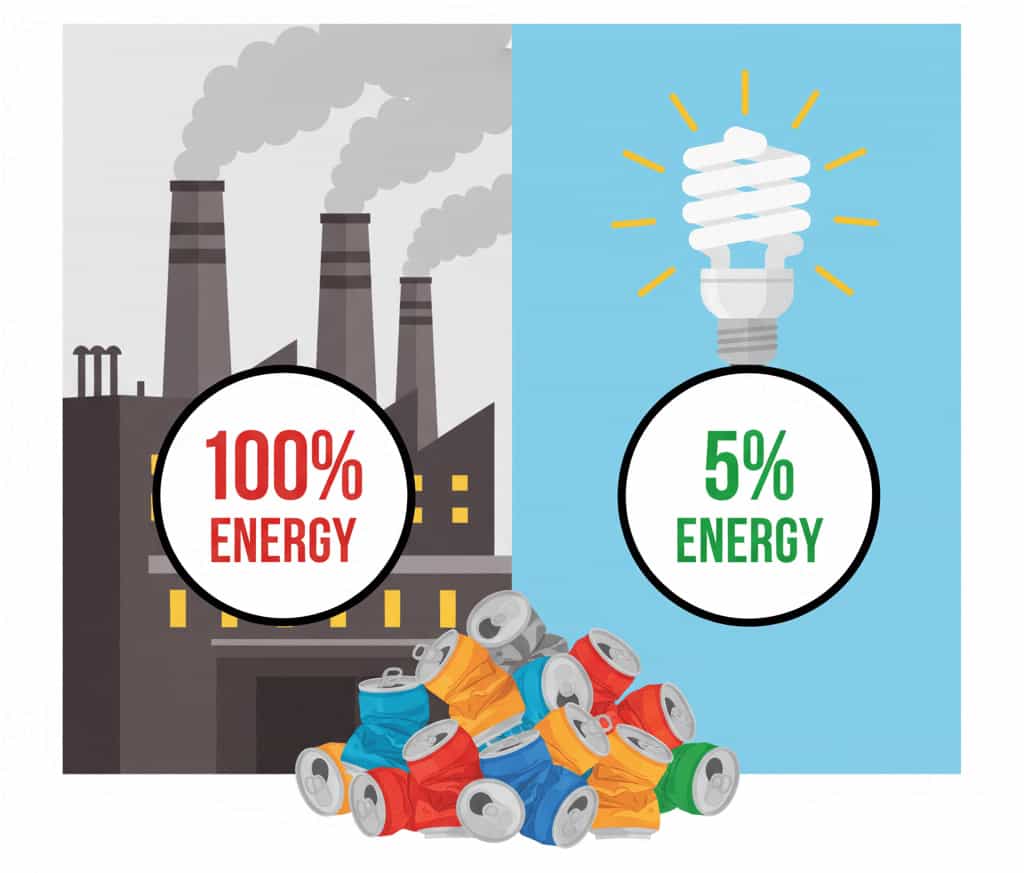
This is where aluminum recycling truly shines. Producing new aluminum from bauxite ore is extremely energy-intensive. Recycling aluminum, however, saves up to 95% of the energy. Recycling a single aluminum can save enough energy to power a TV for three hours. This massive energy saving also translates to a significant reduction in greenhouse gas emissions.
Global Aluminum Can Recycling Rates
Recycling rates vary significantly across the globe. Countries like Brazil, Germany, and Japan have consistently high recycling rates, often exceeding 90%. However, the global average is lower, and millions of tons of valuable aluminum still end up in landfills each year, highlighting the need for continued improvement in collection and recycling infrastructure.
Common Myths About Recycling Aluminum

- Myth: Cans with food residue can’t be recycled. Fact: A small amount of residue is acceptable as it burns off in the melting process. However, you should always empty and give cans a quick rinse.
- Myth: The pull-tab is more valuable than the can. Fact: This is an old rumor. Both the tab and the can are made from the same high-quality aluminum and are recycled together.
- Myth: Aluminum foil can go in the same bin as cans. Fact: While recyclable, foil is often thinner and can be contaminated with food. Check our guide on How to Recycle Aluminum Foil Properly for specifics.
Challenges in Aluminum Can Recycling
Despite its benefits, the system faces challenges. Contamination from other materials in recycling bins is a major issue. Public awareness and participation are inconsistent, and in some regions, a lack of convenient recycling infrastructure makes proper disposal difficult.
Role of Consumers in the Recycling Cycle

You are the most important link in the recycling chain. Your actions directly impact the success of the loop:
- Recycle Every Can: Make it a habit to recycle every single aluminum can you use.
- Clean and Empty: Give cans a quick rinse to reduce contamination and pests.
- Know Your Local Rules: Follow your municipality’s recycling guidelines to ensure your efforts aren’t in vain.
Recycled Aluminum – Where Does It Go?
Recycled aluminum cans don’t just become new cans. This versatile material finds new life in various industries. It is used in automotive parts, building materials like window frames and Aluminium Cladding, and even in consumer goods like Aluminum Bicycles. Learn more about its journey in our article on Understanding Aluminium Waste and Scrap.
The Future of Aluminum Can Recycling

The future is focused on closing the loop completely. Innovations include designing cans for even easier recycling, improving sorting technology at recycling facilities, and developing campaigns to boost public participation. The ultimate goal is a true circular economy where no aluminum is wasted.
FAQs
Do I need to remove the label from my aluminum can?
No, this is not necessary. The decorating process in the recycling furnace will remove the labels.
Can crushed cans be recycled?
Yes, crushing cans is generally fine and can save space. However, some Material Recovery Facilities (MRFs) prefer uncrushed cans because their automated sorting systems use shape recognition. Always check with your local municipality’s recycling guidelines to ensure proper sorting.
Is it worth it to recycle just one can?
Absolutely. As we’ve seen, the energy savings from recycling a single can are significant. Every can counts.
What are aluminum cans made of?
They are typically made from an aluminum-manganese alloy (AA3104 for the body and AA5182 for the lid), designed for strength and formability. For a deep dive, see Everything About Aluminum Cans You Need to Know.
Are aluminum cans sustainable?
Yes, due to their infinite recyclability and the massive energy savings from using recycled content, aluminum cans are one of the most sustainable packaging options available.
You May Like to Read: