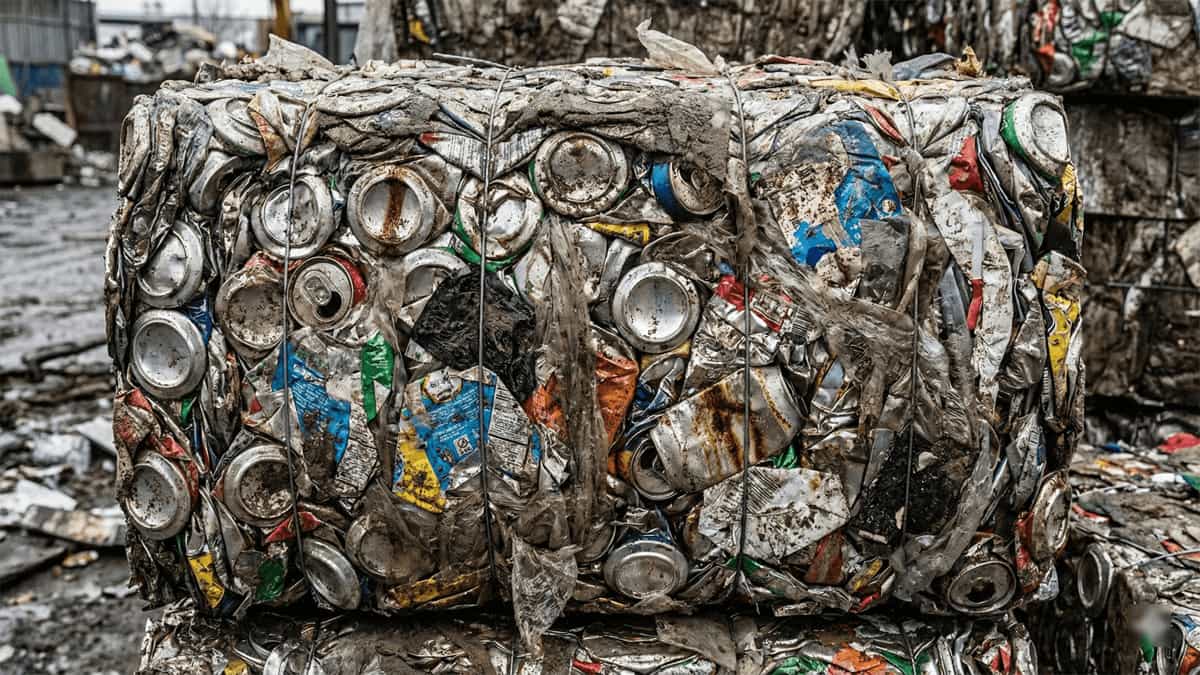
— Inside the recycling plant: where good intentions meet hard industrial realities
The Convenient Lie
You toss your can in the recycling bin. You feel good. You’ve done your part.
The shiny stats say “75% of all aluminium ever produced is still in use.”
Brands proudly label cans “100% recyclable.”
But here’s the dirty secret: “100% recyclable” does not mean “100% recycled.”
Between your blue bin and that “new” can on the shelf, a complex, messy, and often inefficient system stands in the way. This isn’t about blaming consumers—it’s about revealing the structural cracks in the global recycling chain that even industry insiders whisper about.
The Collection Gap
Where Cans Fall Through the Cracks
The Myth: Every can you recycle gets collected.
The Reality: Collection rates vary wildly—from over 90% in Germany to below 30% in parts of Southeast Asia and Africa.
- Formal Systems Failures: Even in developed nations with “curbside recycling,” cans are lost to:
- Single-stream contamination (when cans get crushed with glass, plastic, and food waste)
- Public bins that overflow into landfills
- “Wishcycling” — where non-recyclables contaminate entire loads
- The Informal Lifeline: In much of the world, it’s not municipal trucks but informal waste pickers who collect cans. Their efficiency depends on market prices, accessibility, and safety—factors that fluctuate daily.
- Data Point: In the U.S., the aluminum can recycling rate peaked near 65% in the 1990s. Today, it hovers around 45%. That means more than half of cans never make it to a recycling facility.
Inside the Plant
When “Recyclable” Meets “Unrecoverable”
Once cans reach a facility, the real triage begins.
- Contamination is King-Killer:
- A single contaminated can (filled with sand, liquid, or food residue) can degrade an entire melt batch.
- Plastic liners and labels must be completely burned off—energy-intensive and not always perfect.
- Different aluminium alloys (beverage can vs. automotive scrap) mixed together can create unusable metallurgical soup.
- The Shredding Problem: Modern single-stream plants shred everything. Paper, plastic, glass, and metals get blended before sorting. Thin aluminium cans can become:
- “Fines” — small particles that fall through screens and are lost during sorting
- Embedded in plastic or paper bales, sold overseas, and never recovered
- Plant Economics: When aluminium prices drop, some MRFs (Material Recovery Facilities) stockpile cans instead of selling them. If prices stay low long enough, those stockpiles can become permanent storage.
For a deeper look at what constitutes “waste” in this industry, see: Understanding Aluminium Waste and Scrap
The Alloy Issue: Not All Aluminum is Created Equal

This is the technical truth most PR campaigns skip:
- Beverage cans use a specific alloy: Typically AA3004 or AA3104 for the body and AA5182 for the lid.
- Contamination with other alloys (from auto parts, window frames, cooking foil) reduces quality and can make the batch unsuitable for new cans.
- Result: Much “recycled” aluminium gets downcycled into lower-value products like automotive parts or construction materials—not back into cans.
Want to see the chemical difference between a can body and a lid? Compare the specs yourself with our free Aluminium Alloy Comparison Tool.

The Global Black Hole:
Export and “Ghost Recycling”
- Developed nations often export baled recyclables to countries with cheaper labor and looser environmental regulations.
- Tracking stops at the port. What’s counted as “recycled” in Europe may be:
- Improperly sorted and partially landfilled in another country
- Burned in open-air pits to recover metals, releasing toxic fumes
- Abandoned when market prices crash
- This isn’t recycling—it’s displacement.
The Human Element
The Informal Sector’s Double-Edged Sword
In countries like India, Brazil, and Indonesia, informal waste pickers are the backbone of aluminium recycling. But this system has vulnerabilities:
- Health hazards: No protective gear, exposure to toxins, unstable incomes.
- Market volatility: Middlemen dictate prices. When aluminium prices fall, collection stops.
- Efficiency limits: They target easy wins—whole cans in accessible areas. Cans in mixed waste, rural areas, or contaminated streams are often left behind.
Learn about the types of scrap that feed this system: Types of Aluminum Scraps & Recycling Process
The Packaging Problem
When Design Hinders Recycling
- Shrink sleeves: Full-body plastic labels that survive the washing process and contaminate aluminium melt.
- Painted cans: Some paints contain heavy metals or produce toxic off-gases when burned off.
- Innovation backfire: New “easy-open” lids with plastic components or mixed metals complicate separation.
The “Wishcycling” Epidemic
How Good Intentions Create Industrial Headaches
Consumers toss non-recyclables into the bin, hoping they’ll magically be recycled. This includes:
- Aerosol cans (pressurized, often contain hazardous residues)
- Aluminium foil (often contaminated with food, too thin for some sorters)
- Pie trays, takeout containers (food contamination, mixed materials)
These items increase processing costs and reduce the yield of high-quality aluminum scrap. For more on what should be recycled, see: Aluminum Can Recycling Process
The Geographic Divide
Where You Live Determines If Your Can Lives Again
Table: Data estimates based on global recycling reports
| Region | Estimated Can Recycling Rate | Primary Challenges |
|---|---|---|
| Western Europe | 70-85% | Contamination in single-stream, export uncertainty |
| United States | 45-50% | Inconsistent state policies, low landfill costs |
| Southeast Asia | 20-40% | Reliance on informal sector, limited processing plants |
| Africa | 10-30% | Lack of collection infrastructure, low domestic demand |
The Path Forward: Real Solutions Beyond Greenwashing
- Deposit Return Schemes (DRS): Proven to boost rates to 90%+ in Germany, Norway, and parts of the U.S.
- Better Can Design: Standardized alloys, easily removable labels, and avoidance of plastic components.
- Formalizing the Informal Sector: Equip waste pickers with safety gear, fair pricing, and integration into formal systems.
- Advanced Sorting Technology: AI-powered optical sorters, robotics, and improved eddy current systems.
- Transparent Tracking: Blockchain and other tech to trace materials from bin to new product, eliminating “ghost recycling.”
- Consumer Education That’s Honest: Teach what actually gets recycled, not just what’s “recyclable.”
For entrepreneurs, this represents opportunity: Business Ideas: Establishing an Aluminium Recycling Plant
The Bottom Line: A Call for Radical Transparency
The aluminium can is still one of the most sustainable packaging options on the planet. But its potential is being squandered by:
- Complacency (“We’re already better than plastic!”)
- Over-simplified messaging (“Just recycle!”)
- Systemic underinvestment in collection and sorting
True sustainability requires:
- Admitting the current system’s failures
- Investing in infrastructure, not just marketing
- Measuring real circularity, not just recyclability
Final Wrap: From “Recyclable” to Actually Recycled
The gap between “100% recyclable” and “100% recycled” is filled with broken machinery, contaminated bales, informal labor, and good intentions gone wrong.
Closing that gap requires moving beyond feel-good labels and confronting the messy, expensive, and unglamorous reality of material recovery.
Aluminum cans can be a circular economy superstar—but only if we stop celebrating what’s possible and start fixing what’s practical.
The hard truth? Recycling is not a magic bin. It’s an industrial process—and like any industry, it needs investment, innovation, and honesty to work.
*Next time you hear “infinitely recyclable,” ask: “But is it infinitely *collected*? Infinitely *sorted*? Infinitely *reprocessed?”
That’s where the real conversation begins.
Related Articles

Featured



You May Also Like

What Exactly Is an Aluminium Alloy?

Aluminium Sliding Windows for QLD’s Heat & Humidity: Sta…

Want to Start an Offline Aluminium Business? No One Tells Yo…

Different Types of Aluminum Rods and Their Uses

Aluminum Tungstate (Al₂(WO₄)₃): The Complete Guide