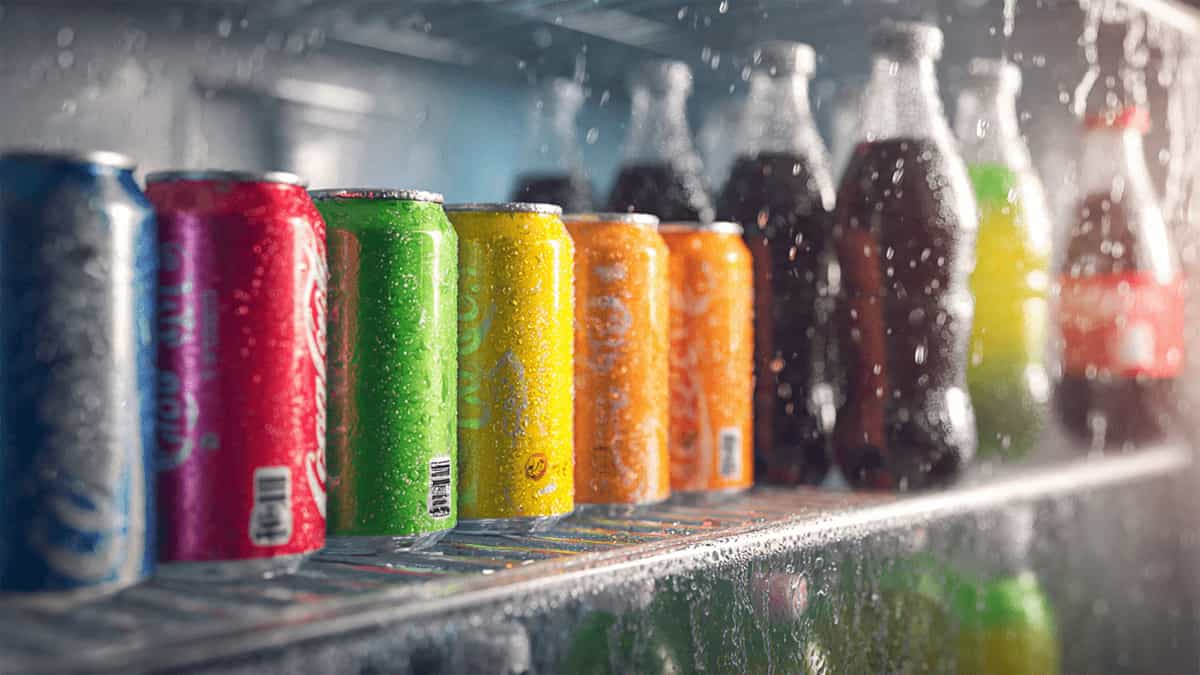
Reach into a cooler full of ice, grab a soda, and you’ll feel immediate cold radiating through the metal. Meanwhile, the plastic bottle next to it barely feels cool to the touch. This isn’t just a sensory trick; it is a fundamental property of the materials used in beverage packaging.
The answer is straightforward: Aluminium conducts heat far better than plastic. In fact, heat moves through aluminium (aluminum) about 1,000 times faster than through the plastic (PET) used for beverage bottles. This dramatic difference in thermal conductivity means your drink in an aluminium can reaches the perfect chilled temperature in minutes—not the half-hour or more required for plastic.
The Science: Thermal Conductivity
To understand why aluminium wins the cooling race, we must look at thermal conductivity—a measure of how quickly heat moves through a substance.
Technical Comparison: Thermal Conductivity of Beverage Packaging
Units measured in Watts per meter-Kelvin (W/m·K) at room temperature.
| Material | Thermal Conductivity | Cooling Efficiency | Thermal Role |
| Aluminium | 205.0 | ⚡ Ultra-Fast | Conductor (Transfers heat instantly) |
| Steel | 50.2 | ⏩ Fast | Moderate Conductor |
| Glass | 1.05 | 🐢 Slow | Thermal Buffer (Holds temperature) |
| Plastic (PET) | 0.25 | 🧊 Very Slow | Insulator (Blocks heat transfer) |
Visual representation of how much faster heat moves through each material compared to Plastic:
- PLASTIC: ▮ (Baseline)
- GLASS: ▮▮▮▮ (4x Faster)
- STEEL: ▮▮▮▮▮▮▮▮▮▮▮▮▮▮▮▮▮▮▮▮ (200x Faster)
- ALUMINIUM: ▮▮▮▮▮▮▮▮▮▮▮▮▮▮▮▮▮▮▮▮▮▮▮▮▮▮▮▮▮▮▮▮▮▮▮▮▮▮▮▮… (1,000x Faster)
Why Metal Transfers Heat Faster
The reason metals excel at heat transfer lies in their atomic structure—specifically, in how they handle electrons.
Free Electrons: Nature’s Heat Carriers
In metals, atoms are arranged in a crystalline lattice, but the outer electrons aren’t tightly bound to individual atoms. Instead, they form a “sea” of free electrons that can move throughout the metal. These delocalized electrons serve two purposes:
- They conduct electricity when voltage is applied.
- They conduct heat when temperature differences exist.
When one part of the metal gets cold, the energy difference causes these free electrons to transfer kinetic energy across the material at astonishing speeds—much faster than the atomic vibrations (phonons) that carry heat in non-metals like plastic or glass.
The Insulator Problem
Plastic is an insulator because it has no free electrons; its electrons are locked in covalent bonds. Heat can only move through plastic via molecular vibrations—atoms jiggling and passing energy to their neighbors. This process is inherently slow and inefficient, making plastic a “thermal barrier.”
The Thin Wall Advantage
For a 10/10 high-value article, the best place to insert the “Technical Comparison: Wall Thickness vs. Thermal Resistance” table is in Section 5: The Thin Wall Advantage.
This is the most effective placement because Section 2 already establishes the material’s conductivity, and Section 5 explains how the physical dimensions (the 0.1 mm thinness) amplify that effect. Placing the table here provides the scientific “proof” for the claims made in the text.
Here is how the improved Section 5 should look:
The Thin Wall Advantage
This connects directly to the engineering principles of the vessel. As explored in our analysis of how thin aluminum cans are made strong, a standard beverage can has a wall thickness of just 90–110 microns—roughly 0.1 mm.
This extreme thinness creates a “Thermal Express Lane” for cooling. To understand the impact, we must look at Thermal Resistance, which is the ratio of a material’s thickness to its conductivity.
Technical Comparison: Wall Thickness vs. Thermal Resistance
| Container Type | Material | Wall Thickness (t) | Conductivity (k) | Thermal Resistance Index (t/k) |
| Aluminium Can | Aluminium 3104 | 0.1 mm | 205 W/m·K | 0.0005 |
| Plastic Bottle | PET Plastic | 0.6 mm | 0.25 W/m·K | 2.4000 |
| Glass Bottle | Soda-lime Glass | 3.0 mm | 1.05 W/m·K | 2.8571 |
Engineering Insight: The “Barrier” Analysis
- The 4,800x Advantage: Because an aluminium (aluminum) can is both highly conductive and extremely thin, it offers roughly 4,800 times less resistance to heat transfer than a standard plastic bottle.
- The Thickness Penalty: Even though glass has better conductivity than plastic, its wall thickness (often 30x thicker than an aluminium can) creates a massive “thermal lag.” The glass itself must be cooled before the liquid inside begins to drop in temperature.
- Short Conduction Path: In an aluminium can, heat only travels 100 microns to escape. In a glass bottle, heat must travel 3,000 microns through a material that is already 200x less efficient at moving energy.
For more on the specific alloys that make these ultra-thin walls possible, read about Aluminum 3004 properties, the workhorse alloy used in can bodies.
This connects directly to the engineering behind the container. As we discussed in how thin aluminum cans are made
Real-World Experiment: The Ice Water Challenge
You can observe this physics in action with a simple 15-minute test using room-temperature drinks (22°C / 72°F) submerged in ice water.
- At 5 Minutes: The aluminium can’s contents will be noticeably cooler—roughly 10–12°C (50–54°F). The plastic bottle will still be near 18–20°C (64–68°F).
- At 15 Minutes: The aluminium can is fully chilled and ready to serve.
- At 30+ Minutes: The plastic bottle finally reaches the same chilled temperature.
This is the difference between enjoying a cold drink in the time it takes to watch a short video versus waiting through an entire television episode.
Why Glass and Plastic Feel Less “Cold”
Have you noticed that a can feels colder to the touch than a bottle, even if they are at the same temperature?
Heat Transfer to Your Hand
When you touch an aluminium can at 4°C (39°F), your hand at 32°C (90°F) creates a massive temperature gradient. The aluminium’s high conductivity rapidly pulls heat from your skin, making the metal feel intensely cold.
With plastic or glass, the low conductivity prevents heat from leaving your hand quickly. The surface of the plastic warms up where your fingers touch it, so you perceive the bottle as only mildly cool.
The Polymer Liner: Does it Insulate?
Every aluminium can contains a thin internal coating to prevent corrosion. You might wonder if this plastic lining slows down the cooling.
At just 5–10 microns (0.005 mm) thick, this coating is 100 times thinner than the metal wall itself. Its thermal resistance is negligible. For more on these protective coatings, read about aluminium cans plastic liners and BPA-free safety.
Beyond the Beverage: Industrial Applications
The same thermal properties that make aluminium (aluminum) cans great for chilling drinks apply to heavy industry:
- Heat Sinks: Used in electronics to dissipate heat from processors.
- Automobile Radiators: Often made of aluminium to cool engine coolant via thin-walled tubes.
- HVAC Systems: Aluminium fins provide the high-speed heat exchange needed for air conditioning.
For more on aluminium’s role in technology, see aluminum’s contribution in modern bicycle design and why aluminum works for aircraft parts.
FAQs
Why do aluminium cans get cold faster than plastic?
Aluminium has a thermal conductivity 1,000 times higher than PET plastic, allowing heat to escape the liquid almost instantly.
Are aluminium cans better for party planning?
Yes. For quick chilling, an ice bucket with aluminium cans will have drinks ready in 10–15 minutes, whereas bottles would require significant pre-planning.
Does a can stay cold longer?
While it chills faster, the same high conductivity means it can also warm up faster if left in the sun. However, the energy efficiency of cooling them initially is a major sustainability win. Learn more at the aluminum can recycling process.
Related Articles

Featured


You May Also Like

Perforated Aluminium Sheet — More Than Just A Fancy Design

Do I Need Thermal-Break Windows for Better Energy Efficiency…

Aluminium 7050 (Aluminum 7050): The Ultimate Aerospace Alloy…

Trump Greenland Deal Puts Aluminum-Rich Minerals in Focus Am…

Always Buy an Aluminum Ladder with a Top Handle & Top Me…