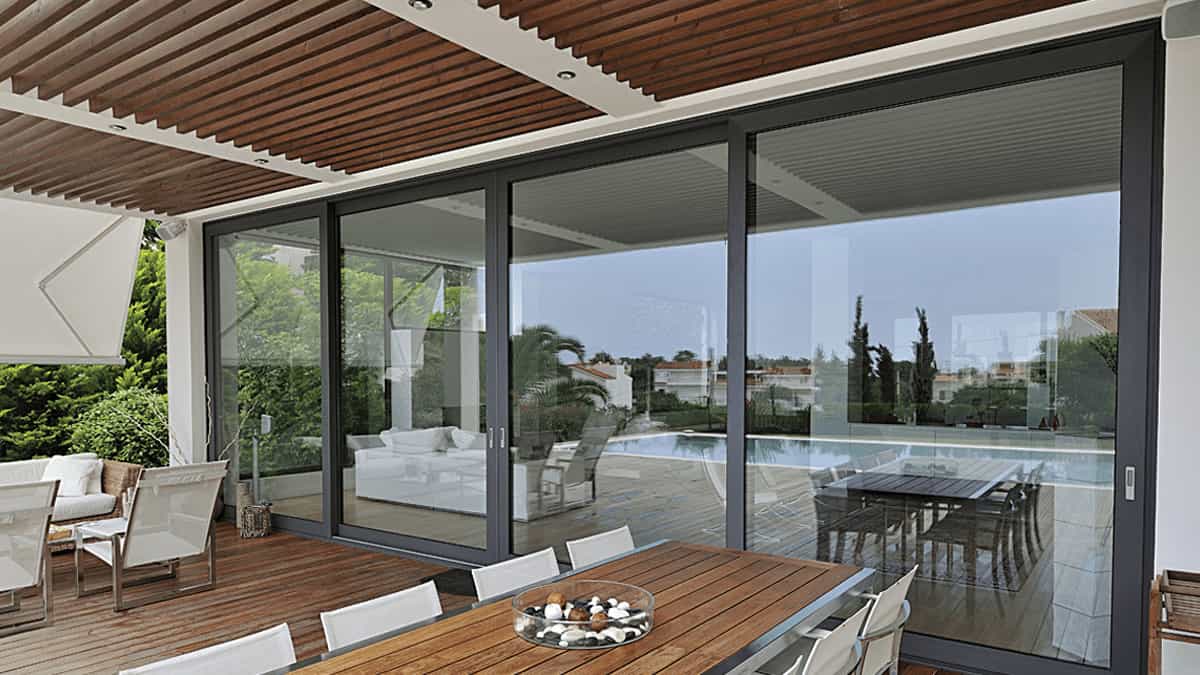
The Architectural Alloy: Shaping the Modern Skyline
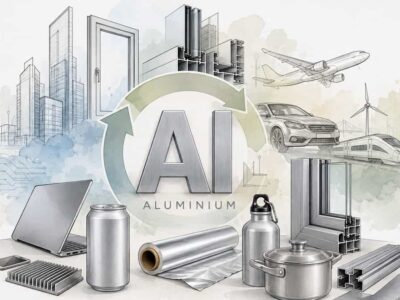
In the vast family of aluminum alloys, some are celebrated for strength, others for corrosion resistance, and still others for weldability. Aluminium 6063 earns its distinction through a different virtue: extrudability. As the most widely used alloy for architectural extrusions, 6063 has literally shaped the modern world—forming the window frames, door profiles, curtain walls, and structural elements that define contemporary buildings from suburban homes to soaring urban skyscrapers.
Known colloquially as the “architectural alloy,” 6063 belongs to the 6000 series (aluminum-magnesium-silicon) and offers an exceptional balance of medium strength, outstanding surface finish, excellent corrosion resistance, and—most critically—superb extrudability. This combination has made it the default choice for complex profiles requiring smooth surfaces, tight tolerances, and consistent anodizing or painting characteristics.
While its cousin 6061 dominates structural applications where maximum strength is required, 6063 excels where form, finish, and aesthetic quality are paramount. From the sleek aluminum storefronts of Fifth Avenue to the thermal-break windows of Passivhaus-certified homes, 6063 is the quiet workhorse that combines engineering performance with architectural elegance.
Composition and Metallurgy: The Extrusion Specialist
Aluminum 6063 is a 6000 series (aluminium-magnesium-silicon) alloy, heat-treatable to achieve its mechanical properties through precipitation hardening. Its composition is carefully optimized for extrusion performance and surface quality.
Primary Composition:
| Element | Content (%) | Role in the Alloy |
|---|---|---|
| Aluminium (Al) | 97.5 – 99.4 | Base metal |
| Magnesium (Mg) | 0.45 – 0.9 | Forms Mg₂Si precipitates with silicon; primary strengthening element |
| Silicon (Si) | 0.20 – 0.6 | Combines with magnesium to form the strengthening phase Mg₂Si |
| Iron (Fe) | ≤ 0.35 | Impurity—controlled to maintain surface finish and anodizing quality |
| Copper (Cu) | ≤ 0.10 | Kept very low for corrosion resistance and consistent anodizing |
| Manganese (Mn) | ≤ 0.10 | Trace element; limited to maintain extrusion characteristics |
| Chromium (Cr) | ≤ 0.10 | Controlled for extrusion response |
| Zinc (Zn) | ≤ 0.10 | Impurity |
| Titanium (Ti) | ≤ 0.10 | Grain refiner during casting |
The Extrusion Advantage:
What distinguishes 6063 from other 6000 series alloys is its lower magnesium and silicon content compared to 6061. This composition:
- Lowers flow stress during extrusion, allowing faster production speeds
- Improves surface finish by reducing the tendency for die lines and surface defects
- Enables complex profiles with thin walls and intricate cross-sections
- Produces consistent anodizing response with excellent color uniformity
For a deeper understanding of the extrusion process: Aluminium Extrusion Press Operation Process.
For a detailed comparison with its structural cousin: Aluminum 6061 vs. 6063.
Core Properties: Engineered for Architecture
1. Excellent Extrudability
The defining characteristic of 6063 is its ability to be extruded into complex shapes with exceptional precision. It flows smoothly through dies, allowing for:
- Thin walls down to 1 mm or less
- Intricate hollow profiles with multiple voids
- Tight dimensional tolerances (±0.1 mm or better)
- High extrusion speeds for cost-effective production
2. Superior Surface Finish
6063 produces some of the finest surface finishes among aluminium alloys, making it ideal for:
- Anodized finishes that are clear, uniform, and aesthetically pleasing
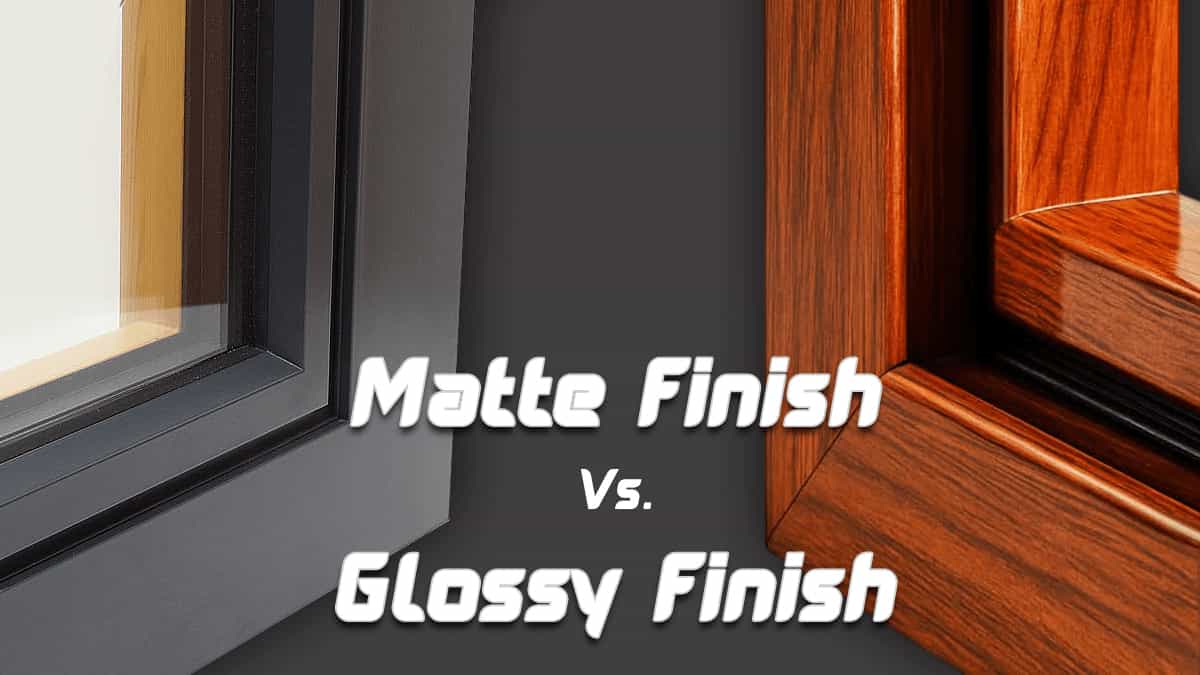
- Powder coating with excellent adhesion and smooth texture
- Brushed and polished architectural surfaces
For more on finishing options: Powder Coating vs. Anodizing.
3. Good Strength with Excellent Formability
While not as strong as 6061, 6063 offers ample strength for architectural applications:
- Tensile Strength (T6): 240–280 MPa
- Yield Strength (T6): 210–240 MPa
- Elongation: 8–12%
This strength level is sufficient for window frames, curtain walls, and structural glazing systems while maintaining excellent bending and forming characteristics.
4. Outstanding Corrosion Resistance
6063 exhibits excellent resistance to atmospheric corrosion, making it suitable for exterior applications in all climates. Its low copper content ensures:
- No susceptibility to intergranular corrosion
- Excellent performance in coastal environments when properly finished
- Long service life with minimal maintenance
5. Excellent Anodizing Response
The alloy’s composition is specifically optimized for anodizing:
- Produces clear, bright anodic coatings with excellent transparency
- Takes colored anodizing uniformly without mottling
- Achieves hard anodizing for wear-resistant architectural surfaces
6. Good Weldability
6063 can be readily welded using standard techniques (TIG, MIG), with filler metals 4043 or 5356 recommended. For high-silicon fillers: Aluminium 4043 Alloy: Filler Wire Guide.
7. Thermal Break Compatibility
6063 is the standard alloy for thermal-break window and door systems, where it is used in combination with insulating polyamide strips to achieve high energy efficiency. For more on this technology: What Are Thermal Break Aluminium Windows?.
Specifications and Standards
Aluminium 6063 is recognized under multiple international designations:
| Standard | Designation |
|---|---|
| AA (Aluminum Association) | 6063 |
| UNS | A96063 |
| EN | EN AW-6063 (AlMg0.7Si) |
| DIN (Germany) | 3.3206 (AlMgSi0.5) |
| JIS (Japan) | A6063 |
| BS (UK) | 6063A (H9) |
| GB (China) | 6063 |
| ASTM | B221 (Extruded bar, rod, wire, shape, tube) |
Physical and Mechanical Properties
Physical Properties
| Property | Value |
|---|---|
| Density | 2.70 g/cm³ |
| Melting Range | 615 – 655 °C (1140 – 1210 °F) |
| Elastic Modulus | 69 – 70 GPa |
| Poisson’s Ratio | 0.33 |
| Thermal Conductivity | 200 – 220 W/m·K |
| Coefficient of Thermal Expansion (20-100°C) | 23.4 × 10⁻⁶/°C |
| Electrical Resistivity | 34.5 – 38.0 nΩ·m |
| Specific Heat Capacity | 900 J/kg·K |
Mechanical Properties by Temper
| Temper | Tensile Strength (MPa) | Yield Strength (MPa) | Elongation (%) | Hardness (HB) | Primary Application |
|---|---|---|---|---|---|
| 6063-O | ≤ 130 | ≤ 70 | 18 – 25 | ~30 | Maximum formability; intermediate state |
| 6063-T1 | 150 – 190 | 90 – 120 | 15 – 20 | ~50 | As-extruded and naturally aged |
| 6063-T4 | 160 – 210 | 90 – 130 | 16 – 22 | ~55 | Good formability; will age to T6 |
| 6063-T5 | 180 – 220 | 140 – 180 | 8 – 12 | ~60 | Most common architectural temper—extruded and artificially aged |
| 6063-T6 | 240 – 280 | 210 – 240 | 8 – 12 | ~73 | Maximum strength; structural applications |
| 6063-T52 | 230 – 270 | 200 – 230 | 8 – 12 | ~70 | Stress-relieved T6 for improved stability |
Note: T5 is the standard temper for extruded architectural profiles, offering good strength with excellent surface finish.
Primary Applications: Where 6063 Dominates
Aluminium 6063 is the undisputed leader in architectural extrusions, but its applications extend far beyond building products.
1. Architectural and Building Products – The Core Market
This is where 6063 truly excels, shaping the built environment:
Window and Door Systems:
- Casement, sliding, and awning windows—extruded profiles with complex geometries
- Thermal-break systems for energy-efficient buildings
- French doors, sliding doors, and bi-fold doors
- Curtain walls and storefront systems
Structural Glazing:
- Glass support systems for commercial buildings
- Spider fittings and point-fixed glazing components
- Structural silicone glazing profiles
Architectural Elements:
- Handrails and balustrades
- Canopies and awnings
- Sunshades and brise-soleil
- Column covers and decorative trim
- Ceiling grids and suspended systems
For more on design possibilities: Aluminium Sliding Windows Design Ideas and Popular RAL Colours for Aluminium Windows & Doors.
2. Transportation
- Automotive trim and molding
- Roof racks and luggage carriers
- Trailer and truck components
- Boat and marine hardware (when properly finished)
- Bicycle frames (lower-end and touring models)
3. Industrial and Electrical
- Heat sinks and LED lighting housings—the alloy’s excellent thermal conductivity makes it ideal for thermal management
- Electrical bus bars and conduits
- Conveyor systems and automation frames
- Machine guards and safety enclosures
- Solar panel frames—6063’s corrosion resistance and extrudability make it the standard for photovoltaic module frames
4. Furniture and Interior Design
- Office furniture systems
- Modular shelving and display cases
- Kitchen cabinet frames and drawer slides
- Decorative trim and accent pieces
5. Consumer Products
- Ladder rails and steps—for a detailed look: Aluminium Ladder 6 Feet Price & Step Ladder
- Sporting goods and camping equipment
- Photography and lighting equipment
- Retail display fixtures
Why Choose 6063? A Strategic Comparison
| Property / Alloy | 6063-T5 | 6061-T6 | 6005-T5 | 6060-T5 |
|---|---|---|---|---|
| Primary Use | Architectural extrusions | Structural, machined parts | Structural extrusions | General extrusions |
| Tensile Strength (MPa) | 180-220 | 310 | 260-280 | 160-200 |
| Yield Strength (MPa) | 140-180 | 270 | 220-240 | 120-160 |
| Extrudability | Excellent | Good | Good | Excellent |
| Surface Finish | Excellent | Good | Good | Excellent |
| Anodizing Quality | Excellent | Good | Good | Excellent |
| Corrosion Resistance | Excellent | Very Good | Very Good | Excellent |
| Weldability | Good | Excellent | Good | Good |
| Machinability | Good | Excellent | Good | Good |
| Cost | Moderate | Moderate | Moderate | Lower |
Choose 6063 when:
- The application requires complex extruded profiles with tight tolerances
- Surface finish and appearance are critical—especially for anodized finishes
- The product will be anodized, and color uniformity is essential
- You need a thermal-break window or door system
- Cost-effective extrusion with good corrosion resistance is the priority
Choose 6061 when:
- Higher structural strength is required (machined components, load-bearing structures)
- The component will undergo significant machining after extrusion
- Welded assemblies need maximum strength in the heat-affected zone
For more on the differences: Aluminium 6061-T6: Properties, Uses & Machining Guide.
Tempers and Heat Treatment
6063 is a heat-treatable alloy, with properties tailored through thermal processing.
Common Tempers
| Temper | Treatment | Properties | Typical Applications |
|---|---|---|---|
| T1 | As-extruded + naturally aged | Moderate strength, good formability | Standard architectural profiles |
| T4 | Solution heat-treated + naturally aged | Good formability, will age to T6 | Intermediate state for forming |
| T5 | As-extruded + artificially aged | Most common—good strength, excellent surface | Windows, doors, curtain walls |
| T6 | Solution heat-treated + artificially aged | Maximum strength | Structural applications, load-bearing components |
| T52 | T5 + stress-relieved | Improved dimensional stability | Precision components |
Heat Treatment Parameters
| Process | Temperature | Time | Cooling |
|---|---|---|---|
| Solution Heat Treatment (T4/T6) | 520 – 530 °C | 1-2 hours | Cold water quench |
| Artificial Aging (T5) | 175 – 185 °C | 4-8 hours | Air cool |
| Artificial Aging (T6) | 175 – 185 °C | 8-12 hours | Air cool |
Fabrication and Processing
Extrusion – The Core Process
6063 is specifically designed for extrusion and is processed on large presses:
- Billet Temperature: 450-500°C (840-930°F)
- Extrusion Speed: High—up to 50 m/min for simple profiles
- Die Temperature: 450-500°C (840-930°F)
- Quench: Air or water quench immediately after extrusion
The alloy’s excellent flow characteristics allow:
- Thin walls (1 mm or less)
- Hollow profiles with multiple voids
- Complex shapes with tight tolerances
Forming and Bending
6063 in T5 or T6 temper can be bent with appropriate care:
- Minimum bend radius: 3-5 × thickness (depending on temper and profile geometry)
- For tighter bends: Use T4 temper and age after forming
- Springback: Significant; compensate in tooling design
Machining
6063 offers good machinability, though not as excellent as 6061:
- Tooling: Carbide tools recommended for high-volume production
- Speeds: Moderate to high cutting speeds
- Coolant: Recommended for good surface finish and chip evacuation
- Chip Formation: Produces longer, stringy chips than 6061
Welding
6063 is readily weldable using standard techniques:
- Processes: TIG (GTAW) and MIG (GMAW)
- Filler Metals: 4043 (general purpose), 5356 (higher strength, better color match for anodizing)
- Preheating: Not typically required for thin sections
- Post-Weld: Natural aging will restore some strength; artificial aging can restore near-T6 properties
For filler selection guidance: Aluminium 4047 Alloy: Filler Wire for Brazing & Crack-Resistant Welds.
Joining
- Mechanical Fastening: Excellent; screw retention is good
- Adhesive Bonding: Effective with proper surface preparation
- Riveting: Common in assembly of window and door systems
Surface Finishing – A Key Advantage
One of 6063’s greatest strengths is its ability to accept and retain high-quality finishes.
Anodizing
6063 is the premium alloy for architectural anodizing:
- Sulfuric Acid Anodizing: Standard process for clear or colored coatings
- Hard Anodizing: For wear-resistant architectural surfaces
- Color Uniformity: Excellent across batches and profiles
- Typical Coating Thickness: 10-25 microns for architectural applications
For more on anodizing types: Hard Anodizing vs. Architectural Anodizing and Why Anodizing Fails in Coastal Areas: Prevention Guide.
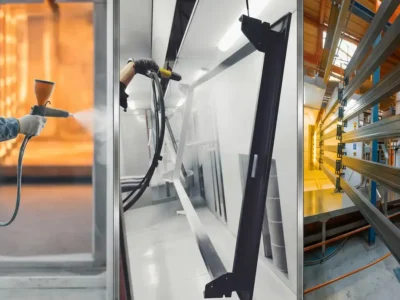
Powder Coating
6063 provides an excellent substrate for powder coating:
- Surface Preparation: Chromate or non-chromate conversion coating
- Adhesion: Excellent with proper pretreatment
- Color Range: Virtually unlimited; RAL and custom colors available
- Durability: Outstanding for exterior applications
Other Finishes
- Brushed and Polished: For decorative architectural elements
- Wood-Grain Laminates: For timber-effect profiles
- Electrophoretic Coating: For enhanced corrosion protection
Sustainability and Recycling
Aluminium 6063 is a champion of sustainable construction:
Key Sustainability Benefits:
- 100% Recyclable: Can be recycled repeatedly without loss of properties
- High Recycled Content: Many extruders use billets with 50-85% recycled content
- Energy Efficiency in Use: When used in thermal-break windows, contributes to building energy efficiency
- Long Service Life: Architectural products routinely last 40-50+ years
- LEED Contribution: Recycled content and durability contribute to green building certification
Recycling Stream:
- 6063 scrap is highly valued and typically segregated in recycling
- Closed-loop recycling programs exist between extruders and customers
- The alloy’s composition is well-suited for direct recycling back into 6xxx series products
For more on recycling: Aluminum Can Recycling Process and Types of Aluminum Scraps: Recycling Process.
Final Wrap
Aluminium 6063 may not claim the highest strength or the widest application range of any aluminium alloy, but in its chosen domain—architectural extrusions—it is without equal. Its carefully optimized composition delivers a unique combination of extrudability, surface quality, corrosion resistance, and finishing characteristics that have made it the default choice for window frames, curtain walls, and countless other building products that define the modern architectural landscape.
From the sleek storefronts of urban centers to the energy-efficient windows of Passivhaus homes, 6063 shapes the spaces where we live, work, and gather. It is the alloy that turns architectural drawings into physical reality, transforming complex profiles into durable, beautiful, and sustainable building components.
For the architect seeking design freedom, the fabricator requiring reliable extrusion, or the building owner demanding long-term performance, 6063 delivers—quietly, consistently, and elegantly—proving that in material science, as in architecture, true excellence often lies in perfecting the fundamentals.
For further reading on aluminium alloys and applications, explore these related articles: