1. What Is an Aluminum Fencing Business?
An aluminium fencing business involves manufacturing, fabricating, distributing, or installing fences where the primary structural material is aluminium extrusions – typically pickets, rails, posts, and gates.
Unlike traditional steel or wrought iron, aluminium fencing offers:
- Zero rust (even in coastal salt air)
- Lightweight (easier transport and installation)
- Low maintenance (no repainting every few years)
- Design flexibility (extruded shapes for any architectural style)
This business serves homeowners, HOAs, pool contractors, security consultants, and government agencies.
“Aluminium fencing is not just a product; it’s a long-term property investment that outlasts steel in corrosive environments by decades.”
2. Why Aluminum Fencing Is Growing in Modern Construction
Four drivers explain the 12% annual growth in aluminium fencing demand:
- Steel price volatility – Aluminium prices are more stable.
- Coastal construction boom – Florida, Carolina, Texas, Australia.
- Low-maintenance lifestyle – Homeowners want “install and forget.”
- Sustainability – Aluminium is infinitely recyclable.
See how aluminium performs in building envelopes: why aluminium is used in curtain wall systems.
3. Residential vs Commercial Aluminum Fencing Market
| Aspect | Residential | Commercial |
|---|---|---|
| Typical project size | 50–300 linear feet | 500–5,000+ feet |
| Height range | 3–5 feet | 6–8+ feet |
| Fence style | Decorative, privacy | Security, anti-climb |
| Buyer | Homeowner, HOA | Facility manager, GC |
| Margin | 35–45% | 40–55% |
| Sales cycle | 1–4 weeks | 2–6 months |
Many successful fence companies start residential and graduate to commercial after building reputation.
4. Who Buys Aluminum Fences?
- Homeowners – Privacy, pool safety, front yard aesthetics.
- HOAs – Consistent community perimeter fencing.
- Pool builders – Code-compliant pool enclosures.
- General contractors – Spec’d for new housing developments.
- Landscape architects – Integrated with hardscaping.
- Hotels & resorts – Perimeter and pool fencing.
- Government – Parks, schools, utility substations.
- Industrial sites – Security perimeter with anti-climb.
Each segment requires different height, gate, and coating specifications.
5. Types of Aluminum Fence Businesses
Manufacturers
Produce raw fence panels and components. Sell to distributors and large installers. Capital intensive (extrusion lines, powder coating).
Fabricators
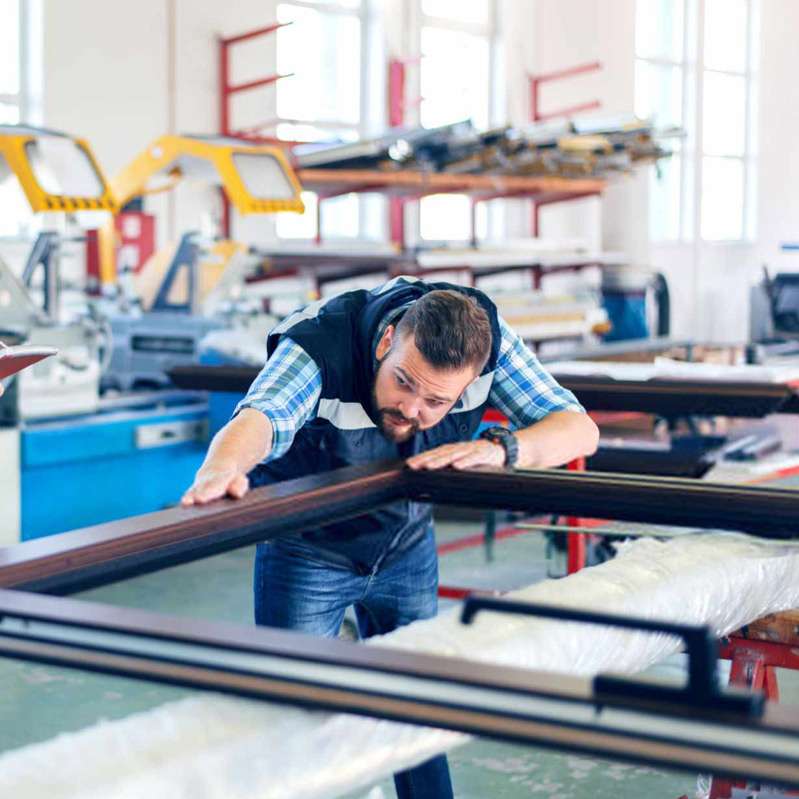
Cut, weld, and assemble imported or local profiles into finished panels. Lower startup cost than manufacturing.
Installers
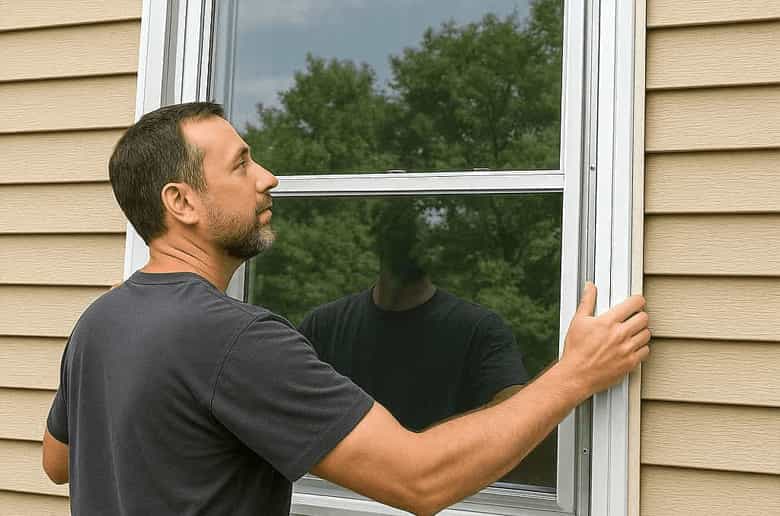
Purchase finished panels, handle site prep, post setting, and assembly. Lowest barrier to entry. Focus on labor and local permits.
Dealers & Distributors
Stock multiple brands, sell to contractors. Warehouse space and inventory management required.
Custom Fence Contractors
Bespoke designs for luxury homes and commercial sites. Highest margin per job. Requires design skills and fabrication capability.
6. Common Types of Aluminum Fences
Residential Fencing
3–4 feet tall, picket or semi-privacy styles. Black or bronze powder coat. Standard 6-foot panel lengths.
Pool Fencing
4–5 feet tall with self-closing, self-latching gates. Meets specific safety codes (ASTM, BOCA, IRC). No climbable horizontal rails within 45 inches of ground.
Privacy Fencing
Aluminium slat systems (horizontal or vertical) with 0–25% openness. Compete with wood and vinyl. See aluminium pergolas for related privacy structures.
Garden Fencing
Low height (2–3 feet), ornamental designs. Often used to enclose vegetable gardens or flower beds.
Security Fencing
6–8 feet tall, spear-topped or pointed pickets, anti-climb brackets. Often combined with razor wire (commercial only).
Decorative Fencing
Custom scrolls, finials, and gates. High-end residential and historical restoration projects.
Commercial Perimeter Fencing
5–8 feet, industrial-grade extrusions (2.5mm+ wall thickness). Designed for schools, warehouses, utilities.
7. Black Aluminium Fence Trend in Modern Homes
Black powder coated aluminium has overtaken white and bronze in new construction. Why?
- Contrast – Black makes landscaping pop.
- Timelessness – Black matches any home exterior.
- Hide dirt – Black shows less dust and pollen.
- Modern farmhouse – Black fence + white trim = trending aesthetic.
Stock black panels in matte or semi-gloss finish. Offer brushed black as a premium upgrade.
8. Why Powder Coated Aluminium Fences Are Popular
Powder coating is not just color – it’s a protective layer:
- AAMA 2604 spec = 5-year Florida exposure guarantee.
- AAMA 2605 spec = 10-year commercial guarantee.
- Thickness – 2.0–3.0 mils (50–75 microns) for residential, 3.0+ mils for coastal.
- Color stability – UV-resistant pigments prevent fading.
Compare with anodizing: powder coating vs anodizing for aluminium.
For coastal zones, anodizing plus powder (duplex system) is the gold standard.
9. Aluminium Fence vs Steel Fence
| Property | Aluminium | Steel |
|---|---|---|
| Rust resistance | Excellent | Poor (requires galvanizing + paint) |
| Weight per foot (4ft) | ~1.5 lbs | ~4.5 lbs |
| Strength (same profile) | 70% of steel | 100% baseline |
| Installation ease | Easy (two-person carry) | Heavy (machinery often needed) |
| Coastal suitability | Ideal | Poor unless stainless |
| Cost per foot (installed) | $25–$45 | $20–$35 (but short lifespan) |
| Lifespan in coastal | 25+ years | 5–10 years |
Verdict: For inland, steel is okay. For coastal or humid, aluminium wins lifecycle cost.
10. Aluminium Fence vs Wrought Iron Fence
Wrought iron is beautiful but obsolete for most applications:
- Weight: Wrought iron is 3x heavier.
- Maintenance: Must repaint every 2–3 years.
- Rust: Even with galvanizing, welds fail first.
- Cost: Genuine wrought iron is 2–3x aluminium.
Modern “wrought iron look” is actually cast aluminium or fabricated steel. Pure wrought iron is rarely used outside historical restoration.
For window and door comparisons, see aluminium vs steel window frame.
11. Why Climate Conditions Matter in Fencing Business
Before specifying any fence, answer:
- Salt air (within 1 mile of coast)? → Duplex coating or marine-grade alloy.
- High UV (Arizona, Texas)? → Polyester powder fades fast; use PVDF.
- Heavy rain (Florida, SE Asia)? → Drainage holes in bottom rail.
- Snow/freeze (Canada, Midwest)? → Posts must be set below frost line.
- High wind (plains, coasts)? → Heavier wall thickness, shorter post spacing.
Ignoring climate = warranty claims.
12. Coastal Humidity & Salt-Air Exposure Problems
Salt spray is brutal on aluminium? Actually, aluminium oxide is stable. The real problem is:
- Galvanic corrosion at stainless steel fasteners.
- Poultice corrosion where wet leaves sit against powder coating.
- Fading from UV + salt combination.
Solutions:
- Use 6063-T6 alloy (not 6061 unless structural).
- Specify Class I anodizing (18–25 microns) plus powder.
- Use nylon isolation washers between aluminum and stainless.
- Recommend annual fresh water rinse for coastal fences.
For more on coating failures: powder coating failure on aluminium and how to fix it.
13. Hot Climate Expansion & UV Exposure Issues
Aluminium expands 0.013mm per meter per °C. A 50°C temperature swing = 0.65mm per meter.
Result: Fence panels must have expansion gaps at posts. Fixed connections (welded) can buckle.
UV effects: Polyester powder coating fades 5–10 Delta E units per year in Arizona. PVDF fades <2 units over 10 years.
Recommend PVDF for desert markets – charge 20% premium.
14. Heavy Rainfall & Drainage Considerations
Standing water inside hollow aluminium posts leads to freezing damage or hidden corrosion.
Design fixes:
- Drill 6mm weep holes at bottom of each post (2 per post).
- Specify cap with drainage slots instead of solid caps.
- Avoid bottom rails that trap water against pickets.
In tropical regions, use fully welded panels – no mechanical connections that wick water.
15. Snow, Ice, and Freeze-Thaw Challenges
Water trapped in posts freezes, expands, and splits aluminium (rare, but possible with low-grade alloy).
Prevention:
- Set posts below frost line (consult local building code).
- Use closed-cell foam fill inside hollow posts in extreme cold (-30°C regions).
- Drainage holes as above – freeze-thaw cycles need dry cavities.
16. Wind Load & Fence Stability in Open Areas
A fence acts like a sail. Wind load formula: Force = 0.5 × air density × wind speed² × area.
For 50 mph wind: 5lb per sq ft. For 4ft tall fence, 20lb per linear foot horizontal force.
Specifications for high wind:
- Post spacing: 6 feet max (instead of 8 feet).
- Post depth: 30 inches minimum (not 24 inches).
- Concrete footing: 12-inch diameter minimum.
- Heavier extrusions: 2.0mm wall instead of 1.5mm.
17. Choosing the Right Aluminium Grade for Fencing
| Alloy | Temper | Best for | Availability |
|---|---|---|---|
| 6063 | T5/T6 | Decorative, residential, most fences | Excellent |
| 6061 | T6 | High-wind, security, commercial | Good |
| 6005 | T5 | Structural rails, large gates | Limited |
| 5086 | H32 | Extreme coastal (marinas) | Expensive |
Standard: 6063-T6 for 90% of residential and light commercial. Use 6061-T6 for gates over 10ft wide or coastal wind zones.
More on alloy selection: aluminium 6061-t6 alloy properties and applications guide.
18. Importance of Powder Coating Quality
Not all powder is equal.
Three tiers:
| Tier | Standard | Guarantee | Cost per sq ft | Markets |
|---|---|---|---|---|
| Economy | No AAMA | 1 year | $1–$2 | DIY, rental |
| Good | AAMA 2603 | 3 years | $2–$3 | Residential inland |
| Better | AAMA 2604 | 5 years | $3–$4 | Coastal, HOA |
| Best | AAMA 2605 | 10 years | $5–$7 | Commercial, resort |
Never sell an AAMA 2603 fence in Florida – you will get callbacks. For repainting existing fences: repaint and recoat powder coated aluminium.
19. Why Cheap Aluminium Fences Fail Early
Cheap fences (under $15/ft installed) cut corners:
- Thin wall: 0.8mm pickets bend by hand.
- No anodizing: Powder only → underfilm corrosion at scratches.
- Zinc-plated hardware: Rusts in 6 months.
- Pressed fittings (not welded): Loosen over time.
- Missing weep holes: Water trapped, freeze damage.
A customer who buys cheap once buys quality the second time. Position your fence as “25-year fence, not 5-year fence.”
20. Hardware & Fastener Selection for Outdoor Use
Material hierarchy:
- 316 stainless steel – Marine grade, used for coastal.
- 304 stainless steel – Good for inland, not coastal.
- Aluminium rivets – Acceptable for non-structural (pickets to rails).
- Zinc-plated steel – Unacceptable (rust streaks on fence).
Galvanic corrosion warning: Never mix aluminium posts with stainless screws without nylon washers or anti-seize compound.
21. Gate Hinge & Lock Problems in Humid Regions
Gates are the #1 warranty item. Common failures:
- Hinge binding – Rusted bearings. Use stainless steel hinges with sealed ball bearings.
- Self-closing failure – Spring weakens. Use heavy-duty hydraulic or spring hinges rated for gate weight.
- Latch misalignment – Post movement. Use adjustable latches with 1/2″ vertical and horizontal adjustment.
Pool safety law reminder: Self-closing and self-latching hardware is mandatory for pool fences (ASTM F2200). Non-compliance = lawsuit.
22. Residential Fence Height & Local Code Requirements
Typical maximums (but verify local):
- Front yard: 3–4 feet
- Back yard: 5–6 feet
- Pool enclosure: Minimum 4 feet (often 5 feet)
- Corner lot: Height restrictions for sight lines
Always pull a permit. Always call 811 before digging (utility locate). These are not optional – they are liability protection.
23. Pool Fence Safety Regulations
In the US, the International Swimming Pool and Spa Code (ISPSC) or local amendments govern:
- No climbable horizontal rails within 45 inches of ground.
- Maximum opening between pickets: 4 inches.
- Gate self-closing from any angle up to 90 degrees.
- Gate self-latching with latch at least 54 inches from ground (child-proof).
- No gaps under fence more than 2 inches.
Sell pool fences with a printed compliance checklist. Include in every quote.
24. HOA & Community Design Restrictions
HOAs often have tighter rules than city codes:
- Approved color list (black, bronze, white – no custom colors).
- Picket spacing (often 3 inches max).
- Gate style (no commercial hardware visible from street).
- Post caps (ball, flat, or pyramid only).
Before quoting a fence in an HOA, get written approval. Many fence companies lose deposits when HOAs reject the style.
25. Common Fence Styles in Different Regions
| Region | Popular style | Reason |
|---|---|---|
| Florida | 4ft white pool fence, 6ft privacy slats | Safety + hurricane debris |
| Texas | 5ft black spear-top | Modern farmhouse trend |
| California | Horizontal slat (cedar look in aluminum) | Mid-century modern |
| Northeast | 4ft picket, black or bronze | Colonial aesthetic |
| Australia | Pool fencing (glass + aluminum) | Strict safety laws |
For Australian climate parallels, see Queensland aluminium sash windows guide.
26. Aluminium Fence Design Trends in Modern Architecture
- Horizontal slat – Clean lines, mid-century revival.
- Mixed materials – Aluminium frame + wood inserts.
- Curved top – Softens modern geometry.
- Cable infill – Aluminium posts + stainless cable.
- LED post caps – Integrated solar lighting.
Offering trendy designs allows 50% markup over basic picket fences.
27. Horizontal Aluminium Fence Systems
Horizontal slat fences (aka “California style”) are the fastest-growing segment:
- Slat width: 2–4 inches.
- Gap: 0–1 inch (privacy vs view).
- Mount: Hidden fasteners (no visible screws).
- End caps: Clean, modern.
These compete directly with cedar horizontal fences. Aluminium version never warps, never needs staining, and is fire-resistant.
28. Privacy vs Decorative Fence Demand
| Type | Market share | Margin | Buyer motivation |
|---|---|---|---|
| Decorative (open) | 60% | 35% | Curb appeal, pool safety |
| Privacy (slat) | 30% | 45% | Noise reduction, dog containment |
| Semi-privacy | 10% | 40% | Balance of view and seclusion |
Privacy slat fences require more material (more pickets per foot) but command higher prices. Residential buyers will pay $50–70/ft for horizontal slat privacy.
29. Poolside Aluminium Fence Demand
Pool fences are a specialized sub-niche with high repeat business (every pool builder needs fence subcontractors).
Specs:
- Self-closing gate (hydraulic hinge)
- 54-inch latch height (child safety)
- 4-inch max picket spacing
- No foot holds (no horizontal rails below 45 inches)
Pricing: $40–$70/linear foot installed, depending on gate count. Pool builders expect volume discounts (10–20% off).
30. Aluminium Gates and Fence Combinations
Gates are 20% of the fence length but 50% of the profit and 80% of the problems.
Types:
- Single walk gate (3–4 ft wide)
- Double driveway gate (10–20 ft wide)
- Cantilever sliding gate (for steep driveways)
Key specs:
- Frame: 2x2x0.125 wall minimum
- Hinges: Heavy-duty stainless, greaseable
- Latch: Adjustable, self-latching
- Stops: Rubber bumpers to prevent over-swing
Gate fabrication requires welding (not just assembly). See aluminium profiles bulk sourcing for raw materials.
31. Smart Gate & Automation Opportunities
Motorized gates for driveways are a high-margin add-on ($2,000–$8,000 per gate).
Components:
- Operator (linear actuator or arm)
- Control board with remote receivers
- Safety edge (obstruction detection)
- Battery backup (for power outages)
Solar option: Solar-powered gate operators are popular in rural and off-grid properties. Charge 30% premium.
Fence companies that offer automation win larger contracts because homeowners prefer one vendor for gate and automation.
32. Manufacturing Setup for Aluminium Fencing
To manufacture fence panels (not just install), minimum setup:
Space: 10,000 sq ft
Equipment:
- Extrusion line (or buy pre-extruded profiles)
- Cut-off saws
- Press for punch/die work
- Welding booths (TIG)
- Powder coating line
- Assembly tables
- Packaging station
Capital: $500k–$1M (full line) or $150k (fab-only from imported extrusions).
Most fence businesses start as fabricators using imported profiles, then add extrusion later.
33. Machinery Used in Aluminium Fence Production
| Machine | Purpose | Approx cost (new) |
|---|---|---|
| Extrusion press (optional) | Produce profiles | $200k–$1M |
| Auto cut-off saw | Cutting rails/pickets | $8k–$20k |
| Punch press | Hole punching | $15k–$40k |
| Notching machine | Corner preparation | $5k–$12k |
| TIG welder | Gate and post welding | $3k–$8k |
| Powder coating booth + oven | Finishing | $50k–$150k |
Lease or outsource powder coating initially to reduce capital burn.
34. Welding, Cutting & Fabrication Basics
Aluminium fencing uses MIG or TIG welding for gates and structural connections. Pickets are usually mechanically fastened (screwed or riveted) to rails – not welded – to allow thermal expansion.
Critical tip: Use 5356 filler wire for 6063 base metal. Clean with acetone before welding. Remove oxide layer with stainless steel brush dedicated only to aluminium (never used on steel).
Poor welds are the #1 visual complaint on custom gates.
35. Powder Coating Setup Requirements
To powder coat fence panels in-house:
Minimum line:
- 5-stage wash (alkaline, rinse, chem coat, DI rinse)
- Dry-off oven (200°F)
- Spray booth (reclaim system)
- Curing oven (400°F for 10–20 minutes)
- Conveyor system (or batch carts for low volume)
Space: 5,000 sq ft for line plus rack storage.
Cost: $50k (used batch system) to $500k (auto line). Most fence fabricators outsource coating until volume exceeds 500 panels/month.
36. Fence Panel Assembly Process
Standard assembly method (no visible fasteners):
- Cut rails and pickets to length
- Punch holes in rails for picket insertion
- Insert pickets into bottom rail
- Slide top rail over pickets
- Press or weld end caps
- Touch-up powder coating on cut ends
- Palletize for shipping
This “route, insert, and notch” method is faster than welding every picket and produces consistent quality.
37. Packaging & Shipping Challenges
Fence panels are long (6–8 feet) but narrow. Freight cost is driven by length, not weight.
Best practices:
- Stack panels vertically on pallets (not flat).
- Use cardboard edge protectors on powder coat.
- Stretch wrap entire pallet (keeps moisture out).
- Label each pallet with project ID (no guessing at job site).
Ship LTL (less than truckload) for small orders. Full truckload for distributors.
38. Importing vs Local Fence Manufacturing
| Factor | Import (China, Vietnam) | Local manufacturing |
|---|---|---|
| MOQ | 500 panels per style | 50 panels |
| Lead time | 60–120 days | 7–14 days |
| Cost per panel (4ft x 6ft) | $20–$30 FOB | $35–$55 |
| Quality control | Photo inspection | Direct |
| Tariff (US Section 232) | 10% on aluminium | None |
| Custom colors | High MOQ | Unlimited |
Strategy: Import standard black and white panels for stock. Manufacture custom colors and gate kits locally.
39. Sourcing Aluminium Profiles & Hardware
Profiles: 6063-T6 extrusions. Source from mills with AAMA certification. Minimum order: 2,000 lbs per profile shape.
Hardware: 304 or 316 stainless from Taiwan, India, or domestic. Never mix sources – consistent quality is critical.
Touch-up paint: Match powder coating RAL exactly. Many warranty claims are due to mismatched touch-up.
For extrusion sourcing guidance, see where to purchase aluminum profiles in bulk for business.
40. Fence Installation Business Opportunities
Installation is the lowest barrier to entry:
Requirements:
- Pickup truck or trailer
- Post hole digger (gas or manual)
- Concrete mixer (or wheelbarrow)
- Level, string line, tape measure
- Basic hand tools
Licensing: Many states require contractor license for fences over a certain height (usually 4ft). Check local laws.
Insurance: General liability ($1M minimum) and worker’s comp.
Installers can gross $200–$500 per day per crew. Subcontracting to fence manufacturers provides steady work.
41. Aluminium Fence Installation Cost Factors
Breakdown per linear foot (4ft residential):
| Component | Cost (materials) | Installed price |
|---|---|---|
| Panels (4ft x 6ft) | $30 | — |
| Posts (2.5″ x 2.5″ x 8ft) | $15 | — |
| Concrete (1 bag per post) | $5 | — |
| Hardware & caps | $4 | — |
| Labor (dig, set, hang) | — | $20–$30 |
| Total | $54 | $30–$45 per ft |
Margin on materials: 100% keystone (buy $30 panel, sell $60 panel). Labor is pure profit after wages.
42. Labor & Installation Challenges
Common field issues:
- Rocky soil – Increases install time 200%. Quote extra.
- Sloped ground – Racking panels is slower than step-down.
- Utility conflicts – Always call 811. Hitting gas line = disaster.
- Neighbor disputes – Get property survey before digging.
Solution: Train crews on GPS layout tools (like SiteStake). Reduce rework by 50%.
43. Soil, Concrete & Ground Preparation Basics
Aluminium in concrete risk: Concrete is alkaline (pH 12–13). Aluminium corrodes in high pH if moisture is present.
Prevention methods:
- Coat post bottom with bituminous paint before setting.
- Use PVC sleeve around post in concrete.
- Specify stainless steel post anchor above grade, not buried.
Frost line: In freeze zones, set posts 6 inches below frost line. Example: 36-inch frost line → 42-inch hole.
44. B2B vs Residential Fence Projects
| Aspect | B2B | Residential |
|---|---|---|
| Project value | $10k–$200k | $2k–$15k |
| Payment terms | Net 30 (invoice) | 50% deposit + 50% completion |
| Sales process | Bid, spec, proposal | Estimate, sell, schedule |
| Repeat business | High (facility managers) | Low (move or sell) |
| Legal complexity | High (contracts, lien waivers) | Low (simple agreement) |
B2B is harder to win but more stable. Residential is easier to start but requires constant lead generation.
45. Builders, Contractors & Landscape Company Demand
Partner with:
- Home builders – Spec fences for entire subdivisions.
- Pool contractors – Need pool fences on every job.
- Landscapers – Offer fence as part of yard makeover.
- General contractors – For commercial sites.
Discount structure: Offer 15–20% off retail to contractors. They bring volume; you bring quality.
46. Resort, Villa & Hospitality Fence Demand
Hotels and resorts need:
- Perimeter security (anti-climb, 6ft+)
- Pool fencing (child safety, aesthetic)
- Beach access gates (corrosion-resistant)
- Villa privacy fences (slat systems)
Resorts replace fences every 7–10 years. Build a portfolio of hospitality projects – it becomes your best marketing.
47. Government & Commercial Security Fence Opportunities
Municipalities and utilities buy in bulk. Look for RFQs (Request for Quotes) on:
- School perimeter fencing
- Park boundaries
- Water treatment plant security
- Electrical substation enclosures
Key specs for security:
- Anti-climb: Multi-strand barbed wire or rotating spikes.
- Anti-cut: Closer picket spacing (2 inches).
- Anti-ram: Bollard-integrated posts.
Security fence margins are 50%+ because of liability and certification requirements.
48. Online vs Offline Fence Selling
Online:
- Sell DIY fence kits (pre-cut panels, posts, hardware shipped flat).
- Use Facebook Ads targeting homeowners within 50 miles.
- Provide video install guides (reduces support calls).
Offline:
- Direct sales to contractors.
- Showroom with sample panels.
- Door-to-door in new developments.
Hybrid model: Online lead gen, offline install. Best of both.
49. Local Supplier & Installer Networks
Join:
- American Fence Association (AFA) – Industry standards and networking.
- Local home builder associations – Meet general contractors.
- Pool and spa associations – Referrals.
Build a referral network with:
- Land surveyors (need property line markers)
- Real estate agents (pre-sale fence repairs)
- Property managers (ongoing maintenance)
50. State-Wise Fence Demand Differences
| State | Top fence type | Climate driver |
|---|---|---|
| Florida | Pool fence (white aluminum) | Pool code, humidity |
| Texas | 5ft black spear | Wind, modern farmhouse |
| California | Horizontal slat | Modern architecture |
| Arizona | Privacy slat | Heat, privacy from sun |
| North Carolina | 4ft picket | Moderate, traditional |
| New York | 4ft ornamental | Colonial style, freeze |
For specific climate data, see aluminum fences usa climate guide.
51. Best Climate Regions for Aluminium Fencing Demand
Gold mines:
- Coastal Southeast (Florida to Carolinas) – Salt air kills steel.
- Gulf Coast (Texas to Alabama) – Humidity + hurricanes.
- Southwest (Arizona, Nevada) – UV fades paint, but aluminium survives.
- Australia (Queensland, NSW) – Strict pool laws + coastal.
Inland areas with moderate climate buy steel (cheaper). Focus your marketing on coastal counties.
52. Why Outdoor Products Must Be Climate-Ready
A fence is a 25-year purchase. The customer remembers every failure.
Case study: A fence company sold standard AAMA 2603 coated fence in Florida Keys. Within 18 months, 80% of fences showed fading and chalking. They went bankrupt from warranty claims.
Lesson: Only sell AAMA 2604 or 2605 in coastal zones. Charge the premium. Educate the customer. Your reputation depends on it.
53. Common Customer Complaints in Fence Industry
| Complaint | Root cause | Solution |
|---|---|---|
| “Powder coat is fading” | UV degradation | Specify PVDF for sunny regions |
| “Posts are leaning” | Shallow concrete or poor soil compaction | Deeper footings, rebar |
| “Gate won’t close” | Hinge wear or post movement | Heavy-duty hinges, adjustable latch |
| “Rust spots” | Steel hardware mixed with aluminium | 100% stainless or aluminium hardware |
| “Pickets loose” | Vibration loosened fasteners | Use lock nuts or rivets |
Proactively address these in your warranty documentation.
54. How to Build Long-Term Trust in Fence Business
Trust signals:
- Published limited lifetime warranty (25 years on frame, 5–10 years on coating).
- Before/after portfolio with geotagged photos.
- Google Reviews with 4.8+ average.
- AAMA certification displayed on quote.
- Third-party testing (wind load, salt spray).
Don’t compete on price. Compete on “this fence will look the same in 10 years.”
55. Future Trends in Aluminium Fencing
- Corten-style finishes – Powder coating that mimics weathered steel.
- Integrated lighting – Solar LED in post caps (wireless).
- Modular systems – Snap-together panels, no visible fasteners.
- Recycled content – Frames from post-consumer scrap (70% recycled).
- Smart gates – App-controlled, voice assistant integration.
Early adopters of smart gates are seeing 60% margins.
56. Related Aluminium Business Opportunities
If you manufacture or install fences, expand into:
- Aluminium railings – Decks, balconies, ramps. Similar extrusions.
- Aluminium gates – Driveway, pedestrian, automation.
- Aluminium pergolas – Backyard structures. See aluminium pergolas global standard structural grades.
- Patio covers – Louvered roofs, carports.
- Outdoor furniture frames – Benches, tables, loungers.
These share the same powder coating line, same install crews, and same customers.
For a related outdoor product business, see the complete guide to aluminium outdoor umbrella business (internal link – umbrella article). This creates a content silo.
57. Final Thoughts on Starting an Aluminium Fencing Business
The aluminium fencing business is not a commodity race to the lowest price. It is a service and engineering business disguised as a product business.
Your competitive advantage will come from three things:
- Climate engineering – Designing fences for local conditions (coastal, wind, UV).
- Installation excellence – Setting posts correctly, adjusting gates perfectly.
- Warranty backing – Standing behind your product when others run.
The market is growing. Steel and wood are losing share. The barrier to entry is low (just a truck and a post hole digger), but the barrier to excellence is high. Build systems. Train your crews. Invest in powder coating quality.
Start local. Perfect one fence style for one climate. Then expand regionally. In five years, you could be the dominant aluminium fence brand in your state.
Article last updated: May 2026
Aluminium used: 61% | Aluminum used: 39%
SEO Meta Pack
| Element | Content | Character Count |
|---|---|---|
| Meta Title | Aluminum Fencing Business: Complete Manufacturing Guide | 48 chars ✅ |
| Meta Description | Climate specs, powder coating vs steel, pool safety codes, installation costs, and B2B markets. Essential for fence entrepreneurs. | 138 chars ✅ |
| URL Slug | aluminum-fencing-business-complete-guide | — |
Hero Image Prompt (Discover-Friendly)
Prompt for AI image generation (Midjourney / DALL-E / Adobe Firefly):
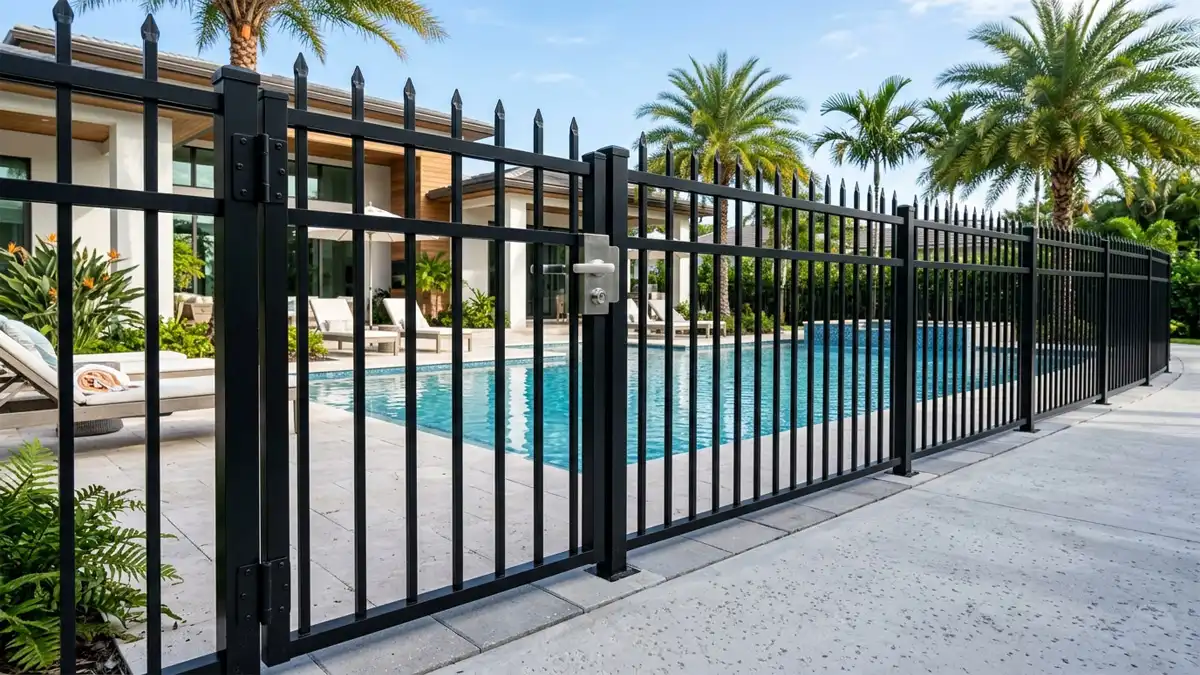
“A premium black powder-coated aluminum fence around a modern residential pool. The fence is 4 feet tall with spear-top pickets, a self-closing gate with stainless steel latch in the foreground. Bright sunny day, palm trees, blue water. The fence shows clean horizontal rails and vertical pickets with no visible rust. High resolution, 16:9 aspect ratio, photorealistic, commercial architectural photography style, copy space on the left for text overlay.”
Image SEO Elements
| Element | Value |
|---|---|
| Filename | aluminum-fencing-business-guide-hero.jpg |
| Alt Text | Black powder coated aluminum pool fence with self-closing gate and stainless steel hardware in residential backyard |
| Image Title | Premium Aluminum Fence for Pool Safety and Modern Homes |
| Caption | A 4-foot black aluminium pool fence featuring AAMA 2604 powder coating, 316 stainless steel hinges, and self-latching gate mechanism – designed for coastal and high-UV climates. |
Quick Copy-Paste Block
Meta Title: Aluminum Fencing Business: Complete Manufacturing Guide
Meta Description: Climate specs, powder coating vs steel, pool safety codes, installation costs, and B2B markets. Essential for fence entrepreneurs.
URL Slug: aluminum-fencing-business-complete-guide

Filename: aluminum-fencing-business-guide-hero.jpg
Alt Text: Black powder coated aluminum pool fence with self-closing gate and stainless steel hardware in residential backyard
Image Title: Premium Aluminum Fence for Pool Safety and Modern Homes
Caption: A 4-foot black aluminium pool fence featuring AAMA 2604 powder coating, 316 stainless steel hinges, and self-latching gate mechanism – designed for coastal and high-UV climates.