
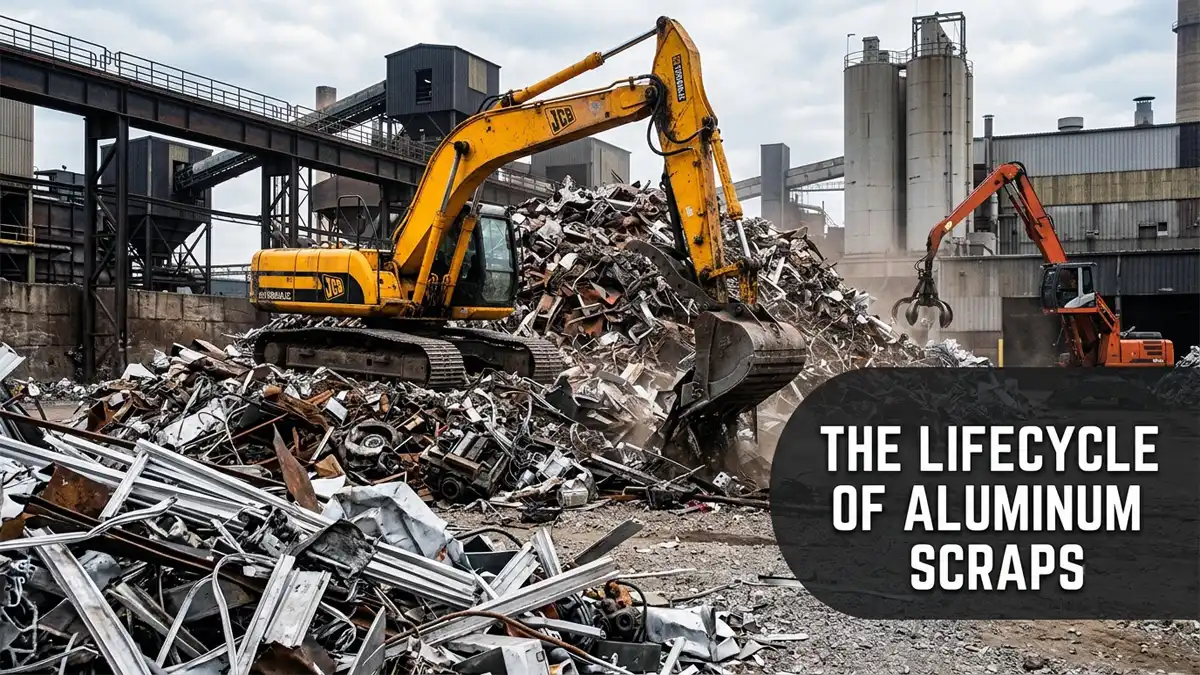
What Are Aluminum Scraps?
Aluminum scraps are discarded aluminum materials from manufacturing processes or end-of-life products. Unlike many other materials, aluminum is infinitely recyclable without degradation in quality. The recycling loop saves up to 95% of the energy required to produce primary aluminum from bauxite ore, making scrap one of the most valuable raw materials in the modern circular economy.
KEY TAKEAWAYS
- Aluminum is infinitely recyclable without any degradation in its structural quality.
- Recycling scrap saves up to 95% of the energy required to process raw bauxite ore.
- Scrap material serves as a highly valuable raw material in the modern circular economy.
Major Types of Aluminum Scrap
1. New (Prompt) Scrap
This is clean, industrial waste generated during manufacturing. It includes trimmings, turnings, and rejected extrusions. Prompt scrap is highly valuable because its alloy composition is known, requiring minimal testing before remelting.
2. Old (Post-Consumer) Scrap
This comes from used products that have reached the end of their life, such as old window frames, car parts, and beverage containers. Old scrap requires more intensive sorting and cleaning to remove coatings, paints, and contaminants.
3. Cast Aluminum Scrap
Typically derived from engine blocks, cylinder heads, and cookware (alloys such as 356 and 319). Cast aluminum often contains higher silicon content, making it suitable for remelting into new casting applications.
4. Extruded Aluminum Scrap
Sourced from window frames, door rails, and structural profiles, predominantly using alloys like 6061 and 6063. This type of scrap is highly sought after due to its workability. For a deeper look at how these profiles are initially shaped, explore the full aluminium extrusion process.
5. Sheet and Can Scrap
Beverage cans and roofing materials fall into this category. Can scrap (alloy 3104) is one of the most recycled consumer items globally. Understanding the versatility of flat materials is crucial; you can read more about the types of aluminum sheets used in construction to see how these products start their lifecycle.
6. Foil and Thin-Gauge Scrap
Common in food packaging and household trays (often alloy 8011). This scrap tends to oxidize quickly and is often contaminated with organic residues, requiring de-coating before melting.
7. Mixed and Contaminated Scrap
This includes painted siding, coated wires, and assorted mixed alloys. While challenging to recycle profitably, advanced sorting technologies are gradually making this stream more viable.
Where Aluminum Scrap Comes From
1. Manufacturing Industry
Factories generate prompt scrap during extrusion, stamping, and machining. These offcuts are usually returned directly to suppliers for closed-loop recycling.
2. Construction and Demolition
Old buildings and renovation projects yield large quantities of extruded frames, roofing sheets, and cladding panels. This scrap often requires dismantling to separate aluminum from steel, glass, and rubber seals.
3. Automotive Sector
Vehicles are increasingly aluminum-intensive. Scrap comes from used engine blocks, transmission casings, and crumple zones from end-of-life vehicles (ELVs).
4. Consumer Products and Packaging
Everyday items like soda cans, foil trays, and old electronics contribute a massive flow of post-consumer scrap, driven largely by curbside recycling programs.
How Aluminum Scrap Is Collected and Sorted
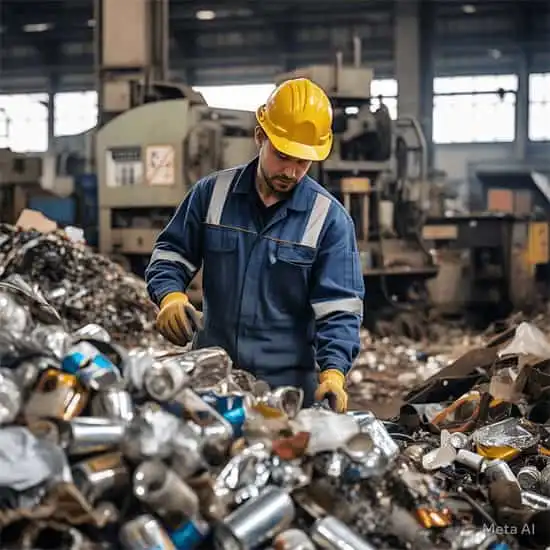
1. Collection Networks
Municipal curbside programs and commercial buy-back centers form the backbone of scrap collection. Industrial scrap is often baled on-site to reduce transportation costs.
2. Manual Sorting
Workers visually separate large items, removing obvious ferrous metals and foreign objects before mechanized processing begins.
3. Eddy Current Separation
This technology uses magnetic fields to repel non-ferrous metals like aluminum from the waste stream, efficiently separating it from plastics and glass.
4. X-Ray Fluorescence (XRF) Alloy Identification
Portable XRF analyzers are used to instantly identify the specific alloy series (e.g., 5xxx or 6xxx), ensuring that high-value alloys are directed to the appropriate smelting furnace.
The Aluminum Recycling Process
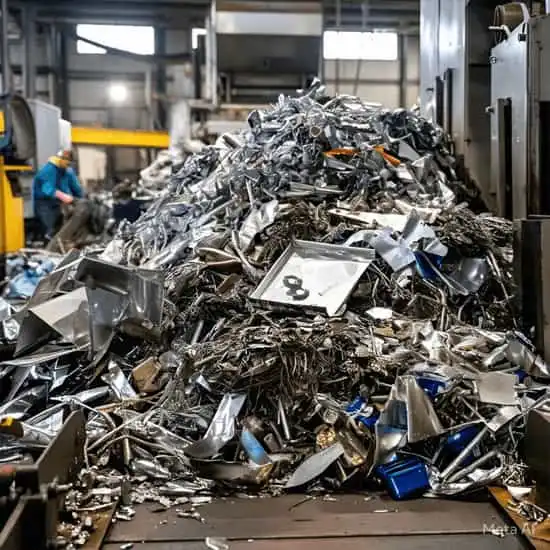
1. Shredding and Preparation
Scrap is shredded into small, manageable pieces to increase surface area for the melting phase. This also helps release trapped contaminants.
2. De-Coating and Cleaning
Polymer coatings, paints, and lacquers are burnt off in a thermal de-coating kiln. The fumes are often captured and used as fuel to improve the energy efficiency of the furnace.
3. Melting and Smelting
The prepared scrap is loaded into reverberatory or rotary furnaces, heated to approximately 660°C. To understand the massive industrial scale of primary aluminum creation—and how recycling contrasts with it—review the comprehensive aluminum manufacturing process.
4. Refining and Alloy Adjustment
Fluxing agents (chlorine and nitrogen) are injected to remove dissolved hydrogen and floating oxides. Virgin aluminum or master alloys are added to tweak the chemistry to the exact specification required for the final product.
5. Casting Into Billets, Ingots, and Slabs
The pure, molten metal is cast into solid forms. Billets are made for extrusion, ingots for casting applications, and slabs for rolling into sheets.
Quality Control in Recycled Aluminum Production
Strict quality checks are performed at every stage. Spectrometers analyze the melt chemistry to ensure it matches the target alloy. Tensile tests verify mechanical properties, and inspectors check for porosity to ensure structural integrity. The goal is to ensure that recycled metal performs identically to primary metal.
How Recycled Aluminum Returns to the Market
Once cast, recycled aluminum re-enters the economy in various forms:
- New Consumer Goods: Fresh beverage cans and electronic casings.
- Automotive Parts: Engine blocks, wheels, and structural components.
- Construction Materials: New siding, roofing, and thermally broken window frames.
Environmental Benefits and Challenges
The environmental case for aluminum recycling is overwhelming. It saves 95% of the energy compared to making new aluminum from bauxite. It reduces greenhouse gas emissions by a similar margin and diverts millions of tons of waste from overcrowded landfills, preserving natural bauxite deposits for future generations.
ADVANTAGES
- ✓ Saves 95% energy vs primary production
- ✓ Drastically cuts greenhouse gas emissions
- ✓ Reduces pressure on active landfills
- ✓ Provides reliable, cheaper manufacturer feedstock
LIMITATIONS
- ✕ Sorting mixed alloys is complex and tedious
- ✕ Paint, coatings, and organic residue cause contamination
- ✕ Bulky, low-density materials (like foil) eat into transit margins
Economic Importance of the Aluminum Scrap Industry
Aluminum scrap is a globally traded commodity worth billions of dollars annually. It provides a cheap, reliable source of feed-stock for smelters, insulating manufacturers from volatile primary metal prices. The industry also creates significant employment in collection, sorting, transportation, and processing.
The Future of Aluminum Circular Economy
The future lies in “design for recycling”—creating products that are easier to dismantle. Advanced sorting technologies like AI-powered robotic picking and LIBS (Laser-Induced Breakdown Spectroscopy) are being developed to identify alloys instantly. Additionally, the demand for low-carbon “green aluminum” from recycled sources is soaring, especially in the automotive and construction sectors.
FAQs
Can aluminum be recycled forever?
Yes! Aluminum is infinitely recyclable with absolutely no loss of quality or structural integrity.
What is the difference between new scrap and old scrap?
New scrap (prompt) is clean, industrial waste generated during manufacturing with known alloy properties. Old scrap comes from post-consumer products and requires heavier sorting and cleaning.
Why is aluminum recycling so energy efficient?
Melting down existing scrap only requires 5% of the massive energy load needed to extract primary aluminum from raw bauxite ore.
Is recycled aluminum more expensive than new aluminum?
Usually, it is cheaper to process, though market pricing ultimately reflects alloy purity and demand. The compounding savings in energy and emissions make it highly cost-effective overall.
Summary
Aluminum recycling is one of the most successful environmental and economic models in the industrial world. From the moment a can is thrown into a bin, to the point it emerges as a brand-new window frame or car part, the lifecycle of aluminum demonstrates a perfect closed-loop system. By understanding the types of scrap, the sophisticated sorting techniques, and the smelting process, we can appreciate why this metal is the undisputed champion of sustainability. Every single piece of scrap you recycle truly powers the circular economy.
Related Articles

Featured



You May Also Like

Top 12 RAL Colour for Aluminium Doors & Windows

Why Aluminium Window Awnings Are the Best Choice for Queensl…

Aluminum Composite Material & Panels in Architectural De…

Aluminium-Clad Wood Thermal-Break Systems, Before Buying Tip…
Aluminum Composite Material & Suppliers
