When selecting casement windows, most people focus on appearance, hardware, or building codes. However, one of the most important performance factors is often overlooked until after installation: ventilation performance and airflow.
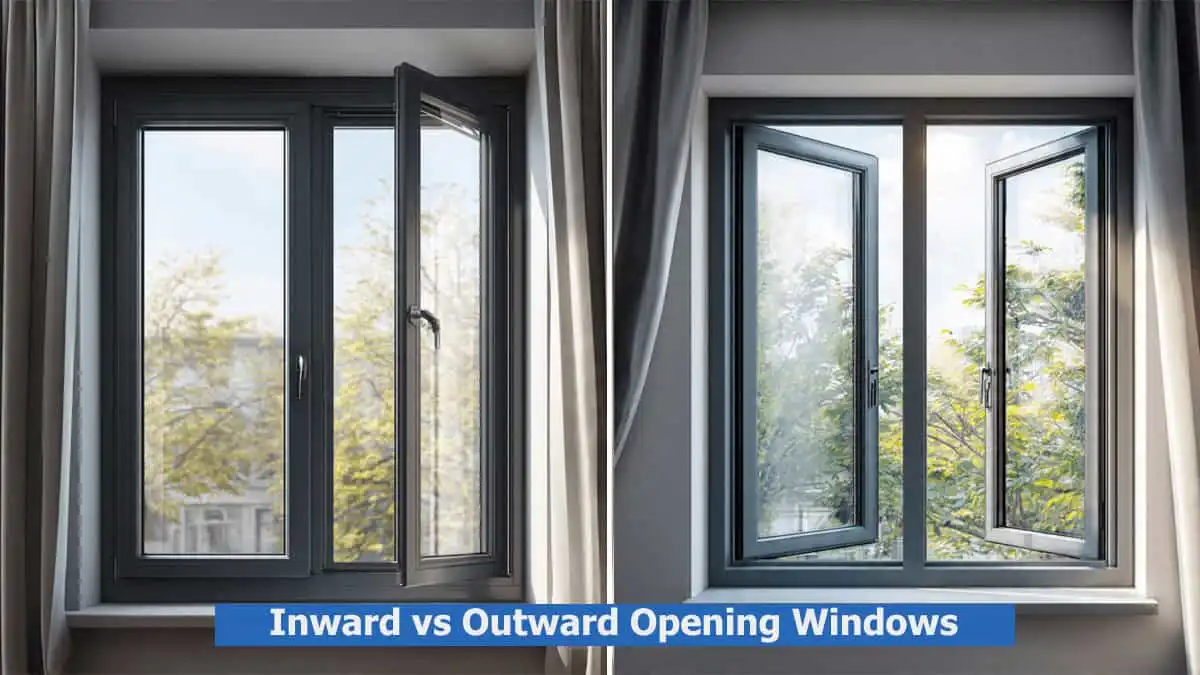
The direction in which a casement window opens — inward or outward — can significantly affect how air enters a room. This is not just a design decision; it is part of the building’s ventilation strategy.
The question is simple:
Which casement window provides better airflow — outward opening or inward opening?
The Mechanics of Airflow: The “Scoop Effect”
Casement windows are different from sliding windows because the sash does not just create an opening — it interacts with the wind.
When wind hits a building facade and a casement window is open, the sash can either:
- Catch and direct air into the room, or
- Deflect air away from the opening
This phenomenon is often called the “scoop effect” or wind catcher effect in ventilation design.
1. Outward Opening Casement (The Wind Catcher)
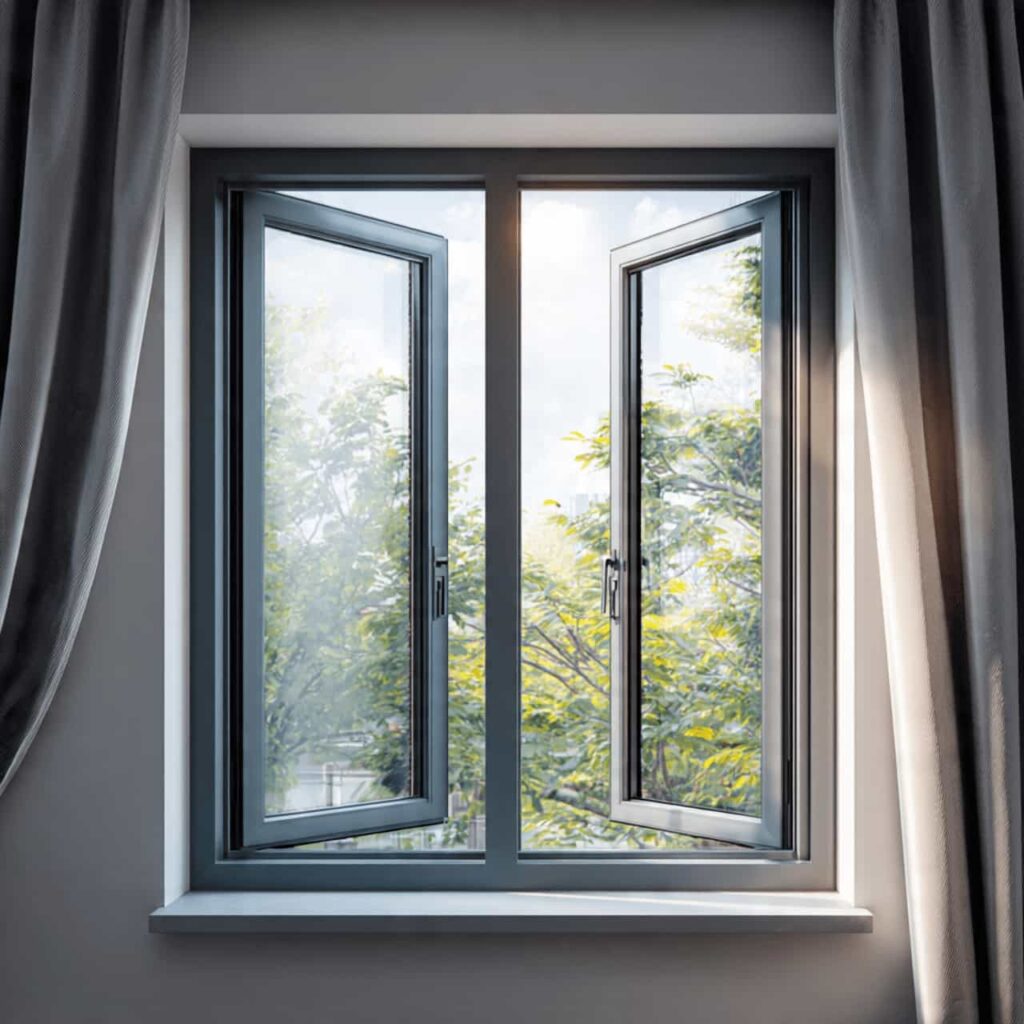
In outward opening casement windows, the sash swings to the exterior. When wind hits the building and the window is open, the sash acts like a scoop, sail, or wind catcher.
When opened around 90 degrees:
- The sash creates a pressure difference
- Wind hits the sash surface
- Air is directed into the room
- Effective ventilation increases
- Cross ventilation improves
Because of this, outward opening casement windows often provide higher effective airflow than inward opening or sliding windows of the same size.
This is why outward opening casement windows are often used in buildings designed for natural ventilation and passive cooling.
2. Inward Opening Casement (The Controlled Vent)
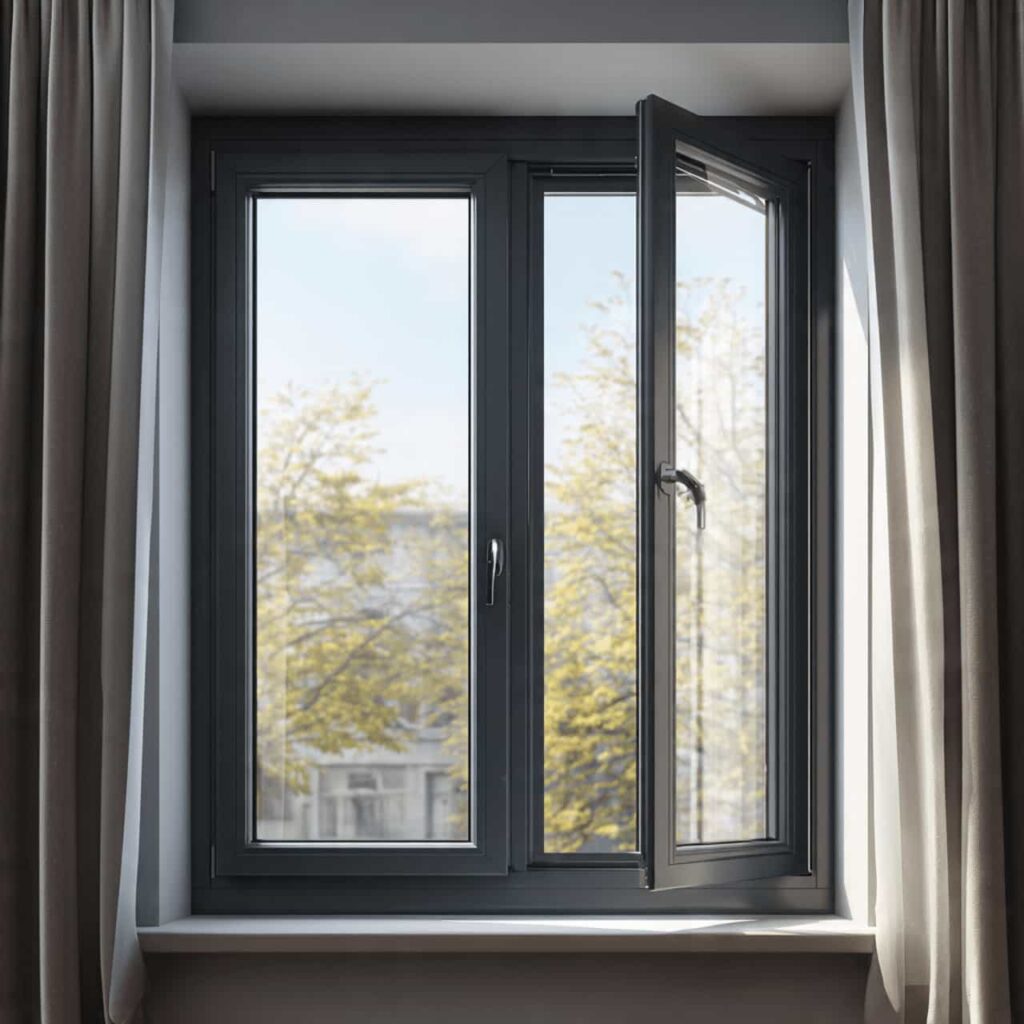
In inward opening casement windows, the sash swings into the room instead of outside.
From an airflow perspective:
- The sash does not catch wind
- Incoming air must move around the sash
- Airflow becomes more turbulent
- The window behaves more like a simple opening rather than a wind catcher
This means ventilation is still good, but usually lower than outward opening casement windows when wind direction is favorable.
However, inward opening windows are often preferred for safety, weather protection, and maintenance reasons, especially in multi-storey buildings.
Comparative Analysis: Location Dictates Choice
Choosing between inward and outward opening casement windows is not only about airflow. It is about airflow, safety, weather exposure, and building type.
| Location / Priority | Recommended Opening | Rationale |
|---|---|---|
| Independent House / Villa | Outward Opening | Maximizes the wind catcher effect; no exterior obstructions. |
| High-Rise Apartment | Inward Opening | Outward sashes face strong wind pressure at height; inward is safer and commonly used. |
| High Wind Areas | Outward Opening | The sash can capture wind and improve ventilation when positioned correctly. |
| Heavy Rain Areas | Inward Opening | Rain is less likely to be blown inside past the seals. |
| Exterior Security Grills | Inward Opening | Outward sash cannot open if grills are installed outside. |
| Ventilation Priority | Outward Opening | Highest airflow and air exchange rate. |
| Safety & Cleaning | Inward Opening | Easier and safer to clean from inside. |
This table summarizes a simple industry rule:
Outward opening for ventilation, inward opening for safety and practicality.
The Aluminium Advantage
Regardless of whether the window opens inward or outward, the frame material plays a major role in ventilation efficiency. Aluminum casement windows are often preferred for high-performance ventilation systems for two important reasons.
1. Slender Profiles
Aluminum frames can be much slimmer than uPVC or timber frames. Slim frames mean:
- Larger glass area
- Larger clear opening area
- Less frame obstruction
- More space for air to pass through
This increases the effective airflow area of the window.
2. Strong Hinges and Hardware
Casement window airflow performance depends heavily on how far and how stable the sash can open.
High-quality aluminum window systems:
- Support heavier sashes
- Maintain alignment over time
- Allow opening angles like 45°, 90°, or even 135°
- Hold position firmly without sagging
This is important because airflow changes significantly depending on the opening angle relative to wind direction.
So in many cases, aluminum casement windows provide better long-term ventilation performance due to stronger hardware and larger clear openings.
Final Conclusion:
Which Casement Window Has Better Airflow?
If the only factor is maximum airflow and ventilation, then:
Outward opening casement windows generally provide better airflow because the sash can catch and direct wind into the room.
However, the best choice depends on the building type and environment.
Simple Decision Rule
- Choose Outward Opening for maximum ventilation and low-rise buildings.
- Choose Inward Opening for high-rise buildings, safety, and weather protection.
In good building design, window opening direction is not random.
It is part of the overall ventilation and building performance strategy.
A small hinge decision can make a big difference in how comfortable a building feels.