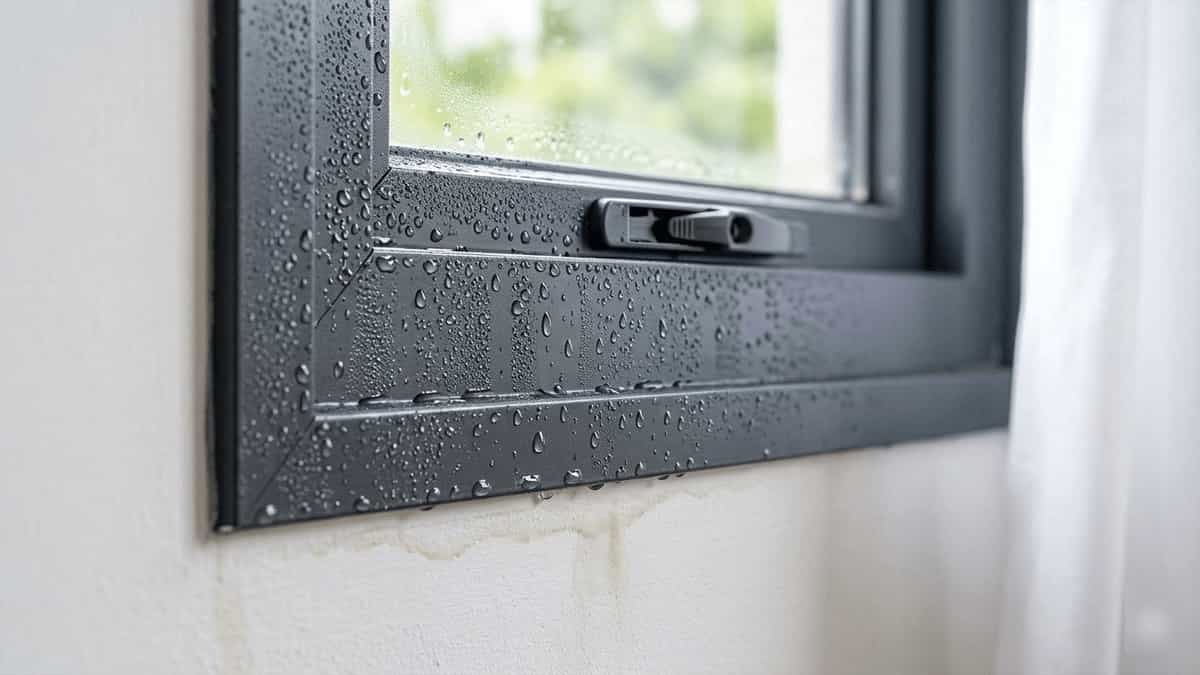
A Ticking Time Bomb? The Council for Aluminium in Building (CAB) has issued a stark warning about a growing “ticking time bomb” affecting thousands of new Aluminium windows. Trickle vents, made mandatory under UK Building Regulations (Part F) in June 2022, may be allowing cold air to circulate around frame perimeters, creating cold bridges that cause condensation on internal Aluminium profiles. This can lead to black mould, damage to cill boards and plasterboard, and even oxidisation of the Aluminum profiles themselves. This guide explains the problem, what you can do about it, and when you must call a professional.
The Problem & The Decision (DIY or Call a Pro?)
What Is Thermal Break Failure?
A thermal break is a insulating barrier (usually polyamide) inserted between the inner and outer parts of an Aluminum frame. Its purpose is to stop cold from transmitting from the outside to the inside. However, CAB has reported that trickle vents—small slots required by law—may be allowing external air to circulate around the frame’s perimeter, bypassing the thermal break and creating a direct cold bridge to the internal Aluminium profiles[reference:0]. The external air then acts as a cold bridge to the internal Aluminium profiles, increasing the risk of condensation on the internal face of the profile[reference:1].
Signs of Thermal Break Failure
- Persistent condensation on the internal face of the Aluminium frame (not just the glass).
- Black mould or mildew forming on the frame or adjacent plasterboard.
- Water stains or damage to cill boards.
- A visible gap between the frame and the wall where cold air enters.
- In severe cases, white powdery residue (oxidisation) on the Aluminum profile.
The CAB “Ticking Time Bomb” Warning
CAB has been approached by a growing number of installation specialists who have been repeatedly called back to site to address moisture-related remedial works[reference:2]. This includes damage to cill boards, internal plasterboard and oxidisation of internal window profiles[reference:3]. Dale Pegler, CAB technical director, explained: “The challenge is that moisture damage often takes a long time to be visible. The reports of moisture-related callbacks from our members are increasing, and there are patterns, with more complaints in winter when homes have more moisture build up and the outside is cold.”[reference:4]
The Decision Matrix
| If this sounds like you… | Your Skill Level | Recommended Action |
|---|---|---|
| You notice minor condensation on the Aluminium frame only on very cold days. The trickle vent is open and you are comfortable with basic ventilation management. | Intermediate | Proceed with DIY Guide (reduce humidity and manage ventilation). |
| You see black mould, water damage, or the condensation is constant. You have no tools or knowledge of window construction. | Beginner / Zero Knowledge | STOP. CALL A PRO. The problem may involve the window’s structural installation. |
| The condensation occurs on multiple windows, or you have already tried reducing humidity with no effect. | All Levels | CALL A PRO. A professional can assess whether the trickle vent cut-out is allowing air to bypass the thermal break and may seal the frame channels. |
The DIY Guide (For Minor Condensation – Managing Internal Humidity)
This guide focuses on reducing internal humidity and properly managing your trickle vents. It assumes the window is otherwise correctly installed. Do not attempt to seal trickle vents permanently – this would breach Building Regulations and could invalidate compliance certification[reference:5].
Tools & Materials You Will Need
- Hygrometer (humidity monitor) – inexpensive and essential.
- Dehumidifier (if humidity is consistently above 60%).
- Soft cloth (for drying condensation).
- Diluted white vinegar (for cleaning mould).
- Draught excluder (temporary, for very cold spells – remove when not needed).
Step‑by‑Step Instructions
Step 1: Measure Your Internal Humidity
- Place a hygrometer in the room where condensation occurs. Ideal indoor humidity is 40–60%. If it’s consistently above 70%, you have a humidity problem.
Step 2: Dry the Condensation Immediately
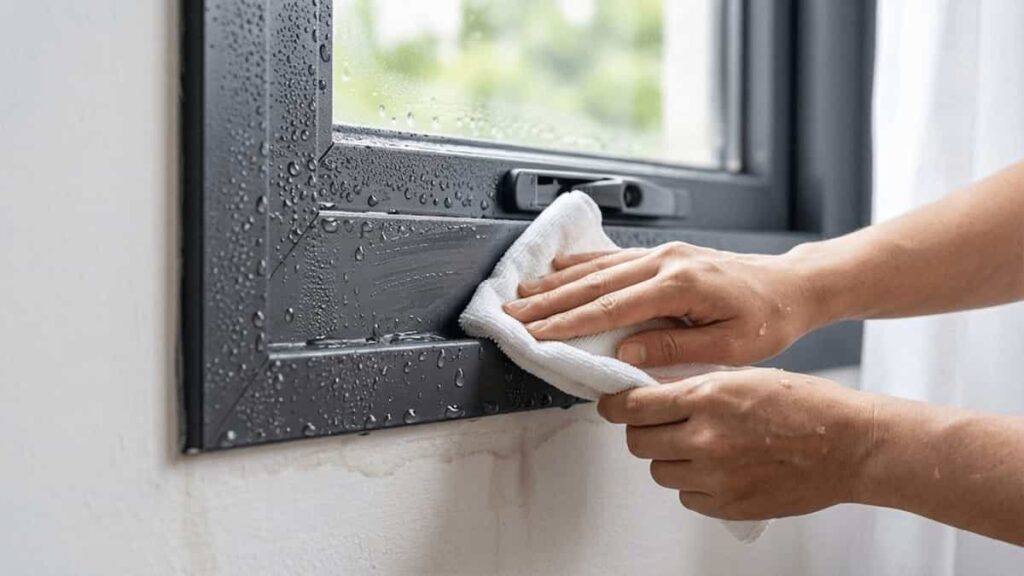
- Every morning, wipe down the Aluminium frame with a soft cloth. Do not let water pool on the cill.
- If mould has started, clean with diluted white vinegar (1 part vinegar to 3 parts water). Wear gloves.
Step 3: Manage Trickle Vents Correctly
- Do not seal them. Trickle vents are a legal requirement and essential for air quality[reference:6].
- In winter, keep them partially open – do not close them completely. Closing them traps moisture inside, worsening condensation.
- If a particular room is very humid (bathroom, kitchen), leave the vent fully open.
Step 4: Reduce Internal Moisture Sources
- Use extractor fans when cooking or showering.
- Dry clothes outdoors, not on radiators.
- Ensure tumble dryers are vented to the outside.
- Move houseplants away from the window – they release moisture.
Step 5: Consider a Dehumidifier
- If humidity stays above 65% for more than a few days, a small dehumidifier can make a significant difference.
Step 6: Test and Monitor
- After a week of reducing humidity, check the Aluminium frame. If condensation has reduced, you have confirmed the problem is internal humidity, not a thermal break failure. If it persists, call a professional.
Why You Might Need to Call a Professional
If you fall into the “Pro” category, here is what a specialist will do that you cannot safely achieve at home:
- Inspect the Trickle Vent Cut-out: A professional will remove the trickle vent and examine whether the cut-out allows cold air to circulate behind the frame, bypassing the thermal break.
- Seal Internal Frame Channels: CAB has suggested that the solution may be simply about sealing the trickle vent so that cold air can’t escape down the profile channels[reference:7]. This requires removing the vent and applying foam or sealant to internal cavities – a job that must be done correctly to avoid blocking drainage.
- Check Thermal Break Integrity: A specialist can use a thermal imaging camera to see exactly where cold air is entering.
- Structural Remediation: If the frame is poorly installed, the window may need to be removed and re‑installed with proper perimeter insulation.
- Warranty & Compliance: A DIY attempt to seal a trickle vent permanently would breach Building Regulations. A professional can advise on compliant solutions.
Summary
- Understand the CAB Warning: Trickle vents required by law may be causing condensation on internal Aluminium profiles by allowing cold air to bypass the thermal break[reference:8].
- Know Your Limits: Minor condensation can be managed by reducing humidity. Persistent mould or damage requires a professional.
- DIY Steps: Measure humidity, dry the frame daily, manage trickle vents (do not seal them!), and reduce moisture sources.
- Professional Help: If condensation continues, a specialist may need to seal internal frame channels or re‑install the window.
- Do Not Seal Trickle Vents: This would breach Building Regulations and worsen indoor air quality[reference:9].
Further Reading & Related Issues
To understand more about Aluminium window problems and moisture management, explore these articles from our archive:
- For a general overview of Aluminium window problems:
Aluminium Window Problems Guide - For understanding thermal break technology:
What are Thermal Break Aluminium Windows? - For condensation on windows (general advice):
Condensation on Aluminium Windows – Causes and Fixes - For energy efficiency and ventilation:
Energy Efficiency with Thermal Break Aluminium Windows