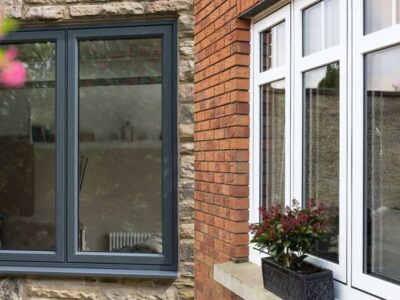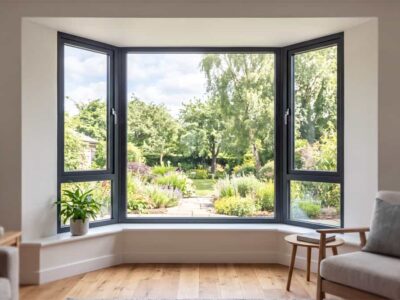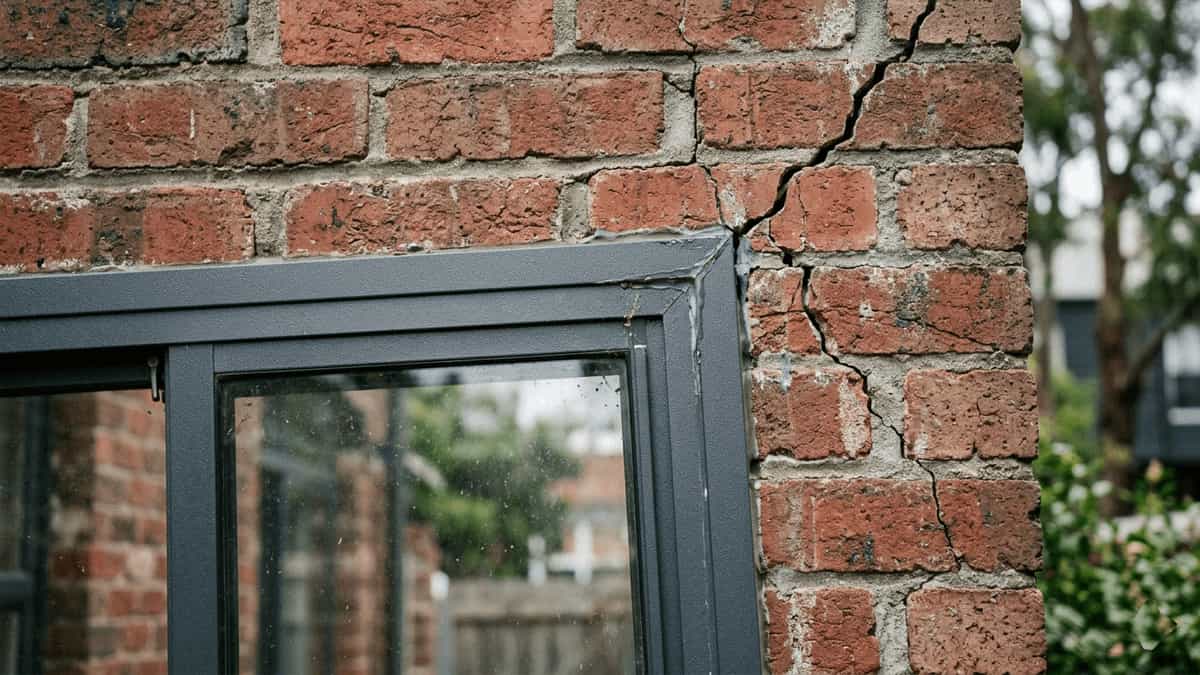
As buildings settle over time, Aluminium window frames can shift out of square. What was once a perfectly rectangular opening may become a subtle parallelogram. This misalignment causes sticking sashes, gaps at the corners, broken seals, and draughts. Unlike a simple hardware issue, settlement misalignment involves the structure itself. This guide explains how to diagnose the problem, perform minor adjustments if you have the right tools, and – most importantly – recognise when you must call a professional.
The Problem & The Decision (DIY or Call a Pro?)
What Causes Building Settlement Misalignment?
All buildings settle. New homes on soft ground, renovations that alter load‑bearing walls, or even seasonal soil expansion and contraction can slowly change the shape of a window opening. Aluminium frames are rigid – they do not bend like wood. When the opening moves, one of two things happens:
- The frame distorts slightly – visible as a racked (leaning) shape. Sashes may bind or fail to close.
- The frame remains square, but the gap between frame and wall becomes uneven – sealant tears, and water leaks appear.
This is a structural issue, not a window problem. The window is only the messenger.
Signs of Settlement Misalignment
- A casement or sliding sash that used to close easily now scrapes at one corner.
- The lock catch no longer aligns with the striker plate.
- Diagonal gaps appear between the frame and the wall (wider at top left, narrower at bottom right).
- Cracks in the plaster or brickwork around the window.
The Decision Matrix
| If this sounds like you… | Your Skill Level | Recommended Action |
|---|---|---|
| The window is only slightly out of square (less than 5mm diagonal difference). You have a level, a tape measure, and are comfortable shimming or adjusting hinges. | Intermediate | Proceed with DIY Guide (minor adjustments only). |
| You see large diagonal cracks in the wall, the window is visibly leaning, or the frame has pulled away from the masonry. You have no structural knowledge. | Beginner / Zero Knowledge | STOP. CALL A PRO. This is a structural issue. Do not attempt to “force” the window straight. |
| The misalignment has returned after a previous DIY fix, or the building is more than 20 years old with ongoing movement. | All Levels | CALL A PRO. A structural engineer may be needed to assess foundations or lintels. |
The DIY Guide (For Minor Adjustments – Less Than 5mm Misalignment)
This guide assumes the frame itself is not bent, and the wall movement is small enough to be compensated by adjusting the window sash or adding shims behind the frame. Do not try to force the Aluminium frame straight – it will crack.
Tools & Materials You Will Need
- Spirit Level (600mm or longer)
- Tape Measure
- Combination Square
- Allen Keys (Hex Wrenches) – for hinge adjustments
- Shims (plastic or Aluminium – never wood)
- Screwdriver (Phillips and flat)
- Pencil
- Safety Glasses
Step‑by‑Step Instructions
Step 1: Measure the Misalignment
- Close the window and measure the diagonal distances from top‑left to bottom‑right, and top‑right to bottom‑left. If the two measurements differ by more than 5mm, stop and call a pro.
- Check the frame with a level. If the head is level but the sill is not, the opening is racked.
Step 2: Adjust the Sash (Casement Windows)
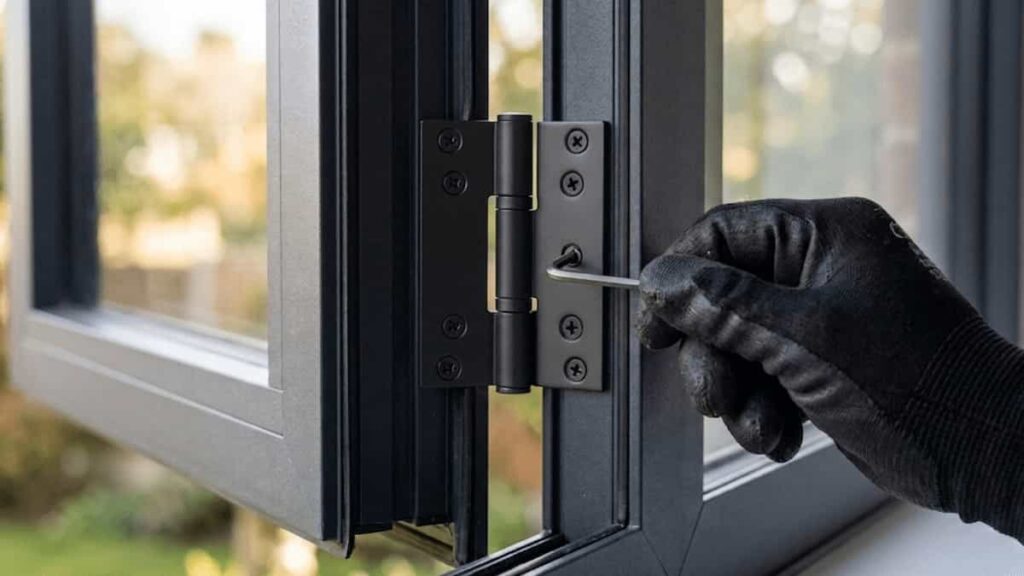
- Most modern Aluminium casement windows have adjustable hinges. Look for a small grub screw or an eccentric cam on the hinge.
- Turn the adjustment screw with an Allen key. A quarter turn usually moves the sash by 1–2mm.
- Close the window and check the lock alignment. Repeat until the sash closes smoothly.
Step 3: Adjust Sliding Sash (Sliding Windows)
- Check the bottom track. Sometimes a worn or misaligned roller is the culprit – not the frame.
- Locate the adjustment screws at the bottom corners of the sliding sash. Turning them raises or lowers the sash.
- Adjust so the sash runs parallel to the track.
Step 4: Shimming the Frame (Fixed Windows Only)
- If the frame itself is slightly out of square but the wall is stable, you can add shims behind the frame on the inside.
- Remove the interior trim or glazing bead on one side.
- Insert plastic shims between the Aluminium frame and the rough opening. Work gradually, checking the level after each shim.
- Do not force the frame more than 2mm. If more is needed, call a pro.
Step 5: Test and Observe
- Operate the window 10 times. If it binds again, the building is still moving – professional intervention is required.
Why You Might Need to Call a Professional
If you fall into the “Pro” category, here is what a specialist will do that you cannot safely achieve at home:
- Structural Assessment: A structural engineer will measure the settlement with a digital level and may recommend underpinning the foundation, repairing a cracked lintel, or installing a load‑bearing jack.
- Frame Removal and Re‑installation: If the opening has permanently shifted, the only correct solution is to remove the window, re‑cut the opening to a true rectangle, and install a new or re‑sized Aluminium frame.
- Custom Tapered Shims: Professionals have access to machined tapered Aluminium shims that can correct racking without stressing the frame.
- Helical Wall Ties: In brick veneer construction, settlement can cause the wall to separate. Helical ties can pull the wall back into alignment before the window is refitted.
- Warranty and Safety: A DIY attempt on a settling building can make the problem worse, potentially causing the window to fall out or the wall to collapse.
Summary
- Diagnose carefully: Measure diagonal differences. More than 5mm = structural issue.
- Know your limits: Minor hinge or roller adjustments are DIY. Shimming the frame is possible only for very small movements (less than 2mm).
- Call a pro for: Visible wall cracks, repeated binding after adjustment, or any frame distortion.
- Do not force an Aluminium frame – it will crack or break the glass.
- Prevention: When building new, specify reinforced Aluminium frames and allow for settlement in the installation (e.g., adjustable anchoring systems).
Further Reading & Related Issues
To understand more about Aluminium window problems and building movement, explore these articles from our archive:
- For an overview of common Aluminium window problems:
Aluminium Window Problems Guide - For frame deformation (which can be mistaken for settlement):
Frame Deformation and Poor Rigidity - For seal failures that often accompany settlement misalignment:
Water Leakage at Frame‑Wall Joints - To understand the difference between Aluminium and other materials in movement:
Aluminum 6063 Alloy for Windows and Doors - For maintenance after the repair:
How to Maintain Aluminum Windows