Aluminium 6262 – also known as Aluminum 6262 – is a heat‑treatable aluminium‑magnesium‑silicon‑copper alloy that belongs to the 6000 series. While the 6xxx family is generally recognised for good corrosion resistance and moderate strength, 6262 is distinctly engineered for one primary purpose: superior machinability. The deliberate addition of lead (Pb) and bismuth (Bi) creates a free‑machining alloy that produces clean, broken chips, enabling high‑speed production on automatic screw machines and CNC lathes. It is the material of choice for precision‑turned parts where dimensional accuracy, surface finish, and manufacturing productivity are critical – from automotive brake components and hydraulic valve blocks to camera parts and marine fittings.
What is Aluminium 6262?
Aluminium alloy 6262 is a member of the 6000 series (aluminium‑magnesium‑silicon) – a family known for a favourable balance of strength, corrosion resistance, and formability. It is chemically related to 6061 and 6162, but is set apart by its lead and bismuth content, which acts as an internal lubricant during machining and promotes chip fracture. This makes 6262 one of the few aluminium alloys developed specifically for machining applications, including screw machine and CNC machine products.
The alloy is heat‑treatable and is commonly supplied in tempers such as T6, T651, T8, and T9, each offering a different balance of strength, ductility, and residual stress control. It is typically formed by extrusion, forging, or rolling, and is not used in casting. Aluminium 6262 is widely known under designations such as AA6262, UNS A96262, ISO AlMg1SiPb, and A96262. It is often described as the practical alternative to 2011 when better corrosion resistance and anodising response are required, while still delivering machining speeds that approach the free‑cutting performance of the 2011 alloy.
Key Characteristics at a Glance
- ✓ Density: 2.71–2.72 g/cm³
- ✓ Melting point: 582°C
- ✓ Thermal conductivity: 172 W/m·K
- ✓ Modulus of elasticity: 68.3–69 GPa
- ✓ Typical tensile strength (T6 temper): 260–310 MPa (min. 260 MPa per BS EN 755‑2)
- ✓ Typical tensile strength (T9 temper): 360–400 MPa
- ✓ Typical yield strength (T6 temper): 240 MPa (min.)
- ✓ Typical yield strength (T9 temper): 330–379 MPa
- ✓ Electrical conductivity: 44% IACS
- ✓ Machinability rating: 70% on a 0–100 scale (compared with 2011 at a higher rating, but with superior corrosion resistance)
Data compiled from industry specifications and MatWeb / AZoM / Aalco datasheets.
Chemical Composition
Aluminium 6262 is a magnesium‑ and silicon‑rich alloy with carefully controlled additions of copper, chromium, lead, and bismuth. The lead (0.4–0.7%) and bismuth (0.4–0.7%) are the defining elements – they do not contribute significantly to strength but are responsible for the alloy’s exceptional machinability by embrittling the chip and reducing friction at the cutting tool. The copper addition provides some solid‑solution strengthening, while chromium helps control grain structure.
| Element | Percentage (%) |
|---|---|
| Aluminium (Al) | Balance |
| Silicon (Si) | 0.4 – 0.8 |
| Iron (Fe) | ≤ 0.7 |
| Copper (Cu) | 0.15 – 0.40 |
| Manganese (Mn) | ≤ 0.15 |
| Magnesium (Mg) | 0.8 – 1.2 |
| Chromium (Cr) | 0.04 – 0.14 |
| Zinc (Zn) | ≤ 0.25 |
| Titanium (Ti) | ≤ 0.15 |
| Lead (Pb) | 0.4 – 0.7 |
| Bismuth (Bi) | 0.4 – 0.7 |
| Others (Each) | ≤ 0.05 |
| Others (Total) | ≤ 0.15 |
Source: Aalco / AZoM / ASTM B221
The magnesium and silicon form fine magnesium‑silicide precipitates during artificial ageing – the primary strengthening mechanism for the 6xxx series. The lead and bismuth remain largely insoluble and serve their machining function without significantly degrading the alloy’s corrosion resistance in the tempers normally used.
Key Properties of Aluminium 6262
⚙️ Exceptional Machinability – The Defining Advantage
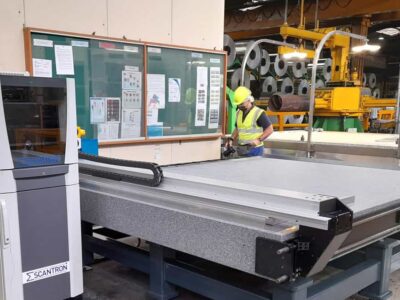
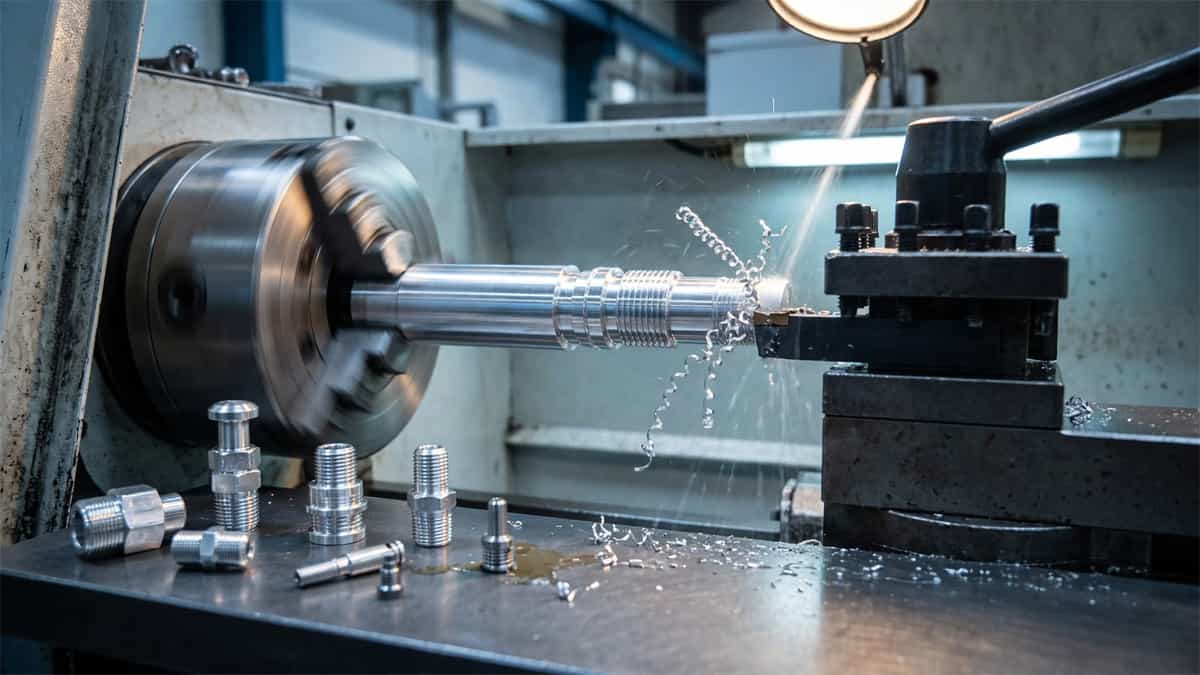
This is where Aluminium 6262 truly excels. The alloy was developed specifically to address the machining challenges of aluminium, which can otherwise produce long, stringy chips that slow production and compromise surface finish. With the lead‑bismuth addition, 6262 produces curled and broken chips, enabling higher feed rates, longer tool life, and excellent surface finishes on automatic screw machines and CNC turning centres. Smooth finishes can be obtained with either high‑speed steel or carbide tooling; light cutting can be performed dry, while heavy cutting may require an oil lubricant. While 2011 remains the absolute benchmark for free‑cutting aluminium, 6262 is consistently rated as a high‑machinability alloy and offers a far better combination of corrosion resistance and anodising response.
💪 Good Strength – Temper‑Dependent
Aluminium 6262 delivers good strength for a 6xxx‑series alloy, and its mechanical properties can be tailored through temper selection. The T6 temper provides minimum tensile strength of 260 MPa and yield strength of 240 MPa with 8–10% elongation – a good balance of strength and ductility for general‑purpose machined parts. For higher strength, the T9 temper (solution treated, artificially aged, and cold worked) raises tensile strength to approximately 360–400 MPa and yield strength to 330–379 MPa, though elongation drops to around 3–10%. The T8 temper offers an intermediate balance, with excellent residual stress control – a valuable characteristic for screw machine starting stock where dimensional stability during machining is essential.
🛡️ Good Corrosion Resistance – Superior to 2011
Aluminium 6262 offers good general corrosion resistance, and its resistance to atmospheric conditions and seawater is considered superior to that of the copper‑rich 2011 free‑machining alloy. MatWeb rates its general corrosion resistance as “B” and its stress‑corrosion cracking resistance as “A” in the T8 temper. This makes 6262 suitable for marine fittings, hydraulic components, and other applications where the part is exposed to moisture or mildly corrosive environments. However, as with all aluminium alloys, direct contact with dissimilar metals can cause galvanic corrosion and should be managed through appropriate design and isolation.
🎨 Anodising and Finishing – Excellent Response
One of the practical advantages of 6262 over 2011 is its excellent anodising response. The alloy readily accepts all common anodic coatings – clear, clear‑and‑dye, and hardcoat – making it suitable for applications where both corrosion resistance and aesthetic appearance are important. Finishing characteristics are rated as better than 2011, 2017, 2024, and 7075, and equal to 6061. This combination of machinability and finishing quality makes 6262 a preferred choice for decorative hardware, appliance fittings, and camera components where a high‑quality surface is required.
🔧 Fabrication and Workability
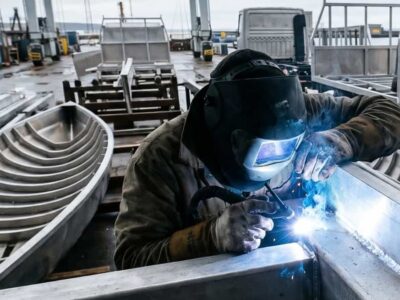
Aluminium 6262 is readily weldable by all commercial methods, including gas, arc, and resistance welding, and can also be brazed. However, because it is a heat‑treatable alloy, the strength in the T6 condition can be reduced by the heat of welding or brazing, and an appropriate filler alloy should be selected based on the desired weld characteristics. Cold workability is poor, particularly in the T8 and T9 tempers, so forming operations are generally limited. The alloy is not intended for casting and is primarily supplied as extruded or cold‑finished rod, bar, and wire.
🔥 Heat Treatment
As a heat‑treatable alloy, 6262 can be significantly strengthened through solution treatment and artificial ageing. The most common tempers are:
| Temper | Description |
|---|---|
| T6 | Solution heat treated and artificially aged – standard high‑strength temper with good machinability |
| T651 | Solution heat treated, stress‑relieved by stretching, and artificially aged – improved dimensional stability |
| T8 | Solution heat treated, cold worked, and artificially aged – excellent residual stress control for screw machine stock |
| T9 | Solution heat treated, artificially aged, and cold worked – highest strength, lower ductility |
| T6511 | Solution heat treated, stress‑relieved by stretching, and artificially aged (for extrusions) |
Sources: Hydro / Sapa / Kaiser Aluminum technical datasheets
Applications of Aluminium 6262
Aluminium 6262 is a specialist alloy whose unique combination of high‑speed machinability, good corrosion resistance, and excellent finishing characteristics makes it indispensable for precision‑machined components across multiple industries.
🔩 Screw Machine Products – The #1 Application
The alloy was developed specifically for automatic screw machine and CNC turning applications, and this remains its largest market. Typical parts include:
- Nuts, couplings, and hinge pins – high‑volume turned parts requiring consistent dimensions and clean threads
- Valve and valve parts – including hydraulic valve blocks and pneumatic quick‑connect couplings
- Oil line fittings and adapters – where pressure integrity and corrosion resistance are required
- Camera parts and tripod fittings – precision components demanding fine surface finish and anodising quality
🚗 Automotive & Transportation
6262 is widely used in automotive and truck applications where machined aluminium components contribute to weight reduction without sacrificing reliability:
- Brake components – including pistons and caliper parts
- Air conditioning components and manifolds – requiring good corrosion resistance and dimensional accuracy
- Electrical and cable components – machined connectors and fittings
⚓ Marine & General Hardware
The alloy’s good seawater corrosion resistance and excellent anodising response make it suitable for marine fittings, decorative hardware, appliance fittings, and general hardware and fasteners. It is often selected over 2011 in these applications because the improved corrosion resistance and finishing quality outweigh the slight reduction in ultimate machining speed.
Fabrication & Workability – Quick Guide
| Aspect | Recommendation |
|---|---|
| Machining | Excellent – use high‑speed steel or carbide tooling; light cutting can be dry, heavy cutting with oil lubricant |
| Welding | Readily weldable by gas, arc, and resistance methods; brazing also suitable; strength in T6 may be reduced by weld heat |
| Cold working | Poor – particularly in T8 and T9 tempers; forming is limited |
| Heat treatment | Solution treat and artificially age; common tempers include T6, T651, T8, T9, and T6511 |
| Anodising | Excellent response – clear, dye, and hardcoat anodising all suitable |
| Joining (non‑weld) | Riveting, bolting, and adhesive bonding are all viable; mechanical fastening is common for screw machine assemblies |
WHY CHOOSE ALUMINIUM 6262?
- ✓ Exceptional machinability – lead and bismuth additions enable high-speed production with clean chip formation and excellent surface finish
- ✓ Good corrosion resistance – superior to 2011 and suitable for marine and atmospheric exposure
- ✓ Excellent anodising response – equal to 6061, better than 2011, 2024, and 7075, enabling both protective and decorative finishes
- ✓ Good strength – T6 temper provides 260 MPa minimum tensile strength; T9 raises this to approximately 360-400 MPa
- ✓ Good residual stress control – the T8 temper offers low average residual stress for dimensional stability in screw machine stock
- ✓ Readily weldable and brazable – all commercial welding methods are suitable
- ✓ Versatile temper range – T6, T651, T8, T9, and T6511 allow properties to be tailored to the application
- ✓ Excellent finishing characteristics – parts can be produced with a high level of polish
CONS
- ✕ Contains lead – lead is a regulated substance in some jurisdictions; lead-free alternatives such as 6026 are available where environmental or health regulations require it
- ✕ Poor cold workability – forming is limited, particularly in high-strength tempers
- ✕ Lower strength than 7xxx alloys – not a substitute for 7075 or 7050 in high-stress structural applications
- ✕ Weld strength reduction – the T6 temper loses strength in the heat-affected zone during welding
- ✕ Not suitable for casting – 6262 is a wrought alloy only
Aluminium 6262 (Aluminum 6262) is the free‑machining specialist of the 6000 series – an alloy that solves the productivity challenges of machining aluminium without sacrificing the corrosion resistance and finishing quality that the 6xxx family is known for. While 6061 provides a well‑balanced general‑purpose alloy and 2011 delivers the ultimate in free‑cutting performance, 6262 occupies a practical sweet spot: machinability that approaches 2011, combined with corrosion resistance and anodising response that far exceed it.
From high‑volume screw machine products and hydraulic valve components to automotive brake parts and marine fittings, Aluminium 6262 provides the dimensional accuracy, surface finish, and manufacturing efficiency that precision‑machined components demand. It is not a structural alloy for airframes or heavy load‑bearing applications – that is the domain of 7050 and 7075 – but for the millions of turned and machined parts that keep vehicles, machinery, and consumer products functioning, Aluminium 6262 is the proven, productive choice.
If your application requires high‑speed machining, good corrosion resistance, and excellent finishing characteristics, Aluminium 6262 is the trusted solution.