Look around your home, your office, your city. There’s a silent, shimmering revolution that shapes modern life, and its name is aluminum. From the moment you wake up to your commute and the food on your table, this versatile metal is an indispensable, yet often invisible, partner. Its journey from a precious 19th-century novelty to the backbone of contemporary design and sustainability is a story of brilliant innovation. Let’s explore how aluminium seamlessly integrates into the fabric of our daily existence.
The Kitchen: Where Performance Meets Everyday Use
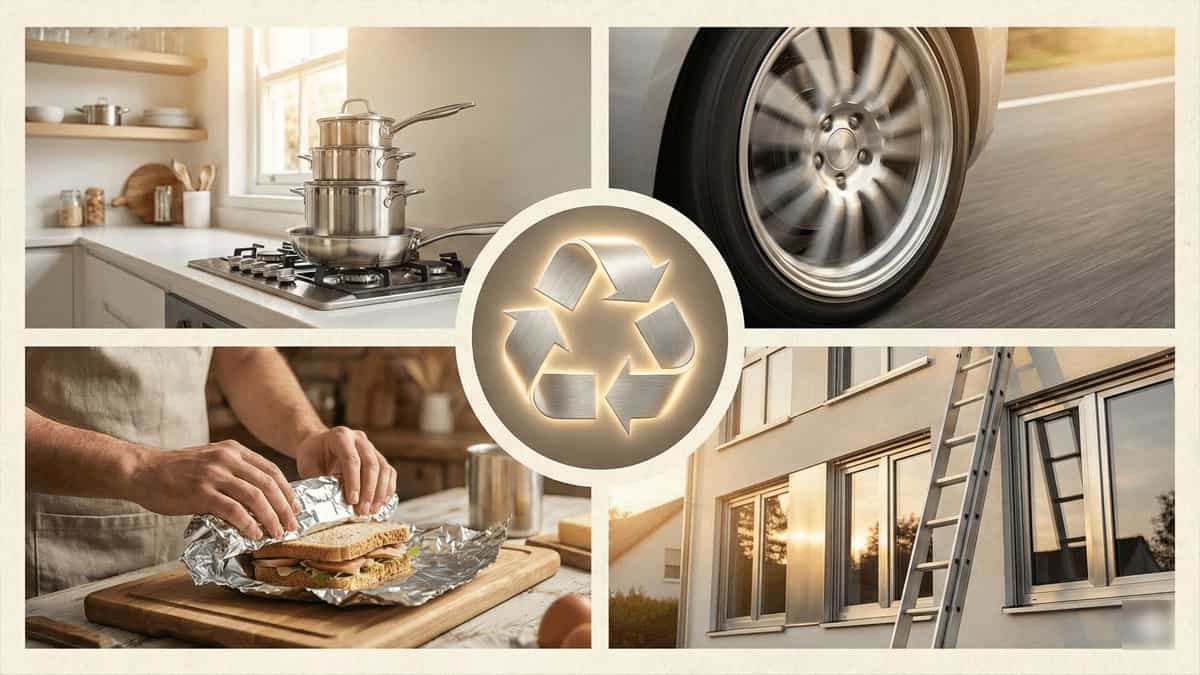
The heart of the home is also aluminum’s premier stage. Its exceptional thermal conductivity makes it a star performer in cookware, heating evenly to prevent hot spots—perfect for everything from searing steaks to simmering sauces. Modern anodized and coated options ensure safety and durability. Then there’s the humble aluminum foil, a kitchen superhero for wrapping, covering, and protecting food, demonstrating the metal’s perfect malleability. Beyond the stovetop, you’ll find it in baking trays, coffee makers, and even as a sleek, easy-to-clean backsplash.
Home & Infrastructure: The Framework of Modern Living
Step outside the kitchen, and aluminum’s structural genius becomes apparent.
- Windows & Doors: Aluminum frames offer strength without bulk, allowing for larger glass panels that flood homes with natural light while providing excellent thermal efficiency with technologies like thermal break systems and Low-E glass.
- Rooftops & Siding: Its corrosion resistance makes aluminum ideal for roofing and wall cladding. It’s lightweight, reducing structural load, and reflects heat, boosting energy efficiency.
- Ladders & Tools: The high strength-to-weight ratio is critical here. An aluminum ladder is strong enough to support significant weight but light enough to be carried and positioned by a single person—a direct application of its aerospace heritage in domestic settings.
Mobility: Driving the World Lighter and Farther
This is where aluminium truly shifts into high gear. The transportation industry’s quest for efficiency has made it a material of choice.
- Automobiles: From engine blocks and wheels to body panels and chassis components, aluminum reduces vehicle weight. Every 10% reduction in weight can improve fuel economy by 6-8%. This is pivotal for both traditional fuel efficiency and extending the range of electric vehicles.
- Wheels: Alloy wheels are not just for aesthetics. They reduce unsprung weight, improving handling, braking, and acceleration, while also dissipating heat from brakes more effectively.
- Aerospace & Rail: The same principle applies on a grander scale. Airplanes and high-speed trains rely on aluminium alloys to achieve the impossible balance of immense strength and minimal weight, making global connectivity feasible.
Technology & Design: The Invisible Enabler
Your smartphone, laptop, and tablet likely feature aluminum unibody designs. It provides a rigid, protective structure that feels premium, dissipates heat from electronics, and allows for sleek, minimalist aesthetics. In furniture, it enables lightweight, durable, and often recyclable designs for indoor and outdoor use. From the skeleton of a skyscraper to the frame of your sunglasses, aluminum’s design flexibility is limitless.
The Sustainable Cycle: Aluminium’s True Superpower
What makes aluminium’s omnipresence truly remarkable is its sustainability profile. Unlike many materials that degrade, aluminum is infinitely recyclable. The can, car part, or window frame you use today can be melted and reformed countless times without losing its properties. Recycling aluminum saves about 95% of the energy required to make it from raw ore. This closed-loop life cycle, from product to scrap to new product, is why aluminium is a cornerstone of the circular economy. Its widespread use, therefore, isn’t just a convenience; it’s an accumulating reservoir of reusable material. Learn more about this vital recycling journey.
Looking Ahead: Smarter and More Integrated
The future of aluminium is one of smarter integration. We’re moving towards more intelligent alloys with enhanced properties, greater use of recycled content in all products, and innovations like photovoltaic-integrated aluminium building facades that generate solar power. The goal is a world where this metal not only serves our needs but actively contributes to a net-zero future, driving sustainable development across sectors.
The Metal That Shaped Modernity
Aluminum is far more than just a material; it is an enabler of modern life. It has allowed us to build taller, travel faster, conserve energy, and design with elegance and efficiency. Its journey from a hidden ore to the most abundant metal in our daily lives is a testament to human ingenuity. The next time you open a can, climb a ladder, or drive your car, take a moment to appreciate the lightweight, strong, and infinitely recyclable metal that makes it all possible. It’s not just in our everyday life; it’s quietly helping build a better, more sustainable tomorrow.