These aluminum multi-task ladders have blown up because they replace multiple tools with one smart, lightweight setup. Built from 6061/6063 aluminum, they stay rust-free, are easy to carry, and can handle 300–375 lbs without flexing. With multi-position hinges, wide flared bases, and reinforced rungs, they are widely considered the best multi task ladders for both homeowners and pros. Whether you’re cleaning gutters, hanging lights, or managing HVAC installs, the verdict is simple: one ladder, four configurations, less storage, and significantly more safety.
When I first got my hands on a multi-task ladder, I’ll admit—I was skeptical. As someone who’s climbed everything from rickety wooden steps to heavy industrial scaffolds, the idea of one ladder doing it all felt too good to be true. But after watching a contractor set up a stable work platform in under 30 seconds—transforming from an A-frame to an extension ladder without breaking a sweat—I was sold. Today, these versatile tools are widely considered the best multi task ladders on the market, representing an engineering marvel that is reshaping how we work at height.
Whether you’re a DIY enthusiast cleaning gutters, a solar panel installer, or an HVAC technician, understanding the design and safety behind these ladders can mean the difference between a job well done and a trip to the ER. Let’s dive deep into the world of aluminum multi-task ladders—where material science meets real-world utility.
Why Multi-Task Ladders Became an Industry Standard
The ladder has come a long way from the single-purpose designs of the past. What started as a simple means of vertical access has evolved into a configurable, multi-functional system capable of adapting to dozens of scenarios. This shift wasn’t just about convenience—it was driven by real industry needs.
With the rise in home renovation projects, construction versatility, and field-service demands, professionals and homeowners alike needed equipment that could keep up. Carrying multiple ladders to a job site was inefficient, costly, and space-consuming. Enter the multi-task ladder: a single tool that could serve as an A-frame, extension ladder, 90-degree lean-to, and even a scaffold.
But the real game-changer was the move toward lightweight yet incredibly strong aluminum alloys. No longer did users have to choose between portability and durability. Modern multi-task ladders offer both, making them a staple in garages, warehouses, and job sites around the world.
Core Material Science: The Aluminum Alloy Behind the Ladder
Not all metal is created equal. The ladders you trust with your safety are typically built from 6061 or 6063 aluminium alloys—materials prized for their excellent strength-to-weight ratios and corrosion resistance.
- 6061 Aluminum: Known for its high tensile strength and good weldability, it’s often used in structural applications.
- 6063 Aluminum: Slightly more formable, with a smoother surface finish, making it ideal for extrusions like ladder rails.
These alloys undergo heat treatment (T5 or T6 tempering) to enhance their mechanical properties. The result? A ladder that can support Type IA (300 lbs) or IAA (375 lbs) loads without bending or buckling, yet remains light enough to carry with one hand.
Unlike steel, aluminium won’t rust—a huge advantage for outdoor use. And compared to fiberglass, it’s more affordable and easier to manufacture into complex shapes. For a deeper look at how these alloys compare, check out our guide on the differences between aluminum 6061 and 6063.
Structural Engineering: Load Distribution & Stress Points
To be considered among the best multi task ladders, the unit must be more than just rails and rungs—it must be a carefully engineered system designed to distribute weight and manage stress across multiple configurations.
Key engineering features include:
- Multi-position hinges: Locking mechanisms that allow secure transitions between modes.
- Cross-bracing: Reduces lateral flex and increases torsional rigidity.
- Reinforced rungs: Often riveted or welded into box-section rails for added strength.
Engineers run finite element analysis (FEA) simulations to identify stress concentrations—especially around hinges and lock points—and reinforce those areas. The goal is to ensure that whether you’re in A-frame or extension mode, the load path remains stable and secure.
Multi-Task Configurations & Engineering Behind Each Mode
One ladder, multiple personalities. Here’s how the engineering adapts to each role:
- A-Frame Mode: The classic step-ladder setup. Hinges lock at a fixed angle, often with a spreader bar for added stability.
- Extension Mode: One section slides over another, with spring-loaded locking dogs engaging in pre-drilled holes.
- 90-Degree Mode: Allows the ladder to lean against a wall while steps remain horizontal—perfect for stairwells.
- Scaffold Mode: Two A-frames with a plank create a temporary work platform.
Each mode relies on precision-machined components and overbuilt locking mechanisms to prevent accidental collapse. If you’re curious about how aluminium is shaped into these complex profiles, our article on aluminium extrusion breaks down the process.
Safety Engineering: The Physics of Balance & Angle Stability
Safety isn’t an afterthought—it’s baked into the design. Here’s how:
- The 75.5° Rule: For leaning ladders, this angle optimizes stability vs. reach. Steeper increases tipping risk; shallower risks base slip.
- Wide-Base Footings: Coupled with non-slip rubber pads, they increase the “footprint” and friction on smooth surfaces.
- Center of Gravity Management: The ladder’s weight is distributed to keep the combined COG (user + ladder) within the support polygon.
Real-world accident data shows that most failures occur from misuse—overreaching, incorrect angle, or exceeding load limits—not from material failure. That’s why understanding these principles is as important as owning a sturdy aluminum ladder.
Ergonomics & Human Factors Engineering
A safe ladder is also a comfortable one. Ergonomics play a huge role in reducing fatigue and improving stability:
- Rung spacing: Typically 10–12 inches, optimized for natural climbing rhythm.
- Wide flared rails: Provide better hand grip and reduce arm strain.
- Textured steps: Enhance foot traction even when wet or muddy.
Manufacturers also consider user height and reach when designing telescopic sections and hinge points, ensuring that whether you’re 5’2” or 6’4”, you can work confidently.
Manufacturing Process Breakdown
Ever wonder how these ladders are made? It’s a blend of traditional metalworking and modern precision:
- Extrusion: Aluminium billets are heated and forced through dies to create rail profiles.
- Heat Treatment: Rails are tempered to achieve the desired strength (T5/T6).
- CNC Machining: Hinges, locks, and brackets are cut and drilled to tight tolerances.
- Assembly: Components are riveted or bolted—welding is rare as it can weaken heat-treated zones.
- Testing: Each batch undergoes load, torsion, and cycle testing.
For a closer look at manufacturing within the industry, explore our piece on aluminium ladder manufacturing in India.
Field Applications Across Industries
These ladders aren’t just for changing lightbulbs. Here’s where they shine in professional settings:
- Solar Installation: Lightweight, easy to reposition on rooftops.
- HVAC & Electrical: Configurable for tight spaces and high ceilings.
- Warehouse Operations: Scaffold mode for shelf access.
- Telecom: Extension mode for antenna or cable work.
Their versatility reduces equipment costs and setup time, making them a favorite across trades.
Climate & Environmental Impact on Ladder Performance
Aluminum performs well in most conditions, but extremes matter:
- Heat: Prolonged sun exposure can make rungs hot to the touch, but structural integrity remains intact.
- Cold: Unlike steel, aluminum doesn’t become brittle in sub-zero temps.
- Coastal Areas: Powder-coated finishes resist salt spray corrosion. Learn more about protective coatings in our guide to powder coating vs. anodizing.
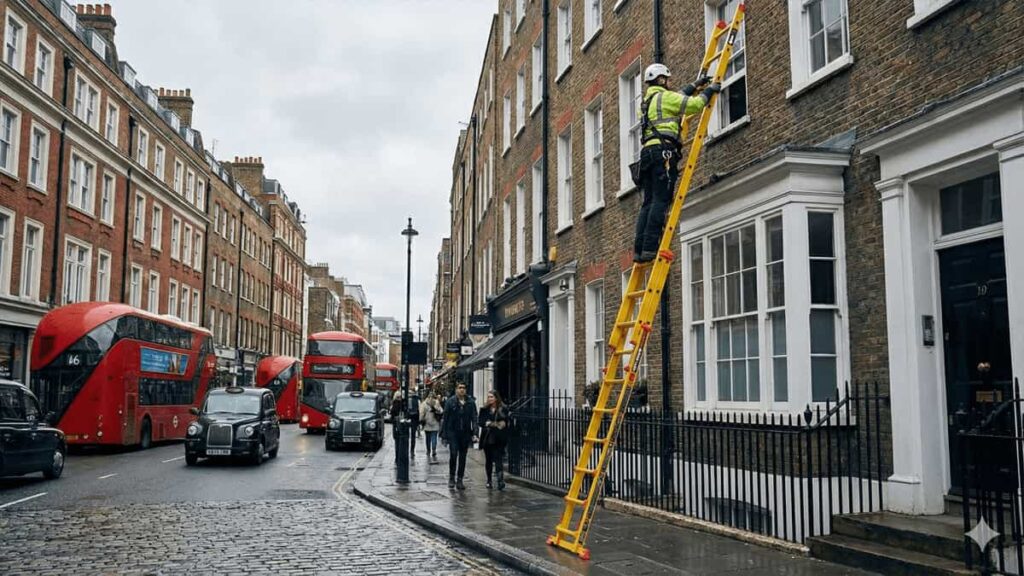
Comparison: Aluminium Multi-Task Ladders vs. Other Ladder Types
| Type | Weight | Durability | Cost | Best For |
| Aluminium Multi-Task | Light | High | $$$ | Versatility, portability |
| Steel Ladder | Heavy | Very High | $$ | Industrial fixed use |
| Fiberglass | Moderate | High | $$$$ | Electrical work |
| Telescopic | Very Light | Moderate | $$ | Storage-limited spaces |
For most users, the multi-task ladder offers the best balance of safety, utility, and value.
Maintenance & Inspection Protocols (Engineering Grade)
Your ladder can last decades—if you care for it. Before each use:
- Check hinges and locks for smooth operation.
- Look for hairline cracks near joints.
- Ensure feet are clean and rubber intact.
- Never use if any component is bent or damaged.
Store indoors, avoid harsh chemicals, and retire any ladder that’s been in a fall or shows signs of fatigue.
Innovations & Future Engineering Trends
The next generation of the best multi task ladders is already here:
- Smart sensors: Warn of overload or unsafe angles.
- Hybrid materials: Carbon fiber-reinforced aluminium for even lighter builds.
- Auto-deploy hinges: One-button configuration changes.
These advances will make ladders safer, smarter, and even more integral to our workflows.
Final Wrap: The Engineering Behind Safe Elevation
A multi-task ladder is more than a tool—it’s a testament to intelligent design and material innovation. By blending aluminium’s inherent strengths with human-centered engineering, these ladders empower us to work safer, smarter, and more efficiently.
Whether you’re a pro or a weekend warrior, investing in a well-engineered multi-task ladder isn’t just about convenience—it’s about trusting the science that keeps you secure several feet above the ground. Stay curious, stay safe, and keep reaching new heights—responsibly.
Got a ladder story or a safety tip to share? Drop it in the comments below—we’d love to hear from you. And if you’re looking to dive deeper into the world of aluminium, check out our full archive on aluminium applications and innovations.