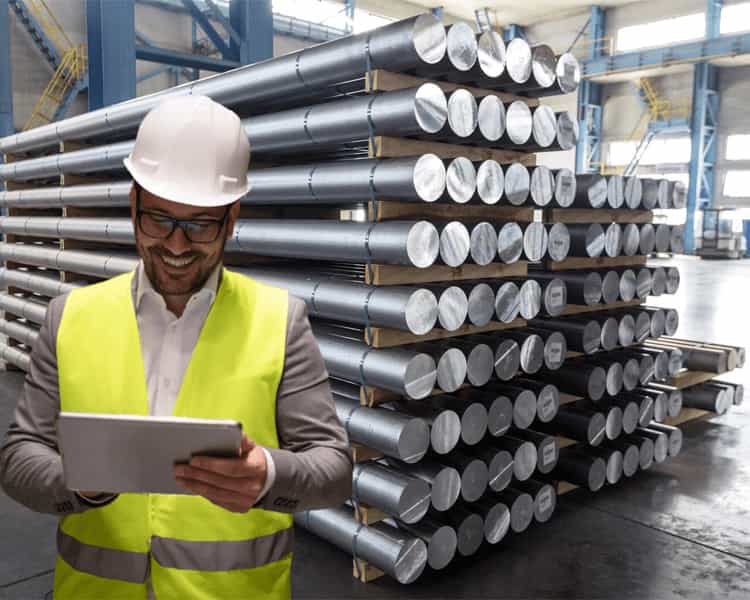
The aluminium industry plays a pivotal role in advancing sustainable development, contributing significantly to green manufacturing, ensuring long-term production sustainability, and benefiting from supportive government policies. This analysis explores these dimensions in detail, providing a thorough understanding of the industry’s impact and the frameworks supporting its growth.
Contribution to Green Manufacturing
Aluminium’s unique properties—lightweight, strong, and highly recyclable—make it a cornerstone of green manufacturing. It is extensively utilized in renewable energy technologies and sustainable transportation, which are critical for reducing carbon emissions and transitioning to a low-carbon economy.
Usage in Renewable Energy Technologies
Aluminium is integral to solar photovoltaics, concentrated solar power, and wind energy systems. For instance, wind turbine towers and blades often incorporate aluminium due to its durability and low weight, reducing transportation emissions and enhancing energy efficiency. Similarly, electric vehicles (EVs) benefit from aluminium’s high strength-to-weight ratio, improving fuel efficiency and reducing emissions. According to Aluminium Sustainability, aluminium’s use in EVs is expected to grow, driven by demand for sustainable transportation. This is further emphasized in Aluminium’s Key Role in the Electric Vehicle Revolution, which highlights how aluminium enables lighter, more efficient EV designs, aligning with the push for intelligent mobility as explored in Aluminium’s Important Impact on Transforming Vehicles into Next-Gen Intelligent Mobility. Additionally, Why Aluminium Train Bodies Are the Future of Railways showcases aluminium’s role in reducing rail transport emissions through lightweight, corrosion-resistant train bodies.
Recyclability and Energy Savings
Aluminium is 100% recyclable without loss of quality, and recycling it saves up to 95% of the energy required compared to producing new aluminium from bauxite. This process significantly reduces greenhouse gas emissions, with nearly 75% of all aluminium ever produced still in use today, as noted by The Aluminium Association. A study on Recycling Aluminium for Sustainable Development highlights that recycling offers superior environmental benefits compared to other waste management options. Understanding Aluminium Waste and Scrap provides practical insights into how the industry manages scrap to close the recycling loop, reinforcing its sustainability credentials. Everyday products like aluminium cans exemplify this, as detailed in Everything About Aluminum Cans You Need to Know, where their recyclability supports a circular economy.
Sustainable Production Innovations
The aluminium industry is actively working to decarbonize its production processes. Efforts include shifting to renewable energy sources, such as hydroelectric power, and investing in green technologies like inert carbon anodes for smelting, which eliminate CO2 emissions. Green Aluminium: The Sustainable Metal discusses how primary aluminium producers are adopting low-carbon smelting and carbon capture technologies to accelerate decarbonization.
Long-term Sustainability of Aluminium Production
Ensuring the long-term sustainability of aluminium production involves managing resource availability, reducing environmental impacts, and adapting to growing demand. This section examines the industry’s strategies to address these challenges, with relevant insights from production and resource perspectives.
Bauxite Reserves and Availability
Bauxite, the primary ore for aluminium, has substantial global reserves, estimated at 30 billion tons in 2023, according to Bauxite reserves worldwide top countries 2023. At current production rates of around 400 million tons annually, these reserves could last over 100 years. However, with potential growth in demand, Availability of Bauxite Reserves suggests that if production increases at 5% annually, known reserves might be exhausted in 20 years without new discoveries. Raw Aluminum Ore: Bauxite offers a detailed look at bauxite’s role as the foundation of aluminium production, emphasizing its finite nature, while Why Aluminum Is a Nonrenewable Resource underscores the need for sustainable management of these reserves. Countries like Guinea, Australia, and Vietnam hold significant reserves, providing a buffer for future supply.
Energy Efficiency and Carbon Footprint Reduction
Aluminium production is energy-intensive, particularly the Hall-Héroult process, which relies on electricity and carbon anodes, contributing to significant CO2 emissions. Globally, about 55% of the electricity for smelters comes from coal-fired power plants, as per Sustainable aluminium: Decarbonizing at a cost that makes sense. However, regions like Canada produce aluminium with a low carbon footprint using hydroelectric power. Aluminum Production: Aluminium Manufacturing Process details the energy-intensive steps involved, highlighting opportunities for renewable energy integration. The industry aims to cut GHG emissions by 77% by 2050, leveraging innovations like those discussed in The aluminium industry: A review on state-of-the-art technologies.
Waste Management and Circular Economy
The production process generates waste like red mud, but recycling efforts align with circular economy principles. Insights from Unwrought Raw Aluminium: Aluminium Not Alloyed Ingots and What Is an Aluminium Billet illustrate how raw aluminium forms are processed, feeding into both primary and recycled supply chains, supporting sustainability.
Government Policies Supporting the Industry
Governments play a important role in supporting the aluminium industry’s sustainability through policies that promote green production, trade fairness, and innovation. While the provided links didn’t directly address policy, existing examples remain relevant.
United States
The US supports the industry with tax incentives like the Advanced Manufacturing Tax Credit (45X) and trade measures under Section 232, as noted in Win the Future for U.S. Aluminum and Adjusting Imports of Aluminum Into the United States.
Canada
Canada leverages hydroelectric power and trade policies like the Aluminum Import Monitoring Regime, detailed in Aluminium and Government Takes Further Steps to Protect Canada’s Steel and Aluminum Workers.
European Union
The EU’s Green Deal and Circular Economy Action Plan, supported by initiatives like Vision 2050 for the aluminium industry, drive the industry toward net-zero by 2050.
The aluminium industry’s role in sustainable development is multifaceted, driven by its contributions to green manufacturing, efforts to ensure long-term production sustainability, and supportive government policies. By leveraging its recyclability, adopting renewable energy, and benefiting from international cooperation, the industry is well-positioned to meet global sustainability goals, fostering a more environmentally friendly and economically viable future.
Related Articles

Featured



You May Also Like

How an Aluminum Tariff Just Made Everything From Chocolates …

The Role of Aluminium in Electrical Wire

3-Track Aluminium Sliding Doors vs Bi-Fold Doors: Which Work…
Powder Coating Vs. Anodizing

Aluminum Screen Doors vs. Storm Doors: What’s Best for Your …