A Daily Drip. Waking up to windows streaming with water is a common winter frustration. While condensation on glass is often dismissed as harmless, persistent moisture can lead to black mould, damage to window frames and cills, and even respiratory issues. Inadequate ventilation combined with high indoor humidity is the primary culprit, and this problem is particularly common in kitchens, bathrooms, and bedrooms during colder months.
This guide explains why condensation forms on Aluminium windows, what you can do about it, and when to call a professional.
The Problem & The Decision (DIY or Call a Pro?)
What Causes Condensation on Glass?
Condensation occurs when warm, moist air comes into contact with a cold surface – in this case, the glass pane of your Aluminium window. When the glass temperature falls below the dew point of the indoor air, water vapour turns into liquid droplets.
The Three Key Factors:
- High Indoor Humidity: Everyday activities release moisture into the air – cooking, showering, drying clothes indoors, breathing, and even houseplants. A family of four can release 10–15 litres of water vapour per day through normal activities.
- Inadequate Ventilation: Modern homes are built to be airtight for energy efficiency. Without adequate ventilation, moisture has nowhere to escape. Trickle vents, extractor fans, and opening windows are essential for allowing humid air to exit.
- Cold Glass Surface: Single‑glazed glass is much colder than double or triple glazing. Even with double glazing, a failed seal or poorly insulated Aluminium frame can lower the glass temperature, increasing condensation risk.
Is Condensation Always a Window Problem?
Not necessarily. In fact, condensation on the inside of the glass usually indicates a household humidity or ventilation issue, not a fault with the Aluminium window itself. However, if condensation occurs between the panes of a double‑glazed unit, that indicates a failed seal – a problem that requires professional replacement of the sealed unit.
The Decision Matrix
| If this sounds like you… | Your Skill Level | Recommended Action |
|---|---|---|
| You see condensation on the inside of the glass only on cold days, and it clears when you wipe it. You are comfortable managing humidity and ventilation. | Intermediate | Proceed with DIY Guide (reduce humidity & improve ventilation). |
| You see condensation between the glass panes (inside the sealed unit), or the glass is permanently foggy. You have no experience with glazing. | Beginner / Zero Knowledge | STOP. CALL A PRO. A failed double‑glazed seal requires replacement of the sealed unit. |
| You have tried reducing humidity and improving ventilation, but condensation persists and mould is forming on walls or frames. | All Levels | CALL A PRO. A professional can assess for underlying issues such as a missing cavity tray, blocked weep vents, or inadequate heating. |
The DIY Guide (Reducing Condensation on Glass)
This guide focuses on managing internal humidity and improving ventilation – the two most effective ways to eliminate condensation on Aluminium window glass. These measures are low‑cost, require no specialist tools, and can make an immediate difference.
Tools & Materials You Will Need
- Hygrometer (humidity monitor) – essential for tracking progress
- Squeegee or Soft Cloth (for wiping condensation)
- Diluted White Vinegar (for cleaning mould)
- Dehumidifier (if humidity remains high)
- Extractor Fan Cleaner (if fans are blocked)
- Draught Excluder (for external doors, not windows)
Step‑by‑Step Instructions
Step 1: Measure Your Indoor Humidity
- Place a hygrometer in the room where condensation occurs. Ideal indoor humidity is 40–60%. If it is consistently above 70%, you have a humidity problem.
- Monitor for 24 hours to see how humidity changes with daily activities (cooking, showering, sleeping).
Step 2: Wipe Condensation Daily
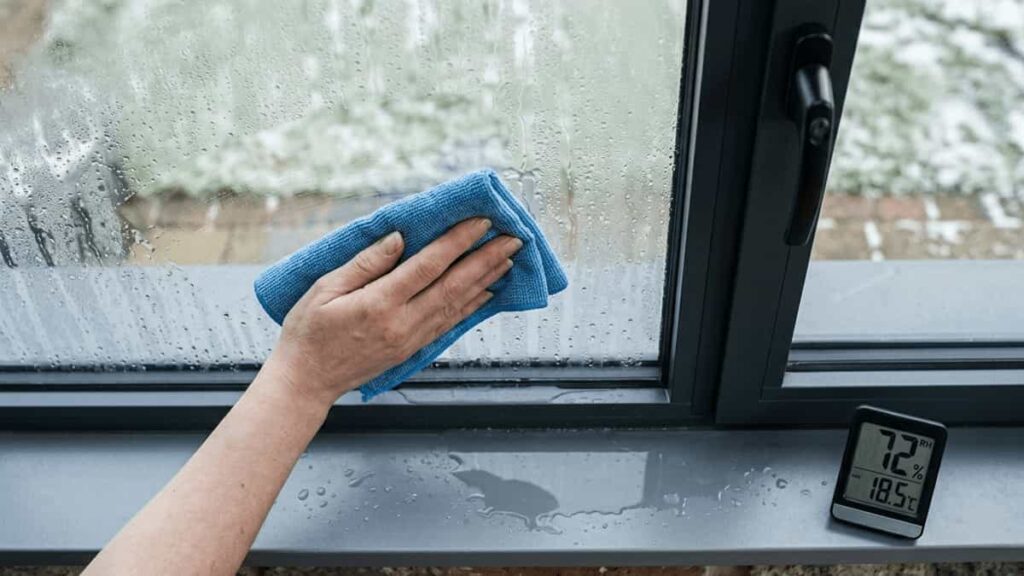
- Every morning, wipe down the glass and the Aluminium frame with a soft cloth or squeegee. Do not let water pool on the cill.
- If mould has started to form, clean with diluted white vinegar (1 part vinegar to 3 parts water). Wear gloves and ensure the room is ventilated.
Step 3: Improve Ventilation
- Open trickle vents (if your Aluminium windows have them). These are small slots designed to allow background ventilation. Do not seal them – they are essential for air quality.
- Use extractor fans when cooking or showering. Run them for at least 20 minutes after you finish.
- Open windows briefly for 5–10 minutes each day, even in winter. This creates a “purge ventilation” effect, swapping humid indoor air for drier outdoor air.
Step 4: Reduce Internal Moisture Sources
- Dry clothes outdoors, not on radiators. If you must dry indoors, use a dehumidifier.
- Ensure tumble dryers are vented to the outside.
- Cover pans when cooking to reduce steam.
- Move houseplants away from windows – they release moisture.
- Check for leaks: dripping taps, leaking pipes, or rising damp can add significant moisture to the air.
Step 5: Use a Dehumidifier
- If humidity stays above 65% after improving ventilation, a small portable dehumidifier can make a significant difference.
- Place it in the most affected room and run it during high‑humidity activities.
Step 6: Consider Secondary Glazing (for single‑glazed windows)
- If your Aluminium windows are single‑glazed, the glass surface is extremely cold, making condensation almost inevitable.
- Secondary glazing film (heat‑shrink plastic) creates an insulating air pocket, raising the glass temperature and reducing condensation.
- Follow the same application method described in the previous article (Poor Thermal Insulation).
Step 7: Monitor and Maintain
- After a week of implementing these measures, check the hygrometer. If humidity has dropped below 60% and condensation has reduced, you have solved the problem.
- If condensation persists, consider calling a professional.
Why You Might Need to Call a Professional
If you fall into the “Pro” category, here is what a specialist will do that you cannot safely achieve at home:
Failed Double‑Glazed Unit Replacement: If condensation appears between the glass panes, the sealed unit has failed. A professional glazier will measure, order, and install a new double‑glazed unit. This is not a DIY job.
Thermal Break Assessment: A professional can use a thermal imaging camera to identify cold spots on the Aluminium frame and glass. If the frame is causing the glass to be colder than it should be, a thermal break retrofit may be recommended.
Cavity Tray Inspection: In some cases, condensation is caused by a missing or failed cavity tray in the wall, allowing moisture to migrate from the cavity to the window reveal. This requires a builder or structural specialist.
Mechanical Ventilation with Heat Recovery (MVHR): For homes with persistent high humidity, a professional can design and install an MVHR system, which extracts humid air and brings in fresh, pre‑warmed air, dramatically reducing condensation.
Window Replacement: If your Aluminium windows are old, single‑glazed, and poorly sealed, replacement with modern thermally broken Aluminium frames and double or triple glazing is the most effective long‑term solution.
Summary
Identify the Problem: Condensation on the inside of glass is usually a humidity or ventilation issue, not a window fault. Condensation between panes indicates a failed double‑glazed seal.
Know Your Limits: Managing humidity and improving ventilation are DIY. Failed sealed units require a professional glazier.
DIY Steps: Measure humidity with a hygrometer, wipe condensation daily, open trickle vents and windows, use extractor fans, reduce moisture sources, and consider secondary glazing for single‑glazed Aluminium windows.
Professional Help: If condensation is between panes, or if humidity remains high after DIY measures, call a professional to inspect for failed seals, cavity tray issues, or inadequate heating.
Prevention: Good ventilation and moderate humidity (40–60%) are the keys to a condensation‑free home.
Further Reading & Related Issues
To understand more about Aluminium window problems and condensation management, explore these articles from our archive:
- For an overview of Aluminium window problems (including condensation):
Aluminium Window Problems Guide
This guide covers condensation as one of the most frequently reported issues. - For condensation specifically on Aluminium frames (thermal break failure):
Thermal Break Failure – Condensation on Internal Profiles
If condensation is on the Aluminium frame itself, not just the glass, this article explains why. - For improving thermal performance to reduce cold glass surfaces:
Poor Thermal Insulation (High Heat Transfer) – DIY Fixes
Secondary glazing and other measures that raise glass temperature and reduce condensation. - To understand double glazing and its benefits:
Single vs Double Glazed Windows – Pros and Cons
Why double glazing reduces condensation compared to single glazing.
Related Articles


Featured



You May Also Like

Why Powder-Coated Aluminium Windows Are Taking Over Modern H…

Buying Guide for Aluminium Thermal-Break Doors and Windows
Why Aluminium Is Used in Telescopic Ladders

Did Steel Cans Exist Before Aluminum? The Real History of Al…

Ideal Climate for Powder Coated Aluminium Frame