Aluminium brackets and L-angles are the unsung heroes of modern construction, providing the critical structural integrity, alignment, and longevity that doors, windows, facades, and countless industrial frameworks rely upon. Often hidden from view, these components form the skeletal backbone of assemblies, ensuring stability under stress, weather resistance, and precise geometric form.
This guide delves deep into the engineering, selection, application, and innovation behind these essential fasteners.
Understanding the Material: Why Aluminium?
The choice of aluminum for brackets and structural angles is no accident. It stems from a unique combination of properties that make it superior to steel, wood, or plastic for many applications.
- High Strength-to-Weight Ratio: Aluminium alloys like 6061-T6 and 6063-T5 offer remarkable strength while remaining exceptionally lightweight. This reduces the overall dead load on structures and makes handling and installation easier.
- Exceptional Corrosion Resistance: Aluminum naturally forms a protective oxide layer when exposed to air, shielding it from rust and degradation. This inherent quality is significantly enhanced by surface treatments like anodizing and powder coating, making it ideal for both interior and harsh exterior environments.
- Non-Combustible and Non-Toxic: Aluminium does not burn or release toxic fumes, a critical safety factor in building construction.
- Excellent Workability: It can be easily extruded into complex profiles, cast into sturdy brackets, or machined to high tolerances. Learn more about this versatile process in our article on Aluminium Extrusion.
- Sustainability: Aluminum is 100% recyclable without loss of its inherent properties. The use of recycled aluminium significantly reduces the environmental footprint.
Common Alloys for Brackets & Angles:
- 6063-T5: The most common alloy for architectural extrusions. It offers excellent surface finish for anodizing or coating, good corrosion resistance, and moderate strength. Ideal for most window and door accessory brackets.
- 6061-T6: A structurally stronger alloy used for heavy-duty brackets and industrial applications where higher shear and tensile strength are required. For a detailed comparison, see Differences Between Aluminum 6061 and 6063.
- Cast Aluminium (e.g., A356): Used for manufacturing complex, high-strength bracket shapes through die-casting.
Types of Aluminium Brackets & Angles for Fenestration
The variety available caters to every conceivable need in door and window fabrication and installation.
Standard L-Angles (Equal & Unequal Leg):

The most basic form, used for reinforcement and framing. Available in various thicknesses and leg lengths, similar to the profiles discussed in Aluminum Flat Bar Types & Sizes.
Corner Brackets (Cast or Extruded):
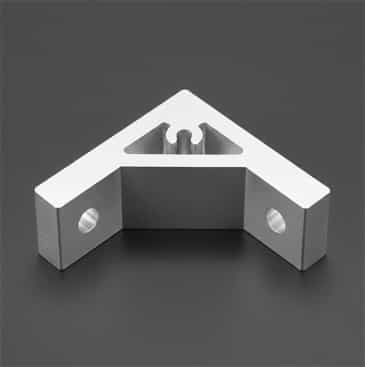
Specifically designed for joining two extrusions at a 90-degree angle. They often feature multiple screw holes and gusseted designs for torsional stability.
T-Brackets & Gussets:
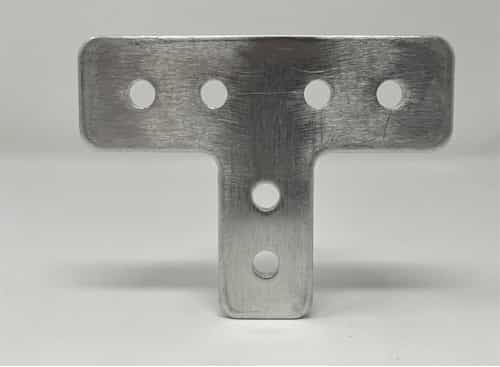
Used for reinforcing T-junctions or providing diagonal support within a frame.
Surface-Mount & Concealed Brackets: Surface-mount brackets are visible, while concealed brackets hide within profiles for a clean, aesthetic finish.
Key Applications Beyond Doors and Windows
While pivotal for fenestration, the utility of aluminum brackets spans industries, underscoring the versatility of aluminium in modern manufacturing:
- Construction & Facades: Mounting curtain wall systems, fixing sunshades, and assembling pergolas. This relates to the growing use of aluminium in infrastructure, as highlighted in How Aluminum Powers Modern Infrastructure.
- Industrial Fabrication: The backbone of machine frames for CNC routers, 3D printers, and assembly workstations.
- Retail & Interior Fit-Outs: Constructing display shelves, partition frames, and decorative structures.
- Furniture: Used in the assembly of high-end, durable, and modern aluminum-framed furniture.
Selection Criteria: Choosing the Right Bracket
Selecting the appropriate bracket is an exercise in precision engineering. Consider these factors:
- Load Calculation: Determine the static and dynamic loads the joint will bear. This dictates the required aluminium alloy and bracket thickness.
- Dimensional Compatibility: The bracket must fit the profile system (e.g., for 20mm T-slot extrusions).
- Environmental Exposure & Finish:
- Interior: Mill finish or basic anodizing may suffice.
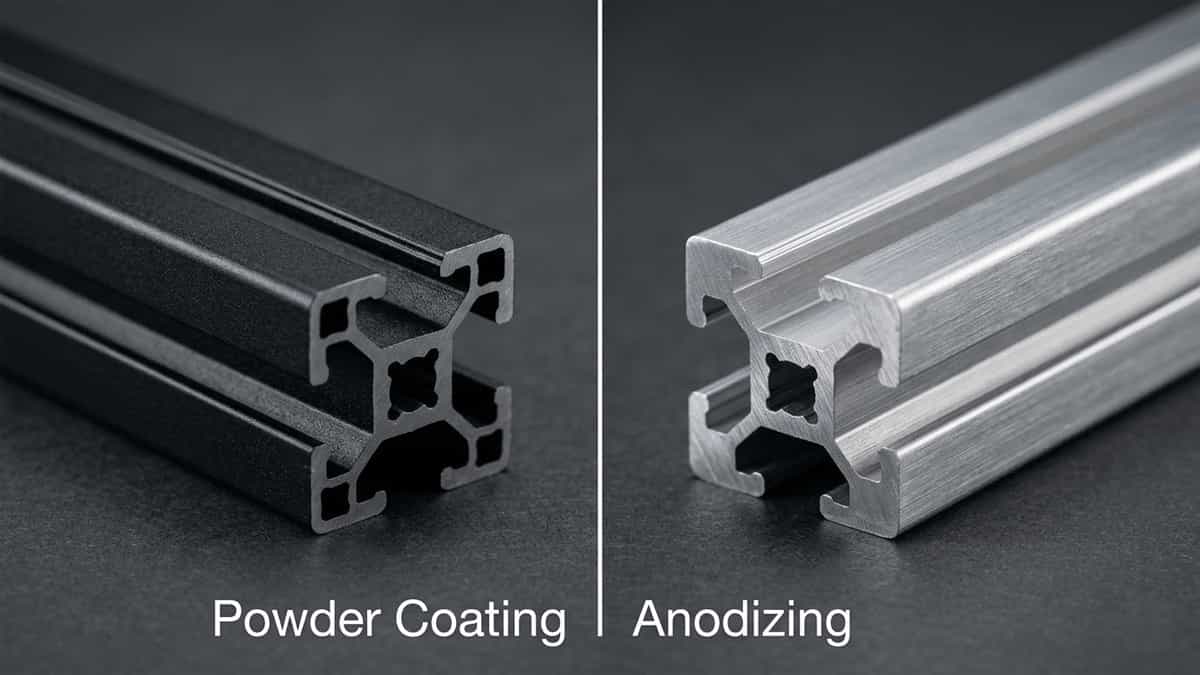
- Exterior/Harsh Environments: Powder coating or architectural-grade anodizing are essential. Powder coating offers superior color variety, while anodizing provides a harder metallic finish. Understand the differences in Powder Coating vs Anodizing.
- Fastener System: Ensure compatibility with stainless steel screws and T-slot nuts.
Installation Best Practices & Lifetime Expectancy
Proper installation is key to performance. Use the correct tools, ensure surfaces are clean, and avoid overtightening.
Product Lifetime:
Lifespan is directly tied to the surface treatment and environment, a crucial consideration for energy efficiency and long-term performance:
- Anodized (20-25µm): Can provide 12-15 years of service outdoors.
- Powder Coated (70-80µm): A high-quality coat can last 18-25+ years outdoors, providing superior color retention.
For projects requiring the highest durability standards, it’s valuable to understand Global Standards (ASTM, AAMA, EN, DIN, BS) which govern material and coating performance.
Industry Trends and the Future
The humble aluminium bracket is evolving with technology:
- Integrated Smart Brackets: Concepts include brackets with embedded sensors to monitor structural stress or thermal performance.
- Additive Manufacturing (3D Printing): Allows for rapid prototyping of highly customized, topology-optimized bracket designs.
- Enhanced Sustainable Alloys: Increased use of post-consumer recycled (PCR) aluminum, driven by demand for lower embodied carbon materials, as seen in industry innovations like recycled-content aluminium alloys.
Aluminum brackets and L-angles are far more than simple metal pieces; they are precision-engineered components that ensure safety, durability, and performance. From enabling the sleek lines of a high-performance thermal break window to forming the rigid frame of an industrial machine, their role is foundational. By understanding the material science, types, and selection parameters outlined in this guide, professionals can specify and use these components with confidence, ensuring their projects stand the test of time and stress.
Would you like me to draft a social media post to promote this new article on aluminiummagazine.com?
Related Articles


Featured


You May Also Like
Beyond the Frame: 6 Residential Glass Profiles to Secure and…
Powder Coating Vs. Anodizing

Sweating Over Windows? Aluminium vs. uPVC: What Truly Lasts …
Alumil India Expands Southern Presence With New Experience C…

Aluminium Oxide, Chloride, Sulfate/Sulphate, and Other Chemi…