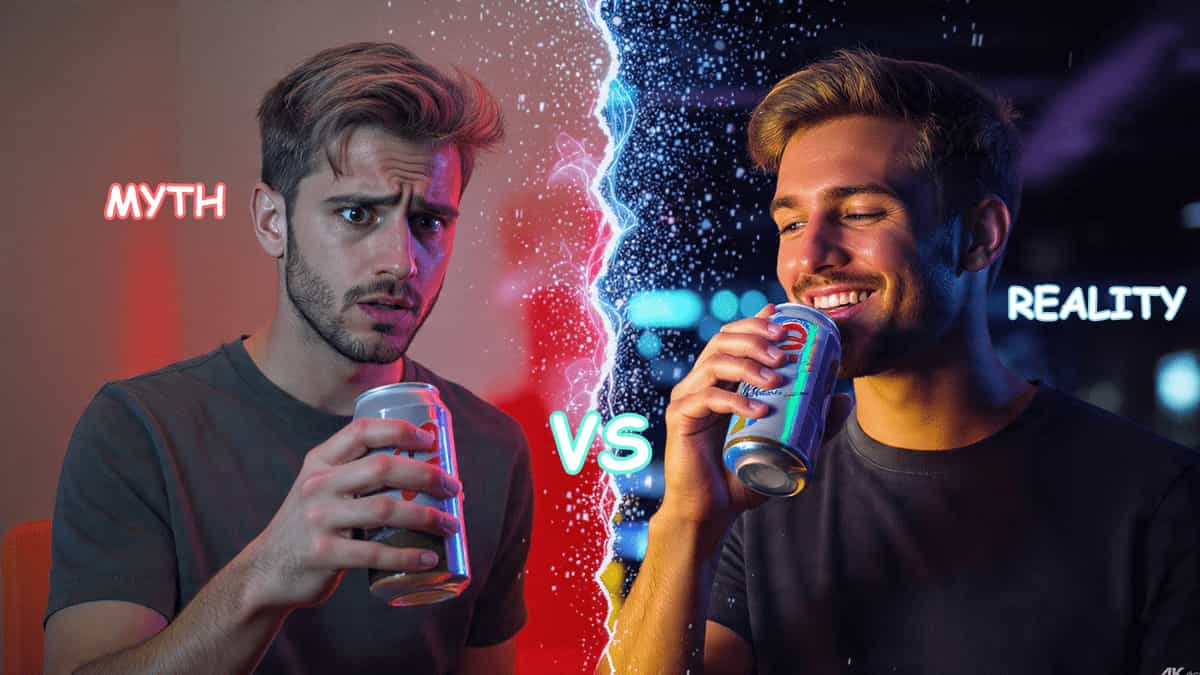
— Debunking the noise with science, data, and industrial reality
The Can of Confusion
Aluminium cans are everywhere—in your fridge, at the stadium, in recycling ads.
And with that ubiquity comes a flood of claims, fears, and flat-out fiction.
From whispered health scares to oversimplified eco-claims, the aluminium can has become a magnet for misinformation.
Let’s cut through the noise. Here are the biggest myths—and the hard truths behind them.
Myth 1: “Aluminium Cans Cause Alzheimer’s”
The Claim: Alzheimer’s disease is linked to aluminium exposure from cans, cookware, or antiperspirants.
The Science:
- While aluminium is found in the brains of Alzheimer’s patients, so is it found in healthy brains. Correlation ≠ causation.
- The Alzheimer’s Society, World Health Organization, and multiple meta-reviews have found no convincing evidence linking aluminium exposure to Alzheimer’s in humans.
- The body absorbs negligible aluminium from cans thanks to food-grade liners that prevent contact. You ingest more aluminium naturally from soil, water, and food than from packaging.
Verdict: 🚫 Debunked. A decades-old fear with no scientific backbone.
Myth 2: “Recycling One Aluminium Can Saves a Tree”
The Claim: Popular eco-mantra says each can recycled = one tree saved.
The Reality:
This is a feel-good metaphor gone literal.
- Recycling aluminium saves energy (95% less than virgin production), not trees directly.1
- The “tree” analogy likely originated from paper recycling campaigns and was misapplied.
- What it does save: Bauxite mining, carbon emissions, and landfill space.
Verdict: 🌳 Misleading. Saves energy, not trees. Good intention, wrong science.
Myth 3: “Aluminium Cans Are Always More Eco-Friendly Than Glass”
The Claim: Cans are the undisputed green champion over glass.
The Nuance:
It depends on recycling rates and transportation.
- If recycled locally at high rates, aluminium wins—lower weight, less transport energy, infinite recyclability.
- If not recycled, glass (inert, non-toxic) may be better in landfill.
- Glass is heavier → higher transport emissions.
- But glass can be reused (not just recycled) in some systems—a big win.
Verdict: ⚖️ It depends. Location, system, and lifecycle matter.
Myth 4: “All Aluminium Cans Get Recycled Into New Cans”
The Claim: Toss a can, it becomes a can again in 60 days.
The Truth:
- In an ideal closed-loop system, yes.
- In reality, alloy contamination, mixed scrap, and export markets mean many cans are downcycled into auto parts, building materials, or worse—lost.
- The U.S. can-to-can recycling rate is estimated at ~50% of collected cans.The rest becomes something else—or nothing.
Verdict: ♻️ Partly true, mostly aspirational. The system leaks.
Myth 5: “Canned Drinks Taste Metallic”
The Claim: Liquid in cans tastes like metal.
The Science:
Modern cans have food-grade polymer liners (BPA-free in most brands) that prevent contact between liquid and metal.2
- What you might taste: Carbonation sensitivity, temperature, or the drink itself—not aluminium.
- Blind taste tests rarely show consistent metallic detection in lined cans.
Verdict: 🥤 Largely psychological. Liners work.
Myth 6: “Aluminium Cans Are Infinitely Recyclable Without Loss”
The Claim: 100% of material is recovered infinitely.
The Reality:
- Metal loss happens through oxidation, shredding “fines,” and contamination.
- Industry estimates ~2-5% material loss per cycle in efficient systems.
- “Infinite” refers to material property, not perfect recovery.
Verdict: 🔄 True in theory, lossy in practice. Still the best packaging loop we have.
Myth 7: “Cans Are Lined with BPA and Are Toxic”
The Claim: Can liners contain BPA, a harmful chemical.
The Update:
- Many major brands have switched to BPA-free liners since the 2010s.
- Regulatory bodies (FDA, EFSA) maintain that BPA in can liners is safe at current exposure levels.
- If concerned, look for “BPA-free” labels—common in premium and health-focused brands.
Verdict: 🧪 Outdated for many brands, but check if concerned.
“Want to see what this liner actually looks like? Check out our deep dive: The Hidden Plastic Inside Aluminium Cans.”
Myth 8: “Making Aluminium Cans Is Worse Than Plastic Because of Mining”
The Claim: Bauxite mining makes cans less sustainable than plastic.
The Big Picture:
- Yes, primary aluminium production is energy-intensive.3
- But recycled aluminium cuts emissions by 95%.
- Plastic’s problem isn’t just production—it’s end-of-life failure (9% global recycling).4
- Over multiple cycles, aluminium’s circular efficiency wins.5
Verdict: ⛏️ Short-term vs. long-term math. Aluminium wins in a circular system.
Myth 9: “You Can’t Recycle Crushed Cans”
The Claim: Crushing cans ruins their recyclability.
The Truth:
- Crushed cans are still recyclable but can be harder to sort in single-stream systems (they may be mistaken for paper or fall through screens).
- In reverse vending machines (deposit systems), they need to be scanned—crushing can interfere.6
- Best practice: Check local guidelines. When in doubt, keep ‘em whole.
Verdict: 🤏 Mostly false, but context-dependent.
Myth 10: “Aluminium Cans Are the Ultimate Sustainable Packaging”
The Claim: Nothing beats the can.
The Balanced View:
Cans are excellent but imperfect.
✅ Lightweight, shatterproof, infinitely recyclable, high-value scrap.
❌ Energy-intensive virgin production, liner complexity, collection gaps.
They’re not “ultimate”—they’re “optimal” for many scenarios, but not all.
Verdict: 🌍 One of the best tools in the box, but not a silver bullet.
Quick Reference: Myth vs. Reality Table
| Myth | Reality | Verdict |
| Causes Alzheimer’s | No proven link in humans | 🚫 Debunked |
| Saves a tree per can | Saves energy, not trees directly | 🌳 Misleading |
| Always greener than glass | Depends on system & location | ⚖️ Context-dependent |
| Becomes a new can in 60 days | Often downcycled or lost | ♻️ Aspirational |
| Tastes metallic | Lined; taste is psychological | 🥤 Largely false |
| Recycled infinitely without loss | ~2-5% loss per cycle | 🔄 True in theory |
| Lined with toxic BPA | Many are BPA-free; regulators safe | 🧪 Check labels |
| Worse than plastic due to mining | Wins long-term in circular systems | ⛏️ Long-term win |
| Can’t recycle if crushed | Recyclable, but may hinder sorting | 🤏 Follow local rules |
| Ultimate sustainable package | Excellent but imperfect tool | 🌍 One of the best |
The Bottom Line: Think in Systems, Not Soundbites
Aluminium cans are a marvel of material science and circular potential—but they’re not magic.
The biggest myth of all? That sustainability is simple.
- Health fears = largely unfounded
- Recycling claims = often oversimplified
- Eco-comparisons = require lifecycle thinking
The can is a tool. Its impact depends on the system around it:
🔁 Design + Collection + Processing + Remanufacturing
What You Can Do (Actually Helpful Tips)
- Recycle clean cans—rinse them.
- Support deposit systems where they exist.
- Choose recycled-content brands when possible.
- Crush? Check local rules first.
- Spread science, not myths.
Final truth: The aluminium can is neither a villain nor a savior. It’s a brilliantly designed package trapped in an imperfect world. Fix the system, and the can will shine.
Related Articles

Featured
You May Also Like

Aluminium Flat Bar – Types, Sizes Chart

Does Window Glass Really Block UV Rays? The Truth About UVA …

Aluminum Casting Vs. Forging: Which One Actually Delivers in…

Thinking of Bifold Doors? 10 Things You Gotta Know Before Yo…
Aluminium Window vs. Steel Window Frame