Aluminium 5005 – also known as Aluminum 5005 – is a non-heat treatable aluminium-magnesium alloy that has earned its reputation as the architect’s alloy. With excellent corrosion resistance, superior anodizing capabilities, and moderate strength, 5005 aluminium is the preferred choice for architectural applications, signage, and decorative finishes where aesthetics matter as much as durability.
What is Aluminium 5005?
Aluminium alloy 5005 belongs to the 5xxx series of aluminum alloys, where magnesium serves as the primary alloying element. It is a non-heat treatable alloy, meaning it cannot be strengthened through heat treatment; instead, it gains strength through cold working (strain hardening). With a nominal magnesium content of approximately 0.8%, Aluminium 5005 offers a balanced combination of properties that make it one of the most commonly used aluminum alloys in sheet and plate form.
Key Characteristics at a Glance:
| Property | Value |
|---|---|
| Density | 2.70 g/cm³ |
| Melting Range | 632 – 655 °C |
| Thermal Conductivity | 201 – 205 W/m·K |
| Electrical Resistivity | 52% IACS |
| Modulus of Elasticity | 69.5 GPa |
Data compiled from industry specifications
Chemical Composition of Aluminium 5005
As a lean aluminum-magnesium alloy, 5005 aluminum derives its distinctive properties from a carefully balanced composition. The table below presents the typical chemical composition ranges for Aluminium 5005.
| Element | Percentage (%) |
|---|---|
| Aluminum (Al) | Balance |
| Magnesium (Mg) | 0.50 – 1.10 |
| Silicon (Si) | 0.00 – 0.30 |
| Iron (Fe) | 0.00 – 0.70 |
| Copper (Cu) | 0.00 – 0.20 |
| Manganese (Mn) | 0.00 – 0.20 |
| Zinc (Zn) | 0.00 – 0.25 |
| Chromium (Cr) | 0.00 – 0.10 |
| Others (Each) | 0.00 – 0.05 |
| Others (Total) | 0.00 – 0.15 |
Source: BS EN 573-3:2009 standard specifications
The magnesium content is the key differentiator. It enhances corrosion resistance, provides moderate strength, and contributes to the alloy’s excellent anodizing response. The low levels of copper and iron ensure consistent surface quality and uniform anodic film formation.
Key Properties of Aluminum 5005
🔹 Excellent Corrosion Resistance
Aluminium 5005 offers very good resistance to atmospheric corrosion, comparable to that of alloy 3003 in most environments. Thanks to the magnesium addition, it also demonstrates improved performance in slightly alkaline conditions, which is a characteristic advantage of the 5000 series alloys.
“5005 has the same high resistance to general corrosion as other non heat treatable aluminium alloys. It also has the higher resistance to slightly alkaline conditions common to the 5000 series alloys.”
The corrosion resistance relies on a protective surface oxide film that naturally forms when aluminum reacts with oxygen. When damaged, this film readily self-repairs, providing long-lasting protection. However, the alloy is sensitive to reducing media, and galvanic corrosion can occur when in electrical contact with dissimilar metals.
🔹 Superior Anodizing Capability
This is where Aluminium 5005 truly shines. When anodized, the oxide film on 5005 is clearer and more uniform than on 3003 alloy, and it provides an excellent color match with 6063 architectural extrusions. This makes Aluminium 5005 highly suitable for decorative anodizing applications where visual consistency is critical.
“When anodised to improve corrosion resistance, the film on 5005 is clearer than on 3003, and gives better colour match with 6063 architectural extrusions.”
Important note: While 5005 is suitable for anodizing, streaks known as “barcoding” can occur in some cases. For applications requiring visual perfection without blemish, “Anodised Quality 5005” (AQ) can be specified to guarantee protection against anodizing streaks.
🔹 Moderate Strength
Aluminum 5005 provides medium strength levels – sufficient for architectural and decorative applications where maximum structural capacity is not the primary requirement.
Typical Mechanical Properties by Temper:
| Temper | 0.2% Proof Stress (MPa min) | Tensile Strength (MPa) | Elongation (% min) |
|---|---|---|---|
| O (annealed) | 35 | 105 – 145 | 12 – 22 |
| H12 | 95 | 125 – 165 | 2 – 8 |
| H14 | 115 | 145 – 185 | 1 – 6 |
| H16 | 135 | 165 – 205 | 1 – 3 |
| H18 | – | > 185 | 1 – 3 |
| H32 | 85 | 115 – 160 | 3 – 9 |
| H34 | 105 | 135 – 180 | 2 – 7 |
| H36 | 125 | 160 – 200 | 1 – 4 |
| H38 | – | > 180 | 1 – 4 |
Data from technical datasheets
🔹 Excellent Formability and Weldability
Formability: Aluminium 5005, especially in the softer tempers, can be easily formed using conventional methods. The alloy’s ductility makes it suitable for bending, stamping, deep drawing, and other sheet metal operations.
Weldability: 5005 offers excellent weldability using all standard methods, particularly GMAW (MIG) and GTAW (TIG). Common filler alloys include 4043 and 5356, depending on the specific alloy joining combinations.
🔹 Thermal and Electrical Conductivity
With a thermal conductivity of 201–205 W/m·K, Aluminium 5005 is an effective material for heat transfer applications. Its electrical resistivity of approximately 52% IACS makes it a reasonable conductor for certain electrical applications, though not as conductive as pure aluminum grades like 1050 or 1350.
🔹 Machinability (The Limitation)
One area where Aluminium 5005 presents challenges is machinability. Machinability is poor on soft tempers, though it improves as the temper increases. For accurate machining, manufacturers recommend:
- High cutting speeds
- Ample lubrication
- Sharp tools
- Positive rakes
- Adequate clearance
- Continuous cutting
Reference: Industry machining guidelines
Applications of Aluminium 5005
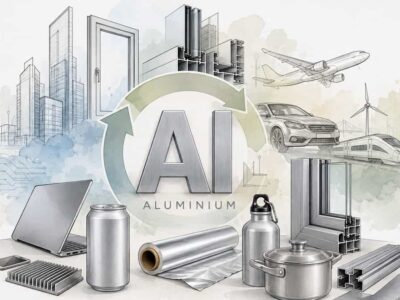
Aluminum alloy 5005 is widely used across multiple industries. Its combination of corrosion resistance, formability, and outstanding anodizing characteristics makes it the material of choice for applications where appearance and durability go hand in hand.
🏗️ Architectural & Building Applications
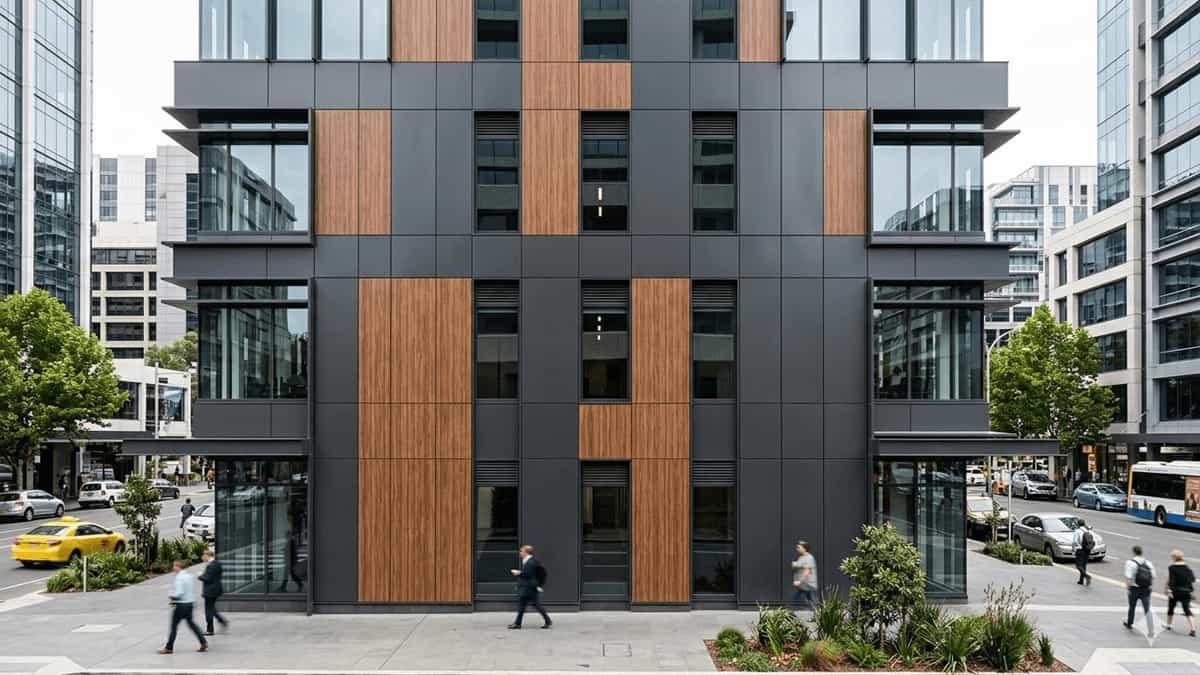
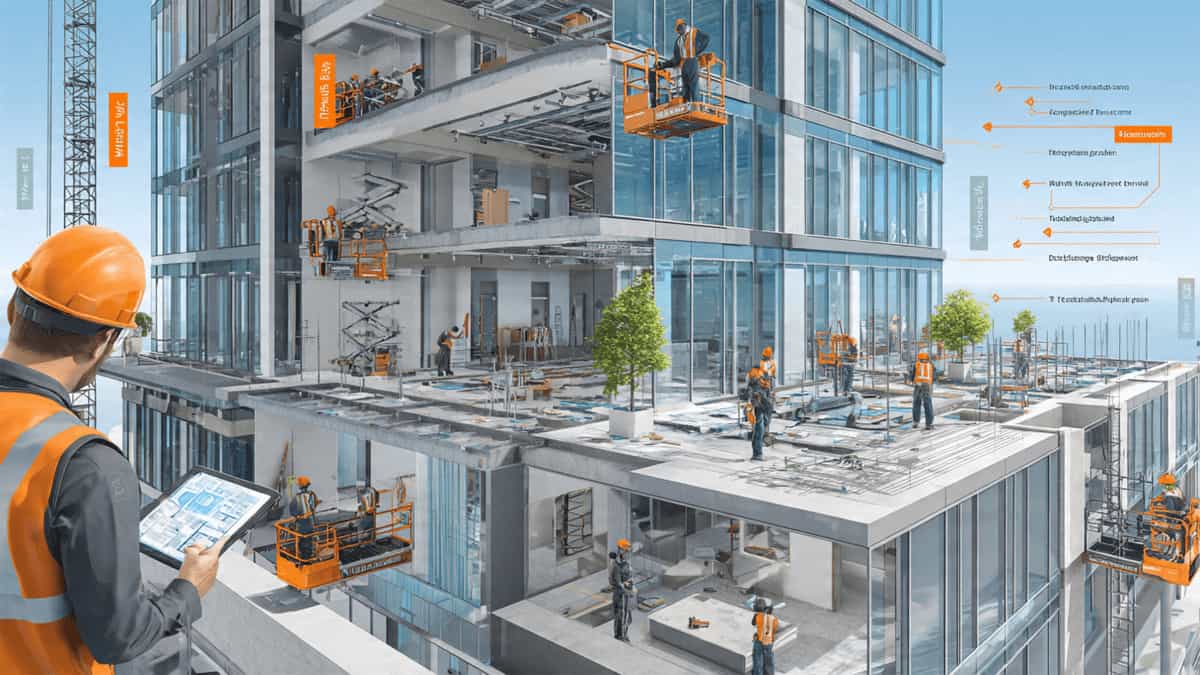
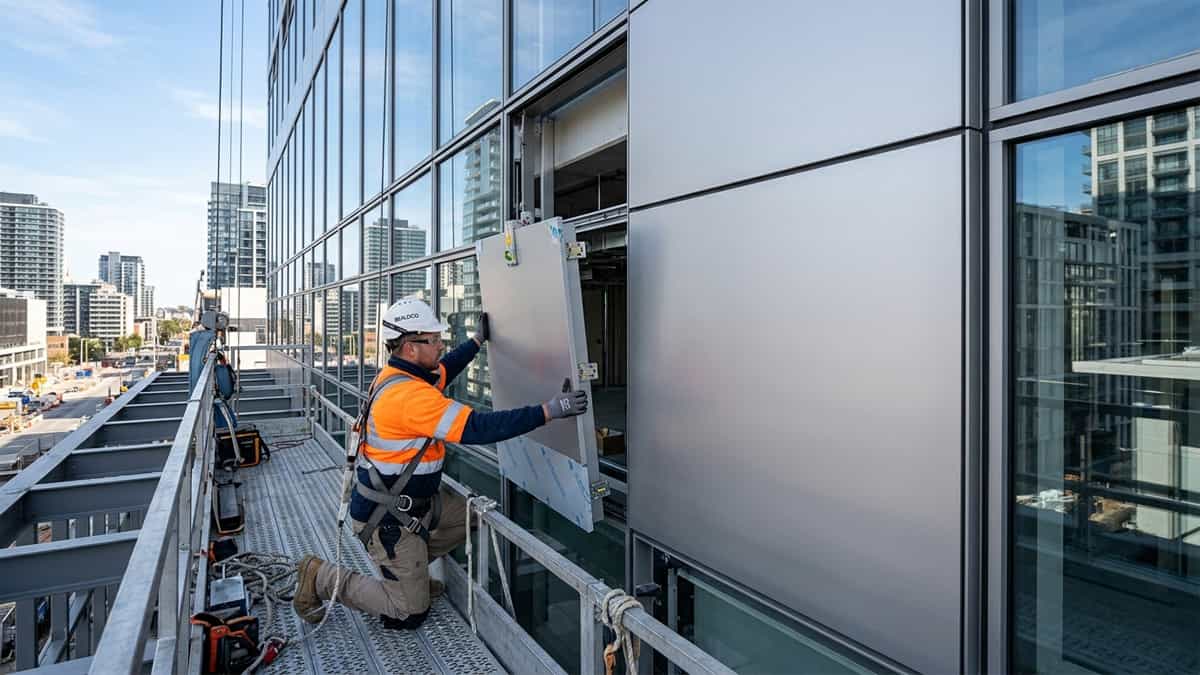
- Building facades and curtain walls
- Roofing and cladding systems
- Corrugated sheet
- Architectural ornaments
- Interior and exterior wall panels
“5005 aluminium sheet can be used as a high-end wide-format curtain wall material, which has the advantage of an excellent anodic oxidation effect compared with the commonly used 3003 aluminium sheet for curtain wall.”
🪧 Signage & Display
- Outdoor signs and road signs
- Name plates and display panels
- Anodized signage requiring uniform color
🚗 Automotive & Transportation
- Vehicle interior materials
- Trim and decorative components
- Body panels (where lightweight durability is essential)
🍳 Consumer Goods & Appliances
- Cooking utensils and kitchenware
- Food preparation equipment
- Appliance panels and housings
- Instrument panels
🏭 General Fabrication & Industrial
- General sheet metal work
- High-strength foil
- HVAC equipment components
- Furniture components
- Small boats and marine accessories
- Electrical conductors
Fabrication & Workability Guide
Forming
Formability of Aluminium 5005, especially in the softer tempers, can be easily achieved using conventional methods. The alloy’s ductility makes it suitable for bending, stamping, deep drawing, and other sheet metal operations.
Welding
Aluminium 5005 has excellent welding capacity. Welding is possible using all commercial methods. Filler metal of the same alloy has high ductility and strength, while filler alloys like 4043 and 5356 are commonly used depending on the application.
Machining
Aluminium 5005 has poor machinability in the soft temper conditions. However, the alloy in harder tempers such as H34 and H38 can be machined better than in the soft temper condition.
Heat Treatment
Aluminium 5005 cannot be heat treated, except when annealed to minimize cold working strain. Annealing can be performed at approximately 343°C (650°F), followed by air cooling.
Cold Working
The alloy has excellent cold working capacity, including the harder tempers. This is the primary method of strengthening 5005 aluminum.
Comparison with Other Aluminium Alloys
🔸 5005 vs. 5052
This is the most common comparison. 5052 is stronger and better suited for demanding structural applications, while 5005 is preferred for aesthetics and anodizing. 5052 contains 2.2–2.8% magnesium, giving it significantly higher strength, but it does not anodize as uniformly as 5005.
| Property | 5005 | 5052 |
|---|---|---|
| Magnesium Content | 0.5–1.1% | 2.2–2.8% |
| Strength | Moderate | High |
| Anodizing Quality | Excellent (clear, uniform) | Good (slightly bluish tint) |
| Typical Use | Architecture, signage, decorative | Marine, structural, tanks |
🔸 5005 vs. 6061
6061 is a heat-treatable alloy that offers significantly higher strength (particularly in T6 temper). However, 5005 provides better anodizing characteristics and is often more cost-effective for applications where maximum strength is not required. 6061 is preferred for structural frames and load-bearing components, while 5005 is chosen for appearance-driven applications.
🔸 5005 vs. 3003
3003 (manganese-based alloy) is the most widely used general-purpose aluminum alloy. 5005 offers slightly higher corrosion resistance, particularly in alkaline environments, and produces a clearer, more uniform anodic film that better matches 6063 architectural extrusions.
| Property | 5005 | 3003 |
|---|---|---|
| Primary Element | Magnesium (0.5–1.1%) | Manganese (1.0–1.5%) |
| Corrosion Resistance | Slightly higher | Good |
| Anodizing Quality | Excellent (clear) | Good (can appear hazy) |
| Strength | Medium | Medium |
Why Choose Aluminium 5005?
✅ Advantages
- Excellent atmospheric corrosion resistance
- Superior anodizing response – clear, uniform finish
- Excellent color match with 6063 architectural extrusions
- High formability and ductility
- Excellent weldability (MIG, TIG, resistance)
- Lightweight (density 2.70 g/cm³)
- Good thermal conductivity (201–205 W/m·K)
- Non-toxic and food-safe
- Fully recyclable
❌ Limitations
- Not heat treatable
- Poor machinability in soft tempers
- Moderate strength only (less than 5052 and 6061)
- Streaks (“barcoding”) can occur during anodizing if special quality is not specified
- Not suitable for reducing media environments
Final Wrap
Aluminium 5005 (Aluminum 5005) is the architect’s alloy – a versatile, non-heat treatable aluminum-magnesium alloy that excels where appearance, corrosion resistance, and workability are paramount. Its superior anodizing characteristics produce a clear, uniform finish that harmonizes perfectly with 6063 architectural extrusions, making it the preferred choice for building facades, curtain walls, signage, and decorative applications.
While it does not offer the high strength of 5052 or 6061, 5005 aluminum strikes an ideal balance for projects where visual quality and long-term durability matter more than raw structural capacity. From towering skyscrapers to everyday kitchen utensils, Aluminium 5005 delivers reliable performance with an aesthetic edge.
📚 Related Articles
Expand your knowledge of aluminium alloys and their applications with these related guides:
- What Exactly Is an Aluminium Alloy? – A beginner-friendly guide to understanding aluminium alloys, their types, and real-world applications
- Aluminum 6063 Alloy: The Extrusion Workhorse for Windows & Doors – Deep dive into the most widely used architectural extrusion alloy
- Aluminium 6060: The Cost-Effective Extrusion Alloy for Complex Profiles – Learn about 6060 aluminum, the streamlined cousin of 6063 known for superior extrudability
- Aluminum 3003: The Versatile Workhorse for Forming & Fabrication – Explore the most widely used general-purpose aluminum alloy
- Types of Aluminium Sheets Used in Construction Projects – Comprehensive guide to aluminum sheet products, including anodized and perforated varieties