
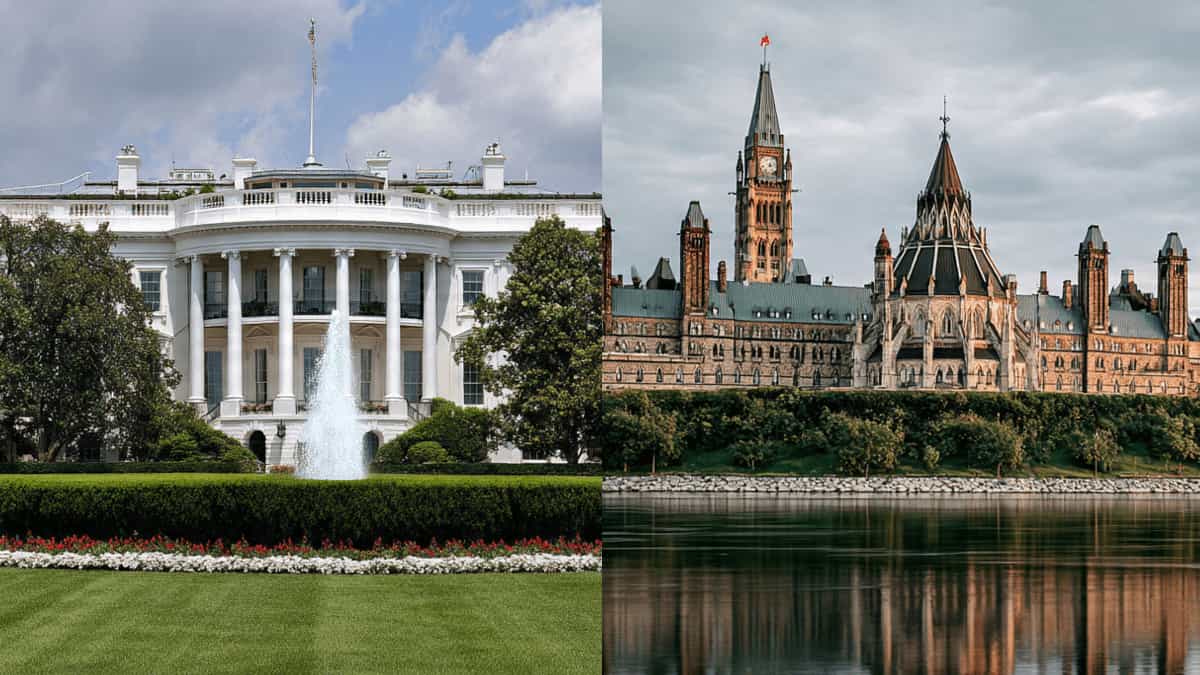
No one seriously believes the United States and Canada are heading toward an actual political “break-up.” But markets don’t wait for official declarations. They react to risk perception long before reality materializes.
And across commodities, few sectors are as exposed to shifting trust as aluminum.
Over the past year, the tone between major Western allies has subtly changed. At Davos, Canadian leadership openly spoke about the erosion of the old global order and the need for “strategic autonomy.” Trade language has become sharper. Tariff policy remains unpredictable. Energy security is increasingly treated as national leverage rather than shared infrastructure.
Individually, none of this signals rupture.
Collectively, it changes psychology.
The End of “Quiet Trust“
For decades, the North American aluminium ecosystem operated on an assumption of stability. Canada supplied large volumes of low-carbon primary aluminum. The U.S. depended on that flow. Contracts, premiums, logistics, and investment decisions were all built around this quiet trust.
That assumption is no longer taken for granted.
Risk managers don’t need conflict to begin adjusting. They only need uncertainty.
Procurement teams begin to diversify sourcing. Contract lengths shorten. Strategic stockpiling increases. Buyers quietly ask new questions:
- What if policy shifts suddenly?
- What if border economics change?
- What if energy becomes a political tool?
The Ripple Effect on Supply Chains
This behavioral shift matters because aluminium is uniquely sensitive. It is energy-intensive, geopolitically strategic, and deeply embedded in defence, infrastructure, transport, and clean energy supply chains. A small change in trust can produce a large change in market structure.
The growing attention on regions like Greenland—framed publicly as energy and security debates—further reinforces the broader signal markets are receiving: critical resources are becoming strategic assets.
When energy, minerals, and sovereignty intersect, industries downstream begin to reposition instinctively.
That repositioning is already visible. North American buyers are more cautious. Premiums behave more nervously. Forward contracting feels more tentative. Supply chain diversification is discussed more frequently than optimization.
Not because a fracture is happening—
But because markets are no longer pricing permanent stability.
Conclusion: The Price of Perception
This is the psychological layer most price charts fail to capture.
Markets move on confidence before they move on data.
They reposition on possibility before policy arrives.
They hedge against futures that may never occur.
That is where aluminium now sits.
The real story isn’t whether the U.S. and Canada will ever drift apart economically. The real story is that the market is beginning to act as though it no longer assumes they never will. And once that mindset enters procurement strategy, risk models, and boardroom conversations, it doesn’t easily disappear.
Related Articles


Featured



You May Also Like

These Fixed (Picture) Window Designs Are Pure Magic

Energy Efficiency in Windows: How Thermal Break Aluminium Cu…

Why Cheap Telescopic Ladders Feel Unsafe

Who Buys Aluminium Lithographic Sheets and Why? Uses, Thickn…

What is Aluminium Business Insurance? Benefits & Importa…
