
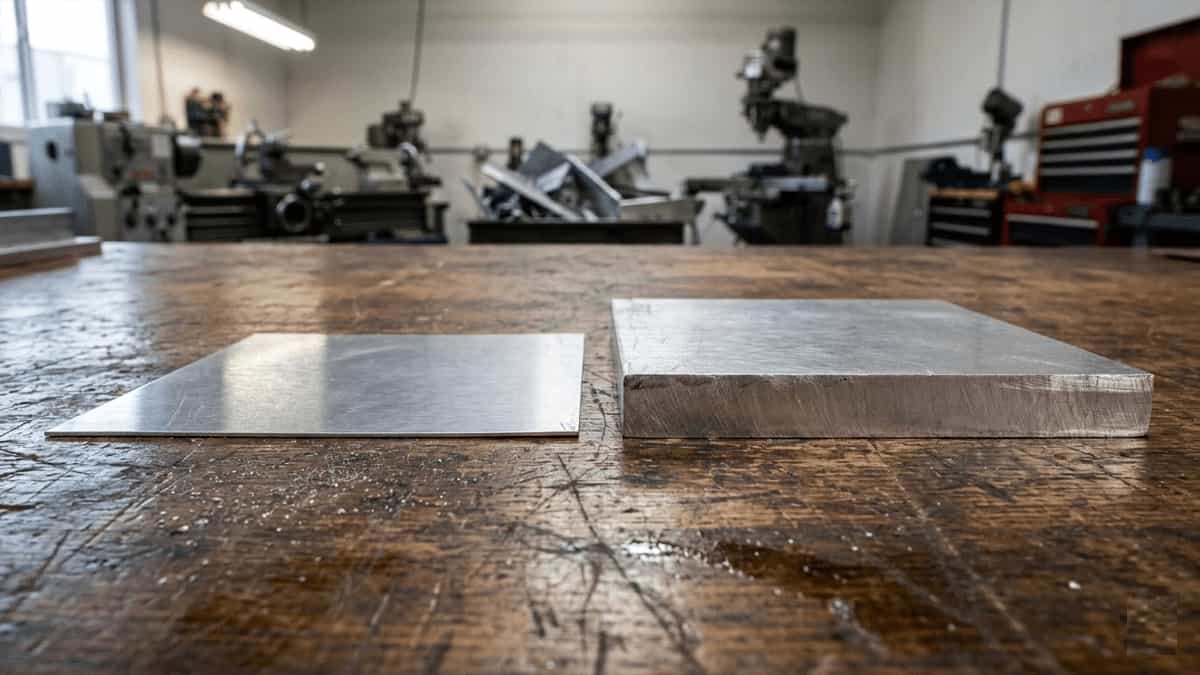
In the world of metal fabrication and industrial supply, the terms “sheet” and “plate” are often used interchangeably by beginners. However, asking for a “sheet of aluminum” when you actually need an “Aluminium Plate” can lead to significant project delays, structural failures, or unnecessary costs.
While both are flat-rolled products, the distinction between a sheet and a plate is critical. It determines the material’s strength, its weight, and how it must be fabricated. This guide will clearly define each form, highlight their key differences, and help you decide which one is right for your specific project.
What Is an Aluminum Sheet?
An aluminum sheet (aluminium sheet) is a flat-rolled product defined by its relatively thin gauge. It is created by passing aluminum ingots through a series of rollers to reduce their thickness to the desired dimension.
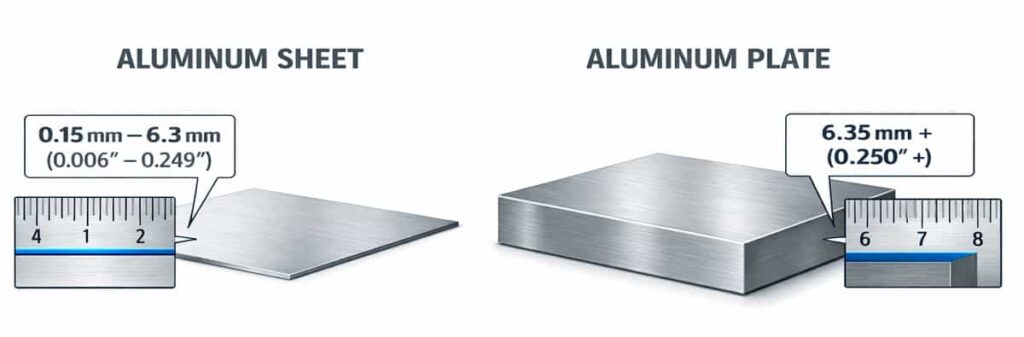
- Thickness Range: Generally, an aluminum sheet is any flat product with a thickness of 0.15 mm to 6.3 mm (0.006″ up to 0.249″).
- Characteristics: Sheets are lightweight, flexible, and easy to cut or form. They are available in various finishes, from mill finish to highly reflective surfaces. For a deeper look at its benefits, you can explore the general advantages of aluminium sheets.
What Is an Aluminum Plate?
An aluminum plate refers to a flat-rolled product that is significantly thicker than a sheet. While the dividing line can vary slightly by regional standards, the transition from sheet to plate typically occurs at the 1/4-inch (6.35 mm) mark.
- Thickness Range: A plate is defined as any flat aluminum product with a thickness of 6.35 mm (0.250″) and above.
- Characteristics: Plates are rigid, extremely strong, and designed to bear heavy loads. They cannot be easily bent by hand and require heavy machinery like industrial press brakes for fabrication.
Quick Comparison: Sheet vs. Plate
| Feature | Aluminum Sheet | Aluminum Plate |
| Thickness | 0.15 mm to 6.3 mm | 6.35 mm and above |
| Fabrication | Easy to bend, roll, and stamp | Requires heavy machining or forging |
| Handling | Lightweight; manual handling possible | Heavy; requires lifting equipment |
| Common Alloys | 3003, 5052 | 6061, 7075 |
| Main Use | Panels, roofing, automotive bodies | Structural frames, machine bases |
💡 Pro-Tip: The “Bending” Rule
If your project requires a radius bend (like a curved corner), always stick to Sheet thickness. Once you cross into Plate territory (above 6.35 mm), bending becomes extremely difficult without specialized heat treatment or massive hydraulic force, as the material is more likely to crack than flex.
-Ads-
When to Use Aluminum Sheet
Aluminum sheets are the preferred choice when the primary requirements are lightweight construction and aesthetic appeal. Opt for a sheet when:
- Weight is a primary concern: In applications like trailer siding or RV panels, every kilogram counts.
- Appearance matters: For decorative surfaces like interior wall panels, sheets are easy to finish with techniques like anodizing. You can see the benefits in our guide on anodized aluminum sheets benefits.
- Common Applications: Roofing, signage, automotive body panels, and gutters.
When to Use Aluminum Plate
Aluminum plates are selected for applications where strength and durability are non-negotiable. Choose a plate when:
- Structural integrity is critical: If the metal is supporting a load or acting as a structural backbone, a plate is necessary.
- You are machining parts: If you plan to mill or drill complex parts from a solid block, you need a plate. This is common for airplane parts made from aluminum.
- Common Applications: Aerospace fittings, heavy-duty machinery bases, and structural beams.
Common Alloys Used
- For Sheets: Alloy 3003 is the standard general-purpose choice, while Alloy 5052 is the strongest of the common sheet alloys. See the aluminum 5052 alloy properties for more.
- For Plates: Alloy 6061 is the most versatile structural plate. For high-stress aerospace needs, aluminium 7075 is the gold standard. Understanding aluminium 6061-t6 alloy properties is essential for engineers.
Frequently Asked Questions (FAQ)
1. At what exact thickness does aluminum become plate?
In the aluminum industry, the standard transition point is 6.35 mm (0.25 inches). Anything thinner is classified as a sheet; anything thicker is a plate.
2. Is aluminum plate stronger than aluminum sheet?
Generally, yes. Because plates are thicker, they have a much higher moment of inertia and section modulus, meaning they resist bending and structural failure far better than thinner sheets.
3. Which is better for welding: sheet or plate?
Both can be welded effectively using TIG or MIG processes. However, welding thin sheets requires more skill to prevent “burn-through,” while welding thick plates often requires “bevelling” the edges and using multiple passes to ensure full penetration.
Related Articles


Featured



You May Also Like
Aluminium vs Fiberglass Telescopic Ladder: Which One Should …

Aluminium Trihydrate: Why Demand is Rising in African Countr…
Aluminium Rolling Ladders: Benefits, Safety, and Selection

Top 10 Big Advantages of Aluminium Doors (Every Homeowner Sh…

5 Facts — Causes of Broken Tempered Glass
