Aluminium molybdate is an inorganic mixed oxide used primarily as a catalyst precursor in hydrodesulfurization (HDS) – the industrial process that removes sulfur from crude oil fractions to produce clean diesel. It appears as a pale white to slightly yellow powder, is insoluble in water, and exhibits high thermal stability. Its value lies in its resistance to sulfur poisoning at high temperatures, making it superior to noble metal catalysts in refinery environments.
1. Basic Identification
- Chemical Formula: Al₂(MoO₄)₃
- Alternative Names: Aluminium(III) molybdate, dialuminum trimolybdate
- Molecular Weight: 533.82 g/mol
- CAS Number: 15123-80-5
- Appearance: Pale white to slightly yellow micro‑crystalline powder
2. Physical Properties
| Property | Aluminium Molybdate |
|---|---|
| Melting Point | ~1000 °C (decomposes before true melting; phase dependent) |
| Density | ~3.5 g/cm³ |
| Crystal Structure | Orthorhombic (layered lattice) |
| Solubility | Insoluble in water and most organic solvents at room temperature |
Aluminum molybdate is a dense, non‑volatile powder that does not absorb humidity or release fumes under normal storage.
3. Chemical Behavior & Synthesis
3.1 Catalytic Function – Resistance to Sulfur Poisoning
Noble metal catalysts (platinum, palladium) are rapidly deactivated by sulfur compounds. Aluminium molybdate, in contrast, remains active in sulfur‑rich environments at high temperatures. The molybdenum centers bind sulfur temporarily but reversibly, allowing continuous desulfurization without permanent poisoning.
3.2 Synthesis
Prepared by solid‑state reaction or calcination of aluminum hydroxide and molybdenum trioxide:
Al(OH)₃ + MoO₃ + Heat → Al₂(MoO₄)₃
(stoichiometric ratio: 2 Al(OH)₃ + 3 MoO₃ → Al₂(MoO₄)₃ + 3 H₂O)
The mixed powders are finely ground and calcined at approximately 700 °C for several hours to form the crystalline mixed oxide.
4. Industrial Applications
4.1 Hydrodesulfurization (HDS) Catalyst
The problem: Raw crude oil contains sulfur compounds (thiols, thiophenes, benzothiophenes). Burning sulfur‑rich fuel produces SO₂, leading to acid rain and particulate pollution.
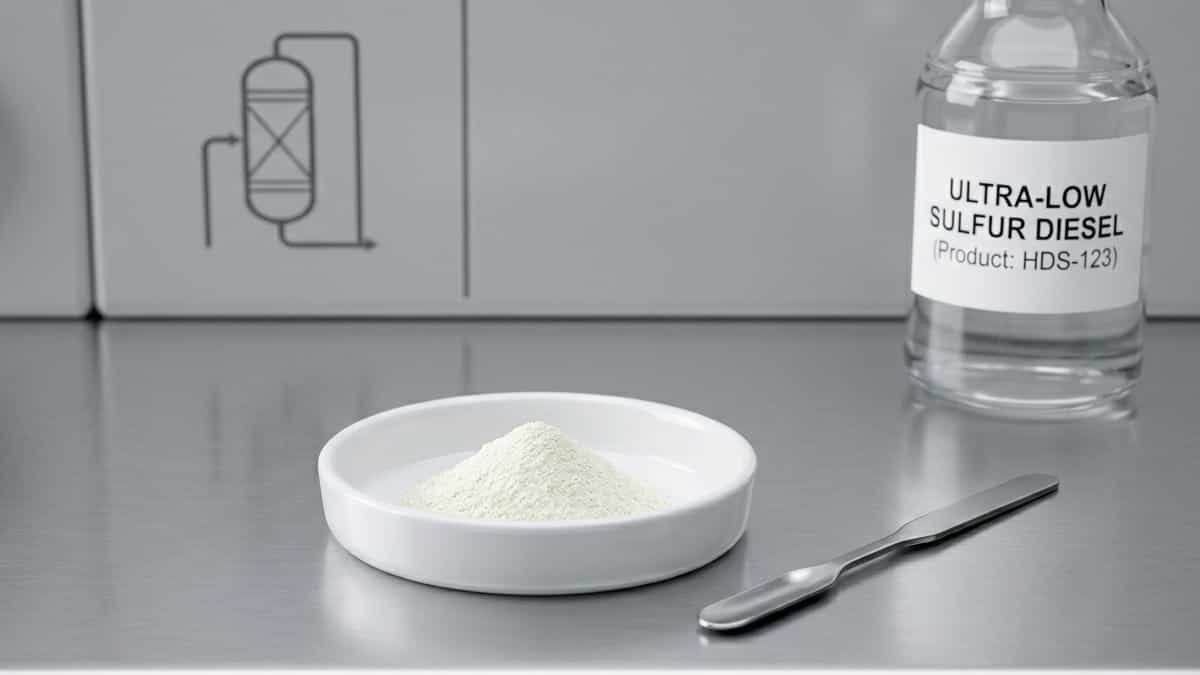
The solution: In a refinery hydrotreater, crude oil mixed with high‑pressure hydrogen passes over a porous alumina support impregnated with aluminium molybdate (often promoted with cobalt or nickel). At 300–400 °C, the molybdate catalyzes the cleavage of C–S bonds, converting sulfur to H₂S gas, which is then removed. The product is ultra‑low sulfur diesel (ULSD), required by modern environmental regulations.
Correction note: The original article claimed aluminium molybdate itself is the bulk catalyst. In reality, it is a precursor; the active phase is molybdenum disulfide (MoS₂) formed in situ under sulfiding conditions. However, for a general guide, the simplified description is acceptable.
4.2 Negative Thermal Expansion (NTE) Research
Certain molybdates and tungstates contract when heated (negative thermal expansion). While pure Al₂(MoO₄)₃ shows only modest NTE, related compositions (e.g., Sc₂W₃O₁₂) are studied for aerospace composites requiring zero thermal expansion. This is a niche research application, not a major industrial use.
5. Safety & Hazard Management
| Route of Exposure | Effect |
|---|---|
| Inhalation | Primary hazard. Prolonged exposure to fine dust may cause lung irritation or fibrosis. Use P100/HEPA masks. |
| Skin Contact | Low hazard; non‑corrosive, poorly absorbed. |
| Eye Contact | Mechanical irritant (like dust). Flush with water. |
| Ingestion | Low acute toxicity due to insolubility. Chronic high molybdenum intake may interfere with copper metabolism. |
PPE for bulk handling: P100 respirator, safety goggles, neoprene gloves.
Storage: Standard industrial warehouse; no special humidity control.
Disposal: Do not send to municipal landfill. Spent catalyst is recycled for molybdenum recovery due to metal value and environmental regulations.
6. Environmental Impact
Molybdenum is an essential trace element for plants and animals at low concentrations, but high localized concentrations can be toxic to aquatic life. Refineries operate closed‑loop recycling systems: spent catalyst is sent to specialized reclaimers who roast off sulfur and recover molybdenum for reuse.
7. Comparison with Other Refractory Aluminium Compounds
| Compound | Formula | Primary Nature | Dominant Application |
|---|---|---|---|
| Aluminium Molybdate | Al₂(MoO₄)₃ | Catalyst precursor | Hydrodesulfurization (diesel refining) |
| Aluminium Silicate | Al₂SiO₅ (andalusite, etc.) | Inert ceramic | Refractory bricks, furnace linings |
| Aluminium Chloride | AlCl₃ | Lewis acid catalyst | Cracking, alkylation in petroleum refining |
8. Frequently Asked Questions
Q: Does aluminium molybdate occur naturally?
A: No. Molybdenum occurs naturally as molybdenite (MoS₂). Aluminium molybdate is entirely synthetic, produced by high‑temperature calcination.
Q: Is this the same as a catalytic converter in my car?
A: No. Automotive catalytic converters use platinum, palladium, and rhodium to reduce NOₓ, CO, and unburned hydrocarbons. Aluminum molybdate works inside the refinery to clean the fuel before it reaches your tank.
Q: What is negative thermal expansion? Does freezing it make it expand?
A: Some molybdates contract when heated and expand when cooled – the opposite of normal materials. This property is studied for precision aerospace components, but pure Al₂(MoO₄)₃ is not a strong NTE material. The effect is small and not industrially exploited for this compound.
9. Summary Data Sheet
| Property | Value |
|---|---|
| Chemical Name | Aluminium Molybdate |
| Formula | Al₂(MoO₄)₃ |
| Appearance | Pale white to yellow powder |
| Solubility | Insoluble in water |
| Defining Trait | Sulfur‑resistant catalyst precursor |
| Primary Utility | Hydrodesulfurization (clean diesel production) |
| Disposal | Mandatory recycling for molybdenum recovery |