
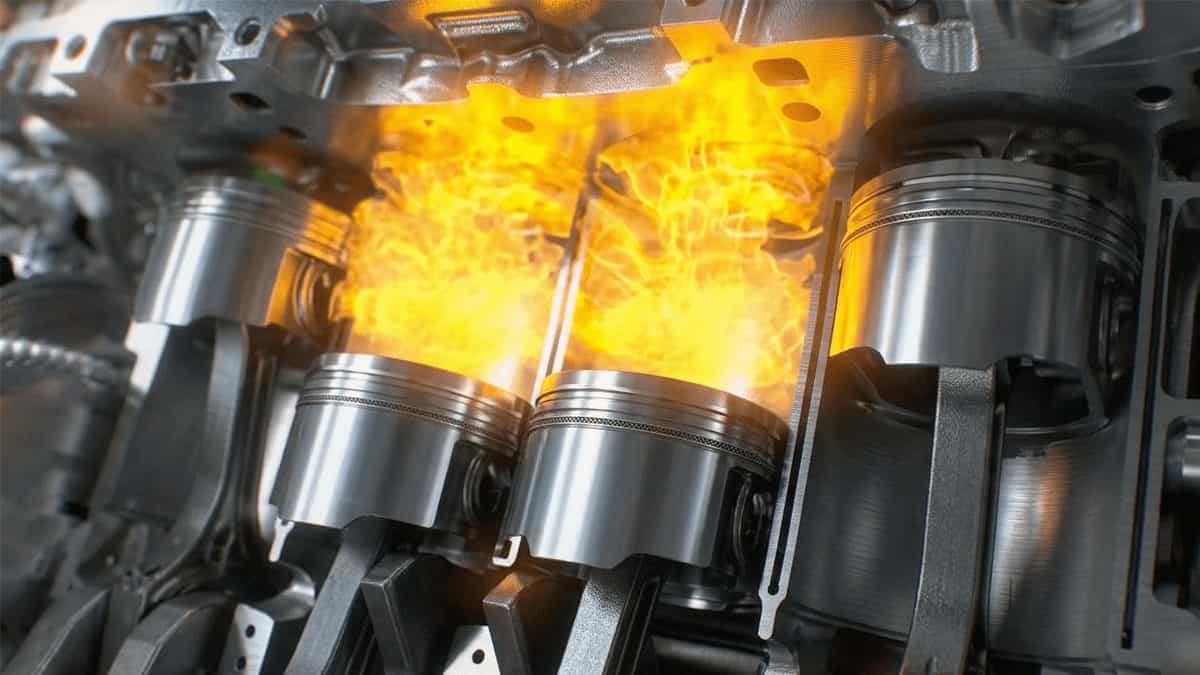
In the diverse family of aluminum alloys, most are designed for general-purpose fabrication, corrosion resistance, or structural strength. Aluminium 4032 occupies a far more specialized niche. As a wrought alloy within the 4000 series (aluminum-silicon system), 4032 is specifically engineered for one of the most demanding applications in mechanical engineering: high-performance pistons and components that must maintain dimensional stability under extreme thermal stress.
Unlike its 4000-series cousins 4043 and 4047, which serve primarily as filler metals, 4032 is a high-strength, heat-treatable wrought alloy designed to be the component itself. Its unique composition—combining high silicon with additions of copper, magnesium, and nickel—delivers a remarkable balance of low thermal expansion, wear resistance, and elevated-temperature strength that has made it the material of choice for forged pistons in racing engines, turbocharged vehicles, and aerospace applications for decades.
Within the 4000 series, 4032 stands apart as the alloy with the highest tensile strength, achieved through careful alloying and heat treatment. It represents the pinnacle of what aluminium-silicon alloys can achieve when optimized for mechanical performance rather than weldability.
Composition and Metallurgy: Engineered for Heat
Aluminum 4032 is a complex, multi-element alloy where each addition serves a specific purpose in enhancing high-temperature performance. Its composition places it at the high-silicon end of the 4000 series, but with crucial modifications that transform it from a simple binary alloy into a sophisticated engineering material.
Primary Composition
| Element | Content (%) | Role in the Alloy |
| Aluminium (Al) | 81.1 – 87.2 | Base metal |
| Silicon (Si) | 11.0 – 13.5 | Primary alloying element; reduces thermal expansion, increases fluidity, improves wear resistance |
| Magnesium (Mg) | 0.8 – 1.3 | Forms $Mg_{2}Si$ precipitates for age hardening; increases strength |
| Copper (Cu) | 0.5 – 1.3 | Solid solution strengthening; improves elevated-temperature properties |
| Nickel (Ni) | 0.5 – 1.3 | Critical addition; enhances high-temperature strength and reduces thermal expansion |
| Iron (Fe) | 0 – 1.0 | Impurity/controlled addition |
| Zinc (Zn) | 0 – 0.25 | Impurity |
| Chromium (Cr) | 0 – 0.10 | Grain structure control |
The Metallurgical Strategy
What makes 4032 unique is its multi-pronged approach to high-temperature performance:
- High Silicon (11-13.5%): Silicon particles in the aluminum matrix dramatically reduce the coefficient of thermal expansion—the alloy expands and contracts less with temperature changes than conventional aluminum. This is critical for pistons, where clearances must remain consistent from cold start to full operating temperature.
- Nickel Addition: Nickel is relatively uncommon in aluminium alloys, but in 4032 it serves a vital function. It forms intermetallic compounds that remain stable at elevated temperatures, helping the alloy retain strength when other alloys would soften.
- Copper and Magnesium: These elements enable precipitation hardening through the formation of $Mg_{2}Si$ and $Al_{2}Cu$ phases, providing the base strength that nickel then helps maintain at temperature.
- Wrought, Not Cast: While many piston alloys are cast, 4032 is a wrought alloy, meaning it is mechanically worked (forged) after casting. This eliminates porosity and aligns grain structure, producing components with superior fatigue resistance and reliability.
Core Properties: Precision Under Pressure
- Low Coefficient of Thermal Expansion: The most prized property of 4032 is its low thermal expansion. With a coefficient of $19.4 \times 10^{-6}/°C$ (20-100°C), it expands significantly less than typical aluminum alloys like 6061 ($\approx 23 \times 10^{-6}/°C$). This dimensional stability allows tighter clearances in engines, reducing noise, vibration, and oil consumption.
- High Strength at Elevated Temperatures: 4032 retains a greater fraction of its room-temperature strength at 200-300°C than most aluminium alloys, thanks to its nickel and copper additions.
- Excellent Wear Resistance: The high silicon content creates hard, wear-resistant silicon particles within the softer aluminum matrix. This provides a natural bearing surface that resists scuffing and galling against cylinder walls.
- Good Forgeability: Despite its high silicon content, 4032 exhibits good hot workability and can be precision-forged into complex shapes. Hot die forging is typically performed in the range of 371-510°C.
- Aesthetic Anodizing: While not as corrosion-resistant as marine-grade alloys, 4032 performs adequately in most environments. Notably, it takes on an attractive dark gray appearance when anodized.
- Important Limitation: 4032 cannot be cold worked due to its high silicon content and limited ductility. All forming must be done hot.
Physical and Mechanical Properties
Physical Properties
| Property | Value |
| Density | 2.68 – 2.69 g/cm³ |
| Melting Range | 530 – 570°C (990 – 1060°F) |
| Elastic Modulus | 70 – 82 GPa |
| Poisson’s Ratio | 0.33 |
| Thermal Conductivity | 138 – 155 W/m·K |
| Coefficient of Thermal Expansion | $19.4 \times 10^{-6}/°C$ |
Mechanical Properties (T6 Temper)
| Property | Value |
| Tensile Strength (Ultimate) | 370 – 415 MPa |
| Tensile Strength (Yield) | 315 – 350 MPa |
| Elongation at Break | 5 – 8% |
| Hardness (Brinell) | 120 – 137 HB |
| Fatigue Strength | 110 MPa |
Primary Applications: Where 4032 Excels
Aluminum 4032 is a specialist alloy, used almost exclusively in applications requiring its unique combination of thermal stability, wear resistance, and high-temperature strength.
- Automotive – Forged Pistons: This is the premium material for forged pistons in high-performance internal combustion engines. Its low thermal expansion allows tighter piston-to-cylinder clearances, reducing “piston slap” on cold starts.
- Aerospace Components: The aerospace industry utilizes 4032 for components that must maintain precision under thermal cycling, such as compressor parts, bushings, and fittings.
- Industrial Equipment: Used in hydraulic components, pistons, and valves where dimensional stability under varying temperatures is critical.
- Precision Machinery: Copier parts, sound recording devices, and radio parts where wear resistance and stability are needed.
Fabrication and Machining
Machinability
4032 exhibits good to excellent machinability, rated at approximately 70% of free-machining brass.
- Tooling: Carbide-tipped tools are recommended, especially for T6 temper.
- Coolant: Essential for extended operations to control temperature and improve surface finish.
- Surface Finish: Excellent finishes are achievable; the high silicon content helps produce small, broken chips.
Welding
4032 is weldable, but with limitations:
- Recommended Method: Inert-gas arc welding (TIG/MIG).
- Filler Selection: 4043 or 4047 fillers are typically used.
- Considerations: Preheating may be beneficial for thicker sections.
Why Choose 4032? A Strategic Comparison
| Property / Alloy | 4032-T6 | 6061-T6 | 2618-T6 |
| Primary Use | Forged pistons | General structural | High-temp aerospace |
| Silicon Content | 11-13.5% | 0.4-0.8% | $\le 0.2\%$ |
| Thermal Expansion | Low (19.4) | Higher (~23) | Low (~22) |
| Wear Resistance | Excellent | Good | Moderate |
| Tensile Strength (MPa) | 380-415 | 310 | 440 |
Choose 4032 when:
- You need a forged piston for a performance engine.
- Dimensional stability under thermal cycling is critical.
- The application involves sustained temperatures of 200-300°C.
Consider alternatives when:
- You need a general-purpose structural alloy (choose 6061).
- Good corrosion resistance in marine environments is primary (choose 5052 or 5083).
- Cold forming is required (4032 cannot be cold worked).
Aluminum 4032 is not an alloy for everyday applications—it is a specialized engineering material designed for the most demanding environments. Its carefully balanced composition of silicon, copper, magnesium, and particularly nickel creates a material that maintains its dimensions and retains strength under thermal conditions that would soften conventional aluminium alloys.
Whether for the automotive engineer designing a turbocharged engine or the aerospace engineer specifying critical components, 4032 remains the gold standard for high-temperature precision.

You May Like to Read:
Related Articles


Featured


You May Also Like

Aluminum Screen Doors vs. Storm Doors: What’s Best for Your …
Aluminum Arsenide (AlAs): The Complete Guide

The Art of the Pivot Door: Architectural Elegance Reimagined

Choosing Aluminum Doors & Windows for Different US Clima…

5 Facts — Causes of Broken Tempered Glass
