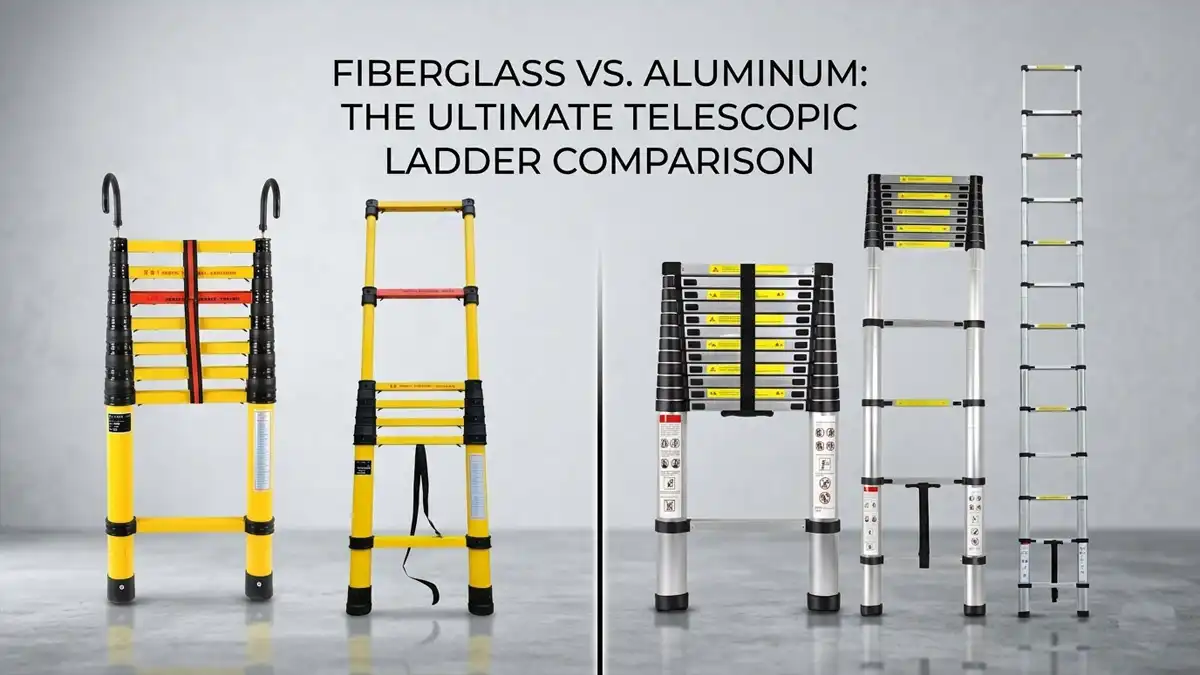
Choosing between an aluminium and a fiberglass telescopic ladder is one of the most important safety decisions you will make. The right material depends on your work environment, climate, and the type of tasks you perform. This guide compares both materials across every key factor, so you can make an informed, safe choice.
⚡ CRITICAL SAFETY WARNING – ELECTRICAL HAZARD
Aluminium conducts electricity. If there is any chance your ladder could contact live electrical wires, power lines, or electrical panels, you must use a fiberglass ladder.
Failure to follow this warning can result in severe injury.
Material Differences
Before comparing performance, it helps to understand what each material actually is.
Aluminum
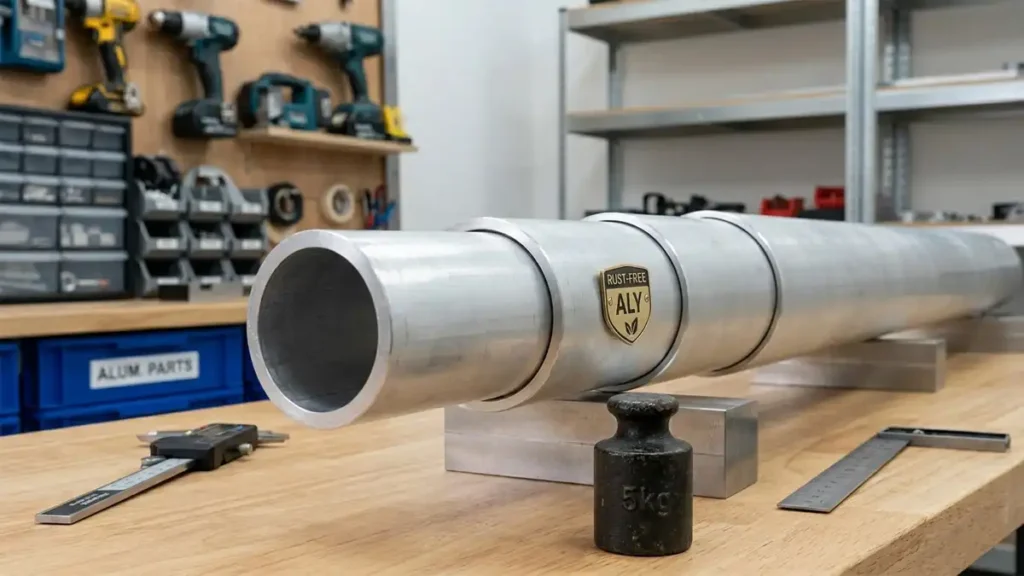
Aluminium is a lightweight, non‑ferrous metal. Telescopic ladders use high‑strength alloys, typically 6061‑T6 or 6063‑T5/T6. These alloys offer excellent strength‑to‑weight ratio and natural corrosion resistance.
Key properties:
- Density: ~2.7 g/cm³
- Tensile strength: 40,000–50,000 psi (6061‑T6)
- Electrical conductivity: High (approx. 61% of copper)
- Melting point: 660°C (1220°F)
Fiberglass
Fiberglass (glass‑reinforced plastic) is a composite material made of glass fibers embedded in a polymer resin (usually polyester or vinyl ester). It is non‑conductive and chemically resistant.
Key properties:
- Density: ~1.8–2.0 g/cm³ (lighter than steel but heavier than aluminium by volume? Actually fiberglass is less dense than aluminium? Wait, aluminium ~2.7, fiberglass ~1.8-2.0, so fiberglass is less dense, but ladders are thicker, so overall weight is higher. Clarify.)
- Tensile strength: Varies, typically 30,000–50,000 psi (comparable to aluminium)
- Electrical conductivity: Zero (insulator)
- Melting point: Resin degrades around 150–200°C
🔗 Related reading: Differences Between Aluminum 6061 and 6063
Weight Comparison
Winner: Aluminium
| Ladder Type (12‑ft extended) | Typical Weight |
|---|---|
| Aluminium telescopic | 20–30 lbs (9–14 kg) |
| Fiberglass telescopic | 35–50 lbs (16–23 kg) |
Fiberglass ladders are 40–70% heavier than aluminium equivalents. Why? Fiberglass requires thicker walls and more material to achieve the same stiffness. The resin matrix is less rigid than aluminium, so manufacturers add more glass fiber layers and thicker profiles.
Practical impact:
- Aluminium is easier to carry, set up, and reposition – ideal for homeowners, RV users, and tradespeople who move the ladder frequently.
- Fiberglass is more fatiguing to carry, especially up stairs or across a job site. However, for stationary work near electricity, the extra weight is a necessary trade‑off.
💡 Pro tip: If you need to carry a fiberglass ladder long distances, consider using a ladder cart or dolly. For aluminium, always use the built‑in carrying handle.
Electrical Safety – The Deciding Factor
Winner: Fiberglass (unequivocally)
This is not a close contest. Fiberglass is non‑conductive; aluminium is highly conductive.
| Material | Electrical Conductivity | Safe Near Live Wires? |
|---|---|---|
| Aluminium | Excellent (61% IACS) | ❌ NO |
| Fiberglass | Zero (insulator) | ✅ YES |
Why This Matters
If a metal ladder touches an overhead power line or a live electrical panel, current flows through the ladder and into your body. Even a momentary contact can cause:
- Severe burns
- Cardiac arrest
- Death
Fiberglass ladders, by contrast, are used by electricians, utility workers, and anyone working near residential panels or overhead service drops.
Important Caveats for Fiberglass
- Fiberglass must be kept clean and dry. Dirt, moisture, or carbon tracking can reduce its insulating properties.
- Never use a damaged fiberglass ladder. Cracks or exposed fibers can allow current to track through.
- Fiberglass does NOT protect against lightning. Neither does aluminium. Never use any ladder outdoors in a thunderstorm.
🚨 Remember: If your job involves any electrical risk, buy a fiberglass ladder. Your life is worth the extra weight and cost.
Rust and Corrosion Resistance
Winner: Tie – both are excellent, but in different ways
Aluminium
Aluminium does not rust (iron oxide). Instead, it forms a self‑repairing aluminium oxide layer that protects against most corrosion. However, it is vulnerable to:
- Salt air (coastal regions) – can cause pitting.
- Strong alkalis and acids – industrial chemical exposure.
Solution: Choose anodised or powder‑coated aluminium ladders for coastal areas.
Fiberglass
Fiberglass is inherently resistant to rust, rot, and most chemicals. It does not corrode in salt air, making it ideal for marine environments. However, the resin matrix can degrade under:
- Prolonged UV exposure – causes chalking and weakening.
- Solvents and strong acids – can attack the resin.
Solution: Use UV‑resistant coatings and store fiberglass ladders out of direct sun.
Regional Recommendations
| Region | Better Material |
|---|---|
| Coastal (e.g., Florida, Goa, Sydney) | Fiberglass (no salt corrosion) or anodised aluminium |
| Industrial chemical plants | Fiberglass |
| Humid inland (e.g., India, SE Asia) | Both fine – but aluminium needs drying after rain |
| Dry desert (e.g., Arizona, Rajasthan) | Both fine – protect both from UV |
Outdoor Weather Performance
Winner: Aluminium for heat / Fiberglass for salt air
Aluminum
- Heat: Handles high temperatures well, but surface becomes hot in direct sun.
- Cold: Retains strength but becomes brittle below -20°C. Warm gradually.
- Rain: No damage if dried afterwards. Internal moisture can cause lock issues.
- UV: No degradation of the metal itself; plastic components may degrade.
Fiberglass
- Heat: Resin can soften slightly at very high temperatures (>50°C). Not recommended for prolonged desert storage.
- Cold: Excellent – fiberglass remains dimensionally stable and does not become brittle like aluminium.
- Rain: No corrosion, but water can freeze inside telescopic sections, damaging the resin.
- UV: The biggest weakness. Sunlight breaks down the resin, leading to chalking, fading, and eventually cracking.
Storage Tips for Both
- Aluminium: Store vertically indoors; clean and dry after rain.
- Fiberglass: Store out of direct sunlight – inside a garage or shed. UV damage is irreversible.
Heat Handling
Winner: Aluminium (with caution)
Aluminium has a much higher melting point (660°C vs resin degradation at ~150°C). In extreme heat (e.g., Australian outback or Indian summer), a fiberglass ladder left in a car or metal shed can become soft and lose structural integrity.
However: Aluminium ladders can become painfully hot to the touch.
| Temperature | Aluminium Surface | Fiberglass Surface |
|---|---|---|
| 30°C (86°F) in shade | Warm | Warm |
| 40°C (104°F) in sun | Very hot (50–60°C) – use gloves | Hot but manageable |
| 50°C (122°F) in parked car | Dangerously hot (70°C+) – burns risk | Resin may soften |
Recommendation: For hot climates, aluminium is generally safer for structural integrity, but always store both types indoors and avoid leaving them in parked vehicles.
Portability and Storage
Winner: Aluminium
Portability is the main reason people buy telescopic ladders. Aluminium’s lower weight makes it far easier to:
- Carry up stairs or ladders (ironic, but true)
- Load into a truck or car
- Move around a crowded job site
- Handle with one hand while holding tools
Fiberglass telescopic ladders, while still more portable than steel, are significantly heavier. Users with back problems or limited upper body strength may struggle.
Storage Considerations
Both materials store compactly when collapsed. However:
- Aluminium can be stored horizontally or vertically (vertical is better – see ladder guide).
- Fiberglass should always be stored flat or vertical – never leaning against a wall for months, as the weight can cause the rails to bow.
🔗 Related reading: 5 Powerful Benefits of Ladders Top Handle and Top Plate
Strength and Stability
Winner: Tie – depends on quality
When comparing ladders of equal quality and safety certification (EN131, ANSI), both materials offer sufficient strength for their rated loads (typically 250–300 lbs).
Observable differences:
- Aluminium has a slight “spring” or flex under heavy load. This is normal and not dangerous but can feel less stable to some users.
- Fiberglass is more rigid and feels more solid, especially at full extension. However, low‑quality fiberglass ladders can be too flexible – check the manufacturer’s stiffness ratings.
Critical note: For telescopic ladders extended beyond 14 feet, both materials benefit from a second person footing the ladder – but fiberglass’s extra stiffness makes it slightly more stable at height.
Industrial Applications
| Industry / Task | Recommended Material | Reason |
|---|---|---|
| Electrician, utility work | Fiberglass | Non‑conductive – mandatory |
| Construction (general) | Aluminium | Lightweight, portable, cost‑effective |
| Oil & gas / chemical plants | Fiberglass | Resists corrosive chemicals |
| Marine / dock work | Fiberglass | Salt air does not corrode it |
| Warehouse stocking | Aluminium | Frequent repositioning – weight matters |
| Homeowner / DIY | Aluminium | Affordable, light, good for most tasks |
| RV / camper owner | Aluminium | Very lightweight, compact storage |
| Solar panel installation | Aluminium (but check for wiring) | Lightweight for roof work; avoid if near live DC wires |
⚠️ Even on solar roofs: DC wiring can be live. If you cannot guarantee zero electrical hazard, use fiberglass.
Which Ladder Lasts Longer?
Winner: Aluminium (with proper care) – but fiberglass also lasts long
| Material | Typical Lifespan (Residential) | Typical Lifespan (Professional) |
|---|---|---|
| Aluminium | 15–20 years | 5–10 years |
| Fiberglass | 10–15 years | 5–8 years |
Why aluminium lasts longer:
- No UV degradation. Fiberglass resin breaks down in sunlight over time.
- Aluminium can be recycled and recoated; fiberglass cannot be easily repaired.
- Aluminium’s failure mode is usually gradual (bending, denting); fiberglass can suddenly crack.
However: In corrosive environments (coastal, chemical), fiberglass may outlast aluminium if properly protected from UV.
To extend fiberglass life:
- Store indoors or under cover.
- Apply UV‑protective wax annually.
- Inspect for cracks or exposed glass fibers.
Best Choice by Climate
🇮🇳 India (Tropical, Monsoon, Coastal)
- Aluminium with anodised finish for general use. Wipe dry after every use.
- Fiberglass for coastal areas with high salt air (e.g., Chennai, Goa) – but store out of sun.
🇦🇺 Australia (Extreme Heat, UV, Bushfires)
- Aluminium for inland/desert – handles heat better.
- Fiberglass for coastal – but expect UV damage in 3–5 years unless stored indoors.
🇬🇧 United Kingdom (Damp Cold, Rain)
- Both work well. Aluminium needs thorough drying after rain. Fiberglass is more forgiving of moisture but needs protection from occasional sun.
🇨🇦 Canada (Extreme Cold, Snow, Ice)
- Aluminium – but warm gradually before use in deep cold. Check rubber feet for hardening.
- Fiberglass – excellent in cold (no brittleness), but heavy to carry in snow gear.
🇺🇸 United States (Regional)
- Northeast/Midwest cold: Fiberglass better for cold stability; aluminium lighter for carrying through snow.
- Southeast heat/humidity: Aluminium with anodising; fiberglass if near salt water.
- Southwest desert: Aluminium (heat handling).
- Pacific Northwest rain: Both fine; dry aluminium after use.
Final Comparison
| Feature | Aluminium | Fiberglass |
|---|---|---|
| Weight | Light (20–30 lbs) | Heavy (35–50 lbs) |
| Electrical Safety | ❌ Conductive – NOT safe near live wires | ✅ Non‑conductive – safe for electrical work |
| Corrosion Resistance | Good (forms oxide layer) – needs anodising for salt air | Excellent – no rust, salt‑resistant |
| UV Resistance | Excellent (metal unaffected) | Poor – resin degrades in sunlight |
| Heat Resistance | Excellent (melts at 660°C) | Moderate (resin softens >50°C) |
| Cold Resistance | Good but brittle below -20°C | Excellent – no brittleness |
| Portability | Excellent | Moderate (heavy) |
| Cost | Lower (typically $100–250) | Higher (typically $200–400) |
| Typical Lifespan | 15–20 years (residential) | 10–15 years (residential) |
| Best For | General home use, construction, RV, warehouse | Electrical work, chemical plants, coastal areas |
Final Verdict
Choose an aluminium telescopic ladder if:
- You never work near electricity.
- You value lightweight portability above all else.
- You live in a hot climate (but store indoors).
- You are a homeowner, DIYer, or general contractor.
- You need to carry the ladder frequently (e.g., between job sites or up stairs).
Choose a fiberglass telescopic ladder if:
- You work with or near live electrical wires, panels, or power lines – this is non‑negotiable.
- You work in a coastal or chemical environment where salt or corrosion is severe.
- You are willing to accept heavier weight for maximum safety.
- You can store the ladder indoors, out of direct sunlight.
Still undecided? Many professionals own both – an aluminium ladder for daily construction tasks and a fiberglass ladder for electrical work. Your safety is worth the investment.
🔗 Further reading:
Related Articles
Featured
You May Also Like
NTPC REL Floats 300 MW Solar Project Tender in Goa, Aluminiu…

Aluminum Summit Grapples with Supply, Sanctions, and Sustain…

Aluminium Powders & Flakes: GST Rates & HSN Codes

Why Aluminium Window Awnings Are the Best Choice for Queensl…
Aluminium Silicate (Al₂SiO₅): The Complete Guide