
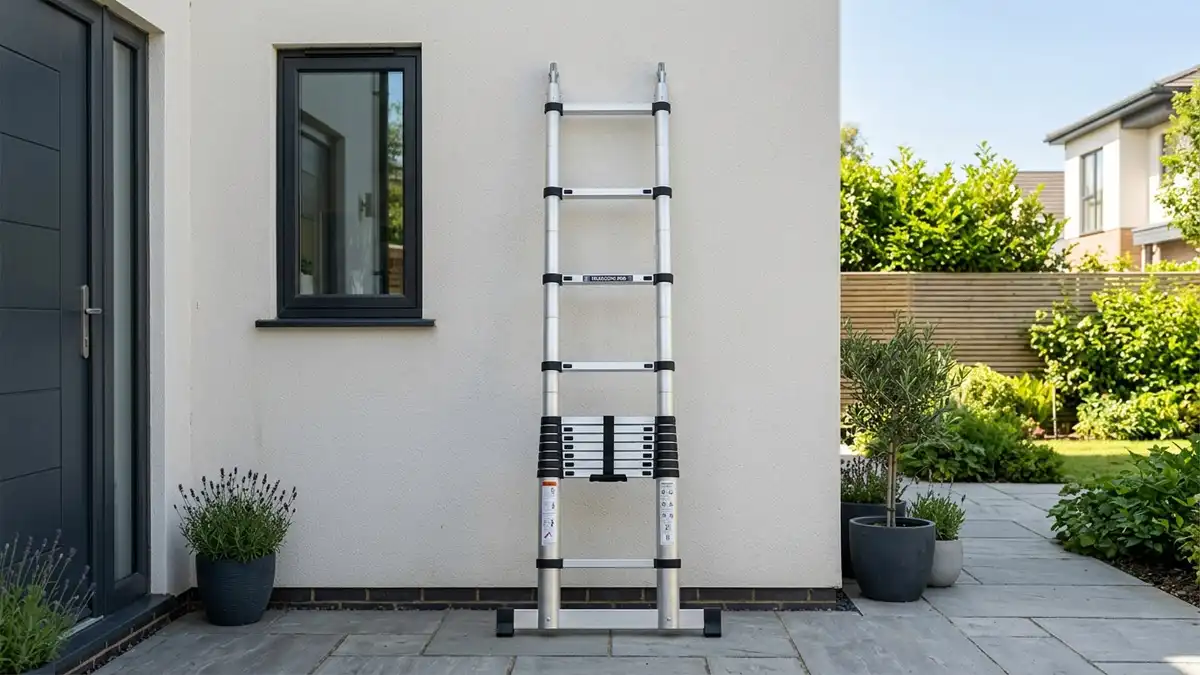
⚡ ELECTRICAL HAZARD WARNING – READ FIRST
Aluminium is a conductor of electricity. Never use an aluminium telescopic ladder near live electrical wires, power lines, or electrical panels. Failure to follow this warning can result in severe injury.
Lightweight Strength Benefits
The primary reason aluminium dominates telescopic ladder manufacturing is its exceptional strength‑to‑weight ratio.
- Aluminium weighs about 2.7 g/cm³ – roughly one‑third the density of steel (7.8 g/cm³).
- High‑strength alloys (e.g., 6061‑T6) offer tensile strength of 40,000–50,000 psi, comparable to mild steel but at one‑third the weight.
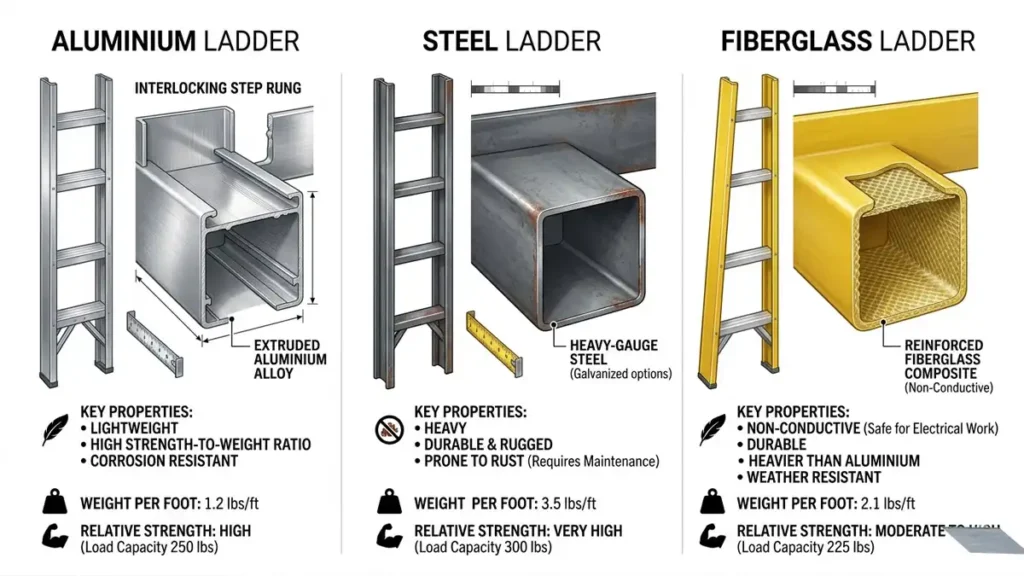
For a telescopic ladder, this means:
- A 12‑foot ladder weighs only 20–30 lbs – easy for one person to carry and set up.
- Yet it safely supports 250–300 lbs (user + tools).
Why this matters: Traditional wooden or steel ladders are heavy and awkward. Aluminium makes telescopic designs practical – you wouldn’t want to carry a 60‑lb steel ladder up a scaffold or into an RV.
🔗 Related reading: Aluminium 6061‑T6 Alloy Properties, Machining, Applications Guide
Corrosion Resistance
Unlike steel, aluminium does not “rust” in the traditional sense (iron oxide). Instead, it forms a thin, transparent layer of aluminium oxide when exposed to oxygen. This layer:
- Adheres strongly to the surface
- Is self‑repairing if scratched (re‑oxidises instantly)
- Blocks further oxygen and moisture from reaching the base metal
This makes aluminium naturally corrosion‑resistant – ideal for:
- Outdoor storage (with reasonable care)
- Humid environments (e.g., India’s monsoon, UK’s damp climate)
- Coastal areas (though extra protection is needed – see Section 17 of the full ladder guide)
However, note: Aluminium is not immune. In salt‑laden air (coastal regions), the oxide layer can be overwhelmed, leading to pitting. That is why anodised or powder‑coated finishes are recommended for seaside use.
Portability Advantages
Portability is the entire premise of a telescopic ladder. Aluminium enables:
- One‑handed carry – A collapsed 12‑ft ladder weighs less than a bag of cement.
- Easy transport in vehicles – Fits in car trunks, back seats, or truck beds without straining the user or the vehicle.
- Frequent repositioning – On a job site, you may move the ladder 20 times a day. A lightweight aluminium ladder reduces fatigue and injury risk.
Compare with alternatives:
| Material | Weight (12‑ft ladder) | Portability |
|---|---|---|
| Aluminium | 20–30 lbs | Excellent |
| Fiberglass | 35–50 lbs | Good but heavy |
| Steel | 50–70+ lbs | Poor |
| Wood | 40–60 lbs | Poor |
For RV owners, apartment dwellers, and mobile tradespeople, aluminium’s low weight is non‑negotiable.
Heat and Weather Resistance
Aluminium performs reliably across a wide temperature range – from Canadian winters (−40°F/C) to Australian outback summers (120°F / 50°C).
Heat Performance
- Melting point: 660°C (1220°F) – far beyond any environmental condition.
- Thermal expansion: ~23.8 × 10⁻⁶ per °C, which is moderate. At 50°C, a 12‑ft ladder expands only ~4 mm – enough to affect locks slightly, but not dangerously.
- Surface temperature warning: In direct sunlight, aluminium can become hot enough to burn skin (60–70°C). Use gloves or wait for it to cool.
Cold Weather Performance
- Aluminium retains its strength at low temperatures better than many plastics and some steels.
- However, at extreme cold (below −20°C), the metal becomes more brittle. Dropping a frozen aluminium ladder can cause cracking.
🌍 Regional note: In India’s hot summers, store ladders out of direct sun. In Canada’s winters, warm the ladder gradually before use to avoid thermal shock.
Structural Flexibility
Aluminium is not as rigid as steel, and that is actually a benefit for telescopic ladders.
- Controlled flexibility allows the ladder to absorb minor impacts and bending stresses without cracking.
- Spring‑back behaviour – Aluminium rails can flex slightly under load and return to their original shape, whereas steel may permanently bend.
- Fatigue resistance – Quality aluminium alloys (e.g., 6061‑T6) withstand repeated load cycles (like extending and retracting) for years without failing.
Important caveat: Too much flexibility is bad. Cheap telescopic ladders use thin, low‑grade aluminium that wobbles dangerously. Always choose ladders with thick‑walled rails (usually 1.2–1.5 mm) and known alloys.
Aircraft‑Grade Aluminium Use
You have seen the term “aircraft‑grade aluminium” in ladder marketing. What does it actually mean?
Aircraft‑grade refers to alloys that meet aerospace specifications for:
- High strength (typically 40–60 ksi tensile)
- High purity and consistency
- Strict quality control in manufacturing
Common alloys used in quality telescopic ladders:
- 6061‑T6 – Excellent strength, weldability, and corrosion resistance. Used in aircraft wings and fuselage frames.
- 6063‑T5/T6 – Designed for extrusions (like ladder rails). Slightly lower strength than 6061 but better surface finish.
Why it matters for ladders:
- Ladders made from these alloys can safely carry 300+ lbs without permanent bending.
- They resist fatigue cracking even after thousands of extension cycles.
- They hold up better in harsh environments (coastal, humid, hot).
⚠️ Beware of marketing hype: “Aircraft grade” is not a legally defined term. Always look for specific alloy numbers (e.g., 6061) and safety certifications (EN131, ANSI). A cheap ladder can claim “aircraft grade” and still use thin, weak aluminium.
Why Manufacturers Prefer Aluminum
From a production standpoint, aluminium offers several advantages over steel or fiberglass:
| Factor | Why Aluminium Wins |
|---|---|
| Extrudability | Aluminium can be pushed through dies to create complex, hollow shapes (like telescopic rails with internal ribs). Steel extrusion is much harder and more expensive. |
| Cost | Aluminium is more affordable than high‑strength composites and competitive with steel when weight savings are factored in. |
| Recyclability | Aluminium can be recycled repeatedly without losing quality. Many telescopic ladders contain 30–50% recycled content. |
| Surface finishing | Aluminium accepts anodising, powder coating, and painting easily – allowing colour coding and extra corrosion protection. |
For manufacturers, aluminium is the sweet spot between performance, cost, and ease of fabrication.
Downsides of Aluminum Ladders
No material is perfect. Aluminium has three significant drawbacks:
1. Electrical Conductivity – ⚠️ THE MOST DANGEROUS DOWNSIDE
Aluminium is an excellent conductor of electricity. If your ladder touches a live wire or power line, you become part of the circuit. This causes severe electrocution or death.
Solution: Never use an aluminium ladder near electrical work. Use a fiberglass ladder for any job near panels, wires, or outdoor power lines.
2. Softness and Denting
Aluminium is softer than steel. Dropping a heavy tool on an aluminium rail can dent it. Deep dents weaken the structure and may prevent telescoping.
Solution: Handle with care. Inspect for dents before each use. Do not use a ladder with bent or dented rails.
3. Thermal Conductivity – Hot/Cold Surfaces
Aluminium transfers heat quickly. In direct sun, the rungs can become painfully hot. In freezing weather, they feel icy cold and can cause bare skin to freeze‑stick.
Solution: Wear gloves. Store ladders out of direct sun. In extreme cold, let the ladder warm up before climbing.
Best Applications
Given its strengths and weaknesses, aluminium is the best choice for these telescopic ladder uses:
| Application | Why Aluminium Works |
|---|---|
| Home maintenance (changing bulbs, painting, gutter cleaning) | Lightweight, easy to store, affordable. |
| RV and camper use | Compact storage, low weight, resists road vibration. |
| Construction sites (non‑electrical tasks) | Durable enough for daily use, portable. |
| Warehouse shelving | One person can carry and adjust. |
| Roof access for solar panels or HVAC | Lighter than fiberglass, easier to reposition. |
| Coastal homes (with anodised finish) | Naturally corrosion‑resistant but needs extra protection. |
Avoid aluminium for:
- Any electrical work (use fiberglass)
- Extreme heavy industrial loads >375 lbs (use steel or heavy‑duty fiberglass)
- Environments with strong acids or alkalis (chemical plants)
For multi‑task ladder designs, see:
🔗 Best Multi Task Ladders: Aluminum Safety & Design
Final Verdict
Aluminium is the ideal material for telescopic ladders because it uniquely combines:
- ✅ Light weight (20–30 lbs for a 12‑ft ladder)
- ✅ High strength (supports 250–300 lbs)
- ✅ Corrosion resistance (with proper care)
- ✅ Affordability and recyclability
- ✅ Manufacturability (extruded shapes)
However, aluminium is not a universal solution. Its electrical conductivity is a serious safety risk, and it dents more easily than steel.
For non‑electrical, general‑purpose use, no other material beats aluminium. That is why nearly every telescopic ladder on the market is made from it. When you buy a certified ladder from a reputable brand and maintain it properly, aluminium will serve you safely for 10–20 years.
🔗 Related reading:
Related Articles
Featured


You May Also Like
Beat the Heat: Why Aluminum Screen Doors Are a Sunbelt Essen…
Why Most Modern Bicycles Use Aluminum Frames

Aluminium 4043 (Aluminum 4043)
Beat the Heat and Save Energy with Aluminium Retractable Awn…
Aluminium Telescopic Ladders: Benefits, Safety & Climat…
