What is Tempered Glass?
Did you know that the glass in your smartphone, the front of a skyscraper, and your car’s side windows are all likely made of tempered glass? Where Is Tempered Glass Used?
Often called “safety glass,” it’s a cornerstone of modern construction and product design. Unlike regular glass, it undergoes a specialized thermal process that makes it up to 5x stronger and significantly safer.
At Aluminium Magazine, we don’t just talk about glass; we explore how it integrates with aluminium systems to deliver on both durability and aesthetics. This guide is for architects, contractors, and homeowners who need to understand the practical applications and benefits of tempered glass.
Understanding Tempered Glass: From Annealing to Quenching
Tempered glass is not a separate material; it’s a state of being for standard glass. The magic happens during a process called thermal tempering. It starts with a sheet of annealed (regular) glass, which is heated in a tempering oven to over 650°C (1,200°F).
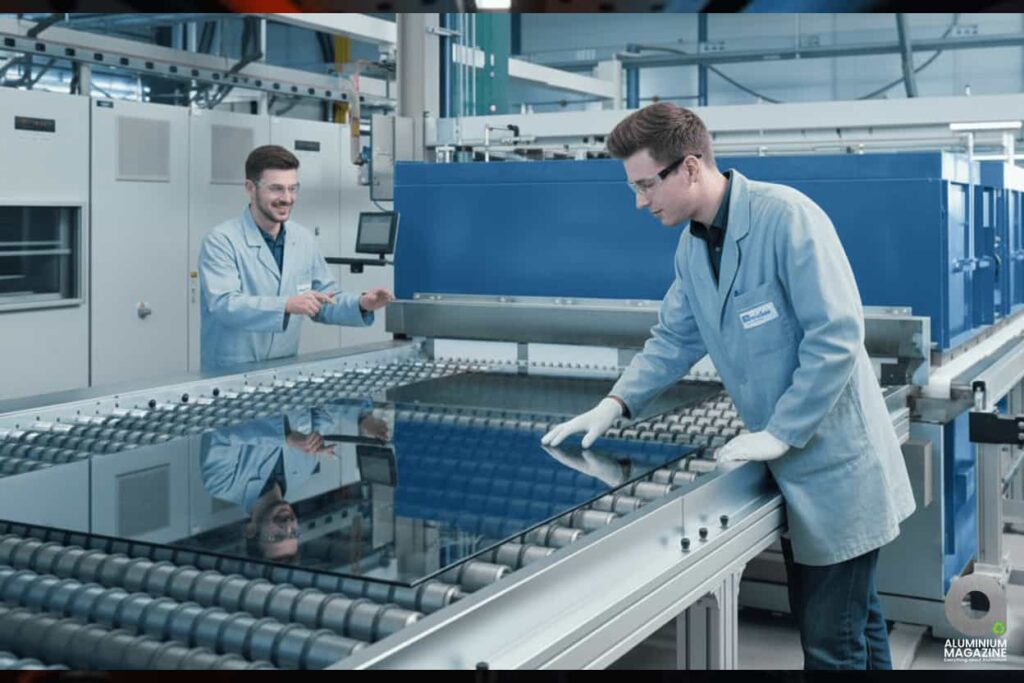

Once heated, the glass is rapidly cooled with high-pressure air jets—a process called quenching. This rapid cooling causes the outer surfaces of the glass to cool and contract much faster than the inner core. As the core later cools and tries to contract, the surface is already solid and compressed, creating a state of internal tension. It’s this compressive stress on the surface and tensile stress in the core that gives tempered glass its incredible strength and unique safety characteristics.
📌 Related read: Causes of Broken Tempered Glass
The Key Difference: How It Breaks
This is the most critical distinction. When regular glass breaks, the internal tension is released, causing it to fracture into large, jagged, and dangerous shards. When tempered glass breaks, the compressed surface shatters almost instantly, releasing the tension in a controlled way. The result is thousands of small, granular, and relatively blunt pieces. This is why it’s considered “safety glass.”
Tempered Glass vs. Other Glass Types
Choosing the right glass for a project is important. Here’s a simple comparison to help you decide.

- Annealed Glass: Standard, untreated glass. Breaks into sharp, dangerous shards. Should not be used in high-risk areas like doors or windows.
- Tempered Glass: Heats and quenches to become 4-5 times stronger. Breaks into small, blunt pieces. Ideal for doors, windows, shower enclosures, and skylights.
- Laminated Glass: Made from two or more layers of glass with a plastic interlayer (PVB) bonded between them. When it breaks, the fragments stick to the interlayer. Best for security applications, noise reduction, and where a broken pane must remain intact, such as in car windshields or high-security storefronts.
Deep dive: Toughened vs. Laminated Glass for Aluminium Profiles
Practical Benefits and Applications

When planning a project, the practical benefits of tempered glass stand out clearly.
- Strength & Durability: Its resistance to impact makes it ideal for high-traffic environments like commercial storefronts and public buildings.
- Heat & Thermal Resistance: Unlike regular glass, it can withstand extreme temperature changes, making it perfect for oven doors, stove tops, and fire-rated doors.
- Unmatched Safety: The way it breaks is a non-negotiable safety feature in residential and commercial spaces, reducing the risk of severe injury.
- Versatility: Tempered glass is essential for a wide range of applications, including:
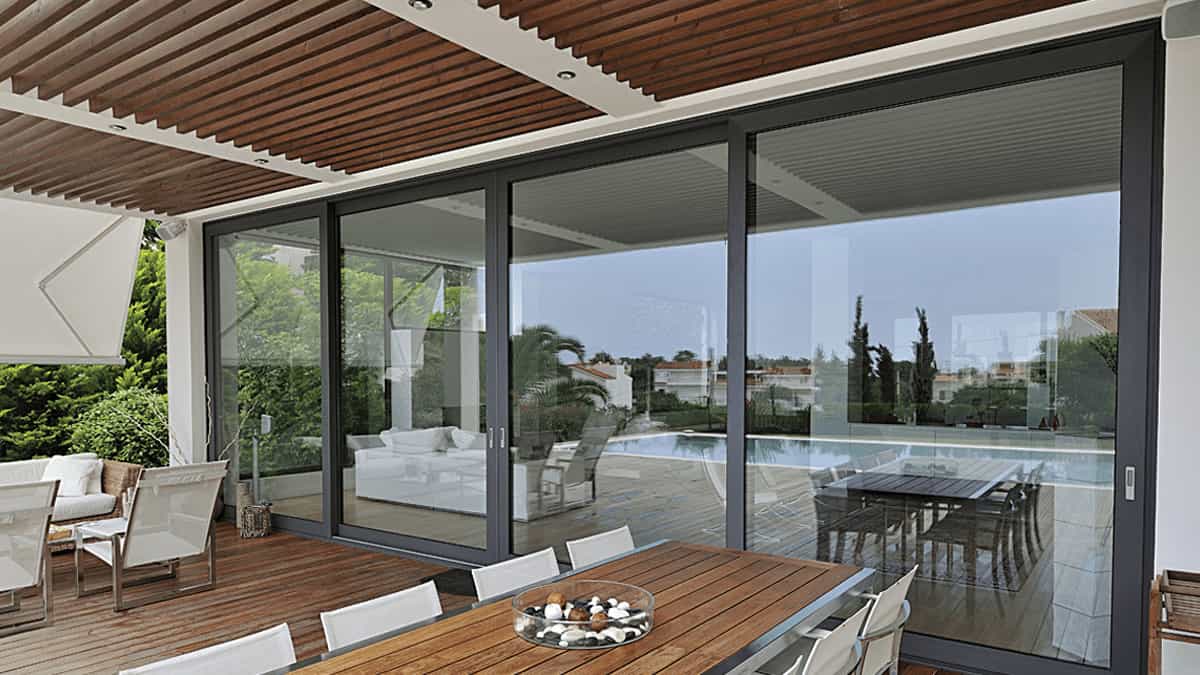
- Residential: Showers, sliding doors, balcony railings→ 👉 Aluminium Sliding Windows Design Ideas
- Commercial: Office partitions, storefronts, and curtain walls.→ 👉 Tempered Glass for Windows
- Automotive: Side and rear windows.
- Kitchen & Home: Oven doors, microwave fronts, and glass back splashes.
A Practical Look: The Limitations You Need to Know
While tempered glass is a superior product, it’s not without its quirks. Understanding its limitations is key to a successful project.
- You Cannot Cut It After Tempering: This is the most critical rule. Once the glass has been tempered, any attempt to cut, drill, or shape it will cause it to shatter immediately. All modifications must be completed on the annealed glass before it enters the tempering furnace.
- Spontaneous Breakage (Rare): In a tiny fraction of cases, microscopic nickel sulphide inclusions can cause the glass to shatter spontaneously. While extremely rare, it’s a known limitation in the industry. Heat-soaking is an optional process that can mitigate this risk.
- Vulnerable Edges: While the surface is incredibly strong, the edges of tempered glass are its weakest point. A sharp blow to an exposed edge can cause the entire pane to shatter.
📌 Reference: Causes of Broken Tempered Glass
Maintaining Your Tempered Glass and Aluminium System
Ensuring the longevity of your installation is simple with a few key steps.
- Cleaning: Use a mild, non-abrasive cleaner and a microfiber cloth. Avoid harsh chemicals or abrasive tools, which can scratch the surface.
- Installation: For the best results, work with a professional installer who understands how to handle and install tempered glass. They will ensure the edges are protected and the frame (like an aluminium window) is correctly fitted to avoid unnecessary stress points.
- Certification: Always look for standards like
ANSI Z97.1,
EN 12150,
or building codes such as the - International Building Code (IBC) Glazing Requirements.
FAQ: Your Practical Questions Answered
1. Is tempered glass truly scratch-proof?
No, while it is more resistant to scratches than regular glass, it is not scratch-proof. Fine abrasives or tools can still scratch the surface.
2. How do you identify tempered glass on a site?
The easiest way is to look for a small, permanent stamp or “bug” in one of the corners of the glass. This is required by law in many regions and will identify the manufacturer and glass type. You can also use polarized sunglasses; when you look at tempered glass through them, you’ll see a pattern of dark, mottled spots or lines.
3. Why is tempered glass more expensive?
It costs about 10-15% more than regular glass due to the specialized tempering process. However, this is a minimal cost when you consider the long-term savings in safety and durability.