
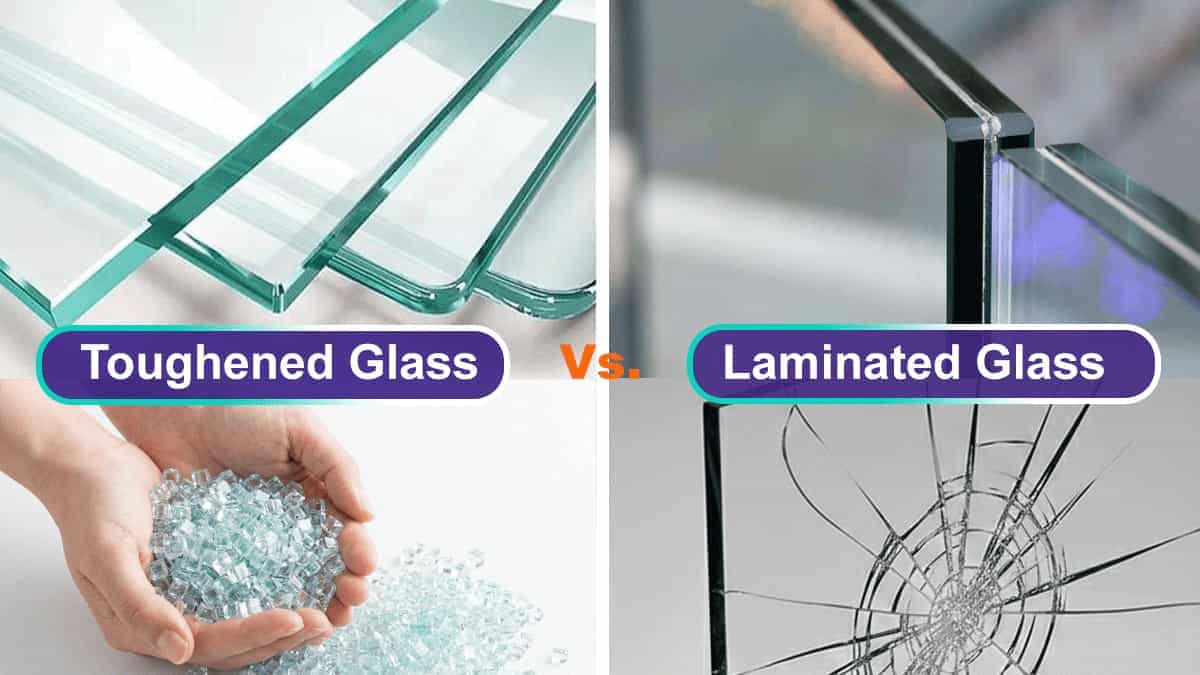
When it comes to selecting the right type of glass for various construction and design applications, understanding the precise differences between toughened glass (or tempered glass) and laminated glass is absolutely crucial for safety, security, and performance. Both are classified as safety glass but achieve their protective properties through fundamentally different manufacturing processes and are therefore suitable for distinct uses.
To make an informed decision for your next project, this high-value, high-quality article will delve into the detailed characteristics, inherent advantages, and most common applications of these two essential glass types, often used in conjunction with different types of glass for aluminium doors and windows.
Understanding Toughened Glass (Tempered Safety Glass)
Toughened glass, more commonly known as tempered glass, is a type of safety glass processed by controlled thermal or chemical treatments to significantly increase its strength compared to standard annealed glass. This process dramatically alters the glass’s physical characteristics, making it approximately four to five times stronger.
The toughening process involves heating the glass to over 600 degrees Celsius and then rapidly cooling it (a process called ‘quenching’), which introduces intense compressive stress on the glass’s surface and balancing tensile stress in the centre. This induced stress makes the final product highly resistant to impact and thermal stress.
Core Benefits of Toughened Glass
- High Mechanical Strength: Toughened glass is four to five times stronger than regular glass of the same thickness, offering superior resistance to blunt force impact.
- Safety Profile: Upon rare breakage, toughened glass shatters completely into small, granular, cube-like pieces that lack sharp edges, significantly reducing the likelihood of severe injury.
- Thermal Shock Resistance: Its manufacturing process makes it highly resistant to temperature fluctuations, allowing it to withstand high temperatures without cracking—making it ideal for fire screens and oven doors.
- Versatility: Commonly used in structural applications requiring high durability but where total structural integrity after failure is not mandatory.
Typical Applications of Toughened Glass
- ✓ Automotive Industry: Used safely for the side and rear windows of commercial and consumer vehicles.
- ✓ Construction & Hardware: Frameless glass doors, interior partitions, shower enclosures, and glass railings/balustrades.
- ✓ Consumer Electronics: Ultra-durable protective screen covers for smartphones, tablets, and high-end monitors.
- ✓ Household Applications: Contemporary glass furniture, heavy-duty oven doors, and modern kitchen backsplashes.
Exploring Laminated Glass (Security Glass)
Laminated glass is a composite material composed of two or more layers of glass bonded together by a strong, flexible interlayer, typically made of polyvinyl butyral (PVB) or ethylene-vinyl acetate (EVA). This interlayer is the key to its superior security and safety features.
When shattered, the interlayer adheres to the glass fragments, holding the pane together as a cohesive unit and preventing the glass from breaking into large, sharp pieces. Laminated glass can be created by heat-pressing the glass layers and interlayer together or by using an autoclave process (combining heat and pressure) for a highly durable, finished product.
Core Benefits of Laminated Glass
- Superior Containment Safety: The flexible interlayer holds broken pieces together, keeping the window opening sealed and drastically reducing falling glass hazards.
- Enhanced Security: It is significantly more difficult to penetrate than monolithic glass, providing enhanced security against forced entry, vandalism, and ballistic threats.
- Exceptional Sound Insulation: The PVB or EVA interlayer acts as a sound-dampening acoustic barrier, making it an excellent choice for noise reduction near busy roads or airports.
- 99% UV Protection: The standard interlayer blocks up to 99% of harmful UV radiation, protecting valuable interior furnishings, artworks, and carpets from fading.
Typical Applications of Laminated Glass
- ✓ Architecture & Glazing: Exterior windows, curtain walls, skylights, and glass facades in tall buildings. This is critical for professionals working in facade and glazing careers.
- ✓ Automotive Windshields: Primarily used for front windshields, where a cracked pane must maintain structural integrity and driving visibility.
- ✓ High-Security Areas: Secure display cases for jewelry, bank teller windows, government facilities, and environments susceptible to intrusion.
- ✓ Acoustic Control: Specialized windows and internal walls inside recording studios, public libraries, and luxury residential complexes.
Comparison: Toughened Glass vs. Laminated Glass for Optimal Use
To help you weigh structural requirements against environmental pressures, let’s look at the core behavioral differences when these two safety glasses fail:
UPSIDES
- ✓ Very high raw strength (4-5x stronger than standard glass)
- ✓ Disintegrates into small, harmless granular chunks upon failure
- ✓ Excellent performance in high thermal stress environments
DOWNSIDES
- ✕ Shatters completely when broken, immediately losing the structural barrier
- ✕ Cannot be cut, drilled, or altered after the tempering process
Conversely, look at how laminated glass answers security and acoustic needs:
UPSIDES
- ✓ Remains completely intact after breaking, keeping the structure sealed
- ✓ Excellent acoustic dampening due to the PVB/EVA internal film layer
- ✓ Blocks 99% of fading UV rays and resists forced penetration panels
DOWNSIDES
- ✕ Lower raw impact resistance before failure if composed of non-tempered panes
- ✕ Heavier profile requires carefully rated glazing channels and frames
A Combined Solution: Toughened Laminated Glass
For ultimate safety and performance, both manufacturing processes can be combined: Toughened Laminated Glass. This product uses two panes of toughened glass bonded together by an interlayer, offering the incredible strength and thermal resistance of tempered glass combined with the security and containment of laminated glass. This is the gold standard for areas requiring maximum protection, such as commercial facades and high-end residential security windows.
Safety Glass Frequently Asked Questions
Can you cut toughened or laminated glass on-site?
Laminated glass can be cut and fabricated after manufacturing using specialized techniques that score both glass layers and slice the inner plastic layer. Toughened glass, however, cannot be cut, drilled, or modified after the tempering process without instantly shattering into granular pieces.
Which glass type is mandatory for overhead skylights?
Laminated glass is generally required or strongly preferred for overhead glazing and skylights. If an overhead pane breaks, the internal PVB or EVA interlayer ensures the glass fragments remain bound together, preventing hazardous shards from falling into the living space below.
Does laminated glass provide better insulation than toughened glass?
While standard laminated glass does not significantly change the thermal insulation (U-value) compared to a toughened pane of the same thickness, its internal polymer interlayer provides dramatically superior acoustic insulation by dampening sound waves.
Choosing the Right Safety Glass for Your Project
Both toughened and laminated glass are indispensable in modern architecture, but their distinct benefits dictate their use. Toughened glass is preferred for its pure strength and thermal performance, making it ideal for certain interior and high-heat applications. Laminated glass, on the other hand, offers unparalleled post-breakage safety, security, and sound insulation, making it the definitive choice for exterior envelopes and areas requiring enhanced protection.
Understanding these differences is key to successful design, ensuring safety, durability, and optimal performance in your projects. Whether you are building a new home or undertaking a commercial renovation, choosing the right material ensures compliance and peace of mind. To explore the frame materials often used with these glass types, read our guide on the top reasons to choose aluminium for doors and windows.
Related Articles

Featured
You May Also Like

Wood Without the Worries: How Aluminium is Changing Design F…
Why Use Aluminum Foil in the Dishwasher?
11 Key Energy Efficiency Terms for Windows & Doors Expla…

Why Aluminum Bathroom Windows Are Ideal for Canadian Weather

Canada’s Top Climate Zones for Optimal Aluminium Windo…
