Aluminum (Aluminium) sheets are the unsung heroes of modern manufacturing and construction, found in everything from the body panels of your car to the roofing over your head. But when it comes to selecting the right sheet for a project, one question dominates all others: What thickness do I need?
Understanding aluminum sheet thickness isn’t just about picking a random number; it’s a critical decision that affects the strength, weight, cost, and formability of your final product. Using a sheet that’s too thin can lead to structural failure, while one that’s too thick can add unnecessary weight and expense to your aluminium fabrication project.
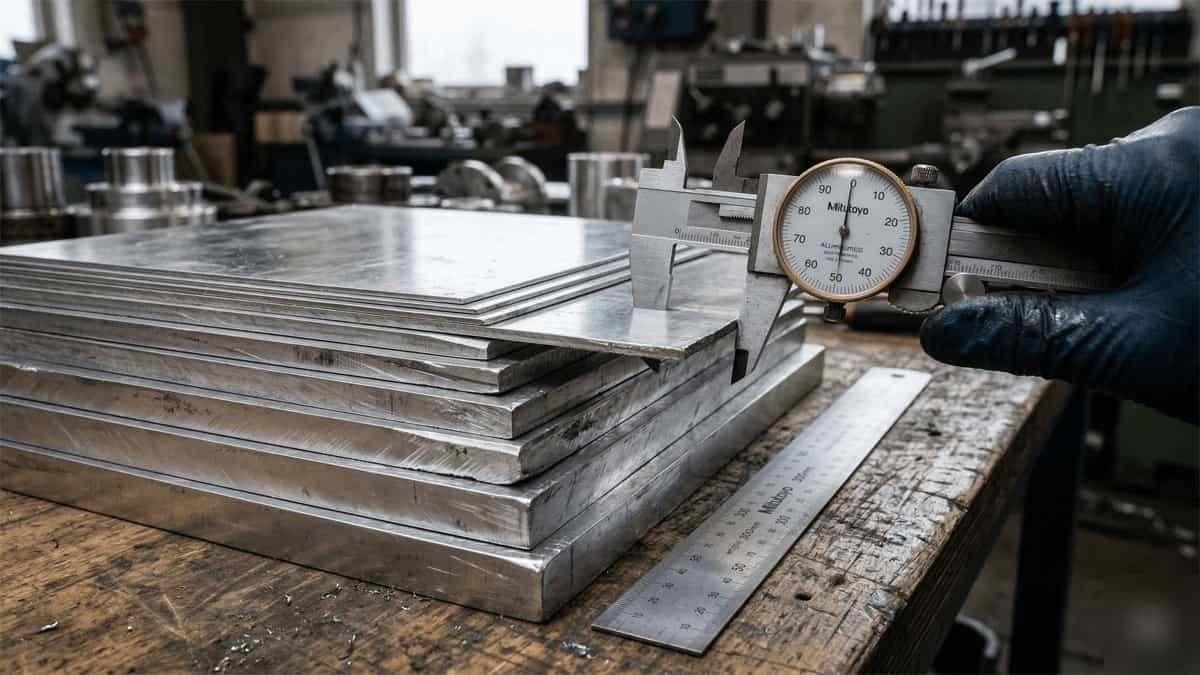
How Aluminum Sheet Thickness Is Measured
Aluminum sheet thickness can be specified in several ways, which often leads to confusion between regional standards. The three most common measurement systems are:
Global Measurement Standards
- Millimeters (mm): The universal metric standard globally used for specifying exact Aluminium physical thickness.
- Inches: The imperial standard commonly used in the United States, typically written in decimal form like 0.040″.
- Gauge System: A traditional standard where a higher number means a thinner sheet—but remember, aluminum gauges are completely different from steel gauges!
While gauge numbers are common in some regions, using millimeters or inches is always the safest and most accurate way to specify the exact thickness you need for engineering and fabrication.
Standard Aluminum Sheet Thickness Chart
Thickness Selection Checklist
- ✓ Application Intent: Determine if the sheet will hold a structural load or if it is purely for decorative aesthetics.
- ✓ Load Requirements: Calculate both static weight loads and dynamic forces, such as wind pressure on a building facade.
- ✓ Fabrication Limits: Remember that bending thicker sheets requires more powerful machinery and larger minimum bend radii.
- ✓ Environmental Exposure: In highly corrosive environments, opting for a slightly thicker sheet will extend the material’s lifespan.
The table below provides a practical conversion between common gauge numbers and their approximate thickness in millimeters and inches for aluminum sheets. Keep in mind that these values can vary slightly depending on the specific alloy and standard being followed.
| Gauge Number | Thickness (mm) | Thickness (Inches) | Typical Application |
| 10 | 2.59 mm | 0.1020″ | Heavy-duty truck panels, flooring |
| 12 | 2.06 mm | 0.0810″ | Structural components, tool boxes |
| 14 | 1.63 mm | 0.0640″ | General sheet metal work, automotive bodies |
| 16 | 1.29 mm | 0.0510″ | Auto body panels, trailer siding |
| 18 | 1.02 mm | 0.0400″ | Roofing, gutters, decorative trim |
| 20 | 0.81 mm | 0.0320″ | Signage, interior panels, light fabrication |
| 22 | 0.64 mm | 0.0250″ | Electronics casings, craft work |
| 24 | 0.51 mm | 0.0200″ | Flashings, decorative cladding |
| 26 | 0.41 mm | 0.0160″ | Laminates, very light trim |
Common Thickness Used in Different Industries
The “right” thickness is entirely dependent on the application. Here’s a breakdown of the standard ranges used across various industries:
Construction & Architecture (0.5 mm – 3 mm)
This is a massive sector for aluminium products. Thinner gauges (0.5-1.0 mm) are used for roofing, flashings, and gutter systems. Medium gauges (1.5-2.5 mm) are common for composite panel cladding and window trim. If you’re considering material for your home, understanding why aluminium is used for roofing sheets can be a great starting point.
Automotive & Transportation (0.8 mm – 4 mm)
The automotive industry uses a wide range of aluminum. Body panels like hoods and doors typically use sheets between 0.8 mm and 1.5 mm for an optimal balance of lightweighting and dent resistance. Heavier gauges (2-4 mm) are used for truck bodies and structural chassis components.
Aerospace (0.3 mm – 6 mm+)
Aerospace applications demand precision and high-strength alloys. Thin sheets are used for skin panels, while thicker plates are machined into complex structural ribs. Alloy selection here is as critical as the aluminum thickness.
HVAC (0.5 mm – 1.5 mm)
Heating, ventilation, and air conditioning systems rely on aluminium sheets for ductwork, casings, and fins. The material needs to be formable and corrosion-resistant.
General Fabrication & Signage (0.6 mm – 3 mm)
Signage often uses 1-2 mm sheets for rigidity. For projects where the finish is key, you might explore options like anodized aluminum sheets for added durability and aesthetics.
How Thickness Affects Strength and Weight
The relationship between thickness, strength, and weight is straightforward but crucial:
Strength & Rigidity
A thicker sheet is exponentially more resistant to bending. Doubling the thickness doesn’t just double the strength; it can increase the section modulus by a factor of four.
Weight
Aluminum’s primary advantage is its light weight. However, weight increases linearly with thickness. A 2mm sheet will weigh twice as much as a 1mm sheet of the same dimensions.
Choosing the Right Aluminum Sheet Thickness
Selecting the correct thickness involves balancing several key factors. Use this checklist:
- Structural vs. Decorative: Is the sheet holding a load, or is it purely for aesthetics?
- Load Requirements: Consider static loads (weight) and dynamic loads (wind pressure on a building’s facade).
- Fabrication Needs: Do you need to bend the sheet? Thicker sheets require more powerful brakes and have larger minimum bend radii.
- Corrosion Exposure: In harsh environments, a slightly thicker aluminium sheet can provide a longer lifespan, as corrosion takes longer to compromise the material’s integrity.
Common Aluminum Alloys Used in Sheets
Thickness is only half the equation. The alloy determines the sheet’s specific properties:
Standard Sheet Alloys
- Alloy 3003: The highly formable “workhorse” alloy, ideal for general sheet metal work and gutters
- Alloy 5052: The strongest of the non-heat-treatable class, featuring excellent resistance to marine corrosion
- Alloy 6061: A heat-treatable, high-strength, and weldable alloy preferred for demanding engineering and structural projects
- Alloy 7075: A premium high-strength aerospace alloy that boasts strength levels comparable to many steels
Choosing the correct aluminum sheet thickness is fundamental to the success and safety of any project. By understanding measurement systems and the interplay between gauge and alloy, you can move forward with confidence. For specialized architectural features, looking into products like perforated aluminum sheet can open up even more design possibilities.
Related Articles


Featured



You May Also Like

Fixed Picture Window Replacement: Transforming Homes with St…

Career in Facade, Structural Glazing & Curtain Wall Indu…

Aluminium Door and Window Business: Is It Profitable? | Full…
How Do Thermally Broken Work?
The Truth About Aluminum Capacitors: Why Plastic, Copper, an…