
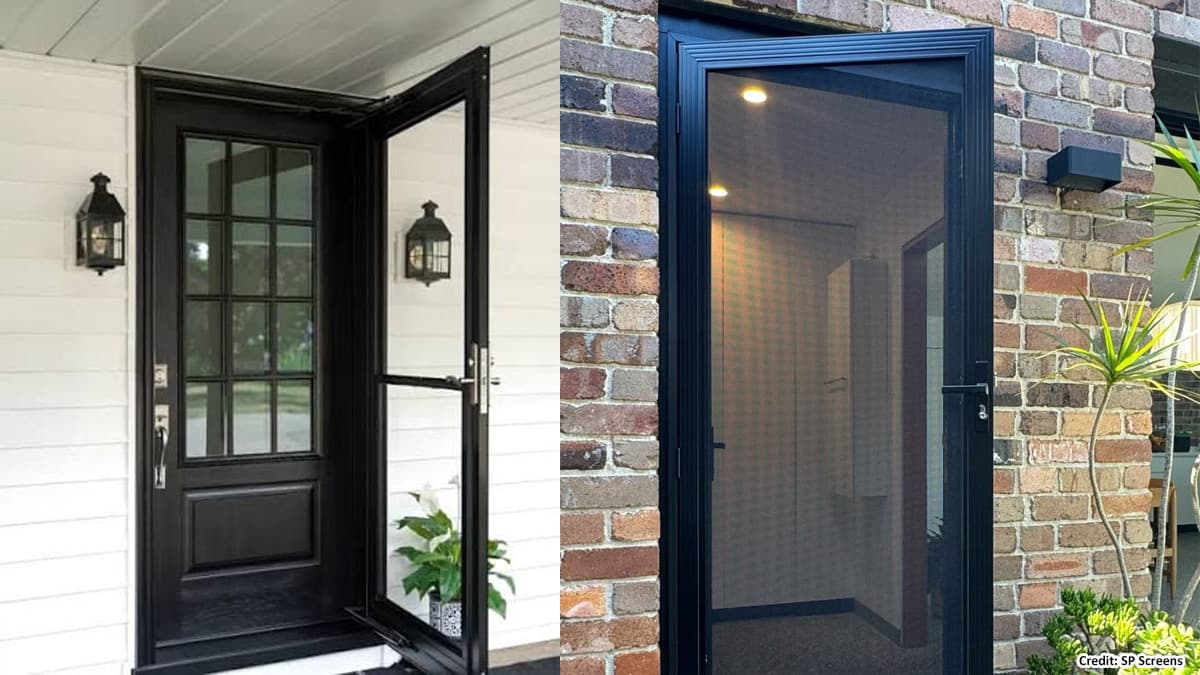
At first glance, a storm door and a screen door can look almost identical. Put them side by side, though, and the differences become pretty obvious. One can turn your entryway into a barrier against rain, wind, cold air, and outdoor exposure. The other is mainly there to let the breeze in while keeping mosquitoes out.
But there is another part of the decision that often gets overlooked: what the door is made of and whether you choose full glass or full screen. Aluminum, steel, and wood storm doors don’t perform exactly the same way, and a full-glass door serves a very different purpose from a full-screen one.
So let’s make the choice simple. Here’s how storm doors and screen doors differ—and what changes when you choose aluminum, steel, or wood.
Storm Door vs. Screen Door: The Basic Difference
The easiest way to remember the difference is simple: a screen door is mainly for ventilation, while a storm door is designed to provide additional protection.
| Feature | Storm Door | Screen Door |
|---|---|---|
| Main purpose | Weather protection + ventilation options | Airflow + insect control |
| Panel | Glass, screen, or combination | Mesh screen |
| Rain & wind | Good protection | Very limited |
| Airflow | Depends on panel | Excellent |
| Insulation | Can reduce drafts | Little to none |
| Typical use | Front and main entry doors | Porches, patios, and warm-weather entries |
A storm door is not necessarily a glass door. It can have a full-glass panel, full-screen panel, interchangeable panels, or a retractable screen. That distinction matters when you’re deciding how much protection or airflow you actually need.
Aluminum Storm Doors: Full Glass vs. Full Screen
Aluminum is one of the most practical materials for storm doors. It is relatively lightweight, strong for its weight, resistant to rust, and easy to maintain.
| Feature | Full-Glass Aluminum Storm Door | Full-Screen Aluminum Storm Door |
|---|---|---|
| Best for | Weather protection | Ventilation |
| Rain & wind | Better protection | Limited protection |
| Airflow | Low with glass closed | Excellent |
| Insect control | Excellent when closed | Excellent |
| Natural light | Excellent | Good |
| Flying debris | Better barrier, but not automatically impact-rated | Not designed to stop debris |
| Best season | Cold, wet, or windy weather | Warm weather |
If you want your aluminum storm door to do more than provide a breeze, full glass is the better choice. If fresh air is the priority, a full-screen aluminum storm door makes more sense.
Steel Storm Doors: Full Glass vs. Full Screen
Steel offers a strong, rigid frame and can make a solid storm door. The downside is that steel is generally heavier than aluminum and needs good protection against corrosion, especially in wet or coastal environments.
| Feature | Full-Glass Steel Storm Door | Full-Screen Steel Storm Door |
|---|---|---|
| Best for | Strength + weather protection | Ventilation with a rigid frame |
| Rain & wind | Better protection | Limited protection |
| Airflow | Low with glass closed | Excellent |
| Weight | Generally heavier | Generally heavier than aluminum screen doors |
| Maintenance | Finish must be kept in good condition | Finish must be kept in good condition |
| Best use | Weather protection and durability | Warm-weather ventilation |
For steel, the full-glass version makes the most sense when protection is the main reason for installing the door. A full-screen version can provide plenty of airflow, but it gives up much of the weather protection that makes a storm door useful.
Wood Storm Doors: Full Glass vs. Full Screen
Wood storm doors have a different appeal. They work especially well with traditional homes where the natural look of wood matters as much as performance. The trade-off is maintenance: wood needs proper sealing, painting, or staining to handle moisture and outdoor exposure.
| Feature | Full-Glass Wood Storm Door | Full-Screen Wood Storm Door |
|---|---|---|
| Best for | Traditional appearance + weather protection | Traditional appearance + airflow |
| Rain & wind | Better protection | Limited protection |
| Airflow | Low with glass closed | Excellent |
| Appearance | Classic, solid look | Open, lighter appearance |
| Maintenance | Higher | Higher |
| Moisture resistance | Depends heavily on finish and maintenance | Depends heavily on finish and maintenance |
Choose full glass when protecting the entryway is more important. Choose full screen when the main goal is letting the house breathe during warm weather.
So, Which Storm Door Should You Choose?
| If Your Priority Is… | Better Choice |
|---|---|
| Rain, wind, and outdoor protection | Full-Glass Storm Door |
| Maximum airflow | Full-Screen Storm Door |
| Insects + fresh air | Full-Screen Storm Door |
| Cold or wet weather | Full-Glass Storm Door |
| Summer ventilation + winter protection | Combination Storm Door |
| Lightweight, low-maintenance frame | Aluminum |
| Rigid, heavy-duty construction | Steel |
| Traditional appearance | Wood |
The Aluminum Advantage for Both
Aluminum works for both door types, but for different reasons:
- In storm doors: Extruded aluminum provides the structural rigidity to handle glass panels, heavy daily use, and outdoor exposure while keeping the door relatively lightweight.
- In screen doors: Light-gauge aluminum keeps the frame lightweight and rust-resistant while remaining relatively affordable. It won’t rot like wood or become brittle like some vinyl products in prolonged sun exposure.
However, don’t confuse an aluminum screen door with an aluminum storm door. The thickness, construction, hardware, and intended use can be very different. A screen door is lightweight by design, while a storm door is generally engineered for greater structural strength and weather protection.
Final Verdict
If you mainly want fresh air and insect protection, a screen door is the straightforward choice.
If you want to protect your entryway from weather while still having the option of ventilation, a storm door gives you more flexibility. Full glass favors protection, while full screen favors airflow. Combination and retractable-screen designs can give you both throughout the year.
The material matters too. Aluminum offers a particularly good balance of strength, weight, and weather resistance; steel emphasizes rigidity and durability; and wood brings a traditional appearance with more maintenance.
In the end, choose based on your climate, entryway, ventilation needs, and the level of weather protection you actually need—not simply because the two doors look similar.
Related Articles
Featured


You May Also Like
Curtain Wall Profiles: Types, Shapes, Materials & Applic…
Mc Clelland Engineers Expands Incineration Solutions for Alu…

Aluminium Nitrate (Al(NO₃)₃): The Complete Guide
11 Key Energy Efficiency Terms for Windows & Doors Expla…

Aluminium Foil: GST Rates & HSN Codes
