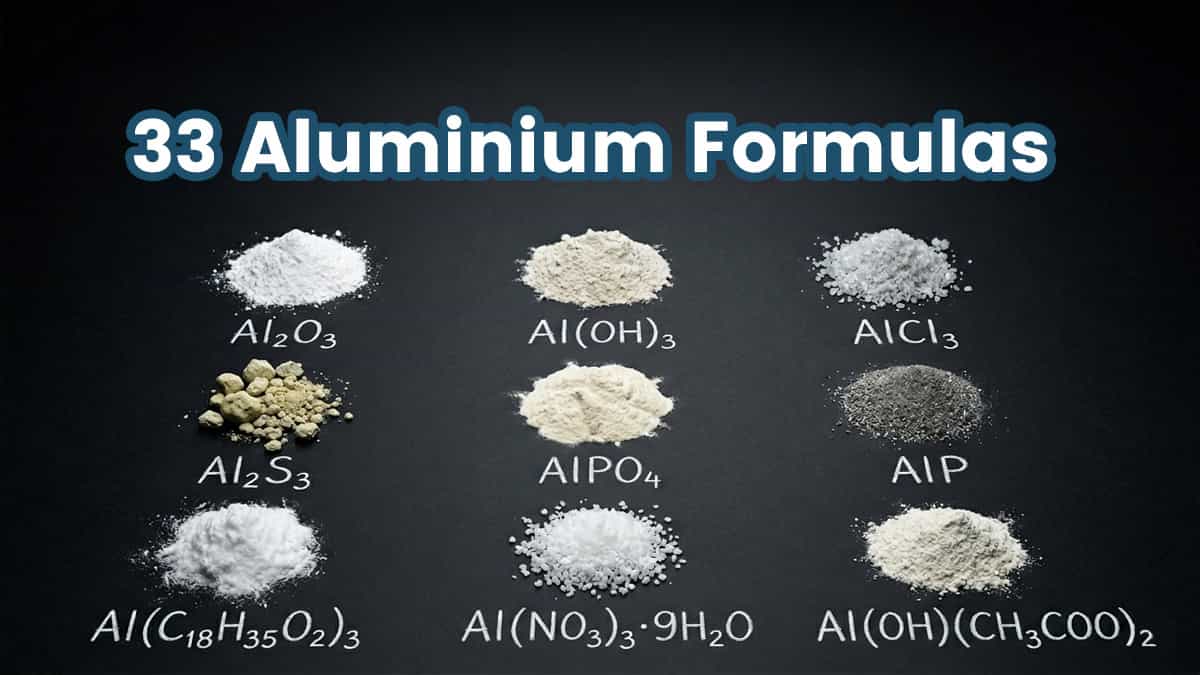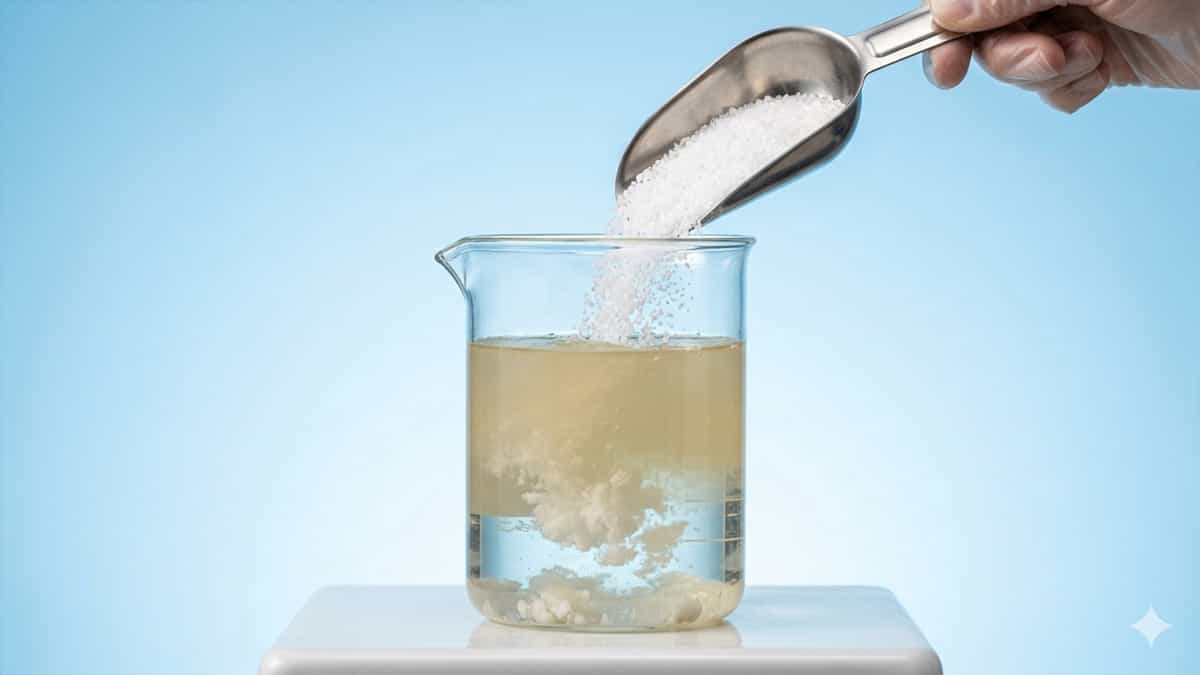
Aluminium sulfate is an important industrial chemical, commonly referred to as “alum” (though strictly, alums are double sulfates). It appears as a white crystalline solid that is highly soluble in water. It is the backbone of municipal water treatment, serving as the definitive flocculent that delivers clear drinking water.
1. Basic Identification
- Chemical Formula: Al₂(SO₄)₃ (anhydrous); common hydrates: Al₂(SO₄)₃·18H₂O or Al₂(SO₄)₃·16H₂O
- Alternative Names: Filter alum, papermaker’s alum, dialuminum trisulfate
- Molecular Weight: 342.15 g/mol (anhydrous); ~666.4 g/mol (octadecahydrate)
- CAS Number: 10043-01-3 (anhydrous); 7784-31-8 (octadecahydrate)
- Appearance: Glossy white crystals, granules, or powder
2. Physical Properties
| Property | Aluminium Sulfate (Anhydrous) |
|---|---|
| Melting Point | 770 °C (1418 °F) – decomposes |
| Boiling Point | Decomposes to Al₂O₃ + SO₃ |
| Density | 2.67 g/cm³ |
| Aqueous pH | 2 – 4 (acidic) |
| Solubility | 31.2 g/100 mL (0 °C); 86.9 g/100 mL (100 °C); insoluble in ethanol |
Aluminum sulfate is a heavy white granular material. It is stable, non‑fuming, and non‑volatile. It absorbs moisture from air to form hydrates but does so peacefully (no violent reaction).
3. Chemical Behavior & Synthesis
3.1 Hydrolysis – The Coagulation Mechanism
In water, Al₂(SO₄)₃ dissociates to Al³⁺ and SO₄²⁻. The Al³⁺ ion hydrolyzes:
Al³⁺ + 3 H₂O ⇌ Al(OH)₃ ↓ + 3 H⁺
This produces a gelatinous precipitate of aluminum hydroxide that traps suspended particles (flocculation).
3.2 Synthesis
Al₂O₃ + 3 H₂SO₄ → Al₂(SO₄)₃ + 3 H₂O
Bauxite or pure alumina is digested in hot concentrated sulfuric acid. The solution is concentrated and crystallized.
4. Industrial & Laboratory Applications
4.1 Water Purification (Primary Use)
As a coagulant, aluminium sulfate neutralizes the negative charge on suspended dirt particles, allowing them to clump into heavy flocs that settle out. This is the standard method for producing clear drinking water from turbid sources.
4.2 Paper Manufacturing
Used to “size” paper – making it resistant to ink bleed. Aluminum sulfate causes rosin sizing agents to bind to paper fibers under acidic conditions.
4.3 pH Regulation in Gardening
Aluminium sulfate lowers soil pH (makes it acidic). Gardeners use it to turn hydrangea flowers deep blue by freeing natural aluminum in the soil.
4.4 Antiperspirants & Medical Astringents
Its astringent properties block sweat glands and stop bleeding from shaving cuts (styptic pencils).
5. Safety & Hazard Management
| GHS Symbol | Meaning |
|---|---|
| ❗ GHS05 | Corrosive |
Critical Warning: Solid is stable, but concentrated aqueous solutions are strongly acidic and can cause burns.
5.1 Health Effects
| Route of Exposure | Effect |
|---|---|
| Inhalation | Dust causes stinging irritation to nose and throat. |
| Skin Contact | Prolonged contact leads to drying, irritation, mild acid burns. |
| Eye Contact | Dangerous – dust dissolves in eye moisture to form acid, causing severe conjunctivitis and potential tissue damage. |
| Ingestion | Irritation of mouth/stomach; sour taste; high doses cause vomiting. |
5.2 PPE
- Respiratory: N95 dust mask (for dry powder)
- Hands: Nitrile or rubber gloves
- Eyes: Tight‑sealing chemical goggles
- Body: Lab coat or apron
5.3 First Aid
- Eyes: Flush 15‑20 minutes; seek ophthalmologist
- Skin: Wash with soap and water
- Ingestion: Drink water or milk to dilute; do not induce vomiting; seek medical attention
6. Storage & Handling
- Container: Thick plastic or glass – not unlined metal (acidic)
- Atmosphere: Keep dry to prevent caking
- Location: Well‑ventilated, dry storage
- Disposal: Dilute and neutralize with lime or soda ash before landfilling
7. Environmental Impact
Aluminium sulfate can lower pH of water bodies if dumped in large quantities, harming aquatic life. However, controlled doses are used to remove toxic phosphorus blooms (eutrophication) from lakes – the flocs settle and remove algae‑feeding nutrients.
8. Comparison with Other Aluminium Compounds
| Compound | Formula | Primary Nature | Primary Use |
|---|---|---|---|
| Aluminium Sulfate | Al₂(SO₄)₃ | Acidic polyatomic salt | Water purification, pH adjustment |
| Aluminium Chloride | AlCl₃ | Fuming Lewis acid | Petrochemical catalysis |
| Potassium Alum | KAl(SO₄)₂ | Double sulfate salt | Pickling, crystal deodorant |
9. Frequently Asked Questions
Q: Is aluminum sulfate the same as the alum block for shaving?
A: No. Shaving alum blocks are typically potassium alum (KAl(SO₄)₂). Aluminum sulfate is more acidic and would sting more.
Q: Does this mean I’m drinking aluminum?
A: No. The aluminum hydroxide floc settles out and is removed. The clarified water contains negligible aluminum.
Q: How fast does it turn hydrangeas blue?
A: Over a growing season. It lowers soil pH, freeing natural aluminum for root uptake, gradually shifting flowers from pink to blue.
10. Summary Data Sheet
| Property | Value |
|---|---|
| Chemical Name | Aluminum Sulfate |
| Common Name | Filter Alum |
| Formula | Al₂(SO₄)₃ |
| Appearance | White granules/powder |
| Solubility | Highly soluble in water (acidic solution) |
| Primary Utility | Water purification coagulant / paper sizing |
| Storage | Keep dry to prevent caking |