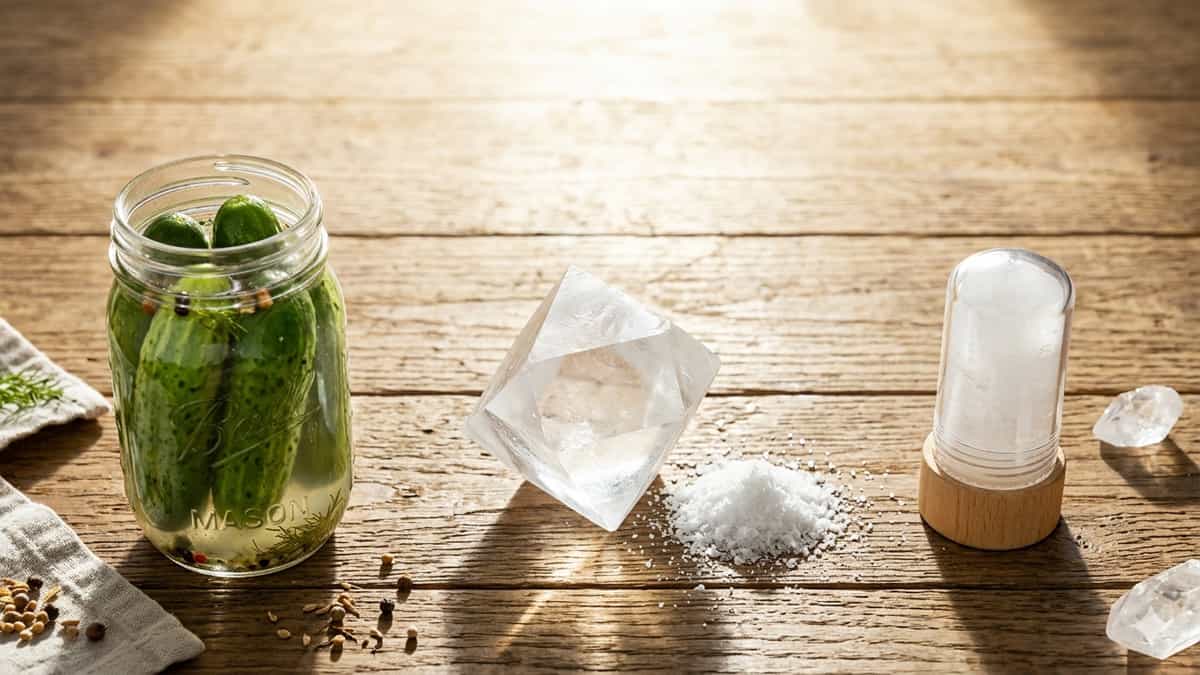
Potassium alum, globally recognized simply as “alum,” is an ancient, highly useful double sulfate salt. Documented since antiquity for clarifying water and tanning leather, it remains a household staple. It forms large, clear octahedral crystals and is known for its sharp astringency. Today, it is used in natural crystal deodorants, pickling crisping agents, and styptic pencils for shaving.
1. Basic Identification
- Chemical Formula: KAl(SO₄)₂·12H₂O
- Alternative Names: Potassium aluminum sulfate dodecahydrate, alum, tawas, kalinite
- Molecular Weight: 474.39 g/mol
- CAS Number: 7784-24-9
- Appearance: Large, transparent or white translucent octahedral crystals or powder
2. Physical Properties
| Property | Potassium Alum (Dodecahydrate) |
|---|---|
| Melting Point | 92 °C (198 °F) – actually dissolves in its own water of crystallization |
| Boiling Point | Loses water at 200 °C; decomposes near 800 °C |
| Density | 1.75 g/cm³ |
| Taste | Intensely astringent, sweetish, puckering |
| Solubility | 14 g/100 mL cold water; 35.7 g/100 mL hot water; insoluble in acetone and alcohol |
Potassium alum forms large, clear crystals that feel cool to the touch. In dry air, the surface may turn opaque white (efflorescence) as it slowly loses water.
3. Chemical Behavior & Reactions
3.1 Mild Acidic Hydrolysis
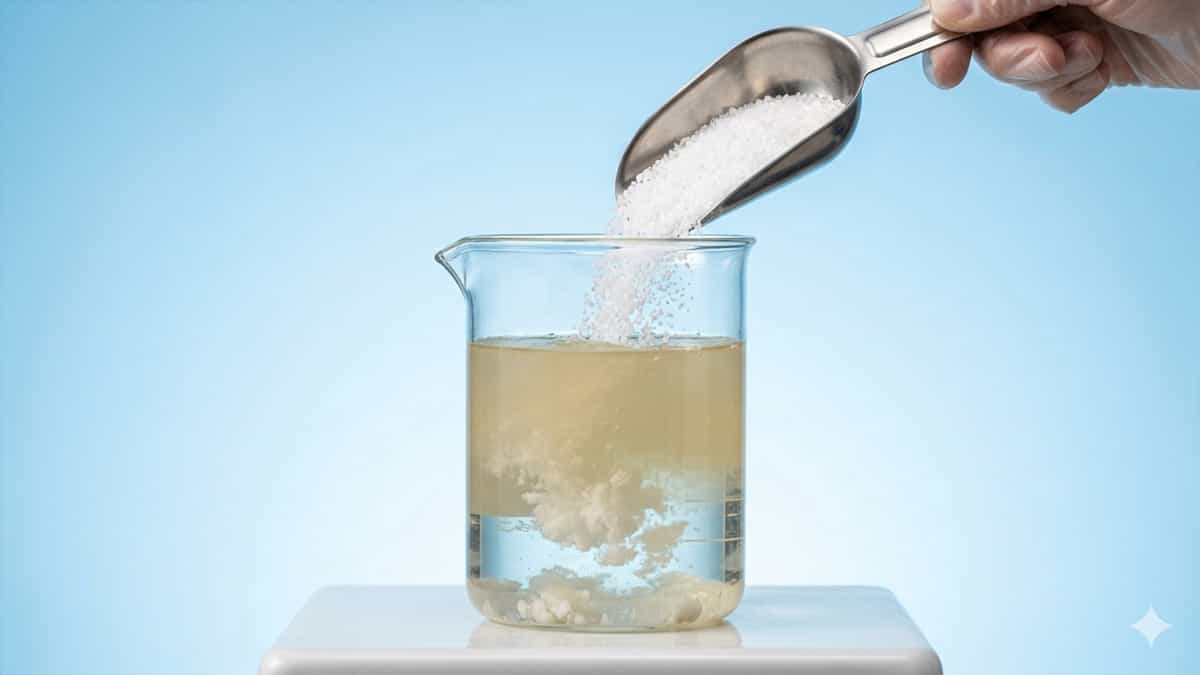
In water, the aluminum ion hydrolyzes to produce a mildly acidic solution and a small amount of sticky aluminum hydroxide:
Al³⁺ + 3 H₂O ⇌ Al(OH)₃ + 3 H⁺
This sticky precipitate binds to suspended particles, enabling water clarification.
3.2 Roasting – Making “Burnt Alum”
Heating the crystals drives off water:
KAl(SO₄)₂·12H₂O + Heat → KAl(SO₄)₂ + 12 H₂O ↑
At 92 °C, the crystals appear to melt as the structure collapses. Further heating to 200 °C produces a porous white powder known as “burnt alum.”
4. Domestic & Laboratory Applications
4.1 Food Crisping (Pickling)
Alum is added to pickling brines. The aluminum ions bind to pectin in cucumber cell walls, cross‑linking them and ensuring a crisp crunch rather than sogginess.
4.2 Cosmetics – Crystal Deodorant & Styptic Pencil
- Deodorant: A smooth block of potassium alum, when wet, transfers a thin salt layer to the skin. It does not block sweat but kills odor‑causing bacteria.
- Styptic Pencil: Applied to shaving nicks, it constricts blood vessels and coagulates proteins, stopping bleeding almost instantly.
4.3 Water Clarification
In rural areas, a chunk of alum added to muddy well‑water binds suspended dirt into a heavy sludge that settles, leaving clear water above.
5. Safety & Hazard Management
General Safety: Potassium alum is FDA‑approved as a food additive (GRAS) and has an excellent safety profile.
| Route of Exposure | Effect |
|---|---|
| Inhalation | Powder may cause dry, stinging sensation in nose/throat. |
| Skin Contact | Safe – intentionally used as deodorant. Dry powder may cause mild pulling/dryness. |
| Eye Contact | Stinging and irritation, but generally not permanent corneal damage. |
| Ingestion | Safe in trace amounts (pickles). Eating straight powder causes throat puckering, nausea, vomiting due to irritation. |
PPE: None required for household use. Dust mask if grinding large amounts.
First Aid:
- Eyes: Flush with water 10‑15 minutes.
- Ingestion: Drink water or milk to dilute; seek medical advice if large amount swallowed.
6. Storage & Handling
- Container: Plastic or glass jar
- Atmosphere: Normal air; high humidity may cause caking; extreme dry heat causes efflorescence
- Location: Kitchen pantry, bathroom cabinet, or chemical shelf
- Disposal: Can be thrown in trash or flushed down drain (safe for plumbing)
7. Environmental Impact
In small amounts, potassium alum is environmentally benign. Large quantities dumped into a small pond would lower pH and harm aquatic life, so bulk disposal requires dilution.
8. Comparison with Other Aluminium Compounds
| Compound | Formula | Primary Nature | Household Use |
|---|---|---|---|
| Potassium Alum | KAl(SO₄)₂·12H₂O | Safe, astringent double salt | Pickling, deodorant, styptic |
| Aluminium Phosphide | AlP | Toxic gas releaser | None – lethal poison |
| Aluminium Chloride | AlCl₃ | Corrosive industrial acid | None – industrial use only |
9. Frequently Asked Questions
Q: My “natural” deodorant crystal says “no harmful aluminum” but lists potassium alum. Does it contain aluminum?
A: Yes, it contains aluminum. However, potassium alum is a large, stable molecule that does not penetrate the skin as deeply as aluminum chlorohydrate. The marketing is misleading, but the compound is generally considered safe.
Q: Why do my pickles still get soft even with alum?
A: The blossom end of the cucumber contains enzymes that can break down cell walls. Always cut off the blossom end before pickling.
Q: If I add alum to muddy water, where does the mud go?
A: The alum binds to the mud, forming a heavy sludge that sinks. You then pour or scoop the clear water from the top.
10. Summary Data Sheet
| Property | Value |
|---|---|
| Chemical Name | Potassium Aluminum Sulfate Dodecahydrate |
| Common Name | Potash Alum / Pickling Alum |
| Formula | KAl(SO₄)₂·12H₂O |
| Appearance | Large clear crystals or white powder |
| Taste | Sour / astringent |
| Defining Trait | Protein binder, tissue astringent |
| Primary Utility | Styptic sticks, deodorant, pickling crispness |
Related Articles

Featured


You May Also Like

Myths About Aluminium Cans: From Health Fears to Recycling L…

Aluminium vs Fiberglass Telescopic Ladder: Which One Should …

Aluminium Flat Bar – Types, Sizes Chart
Aluminium Windows Problem: Thermal Break Failure (Condensati…

Top 25 Real-World Problems with Aluminium & Aluminum Win…