
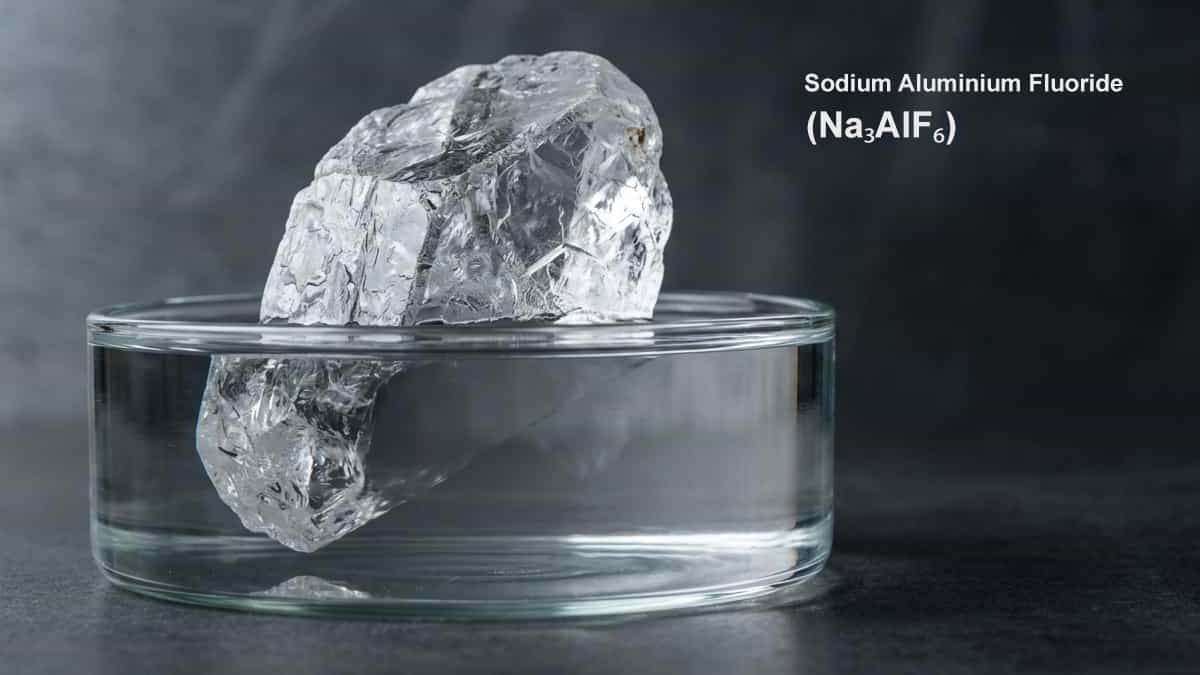
Sodium aluminium fluoride, universally known by its mineral name cryolite, is a strategically important compound. Its high‑temperature properties govern the economics of aluminium metal production. It appears as glassy, white, or colorless chunks, and its role in the Hall‑Héroult smelting process makes it one of the most manufactured inorganic compounds on Earth.
1. Basic Identification
- Chemical Formula: Na₃AlF₆
- Alternative Names: Cryolite, sodium hexafluoroaluminate
- Molecular Weight: 209.94 g/mol
- CAS Number: 13775-53-6 (synthetic); 15096-52-3 (mineral)
- Appearance: Glassy, colorless to white solid lumps or fine white powder
2. Physical Properties
| Property | Sodium Aluminum Fluoride (Cryolite) |
|---|---|
| Melting Point | 1012 °C (1853 °F) |
| Boiling Point | ~1200 °C (decomposes and fumes) |
| Density | 2.90 g/cm³ |
| Refractive Index | 1.338 (very close to water: 1.333) |
| Solubility | 0.04 g/100 mL water; soluble in strong mineral acids |
Natural or melted cryolite looks like cloudy ice or shattered glass. Because its refractive index nearly matches water, a clear chunk submerged in water becomes almost invisible.
3. Chemical Behavior & Synthesis
3.1 High‑Temperature Solvent Action
At room temperature, cryolite is stable. Above 1000 °C in molten form, it readily dissolves aluminum oxide (Al₂O₃). This is the key to aluminum smelting: alumina normally melts at 2072 °C, but in molten cryolite it dissolves like sugar in coffee at ~1000 °C.
3.2 Synthesis
Natural cryolite was mined from a single massive quarry in Greenland, exhausted in the 1980s. Today, all industrial cryolite is synthetic:
Al(OH)₃ + 3 NaOH + 6 HF → Na₃AlF₆ + 6 H₂O
Aluminum hydroxide is reacted with sodium hydroxide and hydrogen fluoride gas to precipitate pure cryolite.
4. Industrial Applications
4.1 Aluminum Smelting (Hall‑Héroult Process)
Cryolite is the electrolyte that makes aluminum production economical. It dissolves alumina at ~1000 °C, allowing electrolysis to extract aluminum metal at far lower energy cost than melting pure alumina. Without synthetic cryolite, the modern aluminum industry would not exist.
4.2 Pyrotechnics & Glass Making
- Glass: Acts as an opacifier (makes glass milky‑white) and lowers melting point.
- Fireworks: Sodium in cryolite produces a brilliant yellow flame.
4.3 Abrasives & Historical Pesticides
Used as a filler in bonded grinding wheels to reduce friction heat. Historically used as an insecticide (now largely replaced by safer alternatives).
5. Safety & Hazard Management
| GHS Symbol | Meaning |
|---|---|
| ☠️ GHS06 | Toxic (chronic) |
| ❗ GHS07 | Harmful |
Critical Warning: Cryolite poses a chronic fluoride toxicity hazard. Long‑term inhalation of dust causes fluorosis – severe bone calcification and joint fusion.
5.1 Health Effects
| Route of Exposure | Effect |
|---|---|
| Inhalation | Primary risk. Chronic exposure → fluorosis (bone distortion, calcification of ligaments, paralysis). |
| Skin Contact | Mild irritation. Wash off to prevent incidental ingestion. |
| Eye Contact | Mechanical and mild chemical irritation. |
| Ingestion | Toxic – gastric pain, nausea, calcium metabolism disruption, cardiac arrhythmias. |
5.2 PPE
- Respiratory: P100 (HEPA) respirator – N95 is insufficient for daily contact.
- Hands: Standard laboratory gloves.
- Eyes: Tight‑sealing splash/dust goggles.
- Body: Coveralls to prevent dust transfer to clothing.
5.3 First Aid
- Eyes: Flush with water 15+ minutes.
- Ingestion: Drink milk immediately (calcium binds fluoride). Seek emergency medical attention.
- Inhalation: Remove from exposure; seek medical evaluation for chronic exposure.
5.4 Firefighting & Incompatibles
- Incompatible with strong acids – releases lethal hydrogen fluoride (HF) gas.
- Firefighting: Use media appropriate for surrounding fire; cryolite itself is not flammable.
6. Storage & Handling
- Container: Sealed industrial bags or plastic drums
- Atmosphere: Normal air; humidity does not degrade it
- Location: Dry industrial storage, isolated from strong acids
- Disposal: Convert to insoluble calcium fluoride (CaF₂) using lime, then landfill as non‑hazardous
7. Environmental Impact
Cryolite itself is stable, but fluoride dust run‑off or emissions from smelters can poison aquatic life, stunt plant growth, and harm livestock. Smelters are regulated to trap fluoride emissions.
8. Comparison with Other Aluminum Halide Salts
| Compound | Formula | Primary Nature | Primary Use |
|---|---|---|---|
| Sodium Aluminum Fluoride | Na₃AlF₆ | Stable mixed salt (cryolite) | Aluminum smelting electrolyte |
| Aluminum Fluoride | AlF₃ | Simple salt | Additive in smelting bath |
| Aluminum Chloride | AlCl₃ | Corrosive Lewis acid | Petrochemical catalysis |
9. Frequently Asked Questions
Q: Did we really mine all natural cryolite?
A: Yes. The only large deposit was in Ivigtut, Greenland, exhausted by the late 1900s. All cryolite used today is synthetic.
Q: Does cryolite end up in aluminum cans?
A: No. Cryolite acts only as a molten solvent. The aluminum metal separates and pools at the bottom; the cryolite bath is recycled continuously.
Q: What causes fluorosis?
A: The body mistakes fluoride for calcium, incorporating fluoride into bones. This causes abnormal bone growth, joint fusion, and crippling pain.
10. Summary Data Sheet
| Property | Value |
|---|---|
| Chemical Name | Sodium Aluminum Fluoride |
| Mineral Name | Cryolite |
| Formula | Na₃AlF₆ |
| Appearance | Transparent chunks or white powder |
| Melting Point | 1012 °C |
| Defining Trait | Dissolves alumina at low temperature; refractive index matches water |
| Primary Utility | Electrolyte for aluminum smelting |
| Hazard Note | Chronic fluoride toxicity (fluorosis) |
Related Articles

Featured
You May Also Like

Who Invented the Pop Can Lock (Ring Pull Tab)? How It Change…
How Heat Affects Aluminium Extendable Ladders
Beat the Heat and Save Energy with Aluminium Retractable Awn…
Business Ideas — Establishing an Aluminium Recycling Plant

Drabiny Aluminiowe 4, 5, 6, 7 czy 8 stopni: która jest najle…
