
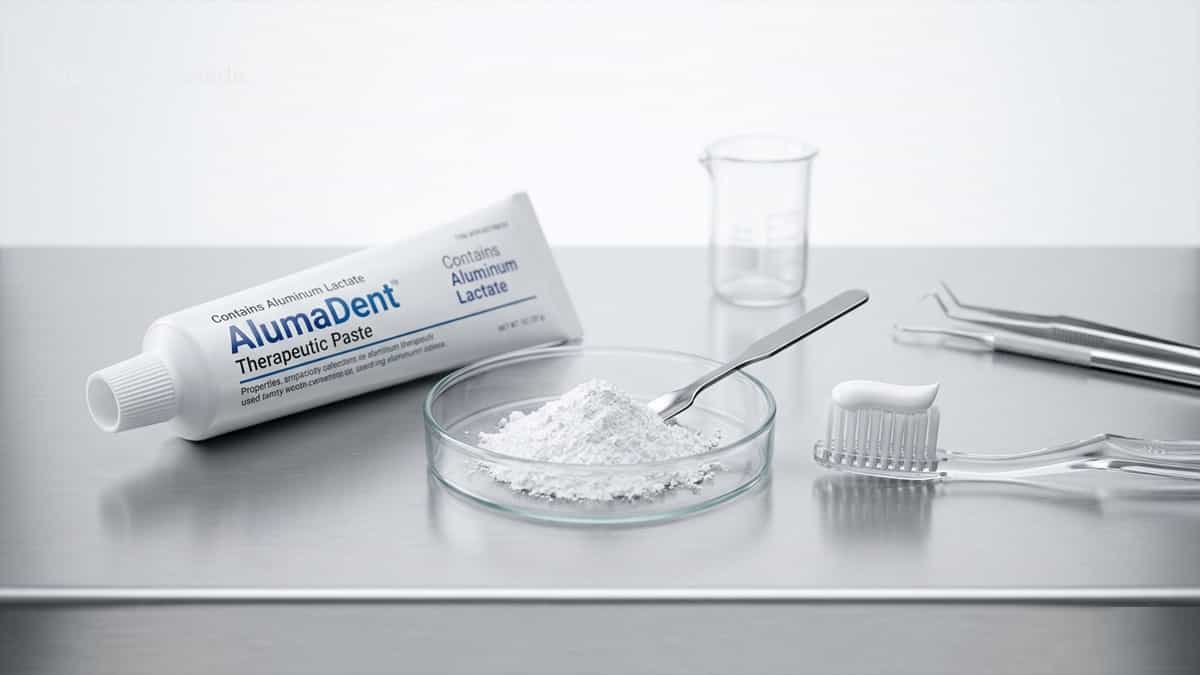
Aluminium lactate is a mild, organic salt formed from metallic aluminium and lactic acid. It appears as a white, water‑soluble powder and is valued for its low skin irritation compared to traditional aluminium salts. Its primary applications are in sensitive‑teeth toothpastes, deodorants for hypersensitive skin, and professional mouthwashes.
1. Basic Identification
- Chemical Formula: Al(C₃H₅O₃)₃ or C₉H₁₅AlO₉
- Alternative Names: Aluminium(III) lactate, Lactic acid aluminium salt
- Molecular Weight: 294.19 g/mol
- CAS Number: 18917-91-4
- Appearance: White, microcrystalline powder, freely soluble in cold water
2. Physical Properties
| Property | Aluminum Lactate |
|---|---|
| Melting Point | >300 °C (decomposes before melting) |
| Density | ~1.1 g/cm³ |
| Solubility | Readily soluble in cold water; insoluble in organic solvents (toluene, etc.) |
| pH Profile | Mildly acidic in solution (biologically agreeable buffer) |
Aluminum lactate is non‑hygroscopic, feels smooth to the touch, and dissolves without aggressive acidification or violent boiling.
3. Chemical Behavior & Synthesis
3.1 Gentle Astringency Mechanism
Unlike aluminium chloride or sulfate, which can damage the skin barrier, aluminium lactate provides a mild astringent effect. The lactic acid component (an alpha‑hydroxy acid) gently exfoliates and moisturizes, while the aluminum ion helps shrink pores and reduce bacterial colonization.
3.2 Synthesis
Prepared in pharmaceutical plants by reacting highly purified aluminium hydroxide with fermentation‑derived lactic acid:
Al(OH)₃ + 3 CH₃CH(OH)COOH → Al(CH₃CH(OH)COO)₃ + 3 H₂O
The water is evaporated under vacuum, yielding a pure white powder.
4. Medical & Cosmetic Applications
4.1 Sensitive Teeth (Dentin Hypersensitivity)
Aluminum lactate is embedded in premium sensitive‑teeth toothpastes (especially European brands).
Mechanism: It coagulates proteins inside exposed dentin tubules, physically blocking the channels and preventing cold liquids from reaching the nerve.
4.2 Deodorants for Hypersensitive Skin
Because it mimics the skin’s natural acid mantle, aluminum lactate restricts sweat gland activity without causing the redness, itching, or rash associated with inorganic aluminium halides.
4.3 Mouthwashes for Gingivitis
In professional mouthwashes, aluminium lactate acts as a mild styptic – it helps harden swollen gum tissue and reduces microscopic bleeding without harsh acidity.
5. Safety & Hazard Management
Aluminum lactate is considered safe for over‑the‑counter daily use.
| Route of Exposure | Effect |
|---|---|
| Inhalation | Minor dust irritation; may dry throat if large amounts are inhaled. |
| Skin Contact | Very low risk; generally therapeutic. |
| Eye Contact | May sting or lightly irritate – flush with tepid water. |
| Ingestion | Low oral toxicity (used in toothpaste, incidental swallowing is safe). |
PPE for bulk handling: N95 dust mask, safety glasses, standard gloves.
Storage: Keep dry to prevent caking. Simple polyethylene drums or sealed bags.
Disposal: Non‑hazardous; can be swept and disposed of in municipal waste.
6. Environmental Impact
Aluminium lactate is highly biodegradable. The lactate moiety is rapidly consumed by soil bacteria and fungi, breaking down into carbon dioxide and water. The trace aluminium rejoins soil minerals without significant bioaccumulation in the food chain.
7. Comparison with Other Aluminium Compounds
| Compound | Formula | Primary Nature | Primary Medical Application |
|---|---|---|---|
| Aluminium Lactate | Al(C₃H₅O₃)₃ | Organic mild acid‑salt | Sensitive‑teeth toothpaste, gums |
| Basic Aluminium Carbonate | Al₂(OH)₂CO₃ (approx.) | Insoluble buffer | Phosphate binder in renal failure |
| Aluminium Sulfate | Al₂(SO₄)₃ | Aggressive acidic salt | Strong styptic to stop bleeding |
Correction note: Pure Al₂(CO₃)₃ is unstable; the pharmaceutical form is a basic carbonate containing hydroxide.
-Ads-
8. Frequently Asked Questions
Q: Does aluminum lactate contain lactose or dairy allergens?
A: No. “Lactate” refers to lactic acid, now produced by bacterial fermentation of corn or beet sugar – completely dairy‑free.
Q: Why isn’t it used in all deodorants?
A: Cost. Aluminum lactate is significantly more expensive to manufacture than generic aluminum chlorohydrate.
Q: Does it damage teeth?
A: No. It physically blocks open dentin tubules, reducing pain from cold stimuli without harming enamel.
9. Summary Data Sheet
| Property | Value |
|---|---|
| Chemical Name | Aluminum Lactate |
| Formula | C₉H₁₅AlO₉ |
| Appearance | White, water‑soluble powder |
| Defining Trait | Dermatologically gentle astringent |
| Solubility | Freely soluble in cold water |
| Primary Utility | Sensitive‑teeth toothpaste |
| Hazard Note | Low toxicity, environmentally biodegradable |
Related Articles

Featured

You May Also Like

Is a Modern Pivot Door Right for You?

Good & Bad Climate for Aluminium Doors and Windows

Aluminium Coating Standards ECCA ASTM EN AAMA Specifications
Did You Know Why Aluminium Is Used for Cylinder Heads?

Aluminum Bars: Types, Uses, and Manufacturing Processes
