
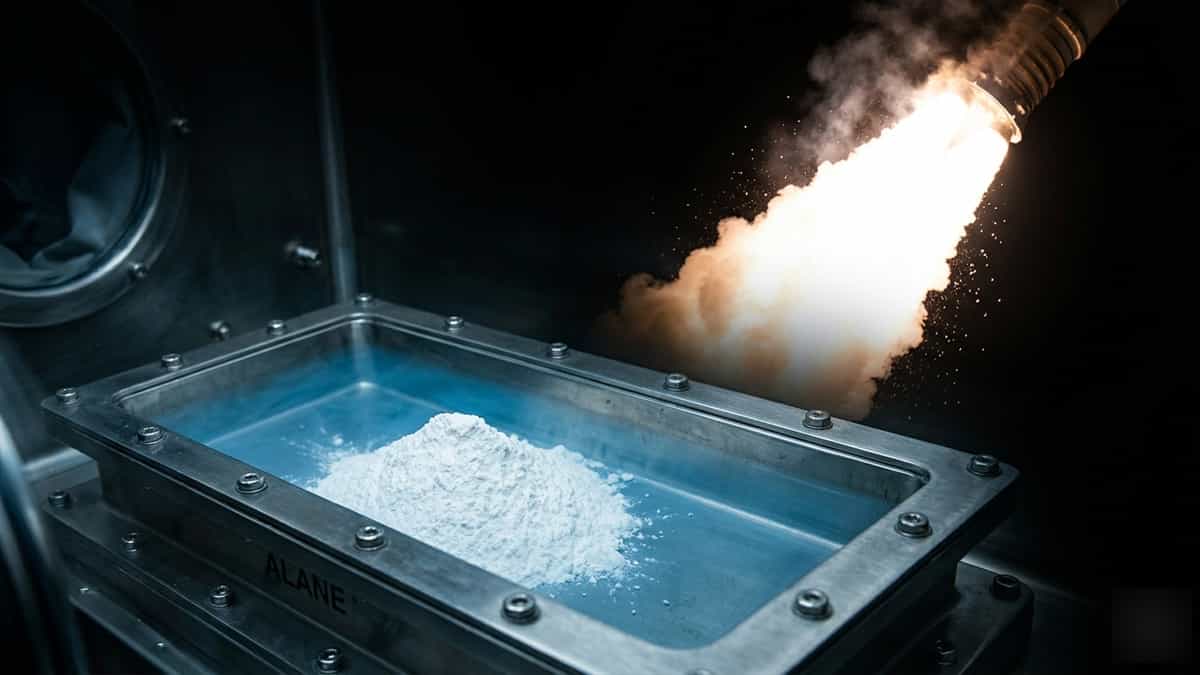
Aluminum hydride, frequently referenced in the literature as “alane,” is an exotic, highly reactive, and intensely energetic solid polymer. Distinctly separating itself from the oxygen-heavy ceramics and chlorine-rich halides, it relies on directly bonding aluminium to raw hydrogen. Appearing as a white, easily degradable powder, its colossal energy density makes it a highly sought-after but difficult-to-handle prize in advanced solid rocket propellant engineering and cutting-edge hydrogen storage technologies.
1. Basic Identification
Chemical Formula: AlH₃ (exists predominantly as an endless polymeric network, (AlH₃)ₙ)
Alternative Names: Alane, aluminium hydride.
Molecular Weight: 30.01 g/mol.
CAS Number: 7784-21-6.
Appearance: A white, often grayish solid powder (can appear clear as a dissolved complex in organic solvents).
2. Physical Properties
Alane is a polymer. Rather than isolated AlH₃ molecules, the aluminium and hydrogen atoms cross-link into a three-dimensional crystal lattice. It exists in multiple phases (alpha, beta, gamma), with α-alane being the most thermally stable.
2.1 Key Data Table
| Property | Aluminum Hydride (α-phase) |
|---|---|
| Melting Point | Decomposes completely before reaching a melt point. |
| Decomposition Temp | ~ 150 °C (302 °F) (releases pressurized hydrogen) |
| Density | 1.48 g/cm³ |
| Hydrogen Content | 10.1% by weight (exceptionally high for a solid) |
| Solubility | Reacts violently with water. Soluble in specific ethers (like THF). |
2.2 Physical Description
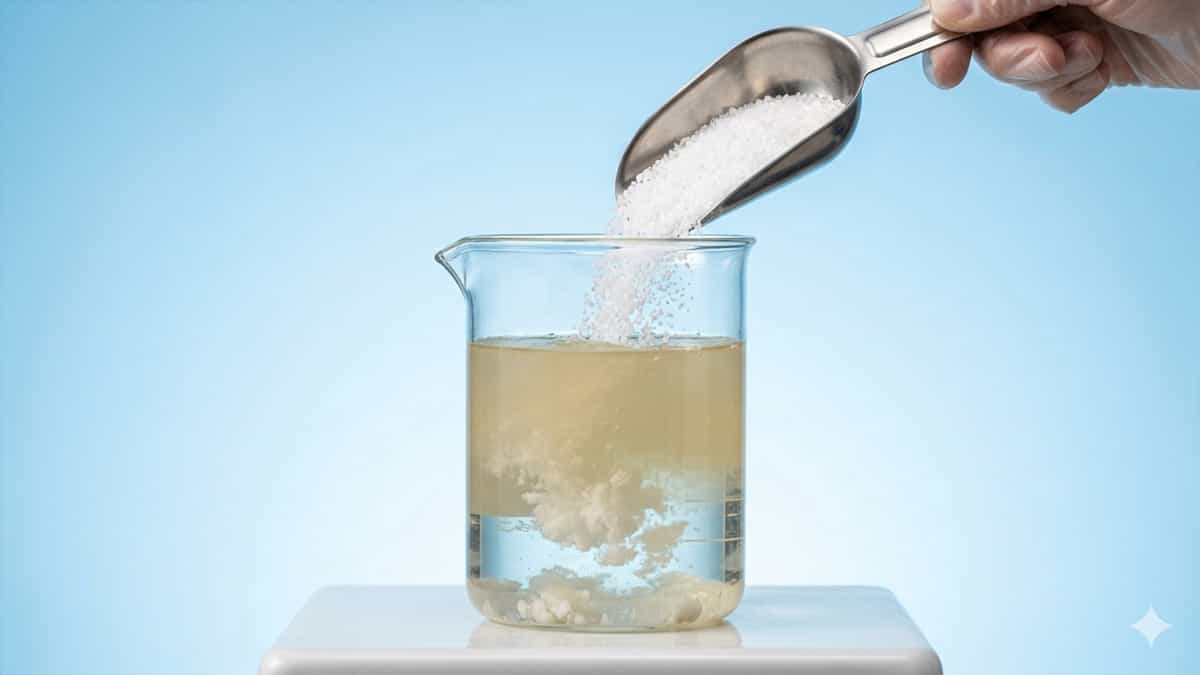
To the naked eye, isolated and stabilized α-alane looks like a harmless, lightweight white powder. But it is highly sensitive. If exposed to even slight atmospheric humidity, the powder quickly degrades into a gray mush, losing its stored hydrogen potential directly into the air.
3. Chemical Behavior and Reactions
The identity of alane centers on its desire to discard its hydrogen payload and return to stable aluminium oxide.
3.1 Thermal Decomposition (Hydrogen Release)
This reaction drives significant funding into alane research.
2AlH₃ + Heat (150 °C) → 2Al + 3H₂ ↑
Observation: With gentle heating, the polymer collapses, leaving pure aluminium powder and releasing large volumes of hydrogen gas. The reaction is exothermic once initiated.
3.2 Aggressive Hydrolysis
Contact with water is a major hazard.
AlH₃ + 3H₂O → Al(OH)₃ + 3H₂ ↑
Observation: Even small amounts of water cause the solid to sizzle violently, rapidly releasing explosive hydrogen gas. The heat generated can be sufficient to ignite the hydrogen, creating a fire.
4. Industrial and Laboratory Applications
Aluminum hydride is too unstable for bulk commodity use, but its energy density secures its place in elite aerospace and defense applications.
4.1 Solid Rocket Propellant Fuel
Advanced aerospace engineers study alane because it holds twice the hydrogen density of cryogenic liquid hydrogen. When mixed with an oxidizer (e.g., ammonium perchlorate) in solid rocket boosters, it burns hotter and with higher specific impulse (thrust efficiency) than traditional aluminium powder. The main issue preventing mass adoption is its lack of long‑term shelf stability.
4.2 Hydrogen Storage Vector (Fuel Cells)
Hydrogen‑powered cars struggle because storing enough hydrogen requires high‑pressure tanks. Alane safely locks 10% of its weight as hydrogen inside a low‑pressure solid powder. Theoretically, a fuel cell vehicle could carry a cartridge of alane, gently heat it, release hydrogen into the fuel cell, and recycle the leftover aluminium dust.
4.3 Specialized Organic Reductions
In advanced pharmaceutical synthesis, dissolved alane serves as a powerful reducing agent, forcing hydrogen onto complex organic molecules (such as amides or esters) that resist weaker reducing agents.
5. Safety and Hazard Management
🔥
GHS02
Highly Flammable
⚠️
GHS05
Corrosive / Water-Reactive
Critical Warning: Aluminum hydride poses extreme fire and explosion risks. Leaving it in a humid room may generate enough heat to ignite the hydrogen gas it releases.
5.1 Health Effects
| Route of Exposure | Effect |
|---|---|
| Inhalation | Dust irritates the respiratory tract. Hydrogen gas released from decomposition is a simple asphyxiant (displaces oxygen) in enclosed spaces. |
| Skin Contact | Reacts with skin sweat, causing localized thermal and chemical burns. |
| Eye Contact | Extreme corneal danger; reacts instantly with eye moisture. |
| Ingestion | Highly toxic. Violent gas generation in the stomach can cause internal pressure injury and severe shock. |
5.2 Personal Protective Equipment (PPE)
Handling requires air‑free environments, often using specialized gloveboxes.
- Respiratory: Work inside gloveboxes or intense fume hoods. Otherwise, supplied‑air systems.
- Hands: Thick neoprene gloves inside the nitrogen box.
- Eyes: Face shield over blast goggles.
- Body: Fire‑resistant (Nomex) lab coat. Avoid synthetic clothing that generates static sparks.
5.3 Firefighting Information
- Suitable Extinguishers: Completely bury the fire under large volumes of dry sand or Class D dry powder.
- DO NOT USE: Water or foam (causes explosive hydrogen release). Do not rely on CO₂ alone.
6. Storage and Handling Guidelines
6.1 Storage Conditions
- Container: Heavy glass bottles encased inside pressurized secondary metal canisters.
- Atmosphere: Must be stored under pure, dry argon or nitrogen.
- Location: Spark‑proof, ventilated explosive/flammable storage bunkers.
- Incompatibles: Water, humidity, oxygen, alcohols, acids, bases, oxidizing agents (extreme explosion hazard).
6.2 Disposal Considerations
Disposal requires controlled chemical quenching.
- Do not place in regular trash.
- Inside a fume hood, suspend the solid in a dry, inert solvent (e.g., dry hexane).
- Add an alcohol (like isopropanol) drop‑by‑drop over hours to slowly release hydrogen without explosive heat.
- Dispose of the neutralized sludge via hazardous waste protocols.
7. Environmental Impact
While the fire and explosion risk is paramount, alane has low chemical persistence in the environment. A spill into soil reacts aggressively with ground moisture, releasing hydrogen gas and converting to harmless aluminium hydroxide (bauxite). It poses negligible long‑term toxicity to water tables or aquatic life because it decomposes rapidly.
8. Comparison with Other Reactive Aluminum Compounds
| Compound | Formula | Primary Nature | Primary Danger |
|---|---|---|---|
| Aluminium Hydride | AlH₃ | Solid hydrogen carrier | Violently combustible; water‑reactive (H₂ gas). |
| Aluminium Chloride | AlCl₃ | Aggressive Lewis acid | Water reaction produces corrosive HCl gas. |
| Aluminium Silicate | Al₂SiO₅ | Stable inert mineral | Biologically inert; no chemical hazard. |
9. Frequently Asked Questions
Q: Is this the same as “lithium aluminum hydride” (LiAlH₄) used in college chemistry?
A: Closely related but distinct. LiAlH₄ is an ionic salt that is easier to handle and more common in synthesis. Pure AlH₃ (alane) is a polymer lacking lithium, making it significantly harder to synthesize and store safely.
Q: If it holds so much hydrogen, why aren’t our cars powered by this powder yet?
A: Two major problems: (1) Alane degrades on the shelf over months, releasing hydrogen prematurely. (2) Regenerating AlH₃ from the leftover aluminum dust requires extremely high hydrogen pressure (nearly 100,000 atmospheres), making the recycling loop currently impractical.
Q: Does it actually explode when wet?
A: It does not detonate like TNT. Instead, water causes violent boiling, releasing large volumes of hydrogen gas. The heat can ignite the hydrogen, creating a secondary fuel‑air explosion.
10. Summary Data Sheet
| Chemical Name | Aluminum Hydride |
|---|---|
| General Identifier | Alane |
| Formula | AlH₃ |
| Appearance | White to grayish solid powder |
| Key Feature | High hydrogen capacity (10.1% by mass) |
| Primary Utility | Solid rocket fuels; advanced fuel‑cell energy storage |
| Hazard Note | Highly reactive with humidity; explosion risk |
| Storage | Under dry inert gas, in spark‑proof area |
Related Articles

Featured



You May Also Like

Aluminum-Free Deodorant: Misconceptions & Facts
Aluminium 7475: The Second-Generation Aerospace Alloy for Su…

Aluminium 6061 Vs. 6063

Why Is Aluminum Used for Aircraft Parts? 5 Reasons Engineers…
Aluminium Sulfate (Al₂(SO₄)₃): The Complete Guide
