Everyone thinks aluminum cans are a boring everyday thing — you drink it, crush it, throw it, move on. But scroll through the comments under any recycling video… and suddenly the story flips. People aren’t talking about “waste management” — they’re talking about childhood memories, broken deposit systems, industrial scale shock, working-class hustle, and that wild feeling that your old Coke can might have travelled more in life than you have.
This piece isn’t about preaching sustainability — it’s about what people really say when they see where their can ends up.
🚀 “My Old Coke Can Went to Space Before I Did”
The most viral theme? People genuinely believe their Coke cans are now astronauts — and honestly, mood. One viewer joked: “So basically I sent my coke can to space before Elon did his Tesla.” Another flexed: “My old coke can had done more things in a year than I have done in my life.”
It’s funny… but it also shows something real: Aluminium has insane second-life potential — aircraft bodies, car parts, window frames, and even ladders. And yes, one guy swears he personally supplied enough cans to build a rocket: “With all the parties I’ve thrown… I have contributed to at least one entire rocket ship.”
👉 Deep-dive explainer on reuse: Everything About Aluminum Cans You Need to Know
🧊 WALL-E, Borg Cubes & Machines the Size of Buildings
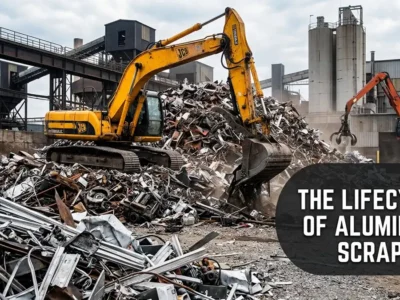
Half the comments aren’t about recycling; they’re about awe. People are stunned by the scale: “I am in awe of just how big some of those machines are. Amazing.” Those giant compressed bales? To viewers, they’re not metal blocks; they’re sci-fi icons like WALL-E or a Borg cube from Star Trek. For factories, it’s daily production. For people, it’s industrial art.
👉 Related read: Aluminum Can Recycling — The 60-Day Loop & 95% Energy Savings
💸 “It Was 5 Cents in the 80s… and It’s STILL 5 Cents?”
This is where the vibe turns cynical. Someone dropped a reality punch: “Kids could recycle cans for 5 cents in the 1980s… 40 years later, it’s STILL 5 cents. Inflation skipped recycling.” Another viewer shared working-class nostalgia: “We collected cans to buy gas in high school. The freedom was real.” And then — the frustration everyone feels but rarely says: “Households do recycling for conscience. Corporations get free raw material and profit.” Recycling is green, but the economics aren’t always seen as fair.
👉 Context piece: Check the Aluminium Scrap Rate Today
🧪 “So Much Energy… for a Drink You Finish in 5 Minutes”
Some watch these videos and question the system. One viewer noted: “The process is complex and energy-intensive… just to quench thirst for a short while.” They aren’t entirely wrong, but the industry perspective reveals why this “waste” is actually a massive win:
- Efficiency: Aluminium recycling is one of the most energy-efficient metal loops in the world.
- ♻️ Energy Savings: It uses up to 95% less energy than producing primary aluminium (bauxite → alumina → smelting).
- 🔁 Speed: Many cans return to the market in as little as ~60 days.
- ⚙️ Zero Waste: Scrap from production lines is immediately re-melted and reused.
- 🚚 Hidden Costs: The biggest energy drains are actually transport, reheating, and global logistics.
- 🧪 The Alloy Secret: Recycled cans aren’t “pure aluminium”—they are sophisticated blends of different alloys specifically engineered for strength.
👉 Must-read companion: Aluminium Cans Recycling Challenges — Explained
🧠 Humor, Identity & The Great “Aluminum vs Aluminium” War
The comments section is often an international pronunciation battlefield: “Americans: Aluminum. British: Aluminium. Me: Diet Metal.” Everyone’s right, everyone’s wrong, and nobody is changing their mind.
👉 Nerd-friendly read: Myths About Aluminium Cans — Sorted
💬 Final Take — People Don’t Just See “Cans”… They See Stories
To some, it’s childhood memories; to others, corporate economics. Recycling videos go viral because people see themselves — their past, their hustle, and their humor — inside those cans. And that is the real story.
Would you like me to write the SEO Meta Description and the Alt-Text for your image once you’ve uploaded it?