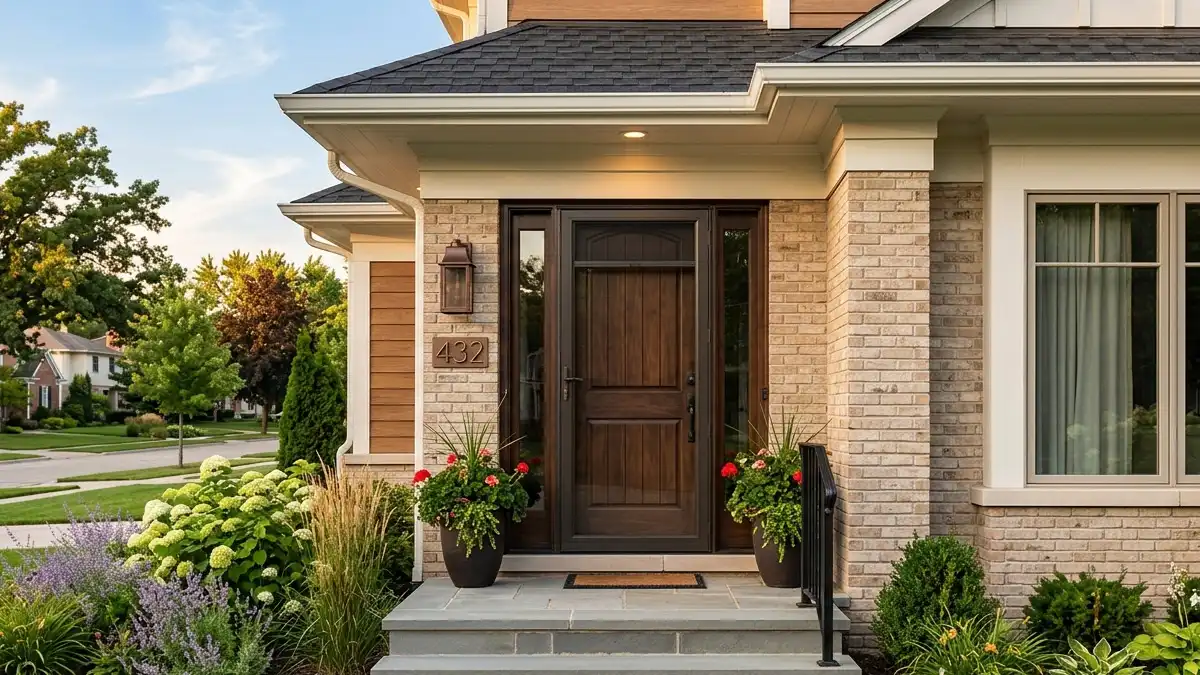
A storm door isn’t just a second entrance. It’s a layered defense system for your home’s most vulnerable opening. Installed over your existing entry door, this exterior-grade door protects against weather extremes while adding ventilation, security, and energy savings.
But not all storm doors perform equally. The frame material determines durability, maintenance needs, and lifespan. And for US homeowners dealing with everything from Midwestern winters to Southern humidity, that choice matters significantly.
What Exactly Is a Storm Door?
A storm door mounts externally to your existing entry door. It creates a dead-air space between itself and your primary door—a buffer zone that reduces heat transfer, blocks wind infiltration, and keeps rain, snow, and UV radiation away from your investment.
Unlike screen doors, which prioritize airflow over protection, storm doors carry heavy-duty construction. They handle interchangeable glass and screen panels, self-storing mechanisms, and continuous daily use without sagging or warping.
Types of Storm Doors
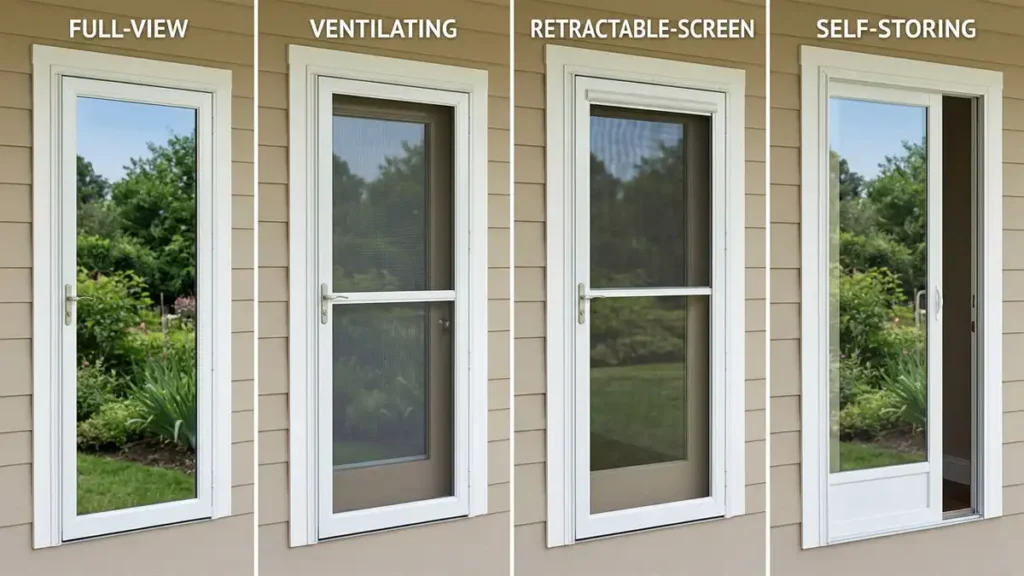
Full-view storm doors maximize natural light with a single large glass panel. The glass slides or retracts fully, exposing a full-height screen. These suit homeowners who want unobstructed views and don’t need privacy at their entry.
Ventilating storm doors feature a divided design—glass above, screen below, or split vertically. You can open the upper or lower section independently. This provides airflow while maintaining privacy at eye level.
Retractable-screen storm doors keep the screen hidden inside the top frame until needed. Pull it down when you want ventilation; roll it up when you need insulation or visibility. No separate screen storage required.
Self-storing storm doors have a built-in pocket. The glass panel slides up or sideways, and the screen automatically appears from the opposite direction. Convenient, but the internal tracks require occasional cleaning.
The Extruded Aluminum Advantage
Modern storm doors predominantly use extruded aluminum frames. Here’s why this material dominates the category:
Corrosion resistance. Aluminum forms a protective oxide layer when exposed to air. Unlike steel, it won’t develop rust spots after a single wet season.
Structural integrity. Heavy-duty extruded aluminum handles the weight of interchangeable glass panels without flexing. The frame remains square even after years of thermal expansion and contraction.
No rot or warp. Wood-core storm doors absorb moisture over time. Vinyl can become brittle or warp in extreme heat. Extruded aluminum stays dimensionally stable across all US climate zones.
Finish options. Two finishes dominate: anodized and powder-coated. Anodizing creates a hard, metallic surface that won’t peel or chip—ideal for coastal homes. Powder coating offers unlimited color options with excellent UV resistance, though it can scratch more easily than anodized surfaces.
Key Benefits of Installing a Storm Door
Protects your primary entry door. Your front door might be solid wood, fiberglass, or steel. None of them benefit from direct sun exposure, driving rain, or hail. A storm door acts as a sacrificial barrier, taking the weather damage so your main door doesn’t have to.
Reduces energy loss. The air gap between doors provides measurable R-value improvement. When combined with proper weatherstripping and a high-quality aluminum storm door, you reduce drafts and keep conditioned air inside.
Enables seasonal ventilation. Swap glass for screens in spring and fall. Let fresh air move through your home without inviting insects. This passive cooling reduces AC load during shoulder seasons.
Adds security. Heavy-gauge aluminum frames resist forced entry better than lightweight screen doors. Locking mechanisms on both doors create a double barrier.
Blocks UV radiation. Constant sunlight fades flooring, furniture, and artwork near entryways. Tinted or Low-E glass panels in storm doors reduce UV transmission significantly.
Common Uses Across US Homes
Northern climates (MN, WI, NY, New England). Homeowners prioritize winter performance. They choose storm doors with full glass panels, thermal breaks in the frame, and Low-E coatings to retain heat.
Southern and humid regions (FL, TX, GA, LA). The priority shifts to ventilation. Aluminum screen doors with full-height retractable screens allow maximum airflow while blocking insects. Glass panels trap heat in these climates, so ventilating models work better.
Coastal areas (CA, FL, NC, WA). Salt air corrodes lesser materials. Anodized aluminum finishes resist salt damage far better than painted surfaces or vinyl.
Desert Southwest (AZ, NV, NM). Intense UV radiation degrades finishes quickly. Powder-coated aluminum with UV-stable pigments maintains appearance longer than painted wood or vinyl alternatives.
Material Comparison: Aluminum vs. Alternatives
| Material | Lifespan | Maintenance | Weather Resistance | Cost |
|---|---|---|---|---|
| Extruded Aluminum | 25+ years | Minimal | Excellent | $$ |
| Wood Core | 10-15 years | Annual painting/sealing | Poor | $ |
| Vinyl | 10-20 years | Low | Moderate | $ |
| Steel | 15-20 years | Rust inspection/painting | Good (until rust starts) | $$ |
Wood-core storm doors look traditional but absorb moisture. Swelling prevents smooth operation. Vinyl resists moisture but becomes brittle in freezing temperatures and softens in extreme heat. Steel offers strength, but once the finish is scratched, rust begins.
When a Storm Door Doesn’t Make Sense
Not every entry benefits from a storm door. Installations with less than 3 inches of clearance between the primary door and the storm door frame create hardware interference challenges.
Crucial safety note for dark-colored doors: If your front entrance receives direct, intense sunlight for hours and features a dark-colored fiberglass or steel entry door, a full-view glass storm door can trap heat like a greenhouse. This extreme heat build-up can warp door panels, peel paint, or ruin weatherstripping. In these specific situations, a fully ventilating model (with no glass panel or a large open screen area) or no storm door at all is the safer choice.
Older homes with compromised door framing may also need reinforcement before adding the extra weight of a storm door.
Final Thoughts
A storm door transforms how your entry performs year-round. The right choice depends on your climate, your primary door material, and how you use your entrance. Prioritize extruded aluminum frames for longevity. Match the glass type (clear, tinted, Low-E, or full-screen) to your regional weather patterns. And verify the finish type—anodized for coastal salt exposure, powder-coated for color flexibility everywhere else.