The landscape of modern construction is increasingly defined by a dual mandate: build bigger, and build cleaner. As large-scale commercial, industrial, and utility projects integrate solar energy to meet sustainability goals and reduce operational costs, one material has proven fundamental to making this integration possible—aluminium. Beyond merely being a component, aluminium has emerged as the indispensable backbone of large-scale solar implementation.
For skyscrapers, distribution centres, manufacturing plants, and massive solar farms, the choice of material for solar support structures is a critical engineering and economic decision. Here’s why aluminium consistently outperforms the alternatives and is the material of choice for forward-thinking developers and engineers.
Unmatched Strength-to-Weight Ratio
Engineering Efficiency at Scale
On a large commercial roof, structural load is a primary concern. Traditional materials can be prohibitively heavy, often requiring expensive and time-consuming structural reinforcement before installation.
- Aluminium’s Advantage: With a strength-to-weight ratio that rivals steel, aluminium framing and mounting systems provide the necessary rigidity and wind load resistance without overburdening the building’s structure. This translates to significant cost savings by avoiding costly reinforcement and opens up solar potential for a wider range of existing buildings. For vast rooftop arrays on warehouses or factories, the cumulative weight saving is a critical feasibility factor. This is a key reason for the Advantages of Aluminum Over Steel in many modern applications.
The Logistics of Lightness
Speed and Scale on Site
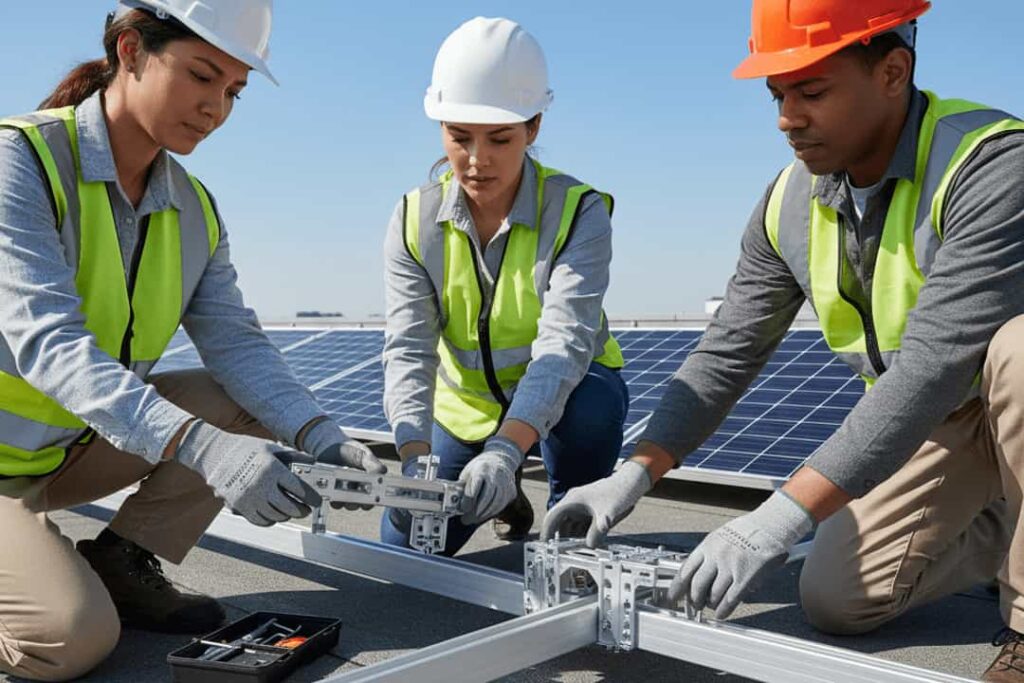
In large-scale construction, time is money. The logistical benefits of aluminium directly accelerate project timelines and reduce labour costs.
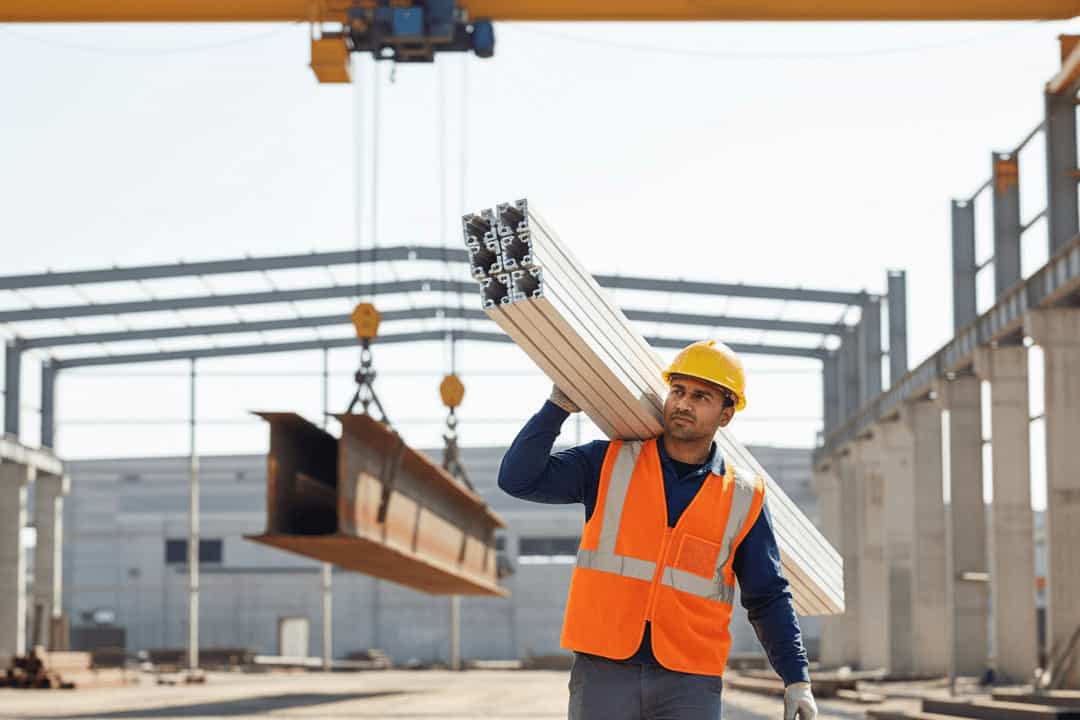
- Easier Handling: Aluminium components are significantly lighter than steel, making them easier for crews to manoeuvre and lift, often without the need for heavy crane machinery. This enhances on-site safety and allows for faster installation.
- Rapid Assembly: Many aluminium mounting systems are designed with modular, pre-engineered components that snap or bolt together quickly. This streamlined assembly process is crucial for projects covering thousands of square metres, where installation speed directly impacts the bottom line. The versatility of Aluminium Extrusion is what allows for these cost-effective, customisable profiles.
Inherent and Enduring Durability
The 30-Year Promise
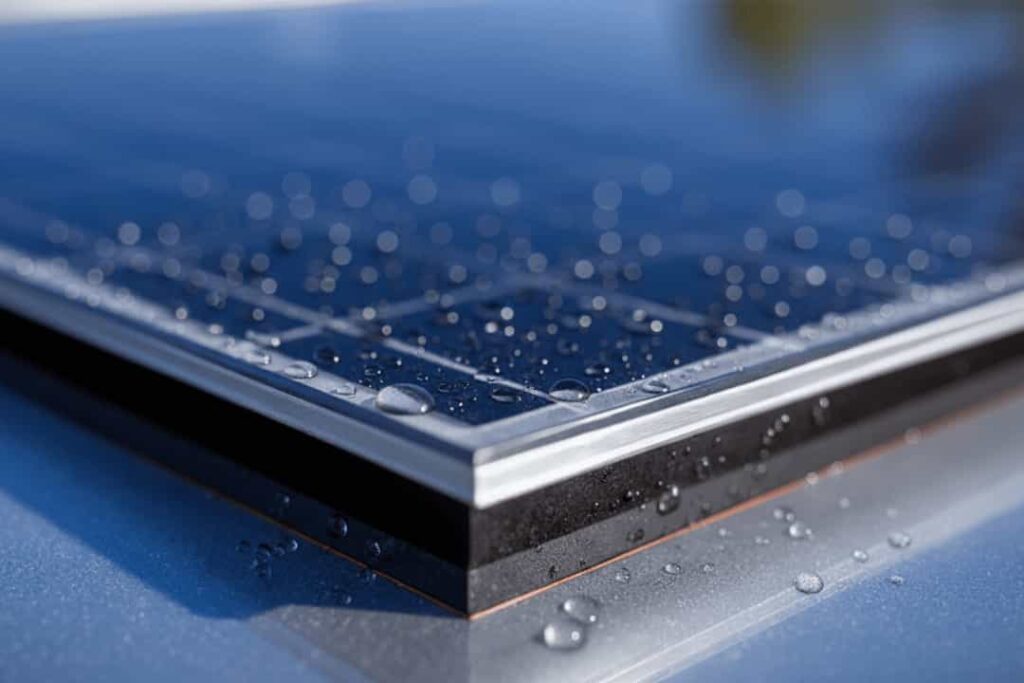
Solar panels are typically warranted for 25 to 30 years. The supporting structure must last just as long, often in harsh, exposed environments.
- Corrosion Resistance is Key: Unlike steel, which requires galvanization and can remain vulnerable to rust if scratched, aluminium naturally forms a protective oxide layer. This inherent corrosion resistance makes it ideal for coastal applications, industrial areas, and regions with high pollution or salinity, ensuring the structural integrity of the investment for decades.
- Withstanding the Elements: Aluminium frames and mounts are engineered to handle thermal expansion, heavy snow loads, and high winds. Their durability ensures that the entire solar array remains secure and aligned, protecting the significant investment in the photovoltaic modules themselves. This long-term performance is a testament to the material’s Advantages of Aluminium Sheets and profiles in construction.
Design Versatility for Complex Projects
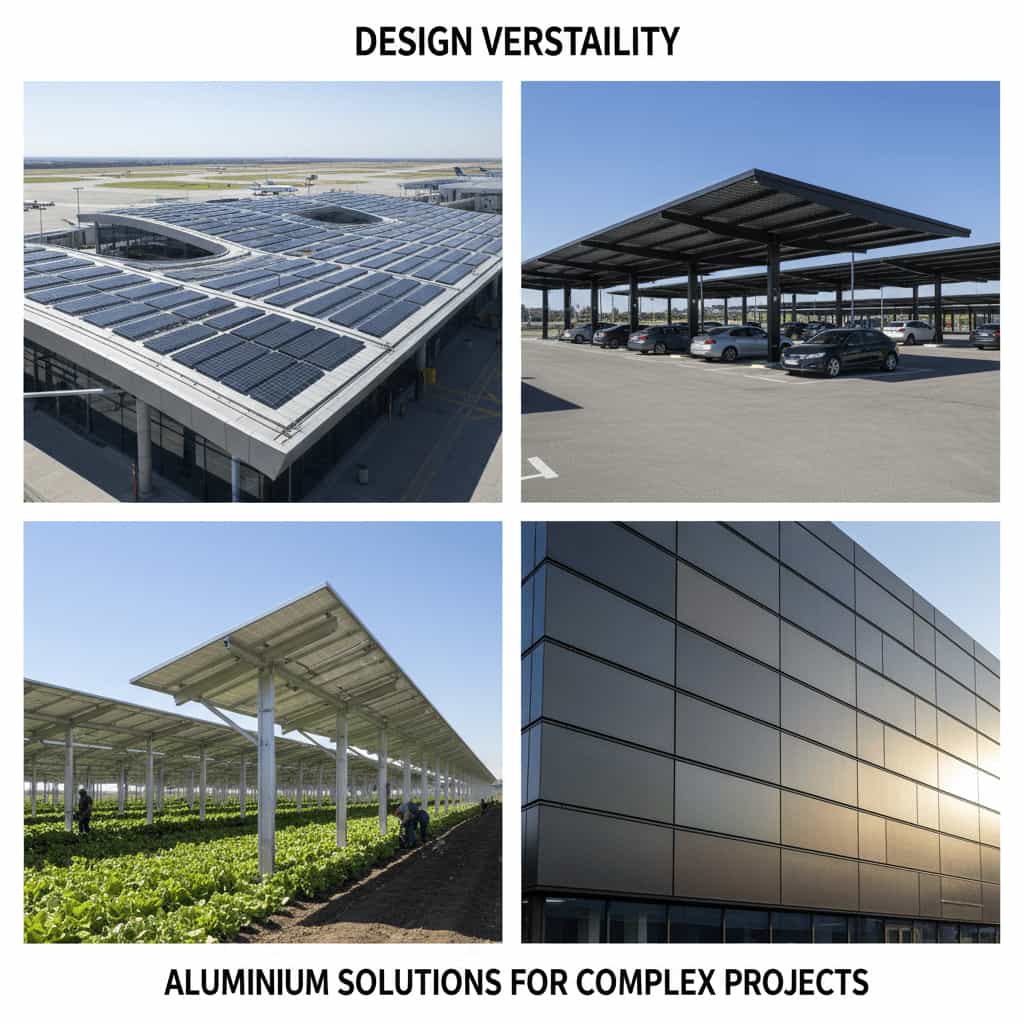
Large-scale projects are rarely uniform. Aluminium’s malleability allows it to be extruded into a vast array of custom profiles, making it uniquely adaptable to complex construction challenges.
- Seamless Integration: Whether it’s conforming to the curved roof of a modern airport, integrating into a building’s facade as part of a Building-Integrated Photovoltaic (BIPV) system, or being used in agrivoltaic projects where structures must accommodate farming equipment, aluminium can be formed to fit the design.
- Standardised Solutions for Any Scale: From ballasted systems for flat roofs that require no penetration to railed systems for sloped roofs, the industry has standardised around aluminium, ensuring a proven solution for virtually any commercial or industrial application.
The Sustainable Choice for a Sustainable Goal
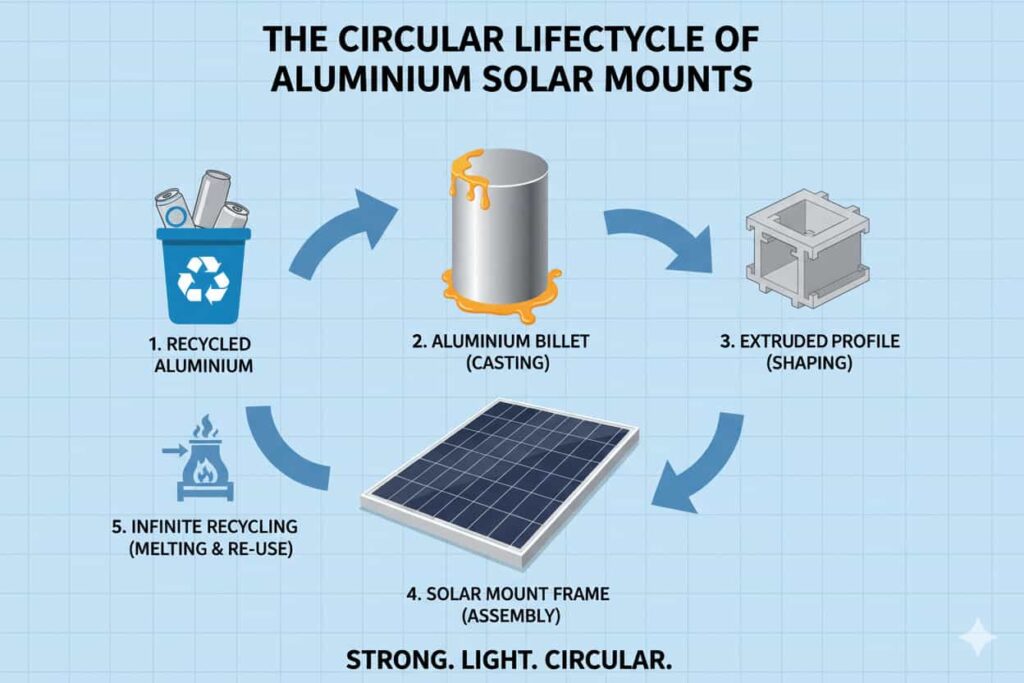
For developers and corporations pursuing green building certifications like LEED or BREEAM, the sustainability of every material counts. Aluminium strengthens the project’s environmental credentials.
- Circular Economy in Action: Aluminium is 100% and infinitely recyclable. At the end of a solar array’s life, the aluminium structure is not waste; it is a high-value material that can be recycled into new products with only 5% of the energy required for primary production. This creates a powerful circular lifecycle, perfectly aligning with the renewable energy generated by the panels themselves. Learn more about this process in our guide to Understanding Aluminium Waste and Scrap and the industry’s drive towards a Sustainable Future.
Building the Future on an Aluminium Frame
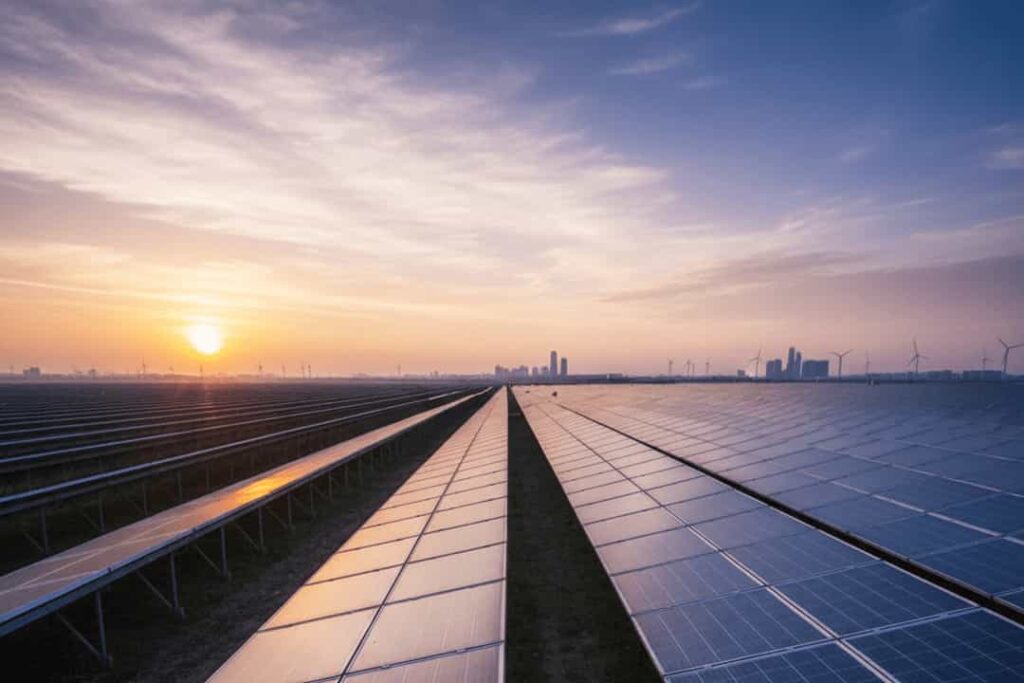
The shift to renewable energy in construction is not just about the solar cells; it’s about the entire system that enables them to perform reliably and economically for decades. For large-scale projects where the stakes—in terms of budget, timeline, and longevity—are highest, aluminium provides the proven, high-performance solution. Its role is so pivotal that it is rightly considered the The Aluminium Solar Panel framework.
Its combination of lightweight strength, logistical efficiency, inherent durability, and ultimate recyclability makes it not just a material choice, but a strategic one. As we construct the sustainable infrastructure of the future, it will be built, quite literally, upon a backbone of aluminium.
Aluminium Magazine is a premier publication for professionals and enthusiasts in the aluminium industry, covering the latest in technology, applications, and market trends.