

Aluminium Coils — also known as Aluminium Mill Finish Coils — are the raw backbone of countless applications. Before you buy, it’s important to know what makes a quality coil and how to choose the right supplier. This guide shows you exactly what to check so you don’t waste money on the wrong material.
What Are Aluminium Mill Finish Coils?
Defining the Raw, Uncoated Material
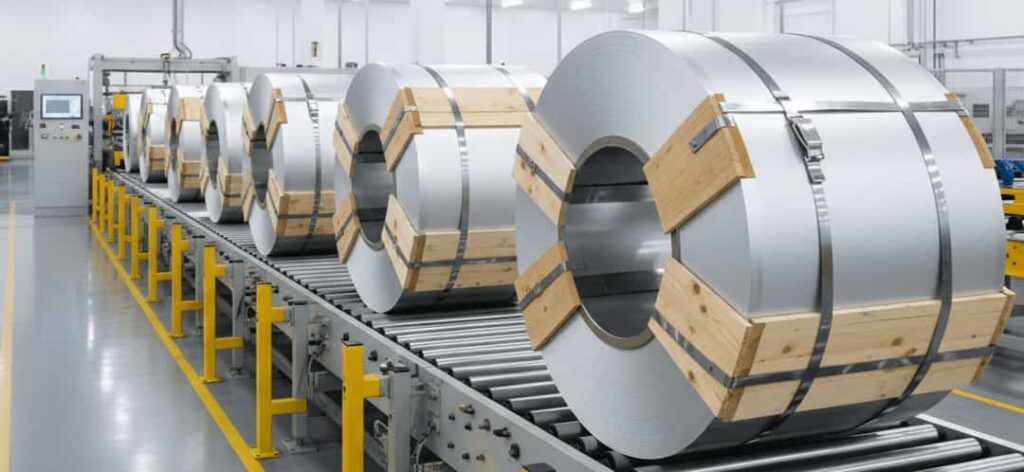
Simply put, Aluminium Mill Finish Coils are continuous lengths of aluminium sheet that have been rolled to a specific thickness and width but have not undergone any secondary surface treatment after the final rolling pass. The term “mill finish” refers to the natural, untreated surface that comes directly from the production mill.
This bare aluminium coil is characterized by a smooth, metallic grey appearance. It is the definitive unpainted aluminium coil or non-coated aluminium coil, highlighting its raw state. This finish is not primarily designed for its aesthetic appeal but for its functionality as a base material, ready for fabrication or further processing. The surface is typically uniform and smooth, with a very low surface roughness (Ra value), making it an ideal substrate for processes like lamination or plating where adhesion is critical.
Key Advantages of Choosing Mill Finish
Why specify a raw aluminium coil over a pre-finished one? The benefits are significant for many applications:
- Cost-Effectiveness: Eliminating the painting, anodizing, or coating processes makes mill finish aluminium coils one of the most economical options. This is a primary driver for projects where the final appearance is not the main concern or where the material will be post-treated.
- Versatility and Workability: This is the ultimate blank canvas. The mill finish surface is ideal for subsequent fabrication processes like bending, stamping, and welding. It also provides an excellent substrate for painting, powder coating, or anodizing, as the clean surface ensures superior adhesion.
- Formability: The specific temper of the coil (e.g., O-temper for full softness) allows for exceptional formability, making it perfect for deep drawing and complex shapes.
- Corrosion Resistance: Aluminium naturally forms a protective oxide layer, giving mill finish coils inherent resistance to corrosion. This makes them suitable for environments where moderate protection is sufficient.
Understanding Specifications: Alloy, Temper, and Thickness
When sourcing aluminium coil stock, understanding the specifications is critical. The properties of a mill finish coil are defined by three key elements:
- Aluminium Coil Alloy: The alloy composition determines the material’s fundamental characteristics.
- Aluminium Alloy 1050/1100: Excellent corrosion resistance and high formability. Ideal for chemical equipment and decorative parts.
- Aluminium Alloy 3003: The most commonly used general-purpose alloy, with manganese added for higher strength than 1000-series alloys. Perfect for generic sheet metal work, tanks, and cabinets. For detailed insights on composition and properties, check our guide on Aluminium Alloy 3003.
- Aluminium Alloy 5052: Offers the highest strength of the common non-heat-treatable alloys, along with excellent marine-grade corrosion resistance. Used in marine, automotive, and aerospace applications.
- Aluminium Coil Temper: The temper indicates the degree of hardness or strength achieved through cold working or heat treatment.
- O Temper (Annealed): Soft, ductile, and ideal for severe forming.
- H Tempers (Strain-Hardened): H14 (half-hard) and H18 (full-hard) are common, offering a balance of strength and formability.
- Thickness and Width: Mill finish coil [thickness] mm is a common search for a reason. Coils are available in a vast range of thicknesses (e.g., 0.3mm to 6.0mm) and widths to meet precise design requirements.
Common Applications of Mill Finish Aluminium Coils
The use of aluminium sheet in coil form is widespread due to its efficiency in automated production lines. Mill finish coils are also widely processed into Aluminium Sheets and Strips for fabrication, roofing, and cladding industries. Key applications include:
1. Fabrication:
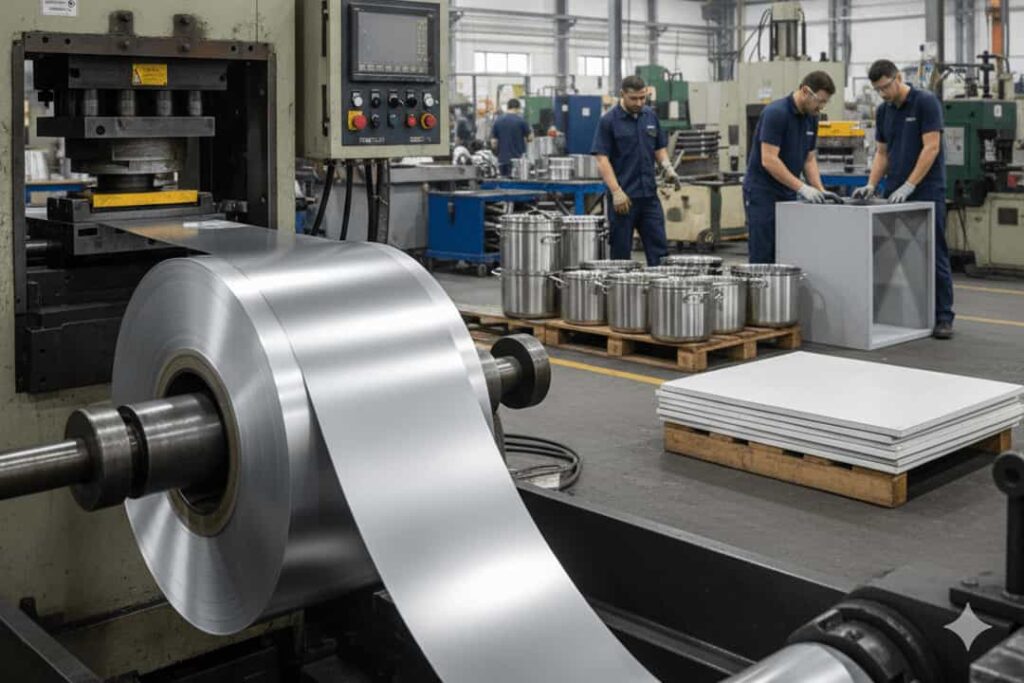
Used as a raw material for manufacturing kitchenware, light fixtures, electrical enclosures, and signage.
2. Composite Panels:

Acting as the core metal skin for Aluminium Composite Panels (ACP), where it will be painted or laminated.
3. Roll Forming:
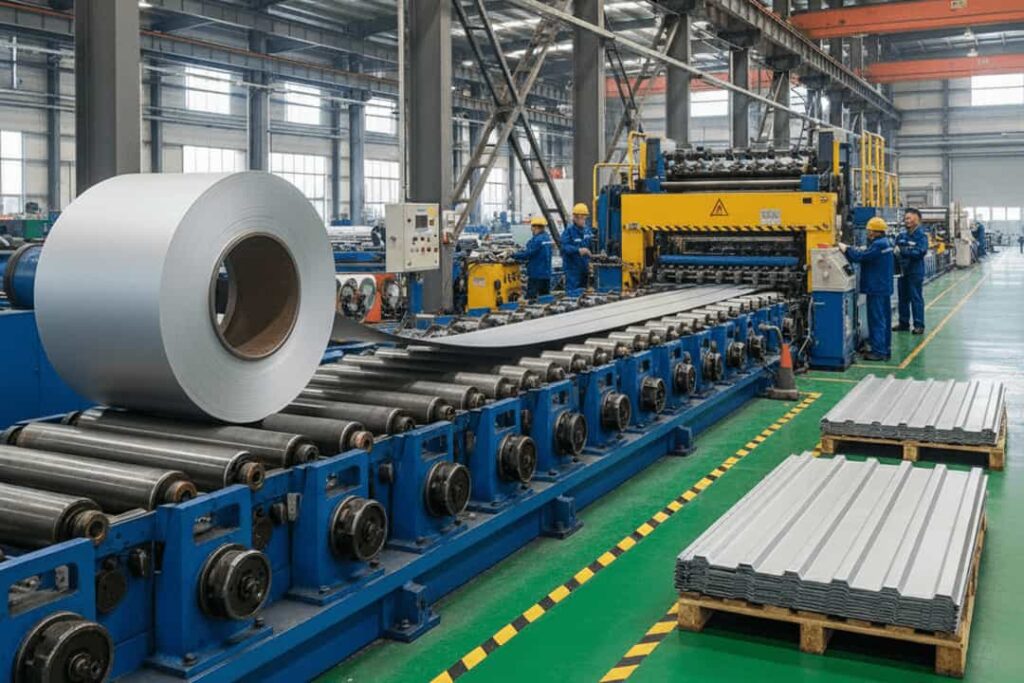
Fed through roll-forming machines to create roofing, siding, gutters, and structural components.
4. Automotive Parts:

Used for non-visual parts, brackets, and components that will be painted in the assembly line.
Choosing a Mill Finish Aluminium Coil Supplier

When you are ready to buy mill finish aluminium coils, selecting the right aluminium coil manufacturer or supplier is important. When comparing suppliers, always track the Current Aluminium Price as it directly influences coil cost and bulk order quotes. Here’s what to consider:
- Quality Consistency and Standards: A reputable aluminium mill finish coils supplier will provide mill test certificates to guarantee the alloy, temper, and mechanical properties. Look for compliance with international standards such as ASTM B209 or European EN standards (e.g., EN AW-3003), which are benchmarks for material quality and consistency.
- Range of Products: Ensure they stock a variety of aluminium coil alloys and tempers to meet your specific needs.
- Logistics and Lead Times: For high-volume orders, a supplier’s logistics capabilities and reliable lead times are as important as the mill finish aluminium coil price. Inquire about their ability to deliver aluminium coil for sale on a consistent schedule to keep your production line running smoothly.
- Practical Handling Advice: Because it is uncoated, mill finish material requires proper storage in a dry, well-ventilated environment to prevent moisture-induced oxidation or “white rust” before processing.
- Pricing and Volume: Price is always a factor. Obtain quotes from several suppliers. Remember that the price is influenced by the global price of aluminium, alloying elements, order volume, and processing costs. Look for wholesale aluminium mill finish coils for large-volume projects to achieve better economies of scale.
- Customer Service and Technical Support: A good supplier will offer technical support to help you select the most appropriate material for your application.
Aluminium Mill Finish Coils may not have the immediate visual appeal of their finished counterparts, but their importance cannot be overstated. They represent the essential first link in a massive manufacturing chain, prized for their affordability, workability, and pure potential. If you are new to this material, our Aluminium Industry Guide offers a complete overview of how aluminium shapes global manufacturing.
Whether you are a seasoned purchaser searching for a reliable source or an engineer designing a new product, understanding the fundamentals of this foundational material—from its surface quality to its compliance with industry standards—is key to making informed decisions. For a wide range of industrial and manufacturing needs, the mill finish aluminium coil remains an indispensable and smart choice.
Looking for a trusted partner for your next project? Explore our directory of certified aluminium coil manufacturers and suppliers to find the perfect source for high-quality aluminium mill finish coils for sale.
Featured



You May Also Like
Aluminium Silicate (Al₂SiO₅): The Complete Guide
Toughened Glass Vs. Laminated Glass: The Ultimate Safety Gla…
Copper Wire vs. Aluminium Wire

Aluminum Water Bottles vs. Stainless Steel: Which Hydration …

Best Storm Doors for Harsh Winters: Heavy-Duty Options for W…
